化妆品等)

Search documents
竞投内斗击退日上免税行 中免拿下上海机场免税店
BambooWorks· 2025-12-19 10:27
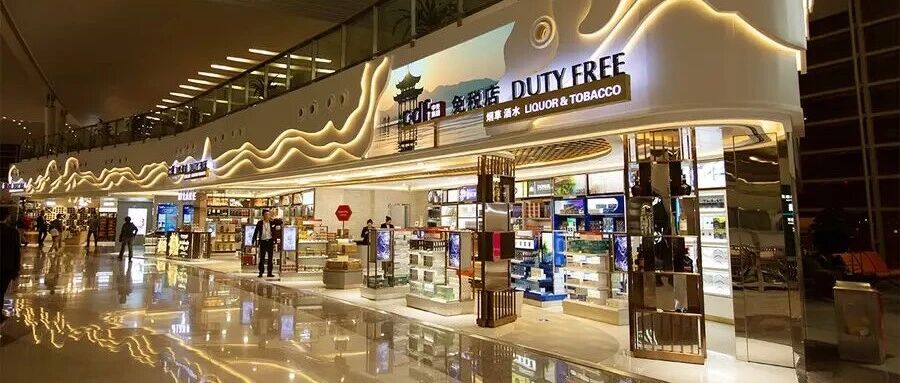
Core Viewpoint - The article highlights the competitive struggle within the Chinese duty-free industry, particularly focusing on China Tourism Group Duty Free Corporation (China Duty Free) and its subsidiary, Sunrise Duty Free, amid declining revenues and profits in the sector [1][2]. Group 1: Industry Dynamics - A rare internal conflict occurred in the Chinese duty-free industry, showcasing the pressures faced by leading companies as they compete for market share [2]. - China Duty Free's aggressive tactics to secure the operating rights for duty-free shops at Shanghai airports reflect deeper structural issues within the industry, including changing consumer preferences and increased competition from local brands [6][8]. - The duty-free market in China was valued at 716 billion yuan last year, but saturation of airport and railway duty-free resources has led companies to explore urban duty-free stores in first-tier cities [8]. Group 2: Company Performance - China Duty Free's revenue and net profit have both declined, with a projected revenue drop of 16% to 56.5 billion yuan and a net profit decrease of 36% to 4.32 billion yuan in 2024 [6][7]. - In the first three quarters of the year, the company reported a 7.34% year-on-year revenue decline to 39.9 billion yuan, with net profit down 22% to 3 billion yuan [7]. - Despite securing the operating rights for two major airports, the market remains skeptical about the company's ability to reverse its declining sales and profits [5][8]. Group 3: Market Position and Future Outlook - China Duty Free holds a dominant market share of 78.7% in the Chinese duty-free and travel retail market, significantly ahead of its closest competitor, which has a 7.1% share [9]. - The recent establishment of Hainan as a free trade zone may provide new growth opportunities for the company, potentially revitalizing its core market performance [9]. - Analysts maintain a cautiously optimistic outlook, with expectations that the revenue decline may narrow in the fourth quarter, and the company could return to profit growth [9].


唯品会上涨2.32%,报16.065美元/股,总市值82.72亿美元
Jin Rong Jie· 2025-08-13 13:47
Core Viewpoint - Vipshop Holdings Limited (VIPS) is experiencing a decline in revenue and net profit, with a significant drop in both metrics as of March 31, 2025 [1][2]. Financial Performance - As of March 31, 2025, Vipshop reported total revenue of 26.269 billion RMB, a year-over-year decrease of 4.98% [1]. - The company's net profit attributable to shareholders was 1.943 billion RMB, reflecting a year-over-year decline of 16.14% [1]. Company Overview - Vipshop is a leading online discount retailer in China, primarily offering high-quality branded products through its online platform [2]. - The company was founded in August 2010 and has established a fast sales model that includes a wide range of product categories such as clothing, shoes, cosmetics, and food [2]. - Vipshop is recognized as the largest online discount retailer globally and the third-largest e-commerce platform in China [2].

43国加入免签“朋友圈”,“中国游”“中国购”再升温
Bei Jing Ri Bao Ke Hu Duan· 2025-06-06 01:32
Core Insights - The influx of foreign tourists to China is significantly increasing due to visa-free and tax refund policies, with a 59.4% year-on-year growth in foreign visitors during the Dragon Boat Festival holiday [1] - The challenge for the tourism industry is to convert this influx of visitors into sustained economic benefits [1] Visa Policy Expansion - As of June 1, China has expanded its visa-free policy to include countries in Latin America and the Caribbean, bringing the total number of countries eligible for this policy to 43 [3] - Travelers from Brazil and Argentina have expressed positive experiences regarding the visa-free entry, highlighting the convenience and potential for increased business travel [3] Tourism Product Development - Travel agencies are actively developing new products to cater to the growing South American inbound tourism market, focusing on unique routes and experiences in Shanghai and the Yangtze River Delta [4] - The introduction of new travel routes aims to enhance the overall visitor experience and encourage longer stays [4] Shopping Trends - The trend of "China shopping" is gaining momentum, with foreign tourists increasingly purchasing high-quality and cost-effective Chinese products during their visits [6] - Tourists are sharing their shopping experiences on social media, emphasizing the affordability of products compared to their home countries [6][7] Consumption Potential - The Ministry of Commerce has indicated that inbound tourism consumption could represent about 0.5% of China's GDP in 2024, compared to 1% to 3% in other major countries, indicating significant growth potential [10] - Various regions are exploring ways to convert tourist flow into consumer spending, with initiatives to enhance tourism services and promote unique travel experiences [10] Addressing Challenges - There are existing challenges in less popular tourist cities, such as language barriers and insufficient payment options for foreign visitors, which need to be addressed to fully capitalize on inbound tourism [10] - Industry professionals suggest improving infrastructure and service capabilities to enhance the overall experience for foreign tourists [10] Innovation in Tourism Products - The tourism industry is encouraged to innovate and design new products that reflect local culture and history, enhancing the appeal of travel experiences for foreign visitors [11] - The successful implementation of visa-free policies sets the stage for the tourism industry to develop engaging and culturally rich offerings [11]