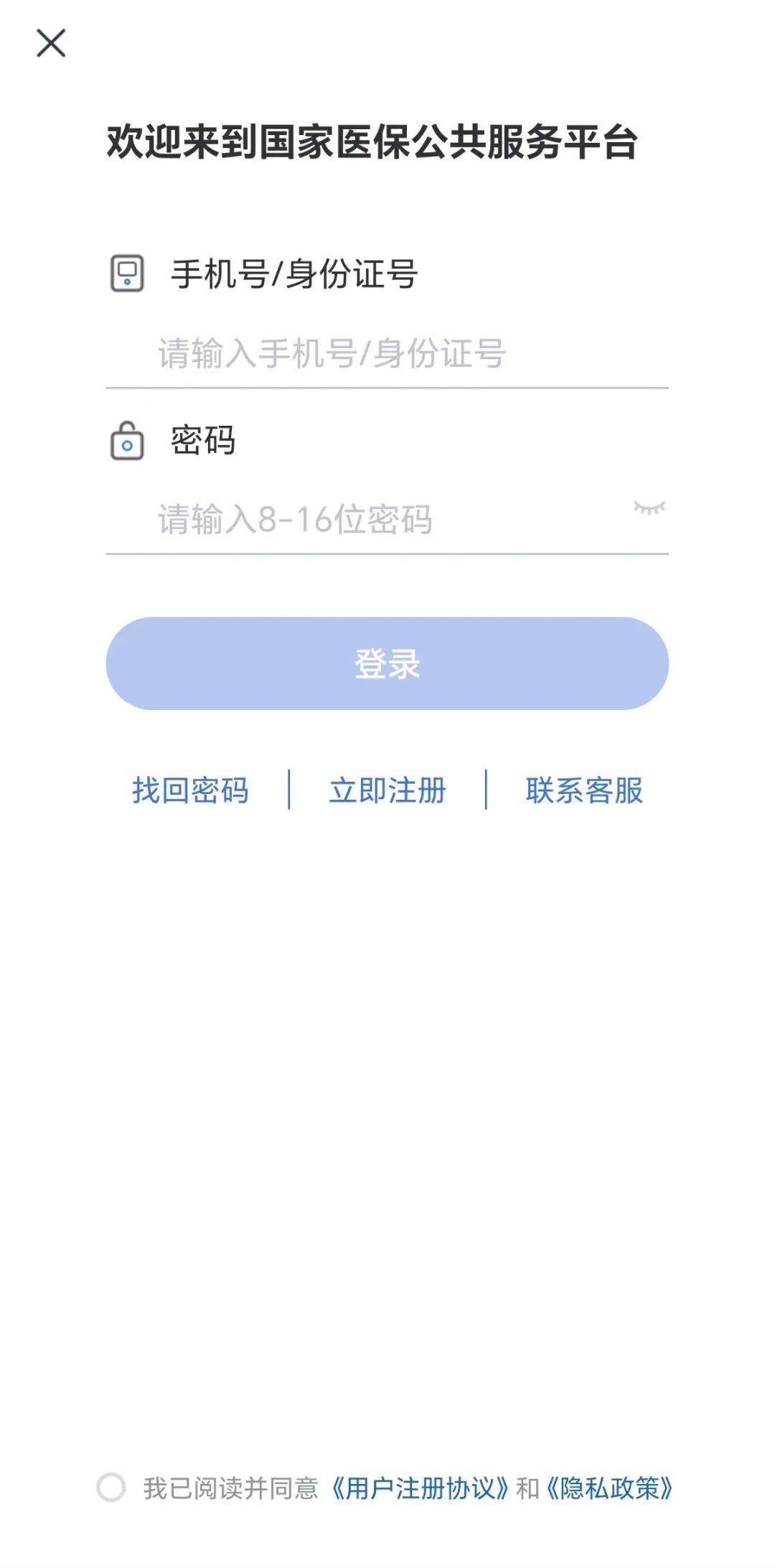
国家医保服务平台App

Search documents
医保个人账户,如何跨省给家人使用?(含详细使用步骤)
证券时报· 2026-01-11 04:07
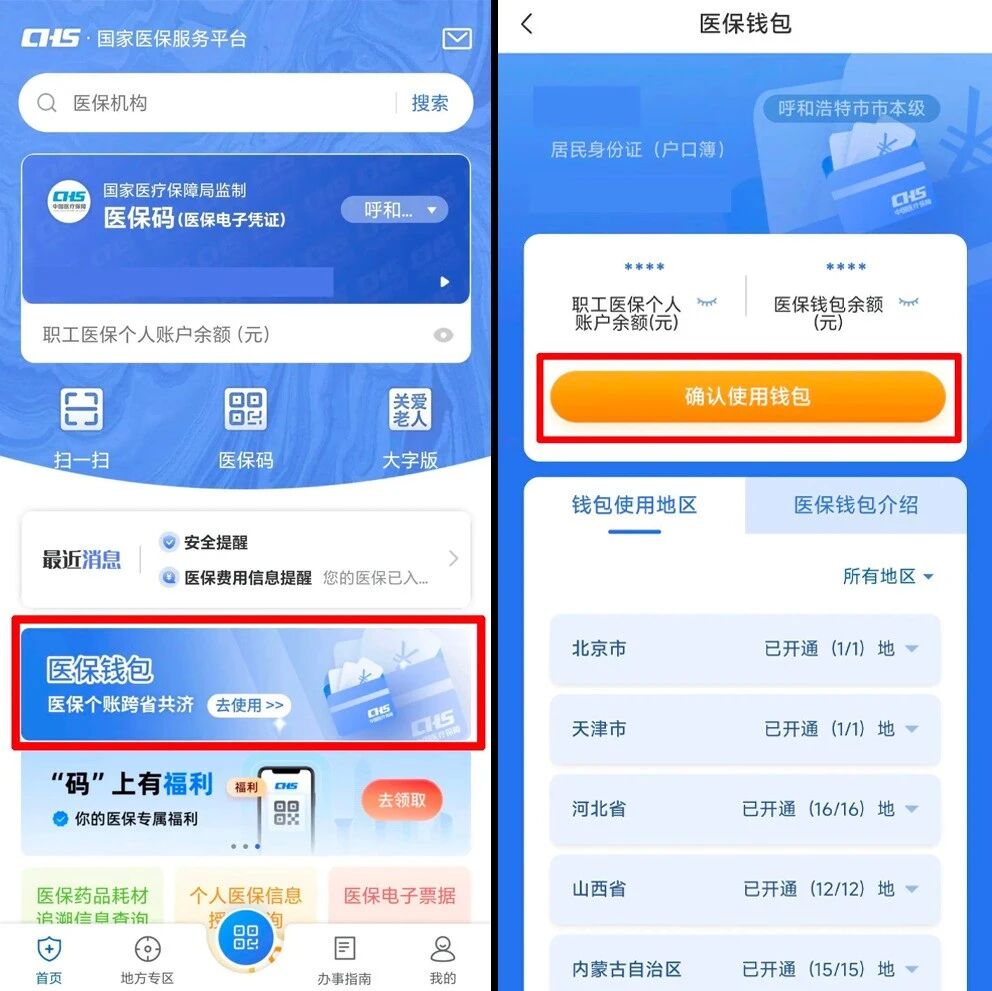
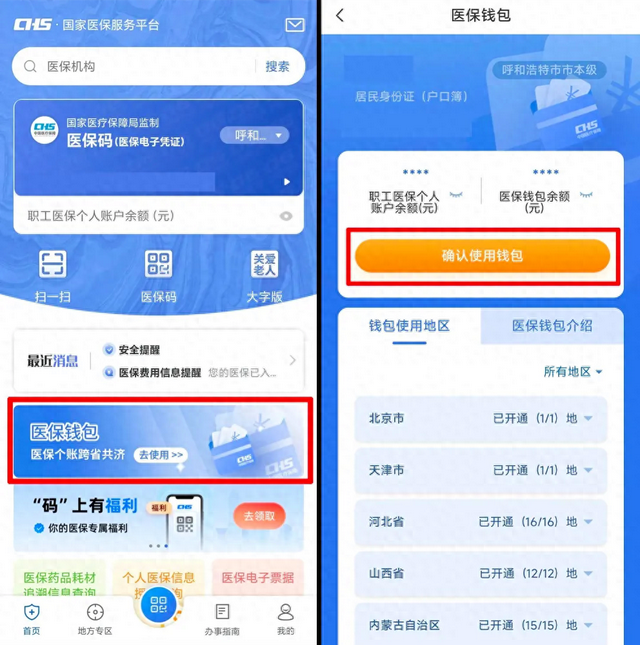
Core Viewpoint - The article discusses the recent notification from the National Medical Insurance Administration and the Ministry of Finance regarding the cross-province mutual aid of personal accounts in employee basic medical insurance, allowing insured individuals to use their personal account funds for family members in different provinces. Group 1: Cross-Province Mutual Aid - Cross-province mutual aid allows insured individuals to use their personal account funds for family members in different provinces, which is particularly beneficial for those working away from home [1]. - The notification expands the scope of mutual aid to include not only direct relatives like spouses, parents, and children but also siblings, grandparents, grandchildren, and other close relatives [2]. Group 2: Eligible Expenses - Funds from the employee medical insurance personal account can be used to cover personal medical expenses incurred by close relatives at designated medical institutions, as well as for purchasing approved medications and medical supplies at designated retail pharmacies [3]. Group 3: Using the Medical Insurance Wallet - The mutual aid process is facilitated through the Medical Insurance Wallet, which is linked to the individual's medical insurance code. Both the donor and recipient must activate their Medical Insurance Wallets to enable fund transfers [4]. - The activation process involves logging into the National Medical Insurance Service Platform App, confirming usage, and completing the necessary steps to open the wallet [5]. Group 4: Transfer Process and Limitations - To transfer funds, the donor must provide the recipient's basic information and submit a transfer request. Each Medical Insurance Wallet can process a maximum of three transfers per day, with a limit of 2000 yuan per transfer [8]. - After a successful transfer, the recipient can check their wallet balance and transaction history [8]. Group 5: Reimbursement and Policy Implications - The mutual aid does not affect the reimbursement qualifications, benefits, or policies of the recipient's medical insurance. For instance, if an employee's account funds are used by a parent under the resident insurance scheme, the parent's reimbursement terms remain unchanged [9]. - It is emphasized that the personal account funds can be shared, but the medical insurance cards cannot be shared, meaning both parties must use their respective cards to access benefits [10].

医保个人账户,如何跨省给家人使用?详细步骤来了
Xin Lang Cai Jing· 2026-01-11 01:44
Core Viewpoint - The National Healthcare Security Administration and the Ministry of Finance have issued a notice to enhance the cross-provincial mutual aid for employee basic medical insurance personal accounts, allowing insured individuals to use their personal account funds for family members in different provinces [1] Group 1: Cross-Provincial Mutual Aid - Cross-provincial mutual aid allows insured individuals to use their personal account funds for family members, such as those working away from home, enabling them to cover medical expenses for relatives in their hometown [1] Group 2: Eligible Recipients - The notice specifies that eligible recipients for mutual aid include not only direct relatives like spouses, parents, and children but also siblings, grandparents, grandchildren, and other close relatives, allowing one person to establish mutual aid relationships with multiple individuals [2] Group 3: Eligible Expenses - Funds from the employee medical insurance personal account can be used to pay for personal medical expenses incurred by close relatives at designated medical institutions, purchase approved medications and medical supplies at designated retail pharmacies, and cover personal contributions to urban and rural resident basic medical insurance and long-term care insurance [3] Group 4: Fund Transfer Process - The transfer of personal account funds to eligible recipients is facilitated through the Medical Insurance Wallet, which is linked to the individual's medical insurance code. Both the donor and recipient must activate their Medical Insurance Wallets to enable fund transfers [4] Group 5: Transfer Limitations - Each Medical Insurance Wallet account is limited to three transfers per day, with a maximum transfer amount of 2000 yuan per transaction. If the transfer exceeds these limits, additional documentation may be required [9] Group 6: Reimbursement Implications - Mutual aid from personal accounts does not affect the reimbursement qualifications, benefits, or policies of the recipient. For instance, if an employee uses their personal account funds to assist a parent enrolled in resident insurance, the parent's reimbursement terms remain unchanged and are based on their own insurance coverage [9]
医保个人账户,如何跨省给家人使用?(含详细使用步骤)
Yang Shi Xin Wen Ke Hu Duan· 2026-01-11 01:13
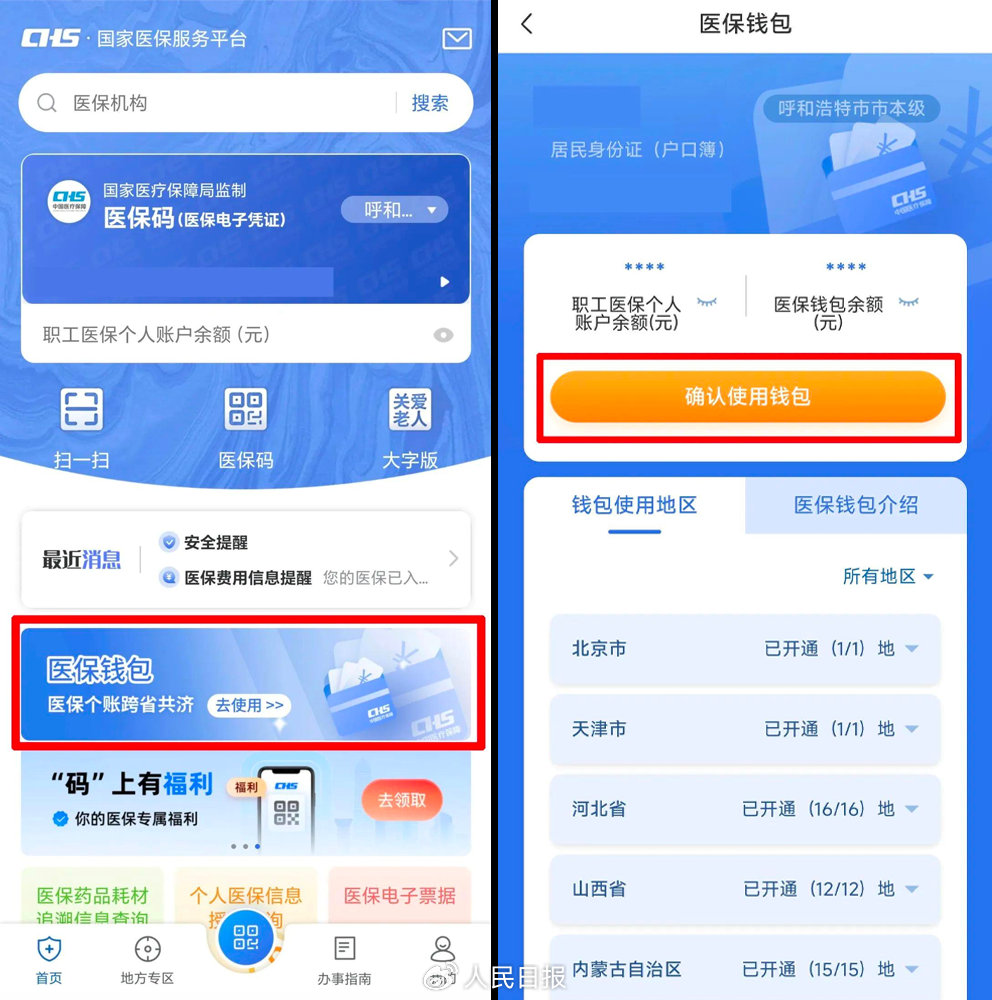
Core Viewpoint - The National Healthcare Security Administration and the Ministry of Finance have issued a notice to enhance the cross-provincial mutual aid for employee basic medical insurance personal accounts, allowing insured individuals to use their personal account funds for family members in different provinces [1] Group 1: Cross-Provincial Mutual Aid - Cross-provincial mutual aid allows insured individuals to use their personal account funds for family members in different provinces, which is particularly beneficial for those working away from home [1] - The notice specifies that mutual aid can extend to not only direct relatives like spouses, parents, and children but also to siblings, grandparents, grandchildren, and other close relatives, allowing one person to establish mutual aid relationships with multiple individuals [2] Group 2: Eligible Expenditures - Funds from the employee medical insurance personal account can be used to cover personal medical expenses incurred by close relatives at designated medical institutions, as well as for purchasing approved medications, medical devices, and supplies at designated retail pharmacies [3] - Additionally, these funds can be utilized for personal contributions to urban and rural resident basic medical insurance and long-term care insurance [3] Group 3: Fund Transfer Process - The transfer of personal account funds to family members is facilitated through the Medical Insurance Wallet, which is linked to the individual's medical insurance code. Both the donor and recipient must activate their Medical Insurance Wallets to enable this feature [4] - The process involves logging into the National Medical Insurance Service Platform App, confirming the use of the wallet, and submitting the necessary information for the transfer [6][10] Group 4: Transfer Limitations and Conditions - Each Medical Insurance Wallet account is limited to three transfers per day, with a maximum transfer amount of 2000 yuan per transaction. Exceeding these limits requires additional documentation [8][10] - It is important to note that mutual aid only involves sharing funds and does not affect the eligibility, benefits, or policies related to medical insurance reimbursement for the recipient [10]
医保个人账户,如何跨省给家人使用?一文读懂
Xin Lang Cai Jing· 2026-01-10 09:09
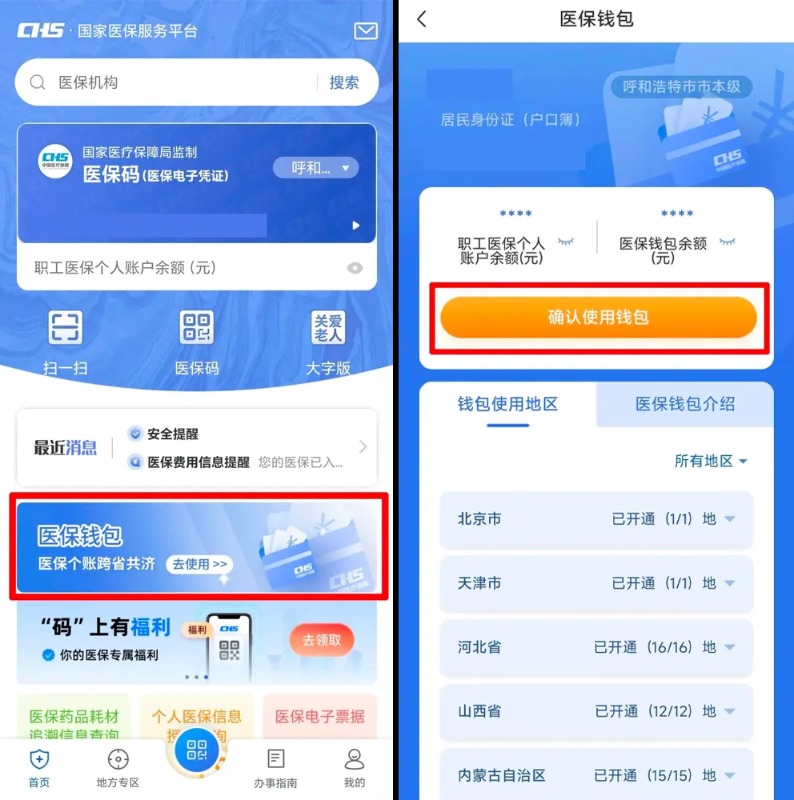
Core Viewpoint - The National Healthcare Security Administration and the Ministry of Finance have issued a notice to enhance the cross-provincial mutual aid for personal accounts in employee basic medical insurance, allowing insured individuals to use their personal account funds for family members across provinces [1] Group 1: Cross-Provincial Mutual Aid - Cross-provincial mutual aid allows insured individuals to use their personal account funds for family members in different provinces, which is particularly beneficial for those working away from home [1] - Eligible mutual aid recipients include not only direct relatives such as spouses, parents, and children but also siblings, grandparents, grandchildren, and other close relatives, with one person able to establish mutual aid relationships with multiple individuals [1] Group 2: Eligible Expenditures - Funds from the employee medical insurance personal account can be used to cover personal medical expenses incurred by close relatives at designated medical institutions, as well as for purchasing approved medications, medical devices, and personal contributions to urban and rural resident basic medical insurance and long-term care insurance [1] Group 3: Usage of Medical Insurance Wallet - The mutual aid process is facilitated through the Medical Insurance Wallet, which is linked to the personal medical insurance code, requiring both the mutual aid provider and recipient to activate their Medical Insurance Wallets [2] - To activate the Medical Insurance Wallet, users must log into the National Medical Insurance Service Platform App and follow the prompts to confirm usage [2][4] Group 4: Transfer Process - To transfer funds, the mutual aid provider must fill in the recipient's basic information and submit the request, with the recipient also needing to have an activated Medical Insurance Wallet [7] - Each Medical Insurance Wallet account is limited to three transfers per day, with each transfer capped at 2,000 yuan [8] Group 5: Reimbursement Implications - The mutual aid from personal accounts does not affect the eligibility, benefits, or policies related to medical insurance reimbursement; the reimbursement terms for the recipient will remain based on their local resident medical insurance [9] - The mutual aid does not allow for the sharing of medical insurance cards or benefits, meaning that while funds can be shared, the insurance cards must be used independently [9]
线上医保购药小贴士
Xin Lang Cai Jing· 2026-01-05 01:12
Group 1 - The article provides a guide on how to activate and use the online medical insurance (医保) for purchasing medications, emphasizing the importance of activating the electronic medical insurance certificate [2][3]. - It outlines the steps for online ordering and payment using medical insurance, highlighting the necessity to select products marked with "医保" or "医保支付" to ensure eligibility for insurance payment [4]. - The article stresses the implementation of a drug traceability code system to ensure the safety and compliance of purchased medications, with a requirement for all sold drugs to have traceability codes by January 1, 2026 [5]. Group 2 - The online medical insurance purchasing service is gradually being promoted across various regions, and users are advised to check local announcements for specific platform support [6]. - The payment for online medical purchases primarily utilizes the balance in personal medical insurance accounts, generally applicable for purchasing over-the-counter (OTC) medications listed in the medical insurance directory [6].

福建医保上新 省外刷社保卡购药须“授权”
Xin Lang Cai Jing· 2025-12-30 11:04
Core Viewpoint - The Fujian province has implemented a new "cross-province medical purchase restriction" feature to enhance the security of insured individuals' medical accounts, requiring an authorization setup for using social security cards in out-of-province pharmacies [1][2]. Group 1: Authorization Setup - Insured individuals can enable the social security card for out-of-province medication purchases without visiting a physical service hall, using online channels such as the "Minzhengtong" app or WeChat/Alipay [3]. - The setup process involves searching for "card purchase settings" in the app, accessing the relevant page, and enabling the "cross-province" configuration switch [3]. Group 2: Direct Settlement for Chronic Diseases - To achieve direct settlement for outpatient chronic special diseases across provinces, insured individuals must complete three steps: qualification recognition for chronic disease treatment at their insured location, filing for cross-province medical treatment, and selecting a designated medical institution that offers direct settlement services [3]. - Insured individuals can handle the cross-province medical treatment filing either at their local medical insurance agency or through online platforms like the "National Medical Insurance Service Platform" app [3].
异地居住医疗救助对象的医保待遇如何保障?
Xin Hua She· 2025-11-26 05:39
Core Viewpoint - The article emphasizes the increasing attention on medical insurance rights and protections, particularly in the context of cross-regional medical treatment, highlighting the need for better understanding of existing policies [1] Group 1: Policy Overview - Current policies allow insured individuals, including those receiving medical assistance, to enjoy direct settlement services for cross-regional medical treatment after completing the necessary registration [3] - The medical expenses for inpatient care, general outpatient services, and outpatient chronic special diseases are subject to the payment scope and regulations of the treatment location, while adhering to the insurance fund's standards and policies of the insured location [3] Group 2: Registration Process - Registration for cross-regional medical treatment can be completed through both online and offline channels [4] - Online registration is facilitated through various platforms, including the "National Medical Insurance Bureau" WeChat account, the National Medical Service Platform App, and Alipay [4] - Local exclusive channels are available in different provinces, such as the "E-Hubei" App in Hubei and "Jiangxi Service App" in Jiangxi, allowing users to complete the registration process [4] Group 3: Offline Registration - Offline registration requires individuals to visit local medical insurance service centers with necessary documents, including identification and residency proof [5] - After registration, insured individuals can access medical services at designated healthcare institutions in their residence area without needing to enroll in local basic medical insurance [5]
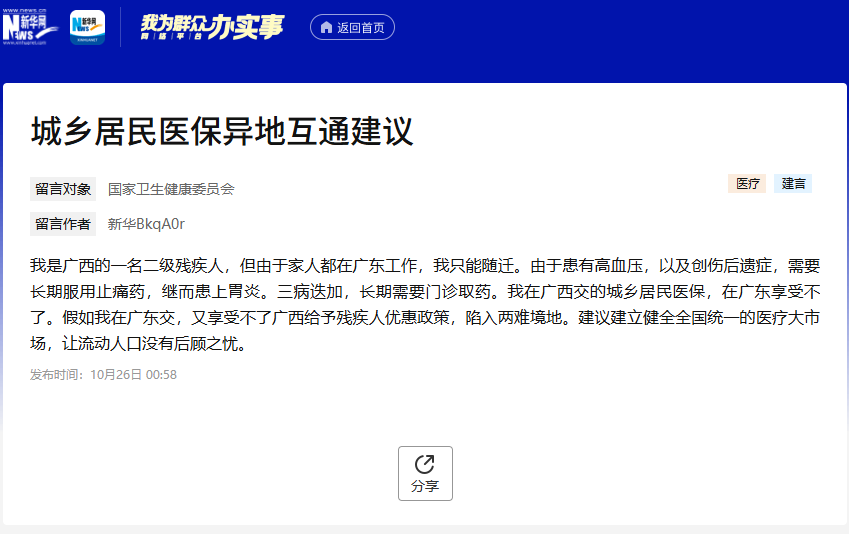
我为群众办实事|异地居住医疗救助对象的医保待遇如何保障?
Xin Hua Wang· 2025-11-26 05:29
Core Viewpoint - The article emphasizes the increasing attention on medical insurance rights and protections, particularly regarding the policies for cross-regional medical treatment, highlighting the need for better understanding of these policies among the public [1]. Group 1: Policy Overview - Current policies allow insured individuals residing long-term in different regions to enjoy direct settlement services for cross-regional medical treatment after completing the necessary registration [3]. - The medical expenses for inpatient care, outpatient services, and chronic disease treatments are subject to the payment scope and regulations of the treatment location, while adhering to the insurance policies of the insured's home region [3]. Group 2: Registration Process - Registration for cross-regional medical treatment can be completed through both online and offline channels [4]. - Online registration is facilitated through various platforms, including the "National Medical Insurance Bureau" WeChat account, the National Medical Service Platform App, and local apps specific to provinces [5]. - Offline registration requires individuals to visit local medical insurance offices or service centers with necessary documents, including identification and residency proof [6]. Group 3: Benefits and Conditions - After completing the registration, insured individuals can receive medical services or purchase medications at designated medical institutions in their residing area using their medical insurance cards or electronic codes, without needing to enroll in local basic medical insurance [7]. - Medical assistance recipients can continue to enjoy benefits from their home region's insurance policies, such as government subsidies and special treatments, without losing their eligibility for these benefits [7].
就医购药、参保缴费都可用 转存收藏医保钱包实用指南
Yang Shi Xin Wen· 2025-09-22 01:58
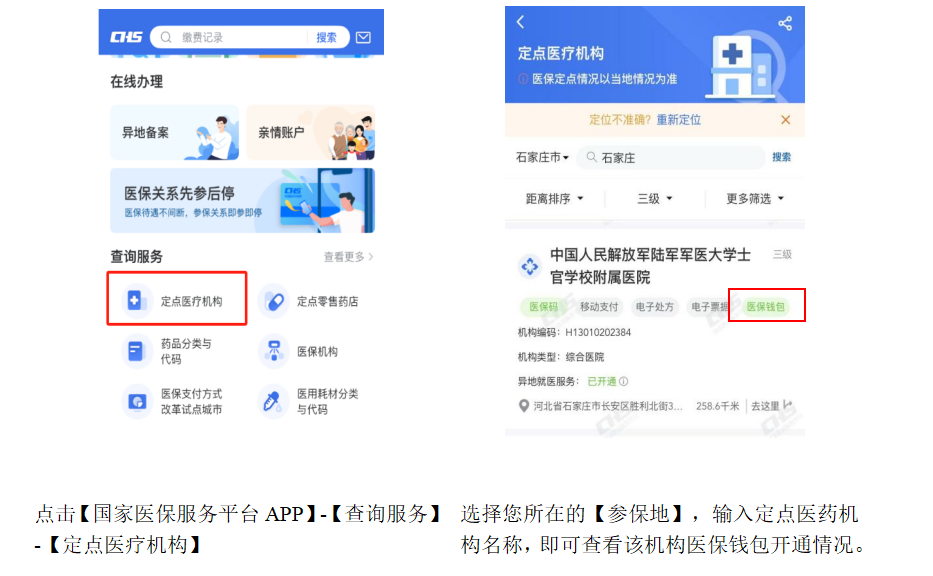
Core Concept - The "Medical Insurance Wallet" is a new feature that allows for the pooling of individual medical insurance accounts among close relatives, facilitating medical expense payments and insurance contributions through a national medical insurance service platform app [2][3]. Group 1: Functionality of the Medical Insurance Wallet - The Medical Insurance Wallet enables insured individuals to transfer funds from their personal medical accounts to the wallets of close relatives [3]. - It can be used for settling medical expenses at designated medical institutions and pharmacies, with over 170,000 medical institutions and 100,000 retail pharmacies nationwide currently supporting this feature [4]. - Residents can also use the funds in their Medical Insurance Wallet for insurance premium payments [7]. Group 2: Availability and Usage - The Medical Insurance Wallet is available in 30 provinces, municipalities, and regions, with the exception of Guangdong, which has not yet launched the service [8]. - As of now, over 1.5 million insured individuals have activated and used the Medical Insurance Wallet, successfully transferring funds in 305,000 transactions, amounting to over 200 million yuan [9]. - Users are advised to check the local availability of the Medical Insurance Wallet before attempting to use it, as some areas may still be in the process of activation [8]. Group 3: Additional Features - The Medical Insurance Wallet allows for a change of usage location if the wrong insurance area is selected, with this feature currently available in 15 provinces [14][15]. - A "proxy activation" feature is available for those who may not be able to use smartphones, allowing family members to activate the wallet on behalf of others [16].
医保账户余额能转账给家人了!但使用前一定要注意
Sou Hu Cai Jing· 2025-08-28 05:20
Group 1 - The core concept of the medical insurance wallet is that it allows insured individuals to transfer funds from their personal medical accounts to the wallets of close relatives for medical expenses and medication purchases, facilitating inter-provincial cooperation in using personal account funds [1][2][3] - Previously, personal medical accounts only allowed for intra-provincial cooperation, but now, if the insured participates in employee medical insurance and has surplus funds, they can transfer funds to family members in different provinces as long as those family members are enrolled in basic medical insurance locally [1][2][3] - The process to open a medical insurance wallet involves logging into the National Medical Insurance Service Platform App and confirming the use of the wallet, which is available in all regions [4][5][6] Group 2 - The wallet transfer application requires the sender to fill in the recipient's basic information and submit the request, with a limit of three transfers per day, each not exceeding 2000 yuan, and transfers cannot be made between 22:00 and 06:00 [29][15][18] - If the recipient's wallet is not opened, the transfer cannot be completed, and any unclaimed funds will be returned to the sender's account by 06:00 the next day [29][31] - The medical insurance reimbursement system operates under a directory management approach, where only expenses listed in the directory are eligible for reimbursement, and the directory is subject to annual adjustments by national and provincial authorities [32][33][34]