
消费医疗

Search documents
普门科技20260313
2026-03-16 02:20
Summary of the Conference Call for Pumen Technology Company Overview - **Company**: Pumen Technology - **Industry**: In Vitro Diagnostics (IVD) and Consumer Health Key Points Industry and Market Dynamics - Domestic IVD business policy impacts are expected to clear up, with a market turnaround anticipated in the second half of 2026 [2][5] - The IVD industry is projected to see growth in testing volumes due to aging population trends, despite ongoing price pressures [6] Product Lines and Growth Strategies - **Core Product Lines**: CRP, Glycated Hemoglobin, and Electrochemiluminescence are expected to stabilize and recover through grassroots screening and high-end replacements [2] - **Overseas Business**: Targeting a growth rate of ≥20% annually, with overseas revenue now exceeding 40% of total income [2][7] - **Consumer Health**: Focus on skin aesthetics and ToC health, with expectations for over 50% growth in the aesthetics segment by 2026 [2][5] Financial Performance and Projections - The company aims to achieve a sales target of over 100 million RMB in the ToC business by 2026, with a doubling of revenue expected in 2025 [2][4] - The consumer health business is projected to turn profitable in 2025 after significant growth [16] Strategic Initiatives - **Cost Management**: Emphasis on self-sourcing core materials to alleviate cost pressures due to healthcare cost control [2][5] - **International Expansion**: Establishing subsidiaries in key markets (e.g., Russia, India, Mexico) to mitigate risks associated with agency limitations and payment issues [2][7][10] Technological Integration - AI technologies are deeply integrated into business lines, with projects in AI interpretation of chromatograms and thrombus prevention systems [3][17] - The company is exploring brain-machine interface applications in home rehabilitation [3][17] Regulatory and Market Challenges - Anticipated regulatory changes in the domestic IVD market, including payment reforms and collection of testing packages, are expected to impact growth in 2025 [5] - The company is cautious about the medical aesthetics market, which is currently undergoing adjustments due to regulatory changes [13] Future Product Development - New product lines in endoscopy and aesthetics are in the registration phase, with expectations for market entry in 1-2 years [12] - The company is focusing on high-value consumables in its aesthetics product line, with significant potential for products like ultrasound knives and gold microneedles [14] Sales and Distribution Strategy - The company employs a mixed sales strategy, combining direct sales for large clients with authorized distribution for others to maintain market stability [14] Online Business Strategy - The consumer health business has seen rapid growth, with a focus on effective product development rather than gimmicky offerings [15][16] - The online business is expected to achieve profitability in 2025, with clear profit targets set for 2026 [16] Conclusion - Pumen Technology is strategically positioned for growth in both domestic and international markets, with a strong focus on innovation, cost management, and regulatory compliance. The integration of AI and a robust product pipeline in consumer health and aesthetics are key components of its future success.

可孚医疗(301087):2025年业绩符合预期,增长新动能充足
Huaan Securities· 2026-03-12 10:41
Investment Rating - The investment rating for the company is "Buy" (maintained) [1] Core Insights - The company reported a revenue of 3.387 billion yuan for 2025, representing a year-on-year growth of 13.56%. The net profit attributable to the parent company was 372 million yuan, up 19.20% year-on-year, while the net profit excluding non-recurring items was 298 million yuan, an increase of 8.33% [3][4] - In Q4 2025, the company achieved a revenue of 990 million yuan, marking a year-on-year growth of 34.79%, with a net profit of 111 million yuan, up 86.17% year-on-year [3][4] - The company is accelerating its merger and acquisition strategy, having acquired Shanghai Huazhou and Ximaner, which enhances its overseas market expansion [5] - The company has entered into a strategic partnership with Philips, gaining brand authorization for seven product categories, which is expected to contribute to revenue growth starting in the second half of 2026 [6] Financial Performance Summary - The company expects revenues for 2026, 2027, and 2028 to be 4.132 billion yuan, 5.132 billion yuan, and 6.286 billion yuan, respectively, with growth rates of 22.0%, 24.2%, and 22.5% [8] - The net profit attributable to the parent company is projected to be 466 million yuan, 590 million yuan, and 763 million yuan for 2026, 2027, and 2028, respectively, with growth rates of 25.5%, 26.4%, and 29.3% [8] - The company's gross margin is expected to improve from 53.2% in 2025 to 55.8% in 2028 [10] - The earnings per share (EPS) is forecasted to be 2.23 yuan, 2.82 yuan, and 3.65 yuan for 2026, 2027, and 2028, respectively [10]
微泰医疗-B(02235.HK):从国产替代到全球输出,CGM先锋的盈利拐点已至
Ge Long Hui· 2026-02-27 10:58
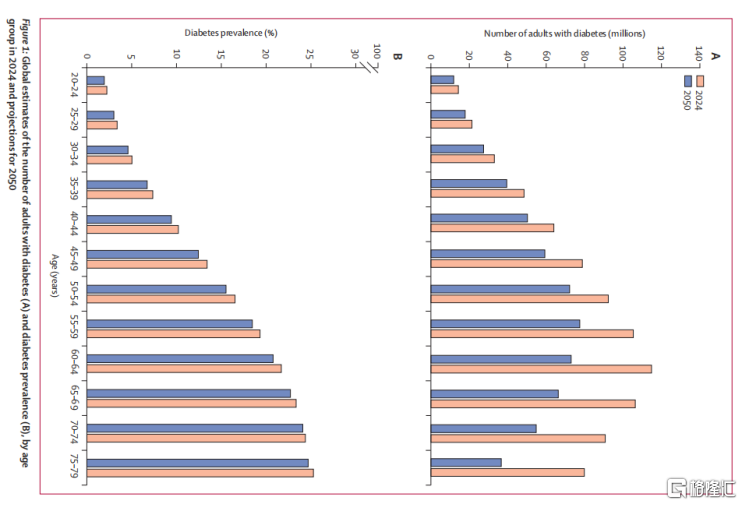
Core Viewpoint - The Hong Kong and A-share markets are experiencing positive trends, with the medical device sector showing signs of recovery, particularly in the context of policy optimization and inventory reduction. MicroTech Medical (02235.HK) has reported significant revenue growth and a return to profitability, driven by strong CGM sales, overseas market expansion, and improved operational efficiency [1][12]. Group 1: Market Trends and Opportunities - The medical device sector is benefiting from favorable market conditions, with a bullish outlook for the industry as a whole [1]. - The global diabetes patient population is projected to exceed 589 million in 2024, with China leading in numbers, indicating a growing market for diabetes management solutions [4]. - Continuous Glucose Monitoring (CGM) technology is transforming blood sugar management, offering real-time data and improving patient experiences compared to traditional methods [5]. Group 2: Company Performance and Growth - MicroTech Medical's revenue for 2025 is expected to reach at least 650 million yuan, representing an approximate 88.1% year-on-year increase, with a net profit of over 38 million yuan [12]. - The company has seen robust growth in its core CGM product, with significant international market expansion contributing to its revenue increase [12]. - The reduction in sales and management expenses has improved profitability, marking a transition from a strategic loss phase to a profit-driven growth stage [12]. Group 3: Strategic Advantages - MicroTech Medical is uniquely positioned with a comprehensive product lineup, including both a patch insulin pump and a real-time CGM, providing a full spectrum solution for diabetes management [16]. - The company is exploring AI applications in CGM, enhancing personalized health management services through data analysis [17]. - The increasing share of overseas revenue demonstrates the company's global market capabilities, with potential for further growth in emerging markets [18]. Group 4: Market Valuation and Future Outlook - The recent performance forecast is expected to catalyze a revaluation of MicroTech Medical's stock, supported by its unique product offerings and global growth potential [20]. - Leading brokerages have expressed optimistic views on the company's future, with target prices indicating significant undervaluation compared to global peers [20].

医疗服务行业周报2.2-2.6:互联网医疗首诊破冰,关注专科连锁龙头-20260208
Xiangcai Securities· 2026-02-08 08:24
Investment Rating - The report maintains a "Buy" rating for the medical services industry, suggesting a positive outlook for investment opportunities in this sector [10][64]. Core Insights - The medical services sector has shown resilience, with a recent increase in the sector's PE ratio to 34.43X and PB ratio to 3.49X, indicating a positive trend in valuation metrics [4][29]. - The approval of internet medical first diagnosis trials in Beijing marks a significant regulatory breakthrough, potentially accelerating the online medical service process and providing new market opportunities for private medical institutions [5][62][63]. - The report highlights the importance of digital regulation and standardization in enhancing service capabilities for private medical institutions, particularly in consumer healthcare sectors like pediatrics and dermatology [5][62]. Summary by Sections Industry Performance - The pharmaceutical and biological sector increased by 0.14%, ranking 15th among 31 primary industries, outperforming the Shanghai Composite Index by 1.47 percentage points [2][12]. - The medical services sub-sector reported a 1.31% increase, closing at 6827.17 points, with a year-to-date performance of 41.41% [24][27]. Company Performance - Top-performing companies in the medical services sector include Meidisi (+18.0%), Tongce Medical (+8.1%), and Nuosige (+5.7%), while underperformers include Haoyuan Pharmaceutical (-6.2%) and Baicheng Pharmaceutical (-4.5%) [3][27]. Valuation Metrics - The medical services sector's PE ratio has increased by 0.56X from the previous week, while the PB ratio has risen by 0.06X, indicating a strengthening in market confidence [4][29]. Investment Recommendations - The report suggests focusing on high-growth areas such as ADC CDMO and peptide CDMO in the pharmaceutical outsourcing sector, as well as companies like WuXi AppTec and Haoyuan Pharmaceutical [10][64]. - It also recommends monitoring private medical service providers with compliance experience, such as Aier Eye Hospital, as they are expected to benefit from the evolving regulatory landscape [5][64].




时代天使20260203
2026-02-04 02:27
Summary of the Conference Call on the Invisible Orthodontics Industry Industry Overview - The conference focused on the **invisible orthodontics industry**, particularly in the context of the Chinese market and the competitive landscape involving key players like **Angelalign**, **Invisalign**, and **Zhengya** [2][3]. Key Points and Arguments Market Growth and Trends - Initial expectations for the invisible orthodontics market in China were optimistic, with anticipated annual growth rates of at least **30%**. However, actual growth over the past two to three years has been slow, ranging from **0% to 10%**, with some years experiencing negative growth [2][3]. - Factors contributing to this slowdown include: - **Macroeconomic conditions** affecting consumer spending [2]. - **Increased competition** and **price reductions** due to collective procurement initiatives [3]. Competitive Landscape - The market is witnessing a **consolidation phase**, with smaller players exiting the market. For instance, a company named **Meilike** ceased operations, transferring its remaining cases to Angelalign and Zhengya, indicating a market cleanup [3]. - The top three companies dominate the market, with their combined market share exceeding **90%**. The ranking is as follows: 1. **Angelalign** 2. **Zhengya** 3. **Invisalign** [4]. Market Share Dynamics - **Invisalign's** market share has been declining, primarily due to competitive pressures and collective procurement initiatives. It was noted that **Invisalign** abandoned a bid during a collective procurement in **October 2022**, resulting in a loss of public hospital market share [4][5]. - Projections for market share in **2025** estimate: - Angelalign: **35%** - Zhengya: **25-30%** - Invisalign: **20%** [5]. Future Growth Projections - The overall market is expected to grow by **5-10%** in the coming years, driven by: - Increased adoption of invisible orthodontics among children and teenagers. - A shift from traditional braces to invisible aligners among adults due to lower prices [6]. - The **2026 collective procurement** is a critical factor that could impact pricing and market dynamics [7]. International Market Insights - Angelalign's international sales are projected to grow significantly, with estimates of **25,000 to 27,000 cases** in **2025**, up from **14,000** in **2024** [8]. - The international market has historically been dominated by **Invisalign**, but Angelalign is gaining traction due to its competitive pricing and service offerings [9][10]. Profitability and Cost Structure - The company's gross margin in China has been declining due to price competition, while margins in international markets are expected to improve as they focus on mid-to-high-end products [13][14]. - The anticipated gross margin in international markets is expected to be higher than in China due to better pricing strategies and product positioning [14]. Legal and Patent Issues - Angelalign is currently facing patent infringement lawsuits from **Invisalign** in multiple regions, including the U.S. and Europe. However, the company denies any infringement and is actively defending itself [15][16]. - Historical data suggests that such lawsuits have a low success rate in preventing market entry for competitors [16]. Additional Important Insights - The conference highlighted the importance of monitoring the **2026 collective procurement** and its potential impact on pricing strategies [7]. - The competitive landscape is shifting, with Angelalign and Zhengya expected to continue gaining market share at the expense of Invisalign [17]. - The overall sentiment is cautiously optimistic, with expectations of gradual recovery and growth in the invisible orthodontics market as economic conditions improve [17].
中欧基金葛兰:一季度医药板块有望延续结构性行情,看好创新药械产业链出海、消费医疗等投资机会
Sou Hu Cai Jing· 2026-01-23 06:53
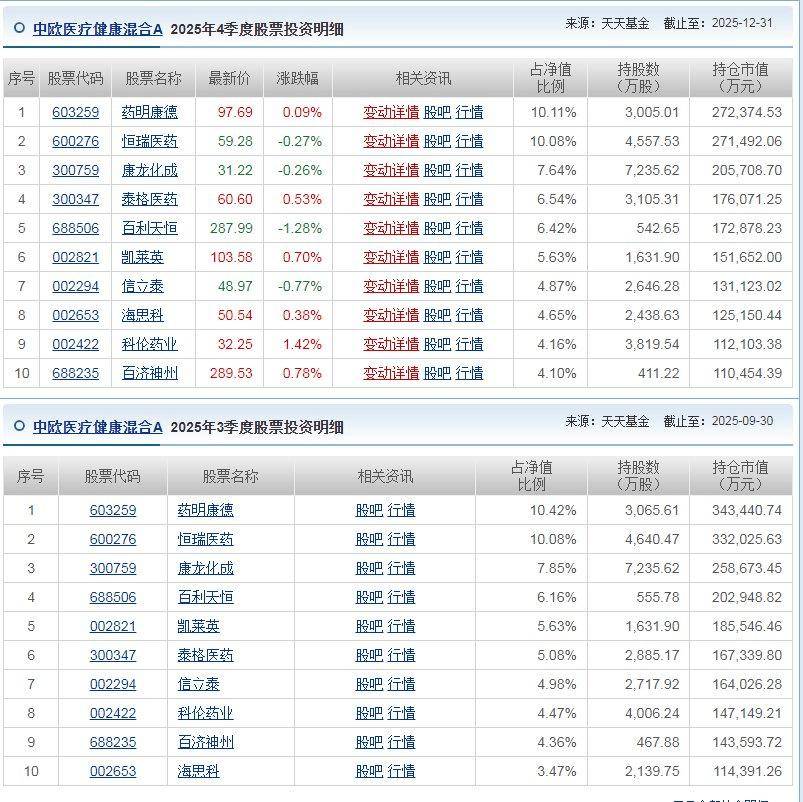
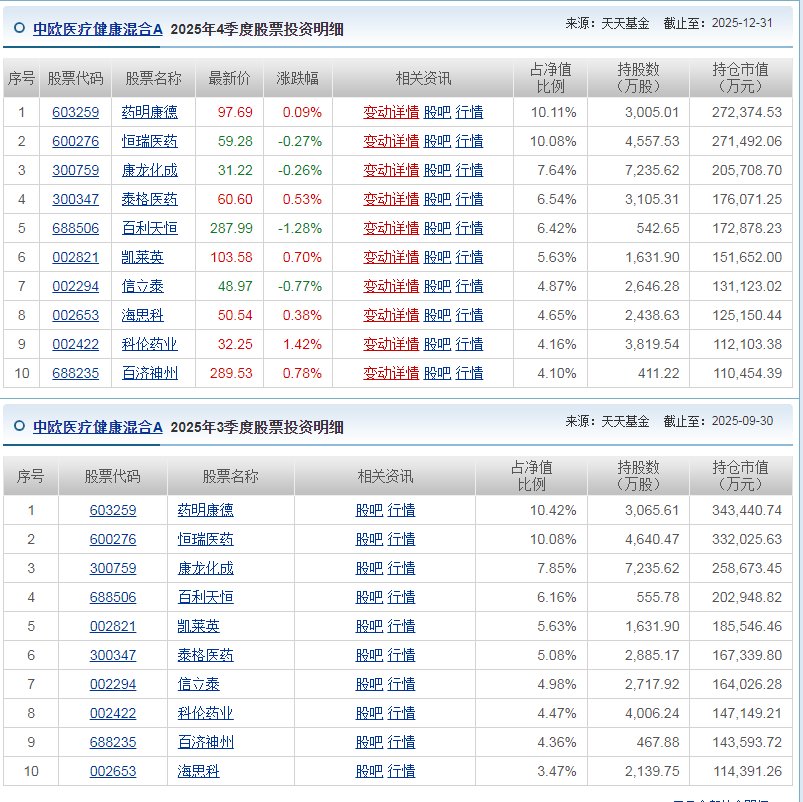
Core Viewpoint - The report highlights the performance of the China Europe Medical Health Mixed Fund managed by Ge Lan and Zhao Lei, indicating a decline in total fund size and negative returns compared to benchmarks [1][4]. Fund Performance - As of December 31, 2025, the total size of the funds managed by Ge Lan decreased from 43.544 billion to 35.389 billion yuan [1]. - The A-class share of the China Europe Medical Health Mixed Fund recorded a net value growth rate of -14.81%, while the C-class share saw a decline of -14.98%, both underperforming the benchmark return of -8.21% [1][3]. Holdings Overview - The top ten holdings of the China Europe Medical Health Fund include WuXi AppTec, Heng Rui Medicine, and Kanglong Chemical, with notable increases in holdings for Hai Si Ke and Tai Ge Medicine, while reductions were seen in stocks like Ke Lun Pharmaceutical and Xin Li Tai [1][2]. Market Context - In Q4 2025, the CSI Pharmaceutical Index fell by 12.7%, underperforming the CSI 300 Index, which declined by only 0.2%. The report notes significant differentiation within sub-sectors, with innovative industries experiencing corrections while traditional Chinese medicine and pharmaceutical commerce remained relatively stable [3]. Future Outlook - Looking ahead to Q1 2026, improvements in global liquidity are expected to boost investment and financing in innovative pharmaceuticals, supported by domestic policy enhancements. The innovative drug and device industry is anticipated to maintain a high level of activity, with several key domestic drugs approaching critical data readouts [4][5]. - The report suggests that the pharmaceutical sector may continue to experience structural trends due to macroeconomic improvements, supportive industry policies, and ongoing innovation, with investment opportunities focusing on the progress of innovative drug and device exports, domestic substitution in equipment, and recovery in consumer healthcare demand [5].



中欧基金葛兰:一季度医药板块有望延续结构性行情 看好创新药械产业链出海、消费医疗等投资机会
Zhi Tong Cai Jing· 2026-01-23 06:33
Core Viewpoint - The report highlights the performance of the China Europe Medical Health Mixed Fund, managed by Ge Lan and Zhao Lei, indicating a decline in total fund size and negative returns compared to benchmarks for the fourth quarter of 2025 [1][4]. Fund Performance - As of December 31, 2025, the total size of funds managed by Ge Lan decreased from 43.544 billion to 35.389 billion yuan [1]. - The net value growth rate for Class A shares of the China Europe Medical Health Mixed Fund was -14.81%, while the benchmark return was -8.21% [1]. - Class C shares experienced a net value growth rate of -14.98%, also underperforming the benchmark [1]. Holdings Overview - The top ten holdings of the China Europe Medical Health Mixed Fund include WuXi AppTec, Heng Rui Medicine, and Kanglong Chemical, with notable increases in holdings for Hai Si Ke and Tai Ge Medicine, while reductions were seen in stocks like Ke Lun Pharmaceutical and Xin Li Tai [1][2]. - The largest holding, WuXi AppTec, accounted for 10.11% of the fund's net value, with a market value of approximately 2.724 billion yuan [2]. Market Context - The CSI Medical Index fell by 12.7% in the fourth quarter of 2025, underperforming the Shanghai and Shenzhen 300 Index, which declined by only 0.2% [3]. - There was significant differentiation within sub-sectors, with the innovative industry chain entering a correction phase after previous gains, while traditional Chinese medicine and pharmaceutical commerce showed relative stability [3]. Future Outlook - Looking ahead to the first quarter of 2026, improvements in global liquidity are expected to boost investment and financing in innovative drugs, supported by domestic policy enhancements [4]. - The innovative drug and medical device industry chain is anticipated to maintain high levels of activity, with several key domestic drugs approaching critical data readout points [5]. - The CXO sector is expected to benefit from a recovery in biotechnology financing, leading to improved order conditions [5]. - The pharmaceutical sector is projected to experience structural trends driven by macroeconomic improvements, supportive industry policies, and ongoing innovation [5].

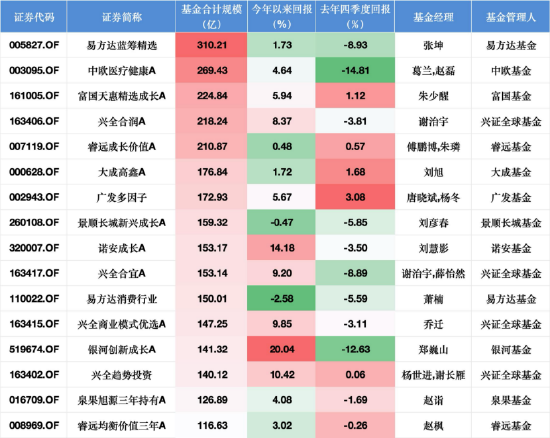
十大基金经理四季报纵览:张坤、刘彦春共话内需前景,郑巍山坚守硬科技,赵诣聚焦“两端配置”
Xin Lang Cai Jing· 2026-01-22 07:09
Core Insights - The 2025 fund's fourth quarterly report reveals that only 5 out of 16 large-cap active equity funds achieved positive returns in Q4, indicating significant performance divergence among funds [1][3][19] - Despite the Q4 challenges, many funds showed a rebound in performance since the beginning of 2026, with 14 out of 16 funds reporting positive returns [3][19] Fund Performance Summary - The top-performing funds in Q4 included: - Guangfa Multi-Factor with a quarterly increase of 3.08% - Dachen Gaoxin A with a return of 1.72% - Fuqun Tianhui Select Growth A with a return of 5.94% [2][3][18] - Conversely, the worst performers included: - Zhongou Medical Health A, which fell by 14.81% - Yifangda Blue Chip Select, which dropped by 8.93% [3][18] Fund Manager Insights - Zhang Kun emphasized the importance of domestic consumption and the long-term potential of investing in domestic demand companies, despite current market skepticism [4][19] - Ge Lan highlighted structural opportunities in the pharmaceutical industry, focusing on innovation and consumer recovery, with a positive outlook for Q1 2026 [6][20] - Liu Yanchun pointed out the need for improved domestic demand and stable asset prices, predicting a rise in inflation expectations [7][21] - Zheng Weishan maintained a focus on hard technology investments, particularly in the semiconductor sector, and expressed optimism about AI demand and domestic production [8][22] - Zhao Yi discussed a dual focus on AI growth and sectors like new energy and military, emphasizing the importance of fundamental analysis [10][25] - Qiao Qian stressed the need for a balance between valuation and fundamentals amid market volatility, aiming for long-term certainty [12][26] - Liu Huiying expressed confidence in the semiconductor and AI applications as key mid-term themes, anticipating breakthroughs in domestic technology [13][27] - Zhao Feng focused on the overseas growth potential of leading companies, noting a shift from product export to local manufacturing and services [14][28] - Xie Zhiyu highlighted the opportunities in the global computing wave and domestic breakthroughs, particularly in the semiconductor sector [15][29] Overall Market Sentiment - Fund managers share a common belief in the long-term potential of the Chinese economy, focusing on industrial upgrades, technological innovation, and the enduring value of quality companies [16][30]
CXO、消费医疗大崩盘:这三年医疗行业发生了什么?
Sou Hu Cai Jing· 2026-01-13 03:48
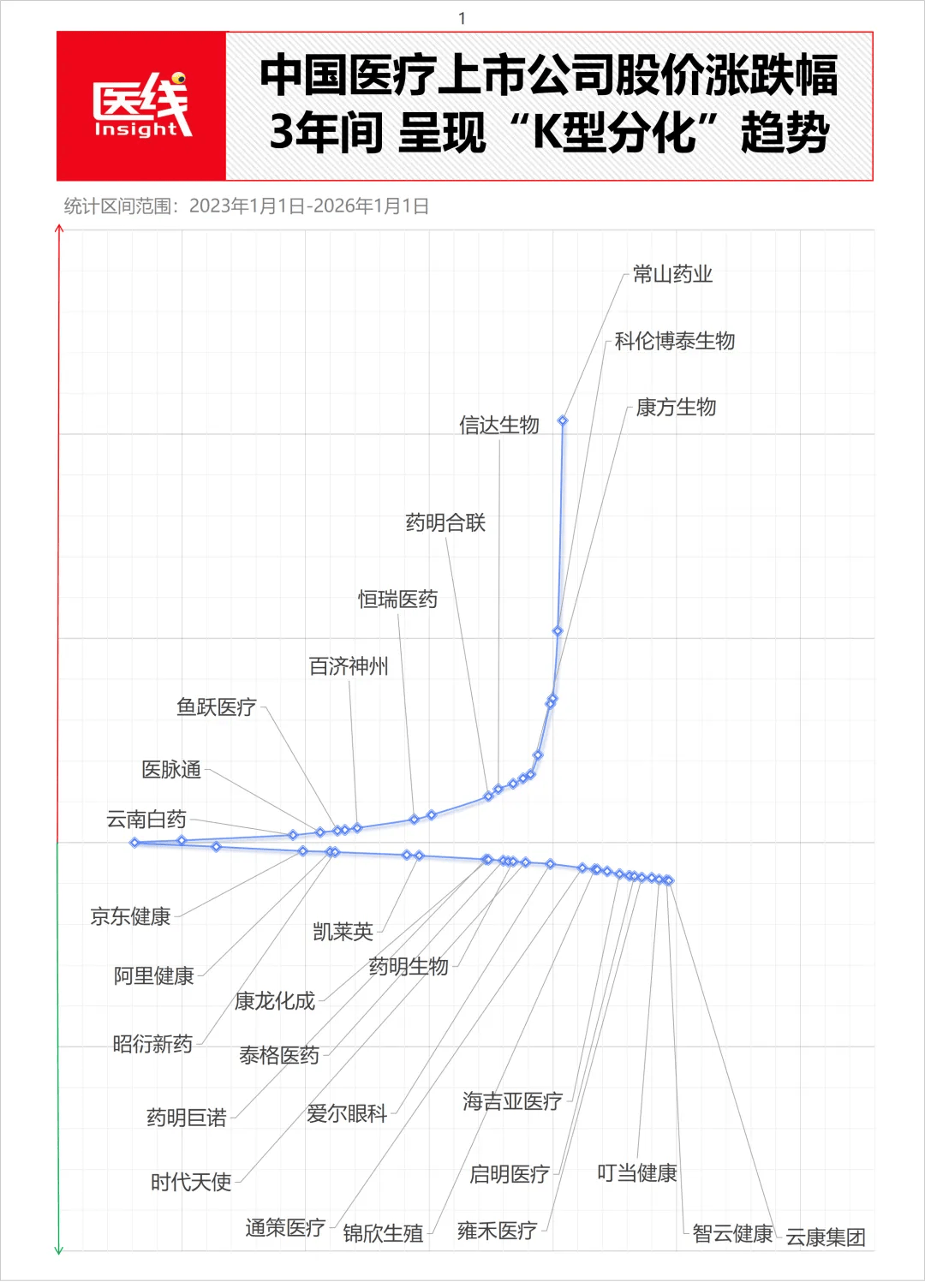
Core Insights - The Chinese healthcare industry has undergone a significant transformation from 2020 to 2025, transitioning from a "golden era" of investment to a "bubble-clearing period" characterized by a K-shaped divergence in market performance [1][2][4]. Group 1: K-shaped Downward Trends - The collapse of previously successful business models, particularly in CXO, consumer healthcare, and internet healthcare, has led to substantial market value losses, with some companies experiencing declines of over 90% [4][7]. - The downturn is attributed to macroeconomic factors such as U.S. interest rate hikes and geopolitical tensions, as well as microeconomic issues like supply-demand imbalances and the disappearance of growth dividends [8][10]. - The CXO sector, once seen as a perpetual growth engine, has faced a 46.68% decline for WuXi Biologics and 44.47% for Tigermed, revealing the fragility of its business model reliant on continuous global financing [12][10]. - Consumer healthcare has suffered a "Davis double whammy," with companies like Yonghe Medical and Aier Eye Hospital seeing declines of 86.19% and 52.69%, respectively, as consumer spending shifts away from discretionary healthcare services [14][15]. - Internet healthcare companies, including Zhiyun Health and Dingdang Health, have also faced severe declines, with drops of 92.44% and 90.67%, as the market realizes that their revenue largely comes from online drug sales rather than innovative healthcare solutions [19][21]. Group 2: K-shaped Upward Trends - In contrast, companies with strong global rights and hard-core technology have thrived, with Keren Biotechnology and Kangfang Biopharma seeing increases of 518.33% and 166.72%, respectively, marking a shift towards biopharma and global market engagement [29][31]. - The rise of these companies signifies a new era where capital is attracted to firms that can demonstrate robust clinical data and global market potential, moving away from mere concepts [30][31]. - Even within struggling sectors, some companies like WuXi AppTec and Yuyue Medical have shown resilience, with increases of 113.36% and 28.75%, respectively, by focusing on high-tech, high-barrier services [34][35]. Group 3: Challenges Ahead - Despite the emergence of new leaders, significant challenges remain, including the risks associated with licensing agreements that may compromise long-term profitability [36][37]. - The ADC sector is experiencing a rush similar to the past PD-1 craze, raising concerns about market saturation and price competition, which could undermine future profitability [39][40]. - The ongoing "ice age" in the primary market poses a threat to innovation, as funding for early-stage companies has become increasingly scarce, potentially leading to a decline in new drug approvals in the coming years [42][43].
万亿市场掀热浪,医药企业群雄逐鹿
Xin Lang Cai Jing· 2025-12-22 02:51
Core Insights - The article discusses the growing importance of consumer healthcare products in addressing chronic health issues like obesity, insomnia, hair loss, myopia, and low immunity, emphasizing the need for pharmaceutical companies to align products with consumer demands and establish effective sales channels [1] Group 1: Market Trends and Company Strategies - Pharmaceutical companies are increasingly entering the consumer healthcare sector, with notable examples including Novo Nordisk's semaglutide and Eli Lilly's tirzepatide, which have generated significant revenue [1] - Sanofi's product, Lybrel, is expected to become a star product in the Chinese market by 2025, showcasing the potential for online sales growth [1] - Three Life Pharmaceuticals' Mandi International is set to go public in Hong Kong, with its minoxidil hair loss treatment dominating the Chinese market, projecting revenue growth from 982 million to 1.455 billion yuan from 2022 to 2024, representing a compound annual growth rate of 21.7% [1] Group 2: Product Performance and Market Position - Mandi's hair loss treatment accounted for over 90% of its total revenue from 2022 to mid-2025, highlighting the substantial market for hair loss products in China [1] - Compared to service-oriented companies like Yonghe Medical, Mandi demonstrates superior profitability in the consumer healthcare sector, indicating that product-based companies can achieve higher margins [1] Group 3: Innovations in Consumer Healthcare - Eisai's Lybrel has gained traction due to its novel mechanism of action, which avoids the regulatory constraints of traditional sedative-hypnotics, and its partnership with JD Health enhances its market reach [2][3] - The dual orexin receptor antagonists (DORAs) used in Lybrel promote natural sleep by inhibiting the overactive orexin system, reducing dependency and side effects associated with traditional sleep medications [2] Group 4: Market Opportunities and Challenges - The consumer healthcare market in China has reached a trillion yuan scale, with early entrants gaining brand influence and market share, while new entrants face challenges in competing against established players [5] - There are still unmet needs in various segments such as osteoporosis, sports rehabilitation, and skin care, suggesting opportunities for new products in the consumer healthcare space [6]