
千问大模型Qwen3

Search documents
中国团队引领太空算力:首次太空在轨部署通用大模型,发2800颗卫星服务数亿硅基智能体
3 6 Ke· 2026-01-28 06:39
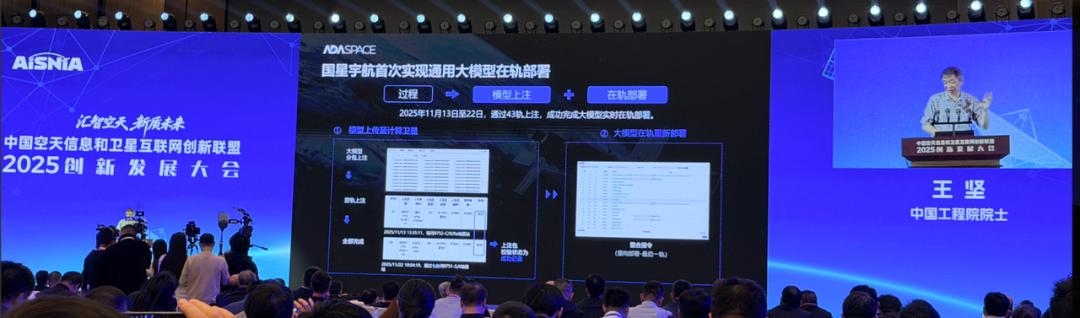
Core Insights - The global competition in AI is shifting focus to space computing power, with both the US and China making significant advancements in this area [1][2][8] Group 1: Developments in Space Computing Power - Starcloud, backed by Nvidia, has successfully run a large model in space using Nvidia H100, marking a significant technical validation [3][5] - Guoxing Aerospace plans to launch 2,800 satellites, with 2,400 dedicated to inference computing power reaching a total of 100,000 P-level, and 400 for training with a capacity of 1 million P-level [2][8] - Guoxing Aerospace has already completed key technology validations with its first group of space computing centers launched last year, and aims for commercial deployment by 2030 [2][8] Group 2: Differences in Approaches - Starcloud's approach involves deploying large models on the ground before sending them to space, while Guoxing Aerospace can deploy general large models in orbit and update them online as needed [5][6] - The difference in methodologies is likened to single-player versus online gaming, highlighting the advanced capabilities of Guoxing Aerospace [6] Group 3: Advantages of Space Computing Power - Space computing power can significantly reduce costs and energy consumption compared to traditional data centers, which are projected to consume 1 trillion kWh by 2026 [8][10] - The ability to provide real-time services from space can enhance the performance of silicon-based intelligent systems, such as Robotaxis and drones, by reducing latency [8][10] - Space computing power can also democratize AI access, providing infrastructure to remote areas lacking computational resources [10] Group 4: Technical Challenges and Innovations - The rapid evolution of AI computing chips poses challenges for maintaining up-to-date hardware in space, necessitating a hardware replacement mechanism [12][13] - Unique challenges in the space environment, such as heat management and protection against high-energy particles, require innovative solutions to ensure the reliability of space computing systems [14][15]

中国团队引领太空算力:首次太空在轨部署通用大模型,发2800颗卫星服务数亿硅基智能体
量子位· 2026-01-28 02:48
Core Viewpoint - The article discusses the emerging trend of space computing power in the global AI competition, highlighting advancements from both American and Chinese companies in deploying AI models in space [1][4][13]. Group 1: Space Computing Power Developments - Starcloud, backed by Nvidia, has successfully run a large model in space, marking a significant milestone in space computing power [1][4]. - Guoxing Aerospace has announced the launch of the world's first silicon-based intelligent agent service network in space, planning to deploy 2,800 satellites to support billions of silicon-based intelligent agents [2][4]. - The total computing power from the planned satellites will reach 100,000 P-level for inference and 1,000,000 P-level for training, with full deployment expected by 2035 [4][6]. Group 2: Technological Differences - Starcloud's approach involves deploying large models on the ground before sending them to space, while Guoxing Aerospace can deploy general large models directly in orbit and update them as needed [9][10]. - This capability allows for real-time updates and operational flexibility, akin to over-the-air updates in smartphones [9][10]. Group 3: Advantages of Space Computing Power - Space computing power can significantly reduce costs and save land resources, as it operates without the constraints of terrestrial data centers [13]. - It offers energy efficiency by utilizing solar power directly in space, avoiding the high energy consumption associated with ground-based data centers [13]. - The real-time service capabilities of space computing power can enhance applications in various sectors, such as providing fishermen with timely information about fish movements [14][16]. Group 4: Challenges and Technical Considerations - The development of space computing power faces challenges such as hardware selection, the need for on-orbit hardware replacement mechanisms, and the unique environmental conditions of space [19][21]. - Issues like heat management and protection against high-energy particles must be addressed to ensure the reliability and accuracy of space-based computing systems [21][22]. Group 5: Future Outlook - The integration of space computing power with open-source large models presents a unique opportunity for China to establish a leading position in this emerging field [23][24]. - The ongoing advancements in both space computing and AI models are expected to drive significant changes in various industries, promoting broader access to AI technologies [17][24].
全球首次!通用大模型太空在轨部署成功
Huan Qiu Wang Zi Xun· 2026-01-28 01:29
Core Insights - The "Star Computing" plan by Guoxing Aerospace aims to deploy a network of satellites for AI model inference and training, marking a significant advancement in space computing capabilities [1][2] Group 1: Deployment and Achievements - In November 2025, Guoxing Aerospace successfully deployed the Qwen3 large model to the "Star Computing" plan's space computing center, achieving the world's first in-orbit deployment of a general large model from the ground to a satellite [1] - The Qwen3 model successfully executed multiple end-to-end inference tasks in space, with a total process time of under 2 minutes for data transmission and processing [1] Group 2: "Star Computing" Plan Overview - The "Star Computing" plan consists of 2,400 inference satellites and 400 training satellites, focusing on serving silicon-based intelligent systems such as autonomous vehicles, drones, and intelligent robots [2] - The satellites will be deployed in orbits ranging from 500-1,000 km, utilizing laser communication for high-speed data transmission, forming a global training and inference computing network with capabilities of 100,000 P-level inference and 1,000,000 P-level training [2] Group 3: Future Plans and Milestones - The first group of the space computing center was successfully launched in May 2025, with subsequent groups planned for deployment in 2026 [2] - By 2030, the plan aims to complete a network of thousands of satellites, with over 95% being inference satellites, and to validate large-scale training satellites in orbit [2] - By 2035, the goal is to fully establish the network to provide computing power for billions of silicon-based intelligent systems [2]