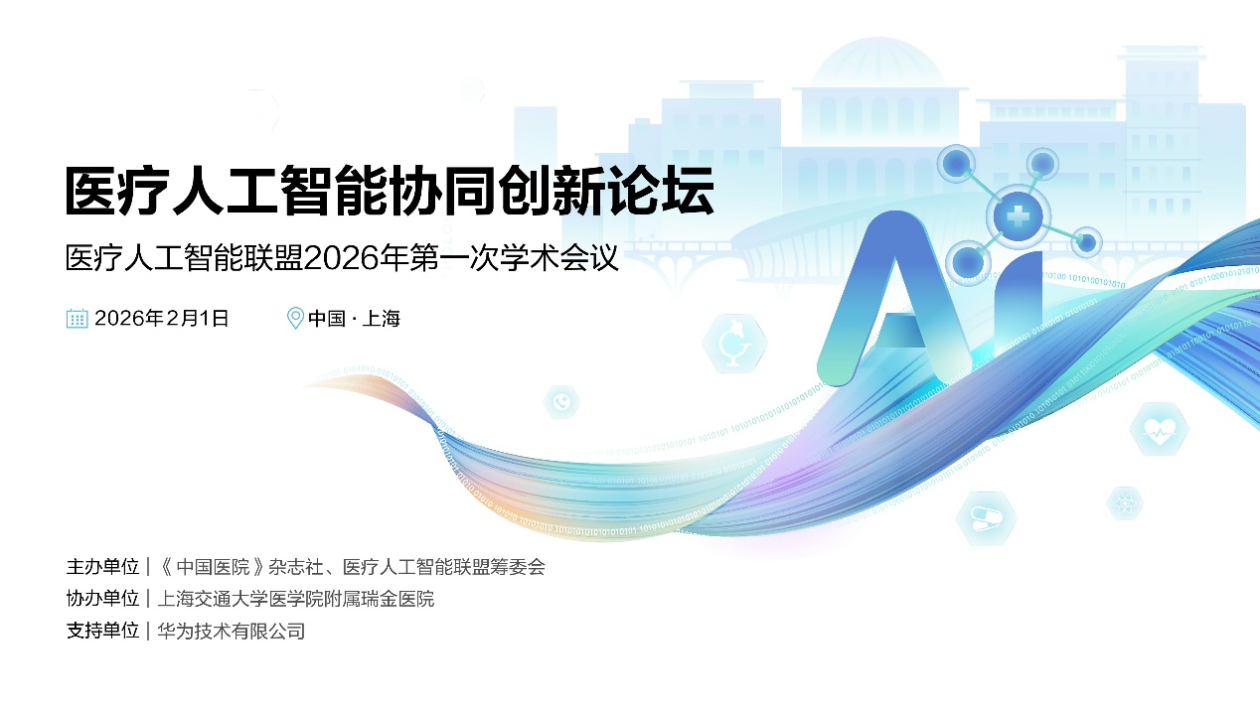
华为云智慧医疗专区

Search documents
华为,AI医疗又一重磅产品!
Xin Lang Cai Jing· 2026-02-03 12:52
Core Insights - Huawei Cloud has launched its first specialized area in the "Industry AI Dream Factory" focusing on smart healthcare, providing a collaborative AI pathology solution for grassroots hospitals and doctors [1][5] - The RuiPath Smart Pathology Integrated Machine, co-developed with Ruijin Hospital, features pre-integrated pathology models and AI software, aimed at enhancing diagnostic capabilities [1][3] Group 1: Strategic Developments - This launch marks the first substantial implementation of Huawei Cloud's "Industry AI Dream Factory" strategy in the healthcare sector, previously explored in areas like autonomous driving and embodied intelligence [3][7] - Huawei's 2026 New Year address highlighted the company's commitment to deepening its industry engagement, particularly in medical pathology and other sectors [3][7] Group 2: Technological Advancements - The RuiPath Smart Pathology Integrated Machine utilizes the RuiPath pathology model, significantly reducing data processing and model training time to just two months, requiring only 16 computing cards [3][7] - The RuiPath model covers 90% of cancer types in China, including lung, breast, colorectal, and gastric cancers, and can assist in diagnosing various rare diseases [3][7] Group 3: Collaborative Efforts - Huawei has established a medical health division, focusing on three main areas: AI imaging, medical large models, and agents, collaborating with leading companies to enhance imaging correction and pathology analysis [3][7] - Partnerships with companies like RunDa Medical and iFlytek aim to develop AI medical models and intelligent medical assistants, supporting features like voice medical records and smart ward rounds [4][8] Group 4: Future Plans - Huawei Cloud plans to collaborate with industry leaders to create 30 specialized models, 10 high-quality industry datasets, and 50 ecological applications and tools in the first half of this year, positioning the smart healthcare area as a premier platform for AI innovation in the medical field [5][9]


华为云智慧医疗专区开放公测,医疗创新ETF(516820)连续11天净流入
Xin Lang Cai Jing· 2026-02-02 03:02
Group 1 - The core viewpoint of the news highlights the performance of the China Securities Pharmaceutical and Medical Device Innovation Index, which fell by 0.27% as of February 2, 2026, with mixed results among constituent stocks [1] - The top-performing stocks included Aimeike, which rose by 3.77%, and Dong'e Ejiao, which increased by 2.03%, while Xinhengcheng led the decline with a drop of 3.91% [1] - The Medical Innovation ETF experienced a decrease of 0.55%, with the latest price at 0.36 yuan, and has seen continuous net inflows over the past 11 days, totaling 198 million yuan [1] Group 2 - Everbright Securities emphasized that AI has become a core productivity driver in the medical new infrastructure, particularly in AI drug development and AI medical imaging, which are currently the most mature sectors [2] - The China Securities Pharmaceutical and Medical Device Innovation Index includes 30 listed companies with good profitability and growth potential, reflecting the overall performance of profitable and innovative pharmaceutical and medical device companies [2] - As of January 30, 2026, the top ten weighted stocks in the index accounted for 63.9% of the total, including WuXi AppTec and Mindray Medical [2]
如何加速医疗AI大模型进入临床诊疗流程?
Guo Ji Jin Rong Bao· 2026-02-02 02:00
Core Insights - China faces a significant cancer challenge, with approximately 4.82 million new cancer cases reported in 2022, the highest globally, and 2.57 million deaths, accounting for over a quarter of global cancer deaths [1] - The launch of Huawei Cloud's "Smart Medical Zone" aims to leverage AI technology to enhance medical diagnostics, particularly in pathology, and improve access to quality healthcare resources in underserved areas [1][3] Group 1: Cancer Statistics and Challenges - In 2022, China reported around 4.82 million new cancer cases, translating to about 9.2 diagnoses per minute, and 2.57 million cancer-related deaths [1] - The country faces challenges such as a shortage of pathologists, uneven distribution of medical resources, and inadequate initial diagnosis rates in grassroots hospitals [1] Group 2: Huawei Cloud's Smart Medical Zone - Huawei Cloud has launched a "Smart Medical Zone" as part of its "Industry AI Dream Factory" initiative, focusing on the healthcare sector to promote the widespread application of AI technology [1][3] - The Smart Medical Zone collaborates with Shanghai Ruijin Hospital to integrate AI and cloud computing with pathology diagnostics, enabling scalable diagnostic capabilities for grassroots medical institutions [3][9] Group 3: AI and Healthcare Transformation - The application of AI is expected to fundamentally transform traditional healthcare service models, making high-quality medical resources more efficiently utilized [4] - The Smart Medical Zone aims to address issues such as insufficient diagnostic capabilities in grassroots healthcare, data silos, and challenges in implementing AI solutions [7] Group 4: Implementation and Community Building - The Smart Medical Zone provides a collaborative platform for hospitals and healthcare professionals, offering tools for training and deploying AI pathology models without the need for expensive equipment [8] - Huawei Cloud plans to establish a national AI community for the healthcare sector, bringing together validated medical models, high-quality datasets, and intelligent applications to facilitate AI implementation [8] Group 5: Impact on Cancer Diagnosis - The initial focus of the Smart Medical Zone is on cancer pathology diagnosis, which is crucial for early screening and diagnosis of cancer cases in China [9] - AI-assisted diagnostics are expected to enhance the level of grassroots medical care and make quality healthcare services more accessible, effectively bringing "tertiary hospital diagnostics" closer to the public [9]
AI专属社交网络Moltbook火爆出圈引热议;华为云智慧医疗专区开放公测丨AIGC日报
创业邦· 2026-02-02 00:40
Group 1 - The core point of the article highlights the rapid advancements and popularity of AI technologies, particularly focusing on OpenClaw and its Kimi K2.5 model, which has become the first major model to be offered for free by OpenClaw, marking a significant milestone in the open-source AI community [2] - OpenClaw has gained immense traction, becoming one of the top three open-source models globally, only behind proprietary models Claude Sonnet 4.5 and Gemini 3 Flash, indicating its competitive position in the market [2] - The emergence of AI-specific social networks like Moltbook has sparked discussions about the implications of AI entities engaging in human-like interactions, including forming communities and even religions, which raises questions about the future of AI-human relationships [2][2] Group 2 - Huawei Cloud has launched a public beta for its "Smart Healthcare Zone," integrating clinical expertise from top medical institutions with its technology, aiming to create an AI-enabled platform for healthcare services [2] - Beijing Economic and Technological Development Zone has issued the first national identity certification for a virtual idol, Yuri, showcasing the growing recognition and establishment of virtual identities in the AI sector [2]

月之暗面公开喊话求助百度,百度悄然优化“Kimi官网”检索结果;何小鹏回应IRON人形机器人首秀行走摔倒;王石发文疑辟谣失联传闻丨邦早报
创业邦· 2026-02-02 00:40
Group 1: Automotive Industry Performance - Xiaomi's automotive deliveries exceeded 39,000 units in January 2026 [2] - Li Auto delivered 27,668 vehicles in January 2026 [2] - Leap Motor achieved total deliveries of 32,059 units in January, a year-on-year increase of 27% [2] - AITO (问界) delivered 40,016 vehicles in January, marking an 83% year-on-year growth [2] - Lantu delivered 10,515 vehicles in January, up 31% year-on-year [2] - GAC Toyota's sales reached 63,648 units in January [2] - GAC Trumpchi's terminal sales were 26,937 units in January, a slight increase of 2.06% [2] - Great Wall Motors reported total sales of 90,312 units in January, a year-on-year increase of 11.59% [2] - Extreme Stone (极石) delivered 1,028 vehicles in January, nearly doubling year-on-year [2] Group 2: Company Developments and Innovations - Xiaomi denied reports of discussions with Ford to establish a joint venture for electric vehicles in the U.S. [7] - Xiaomi's founder Lei Jun announced that the development of the new generation Xiaomi SU7 has been completed, with production set to begin soon [7] - The AI robot YuTree G1 successfully walked 13,000 steps in extreme cold conditions of -47.4°C, marking a global first [7] - NIO launched a limited-time financial purchase plan with a low interest rate of 0.49% for vehicle purchases [9] - ByteDance's Hongguo short drama app surpassed 100 million daily active users within three years of its launch [9] - Tencent's AI assistant Yuanbao officially launched its public beta, exploring the AI social networking space [9] - Beijing Economic Development Zone issued the first national virtual idol identity certification [9] - Toyota recalled over 161,000 Tundra vehicles in the U.S. due to rearview camera issues [9] Group 3: Financing and Market Trends - Zhongke Qingneng completed nearly 500 million yuan in PreA++ financing, led by Dinghui Baifu [11] - Xuqing Intelligent secured seed round financing in the millions, focusing on technology development [11] - The global semiconductor industry saw a significant increase in exports from South Korea, reaching $20.5 billion in January, a year-on-year increase of over 102% [13]




华为云即将发布”智慧医疗专区”,持续加码医疗AI
Huan Qiu Wang· 2026-01-30 08:28
Core Insights - Huawei is set to launch its "Smart Medical Zone" as part of its industry AI "Dream Factory" plan on February 1, 2026, at the Medical AI Collaborative Innovation Forum in Shanghai [1][3] - The initiative aims to address the shortage of pathology doctors in China, where there are currently fewer than 20,000 registered pathologists, with a shortfall of 140,000, and 80% of these professionals are concentrated in major cities [3] Group 1 - The Smart Medical Zone will integrate top medical resources with AI technology to tackle structural challenges in pathology diagnosis, such as talent shortages and uneven resource distribution [1][3] - Since 2021, Huawei has partnered with Shanghai Ruijin Hospital to develop the pathology AI field, establishing China's first digital smart pathology department and planning to release a clinical-level pathology model, RuiPath, covering over 90% of common cancer types by 2025 [3] - The launch of the Smart Medical Zone signifies Huawei's commitment to consolidating ecosystem forces and positioning itself at the forefront of the national strategy for "AI + Healthcare," aiming to break down barriers in medical resources and scale AI capabilities to grassroots medical institutions [3]