AI医学影像

Search documents
190亿港元!80后交大教授,用AI分析染色体,刚刚IPO
创业邦· 2026-03-30 08:44
Core Viewpoint - The article highlights the successful IPO of Hangzhou Deshi Biotechnology Co., Ltd., marking it as the first stock in the Hong Kong market focused on medical imaging large models, with a market capitalization of approximately HKD 19.5 billion (around RMB 17.2 billion) at opening [3][4]. Company Overview - Deshi Biotechnology operates in the niche field of chromosome karyotype analysis, utilizing AI to provide intelligent analysis solutions for medical devices [4][20]. - The company has developed AI AutoVision® software and MetaSight® scanning system, automating the entire process from image scanning to result interpretation, significantly improving efficiency [4][24]. - In the first three quarters of 2025, the company reported revenue of RMB 112 million, a 470% year-on-year increase, with a gross margin of 75.9% [4][32]. Market Position - According to a report by Frost & Sullivan, Deshi Biotechnology holds a 30.6% market share in China for chromosome karyotype analysis, ranking first, whereas previously, over 95% of the market was dominated by German companies Zeiss and Leica [4][36]. - The market for chromosome karyotype analysis in China is projected to grow from RMB 120 million in 2019 to RMB 166 million by 2024, indicating a stable growth trajectory [36]. Founder Background - The founder, Song Ning, has a diverse academic background in computer science and medical genetics, which has influenced the company's innovative approach to integrating AI in medical diagnostics [8][9][10]. - Song Ning's vision was driven by the need for advanced genetic testing solutions in China, where a significant portion of couples face reproductive challenges due to genetic diseases [10][11]. Product Development - Deshi Biotechnology's AI AutoVision significantly reduces the analysis time for samples from approximately 34.1 minutes to about 11.3 minutes, allowing a single doctor to process around 50 samples daily [24][22]. - The company has developed a comprehensive product matrix that includes software, hardware, reagents, and consumables, addressing the entire workflow of chromosome karyotype analysis [22][21]. Financial Performance - The company has not yet achieved profitability but has shown a trend of narrowing losses, with net losses of RMB 56.1 million in 2023, RMB 43.4 million in 2024, and RMB 36.6 million in the first nine months of 2025 [34][32]. - As of September 30, 2025, the company had cash and cash equivalents of RMB 396 million, indicating a strong cash flow position [34]. Investment and Shareholding - Major shareholders include Hangzhou Zijin Port (9.88%), Shanghai Meihong (7.48%), and several other institutional investors, reflecting a diverse investment base [5][18]. - The article notes that some investors have seen returns as high as 90 times their initial investment following the company's IPO [15][19]. Industry Trends - The article discusses the shift in the chromosome karyotype analysis market from reliance on imported technologies to domestic innovations, with Deshi Biotechnology leading this change [36][39]. - The broader AI medical imaging market in China is expected to grow from RMB 1.1 billion in 2019 to RMB 138.2 billion by 2030, highlighting the increasing demand for automated solutions in medical diagnostics [40][42].

AI-医疗报告解读电话会
2026-03-18 02:31
Summary of AI in Healthcare Conference Call Industry Overview - The AI healthcare sector is entering a commercialization phase, with a divergence in the U.S. stock market in 2025, where only companies like Canopy Growth with practical applications performed well, while concept-driven stocks like Recursion saw significant declines [1][2] - Payment dynamics in the U.S. are driven by pharmaceutical companies (cost reduction in R&D), hospitals/insurance companies (DRG reform/cost control), and consumers (habits still developing) [1] Key Insights - **AI Pharmaceutical Models**: - AI+CRO (e.g., Crystal Technology) is the most stable mainstream model due to upfront payments and milestone sharing [1] - AI+Biotech has high explosive potential but comes with higher risks [1] - AI+SaaS faces limitations due to market saturation [1] - **Medical Imaging Evolution**: - Transitioning from auxiliary diagnostics to full-process empowerment, with lung nodule screening becoming highly competitive [1] - Companies like United Imaging are leveraging AI to significantly reduce MRI imaging time from 20 minutes to 3 minutes, addressing hospitals' needs for increased turnover [1] - **Dual Pathways in Diagnosis**: - The emergence of renowned doctor IP clones and grassroots assistants, with companies like Gushengtang planning to release 14 AI clones by 2025, generating substantial revenue [1] - **Wearable Devices and AI**: - Leading medical device companies like Yuyue Medical are integrating AI with wearables to create a data feedback loop, with new products like blood pressure watches expected in Q1 2026 [1] Market Dynamics - **Comparison of AI Healthcare Stocks**: - In 2025, the rise of domestic AI healthcare stocks was influenced by strong performances in the U.S. market, particularly subscription-based chronic disease management and intelligent diagnostic companies [2] - By 2026, A-share and Hong Kong stocks showed independent trends, with significant gains in related companies [2] - **Payment Motivations**: - Pharmaceutical companies exhibit the strongest willingness to pay for AI solutions due to benefits in R&D efficiency [3][4] - Hospitals and insurance companies also show strong payment motivation, particularly in the U.S. insurance system [4] Commercialization Challenges - **Differences in Payment Systems**: - The U.S. has a mature commercial insurance payment system that facilitates rapid commercialization of AI healthcare, while China's system is still developing, leading to complexities in independent billing for AI products [4][5] - **AI in Drug Development**: - AI is applied across various stages of drug development, with significant cost-saving potential in preclinical research [5] - Current business models for AI pharmaceutical companies include AI+SaaS, AI+CRO, and AI+Biotech, each with distinct advantages and challenges [5] AI Medical Imaging Development - The AI medical imaging industry is transitioning from a focus on single-disease detection to comprehensive solutions, with significant competition in lung nodule detection [7][8] - High-value segments like cardiovascular imaging remain promising due to their technical barriers and clear value propositions for hospitals [8] Future Directions - **Core Competitiveness**: - Future competitiveness in AI healthcare will hinge on exclusive data resources, the ability to iterate and optimize data through specific business scenarios, and the necessity of the service to drive payment willingness [12] - **Investment Focus**: - Investment should concentrate on AI+pharmaceuticals, AI+medical imaging, AI+diagnostics, and AI+wearable devices as key growth areas [12]

华为云智慧医疗专区开放公测,医疗创新ETF(516820)连续11天净流入
Xin Lang Cai Jing· 2026-02-02 03:02
Group 1 - The core viewpoint of the news highlights the performance of the China Securities Pharmaceutical and Medical Device Innovation Index, which fell by 0.27% as of February 2, 2026, with mixed results among constituent stocks [1] - The top-performing stocks included Aimeike, which rose by 3.77%, and Dong'e Ejiao, which increased by 2.03%, while Xinhengcheng led the decline with a drop of 3.91% [1] - The Medical Innovation ETF experienced a decrease of 0.55%, with the latest price at 0.36 yuan, and has seen continuous net inflows over the past 11 days, totaling 198 million yuan [1] Group 2 - Everbright Securities emphasized that AI has become a core productivity driver in the medical new infrastructure, particularly in AI drug development and AI medical imaging, which are currently the most mature sectors [2] - The China Securities Pharmaceutical and Medical Device Innovation Index includes 30 listed companies with good profitability and growth potential, reflecting the overall performance of profitable and innovative pharmaceutical and medical device companies [2] - As of January 30, 2026, the top ten weighted stocks in the index accounted for 63.9% of the total, including WuXi AppTec and Mindray Medical [2]
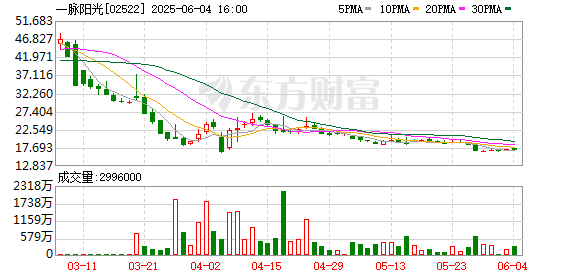
一脉阳光(02522):整体业务稳定发展,加速发掘影像数据价值
Guoxin Securities· 2025-09-30 12:32
Investment Rating - The investment rating for the company is "Outperform the Market" [5][22][26] Core Viewpoints - The company achieved a revenue growth of 12.9% year-on-year in the first half of 2025, reaching 467 million yuan, and turned a profit with a net profit of 16 million yuan, compared to a loss in 2024 [1][8] - The growth in revenue is attributed to the rapid expansion of clients in imaging center services and imaging solution services, alongside optimized resource allocation and reduced unnecessary expenses [1][8] - The company is positioned as a leader in the domestic medical imaging service sector, with a steady expansion pace and a focus on AI-driven comprehensive imaging solutions [3][22] Revenue and Profitability - In the first half of 2025, imaging center service revenue was 300 million yuan, down 6.1% due to macroeconomic fluctuations and policy adjustments [2][10] - Imaging solution service revenue surged by 88.9% to approximately 161 million yuan, driven by the ongoing benefits of new medical infrastructure policies and the recovery of medical equipment upgrade demands [2][10] - The company's gross margin was 29.4%, a decrease of 9.2 percentage points, primarily due to adjustments in imaging examination fees [3][15] Financial Forecasts - The company forecasts net profits of 49 million yuan, 81 million yuan, and 113 million yuan for 2025, 2026, and 2027 respectively, reflecting a turnaround and growth rates of 65.3% and 39.5% [3][22] - Revenue projections for 2025, 2026, and 2027 are 997 million yuan, 1.227 billion yuan, and 1.477 billion yuan, indicating growth rates of 31.1%, 23.1%, and 20.3% respectively [4][24] Operational Developments - The company has developed 11 new imaging centers and commenced operations at 12 centers, with 11 more under construction, which are expected to contribute to revenue stability in the second half of 2025 [2][10] - The company launched a medical imaging large model computing machine in collaboration with Alibaba Cloud, enhancing its capabilities in AI medical imaging [2][10]
一脉阳光(02522.HK):AI赋能 第三方医学影像龙头发展加速
Ge Long Hui· 2025-09-04 03:57
Industry Insights - The third-party medical imaging service industry in China has significant potential, with a current penetration rate of only 1% compared to over 40% in the US, indicating a vast market opportunity [1] - AI technology is enhancing the medical imaging sector through various applications, including equipment, diagnostic assistance, treatment support, and data quality control, which can lead to cost reduction and efficiency improvements [1] - The third-party imaging centers serve as both producers of imaging data and application scenarios for AI, allowing them to generate additional revenue through licensing AI algorithms and data services [1] Company Overview - The company operates a one-stop ecosystem with three main business segments: imaging center services, imaging solution services, and Yimai Cloud services, which support and transform each other [2] - The imaging center business is the cornerstone of the company's revenue, accounting for over 60% of total income, and serves as a competitive moat due to high market entry barriers [2] - The imaging solution business is poised for growth, with a focus on international expansion, targeting 30% of revenue from overseas markets within five years [2] - The company has launched the world's first full-modal, full-process medical imaging foundation model, with significant collaborations to accelerate AI medical imaging applications [3] - Revenue projections for the company are optimistic, with expected figures of 1.011 billion, 1.286 billion, and 1.588 billion yuan for 2025-2027, reflecting year-on-year growth rates of 32.9%, 27.3%, and 23.5% respectively [3] - The company is positioned as a leader in the domestic third-party medical imaging market, with a unique business model that leverages data and scenario advantages in the AI imaging field [3]
一脉阳光(02522):AI赋能,第三方医学影像龙头发展加速
Huachuang Securities· 2025-09-02 11:41
Investment Rating - The report gives a "Strong Buy" rating for the company with a target price of HKD 27.4 [1][9][12] Core Viewpoints - The company is positioned as a leader in the third-party medical imaging service sector in China, with significant growth potential driven by AI integration and a robust business model [10][11] - The imaging center business serves as the cornerstone of the company's revenue and competitive advantage, accounting for over 60% of total revenue [2][11] - The company aims to achieve 30% of its revenue from overseas markets within five years, leveraging its imaging solutions business [2][11] Summary by Sections Company Overview - The company, established in 2014, operates the largest number of medical imaging centers in China, with 115 centers and 33 valid third-party imaging center licenses as of June 2025 [15][17] - The business is divided into three main segments: imaging center services, imaging solutions services, and Yimai Cloud services, forming a comprehensive ecosystem [17][52] Industry Analysis - The third-party medical imaging service market in China has significant growth potential, with a current penetration rate of only 1% compared to over 40% in the U.S. [8][43] - The market size for medical imaging services in China is projected to grow from CNY 270.9 billion in 2023 to CNY 661.5 billion by 2030, with a CAGR of 13.6% [32][34] Business Model and Competitive Advantage - The imaging center business is the company's main revenue source and a key competitive moat, with various types of centers catering to different market needs [55][56] - The company has a strong management team with extensive industry experience, supported by notable institutional investors [22][25] Financial Projections - Revenue is expected to grow from CNY 10.11 billion in 2025 to CNY 15.88 billion by 2027, with net profits projected to increase significantly during the same period [4][12] - The company anticipates a recovery in 2025 after a decline in 2024 due to macroeconomic factors and increased operational costs [18][20]
华创医药投资观点、研究专题周周谈第139期:第三方医学影像服务潜力巨大,AI推动数据掘金-20250816
Huachuang Securities· 2025-08-16 08:53
Investment Rating - The report maintains a "Recommended" rating for the pharmaceutical sector, highlighting optimism for growth in 2025 and beyond due to low valuations and favorable macroeconomic conditions [9][36]. Core Insights - The report emphasizes the significant potential of third-party medical imaging services, driven by AI technology, which is expected to enhance data utilization and operational efficiency [12][16]. - The medical imaging service market in China is projected to grow from CNY 2,709 billion in 2023 to CNY 6,615 billion by 2030, with a CAGR of 13.6% [20]. - The report identifies a shift in the pharmaceutical industry from quantity to quality, particularly in innovative drugs, suggesting a focus on differentiated products and internationalization [9][36]. Market Overview - The medical imaging service market has seen a growth from CNY 1,474 billion in 2018 to CNY 2,709 billion in 2023, with a CAGR of 12.9% [20]. - The report notes that the penetration rate of third-party imaging centers in China is currently around 1%, compared to over 40% in the US, indicating substantial growth potential [29][30]. - The report highlights the increasing importance of AI in medical imaging, which enhances diagnostic accuracy and operational efficiency [31][32]. Sector-Specific Insights Innovative Drugs - The report forecasts that the revenue share of innovative products will rise from 12% in 2018 to 41.8% in 2024, with expectations to exceed 50% by 2025 [36]. - Companies like BeiGene, Innovent, and others are recommended for their strong pipelines and potential for international collaboration [9][36]. Medical Devices - The report indicates a recovery in the bidding volume for imaging equipment, with significant growth expected in the home medical device market due to supportive policies [9][40]. - Companies such as Mindray and United Imaging are highlighted for their potential in the imaging equipment sector [9][40]. Traditional Chinese Medicine - The report suggests focusing on essential medicines and state-owned enterprise reforms, with companies like Kunming Pharmaceutical and Kangyuan Pharmaceutical recommended [48]. Medical Services - The report sees potential in the medical services sector, particularly for companies like Guosheng Tang, which are well-positioned for national expansion [47]. Life Sciences Services - The report notes a recovery in demand for life sciences services, driven by increased investment in domestic biopharmaceuticals and a shift towards domestic production [44]. Pharmacy Sector - The report highlights the accelerating trend of prescription outflow and the optimization of competitive dynamics in the pharmacy sector, recommending companies like YaoBai and YiFeng Pharmacy [45].
华创医药周观点:第三方医学影像服务潜力巨大,AI推动数据掘金 2025/08/16
华创医药组公众平台· 2025-08-16 07:13
Core Viewpoint - The third-party medical imaging service sector in China has significant growth potential, driven by AI technology that enhances data utilization and operational efficiency [14][20][22]. Market Overview - The medical imaging service market in China has grown from 147.4 billion yuan in 2018 to 270.9 billion yuan in 2023, with a CAGR of 12.9%. It is projected to reach 661.5 billion yuan by 2030, with a CAGR of 13.6% [16][18]. - The penetration rate of third-party imaging centers in China is currently around 1%, compared to over 40% in the US, indicating substantial room for growth [28][22]. Industry Dynamics - The value chain of the medical imaging industry in China consists of three segments: upstream (equipment providers), midstream (hospitals and third-party centers), and downstream (patients and healthcare consumers) [19][15]. - Public hospitals dominate the imaging service market, but there are challenges such as resource shortages and uneven distribution of advanced imaging equipment [20][22]. AI Integration - AI is transforming the medical imaging sector by optimizing imaging equipment, assisting in diagnostics, and enhancing data quality control processes. AI's role has evolved from a supportive tool to a core driver of business growth [29][27]. - The integration of AI in third-party imaging centers allows for the production of standardized imaging data, which can be leveraged for algorithm development and additional revenue streams [29][28]. Investment Opportunities - The third-party imaging center market has seen rapid growth, with a CAGR of 29.0% from 8 billion yuan in 2018 to 29 billion yuan in 2023, and is expected to reach 68 billion yuan by 2026 [28]. - Companies like Radnet in the US are leveraging AI to enhance their imaging capabilities and drive revenue growth, serving as a model for potential developments in the Chinese market [32]. Future Outlook - The medical imaging service market is expected to continue expanding due to increasing demand from an aging population and improvements in service penetration rates [16][20]. - The combination of AI technology and third-party imaging services is anticipated to create a more efficient and profitable sector, with significant implications for investment strategies in the healthcare industry [29][14].
在可持续发展战略下一脉阳光的长期价值之路
Zheng Quan Ri Bao· 2025-06-04 09:09
Core Viewpoint - The company, Yimai Sunshine Group, is positioned as a leader in the medical imaging sector under China's "Healthy China" strategy, benefiting from policy support and focusing on both economic efficiency and social responsibility [2][5]. Group 1: Economic Efficiency and Innovation - Yimai Sunshine has redefined the development path of third-party medical imaging centers in China through a "shared model," establishing a strong competitive moat [2]. - The company is experiencing rapid growth, with revenue and profit entering a synchronized leap phase [2]. - Yimai Sunshine leverages AI technology to create a unique technical system with independent intellectual property rights, enhancing its competitive advantage [3]. - The AI medical imaging market in China is projected to reach 6.17 billion yuan by 2025 and 13.74 billion yuan by 2030 [3]. - The company has made significant strides in medical data assetization, ensuring data accuracy and security, and promoting the marketization of medical imaging data [3][4]. Group 2: Social Value and Healthcare Improvement - Yimai Sunshine aims to address the imbalance in medical resource distribution in China, focusing on empowering both patients and healthcare institutions [7]. - The company has established over 100 imaging centers nationwide, serving more than 500 institutions and achieving an annual scanning volume of over 10 million [7]. - By providing comprehensive support to partner hospitals, Yimai Sunshine enhances their diagnostic capabilities and operational efficiency [7][8]. - The company employs a dual-driven model, focusing on both patient services and empowering medical institutions, which has proven effective in maintaining long-term partnerships [7][8]. Group 3: International Expansion - Yimai Sunshine is expanding its international presence by leveraging cost advantages in hardware, labor, and data services [9]. - The company aims to replace low-experience local information systems overseas with its established cloud and AI platforms, enhancing the quality of medical services internationally [9].