
南极磷虾

Search documents
10亿吨海里“金矿”,全球多国竞相争夺,中国或将成为最大赢家
Sou Hu Cai Jing· 2026-02-21 05:27
Core Insights - Antarctic krill is a crucial species in the Antarctic ecosystem, supporting the entire food chain and has an estimated population of 6 to 10 billion tons, significantly surpassing the total weight of humans and most land animals [3] - The potential of Antarctic krill as a high-quality protein source is highlighted, with its resources capable of supporting 1.4 billion people globally [1][4] - China is emerging as a key competitor in the global krill resource competition, leveraging technology and strategic positioning to potentially become the largest beneficiary [4] Industry Overview - Krill has strong environmental adaptability, capable of reducing its size and metabolic rate during food shortages, and can reproduce prolifically, with females laying 6,000 to 10,000 eggs annually [6] - Krill meal is becoming a premium substitute for traditional fish meal, with a replacement ratio of 2.5 tons of fish meal per ton of krill meal, thus reducing fish resource consumption [8] - The global krill fishing competition began in the 1970s, with China entering the market in 2007 and reaching a catch volume of 100,000 tons by 2019, accounting for one-fourth of the global total [10] Sustainability Challenges - The development of krill resources faces sustainability challenges due to climate change, which is causing Antarctic ice melt and affecting their habitat and food sources [10] - International agreements limit the global annual catch to no more than 620,000 tons to protect the ecosystem [10] - Balancing development and ecological protection is essential for the sustainable utilization of this marine protein resource, which is critical for human development [12]


江苏连云港:向海图强,“蓝色引擎”动力澎湃
Xin Lang Cai Jing· 2025-12-21 19:39
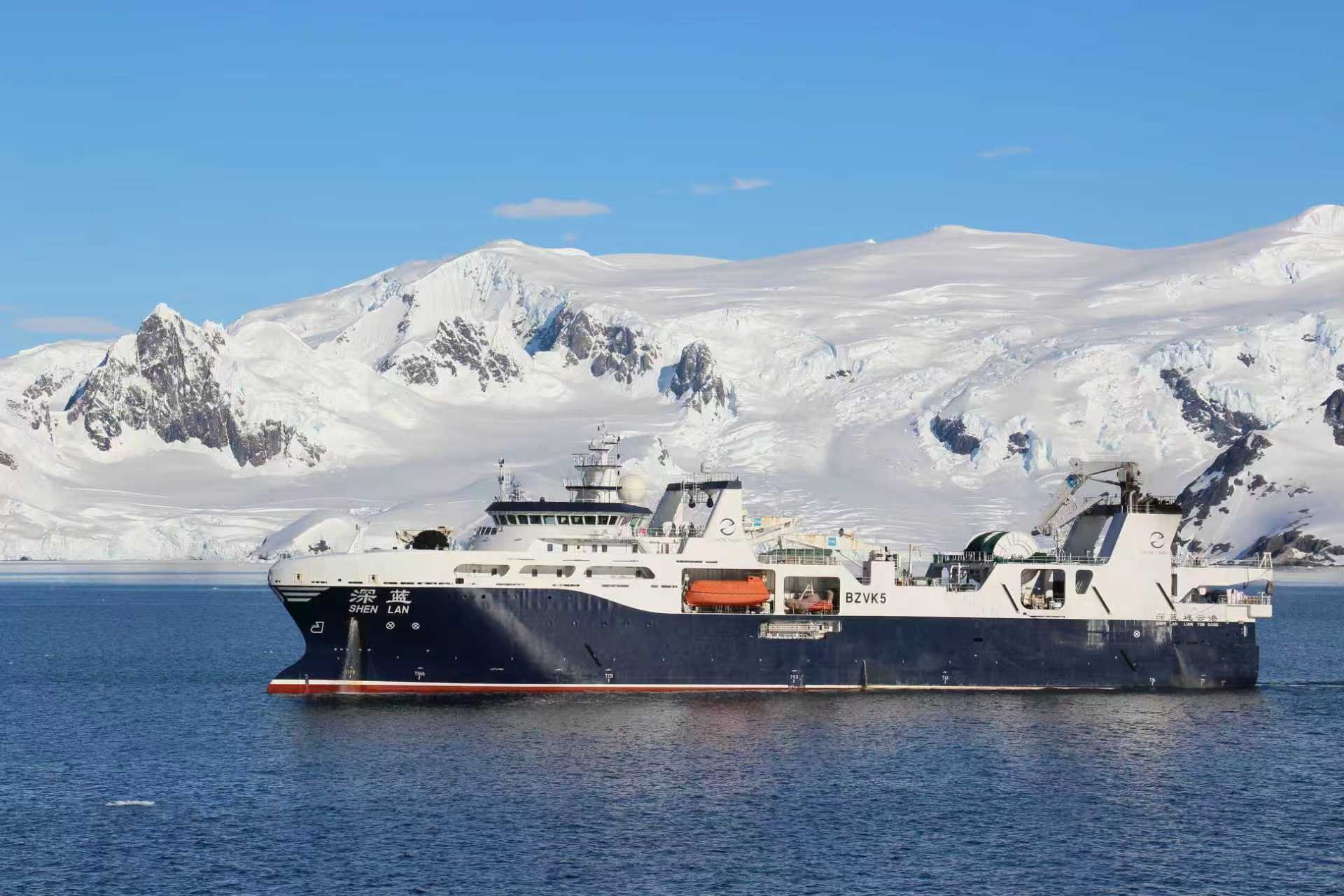
Core Insights - The successful docking of the 400,000-ton vessel "Yuan Shi Hai" at Lianyungang Port marks a significant milestone, enabling night-time operations and enhancing the port's shipping efficiency and competitiveness [1] - Lianyungang is transforming from a traditional port to an international hub, facilitating trade and logistics for Central Asian countries, with a notable increase in cargo throughput and container volume [2] - The marine industry in Lianyungang is experiencing rapid growth, driven by technological innovations and the emergence of new strategic industries, including advanced aquaculture and renewable energy projects [3] - The development of coastal tourism is flourishing, with a significant increase in visitor numbers, supported by ecological protection and restoration efforts that enhance the region's natural resources [4] Group 1: Port Operations - Lianyungang Port achieved its first-ever night-time docking of a fully loaded 400,000-ton vessel, enhancing operational efficiency [1] - The port's total throughput increased from 252 million tons and 4.8 million TEUs at the end of the 13th Five-Year Plan to 346 million tons and 6.69 million TEUs projected for 2024, with a year-on-year growth of 6.89% in the first ten months of this year [2] Group 2: Marine Industry Development - The marine industry is evolving with significant advancements, including the launch of the "Deep Blue" Antarctic krill fishing vessel and the world's first self-propelled closed salmon farming vessel [3] - Lianyungang has established 39 provincial-level marine innovation platforms, supporting technological advancements in the marine sector [3] Group 3: Tourism and Ecological Development - Coastal tourism has seen a dramatic rise, with visitor numbers increasing from 400,000 in 2022 to 1.9 million in the current year [4] - Ecological protection initiatives have led to the recognition of Lianyungang as a city with dual 5A scenic areas, enhancing its appeal as a tourist destination [4]

行进的海岸线 | 领航南极 一群小虾撬动远洋渔业亿元产业
Yang Guang Wang· 2025-11-28 08:01
Core Insights - The story highlights the development of the Antarctic krill industry in China, led by the "Deep Blue" vessel, which has successfully completed three fishing seasons since its operation began in 2022, marking a significant advancement in the country's marine economy [1][4]. Industry Overview - The Antarctic krill serves as a crucial food source for various marine animals, including penguins, seals, and whales, and plays a vital role in the oceanic food chain [3]. - The Ministry of Agriculture and Rural Affairs has been actively promoting Antarctic krill exploration projects, transitioning from following international practices to becoming a leader in the comprehensive development of Antarctic krill resources [4]. Company Developments - Jiangsu Deep Blue Ocean Fishing Co., Ltd. has established itself as a national high-tech enterprise and a pioneer in the comprehensive development of Antarctic krill resources [4]. - The "Deep Blue" vessel has caught and processed over 143,000 tons of Antarctic krill since its launch, setting multiple domestic records for single-vessel catch and processing [4]. - The company has developed a full-process coverage from sea raw material harvesting to initial processing and further deep processing on land, enhancing its operational capabilities [4]. Economic Impact - The Antarctic krill industry is expected to generate significant economic value, with the production base projected to exceed 2 billion yuan annually once fully operational [5]. - The exploration of Antarctic resources is seen as a new growth driver for the marine fishing industry, shifting from traditional fishing methods to high-value industrial extensions [5]. - A new vessel, "Deep Extreme," is in the design phase with an estimated investment of 1 billion yuan, aimed at ensuring continuous production for polar operations [5].
推动远洋渔业绿色可持续发展
Jing Ji Ri Bao· 2025-09-18 21:59
Core Viewpoint - China's distant water fisheries have made significant achievements over decades, contributing positively to global fisheries development and seafood supply, while emphasizing green and sustainable development since the 18th National Congress of the Communist Party of China [1][2]. Development Stages - The development of China's distant water fisheries can be divided into four stages: 1. **Initial Stage (1985-1990)**: The industry began with a fleet of 13 fishing vessels, achieving a total output of nearly 200,000 tons by 1990 [3]. 2. **Rapid Development Stage (1990-2000)**: The implementation of the "going out" strategy led to a significant increase in production, surpassing 800,000 tons by 2000, with a competitive market emerging [4]. 3. **Adjustment and Regulation Stage (2000-2010)**: The focus shifted to adjusting the industrial structure, with production stabilizing above 1 million tons annually by 2010 [5]. 4. **High-Quality Development Stage (2010-Present)**: Emphasis on modernization and regulatory compliance, with total production reaching 2.0273 million tons in 2014, an increase of nearly 800 times since the start [6][7]. Recent Achievements - Since the 18th National Congress, significant progress has been made in enhancing comprehensive governance capabilities, improving management systems, and applying advanced technologies such as big data and artificial intelligence [6][7]. - China's international influence in fisheries has grown, with initiatives like autonomous fishing bans in international waters and active participation in global marine governance [7][8]. Modernization of Distant Water Fishing - The transition from traditional to modern distant water fishing is driven by multiple factors, including resource sustainability, economic efficiency, and technological advancements [10][11]. - Modern fishing practices emphasize value realization and sustainability, utilizing advanced equipment and management systems to enhance operational efficiency [11][12]. Challenges and Recommendations - The industry faces challenges such as rising compliance costs, labor costs, and competition, necessitating a shift towards automation and smart technologies [12][13]. - Recommendations for development include promoting energy-efficient vessels, enhancing the value chain, and strengthening international cooperation in fisheries management [13][14]. International Cooperation - China actively engages in global and regional fisheries cooperation, contributing to international agreements and enhancing its role in global fisheries governance [14][15]. - The country has established bilateral dialogues with various nations to promote sustainable fisheries practices and combat illegal fishing [15][16]. Conclusion - China's commitment to responsible fisheries management and sustainable development positions it as a key player in global fisheries governance, contributing to the establishment of a fair and reasonable global fisheries governance system [17][18].