即时零售配送

Search documents
聚焦一线网点生存战,2026快递行业六大趋势前瞻
3 6 Ke· 2026-01-05 12:39
Core Insights - The logistics industry is entering a phase of stock competition, with growth rates slowing to single digits due to various factors such as weak e-commerce growth and regulatory pressures [2][4] - The rise of instant retail is reshaping consumer behavior and threatening traditional logistics business models, with significant growth expected in the sector [15][18] - The integration of AI technology is revolutionizing operational efficiency in the logistics sector, enhancing service quality and operational management [9][11] Group 1: Industry Trends - Trend 1: The industry is shifting towards stock competition, leading to intensified price competition and a need for companies to innovate and improve service quality [4] - Trend 2: The challenge of increasing delivery fees persists due to ongoing price wars and a lack of motivation for fee increases among logistics providers [5][7] - Trend 3: AI is being embedded across all logistics processes, significantly improving efficiency and reducing complaint rates [9][10] Group 2: Market Dynamics - Trend 4: The elimination of underperforming logistics points is accelerating due to increased competition and regulatory pressures, with a focus on cost reduction and service improvement [12][14] - Trend 5: Instant retail is rapidly growing, with major platforms achieving significant daily order volumes, posing a threat to traditional logistics operations [15][17] - Trend 6: Chinese logistics companies are expanding internationally, driven by domestic competition and global opportunities, although they face challenges such as high operational costs and cultural differences [19][21]

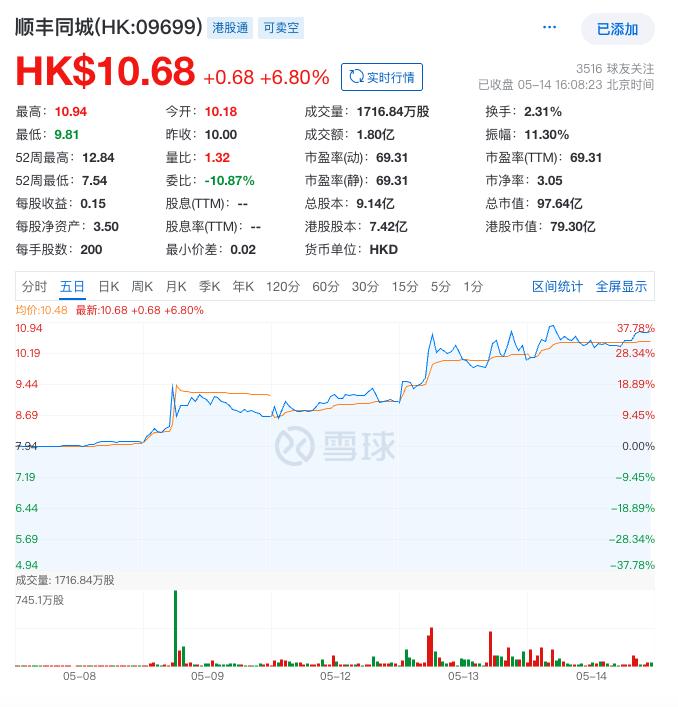
顺丰同城股价大涨,外卖大战的赢家其实是第三方即配
3 6 Ke· 2025-05-14 11:39
Core Viewpoint - The recent competition in the local life service sector, particularly in the food delivery market, has become a major focus of commercial competition in China, driven by the entry of JD.com into the market and the responses from Meituan and Ele.me [1][3]. Group 1: Market Dynamics - The market regulatory authorities have engaged with major platforms like JD.com, Meituan, and Ele.me to guide the industry towards healthier development rather than to stifle competition [1]. - The ongoing battle in the food delivery sector is part of a larger competition for the trillion-dollar instant retail market, which is crucial for consumer upgrades and the long-term development of the digital economy [1]. - The initial market reaction to JD.com's entry was one of fear, primarily due to concerns over price wars and the potential dilution of profit margins for all players involved [3][5]. Group 2: Competitive Landscape - The competition has led to increased delivery orders, benefiting third-party logistics providers like SF Express, which can capitalize on the surge in demand while maintaining operational efficiency [5][7]. - SF Express has positioned itself as a neutral third-party logistics provider, allowing it to benefit from the increased demand for delivery services without being tied to any single platform [7][10]. - The market has begun to recognize that the delivery sector is large enough to accommodate multiple players, and the competition may actually enhance the overall market rather than diminish it [5][8]. Group 3: Financial Performance and Growth - SF Express reported a 39% year-on-year increase in active merchant numbers, reaching 650,000, with significant new partnerships established with key accounts [13]. - The financial performance of SF Express has shown substantial growth, with both revenue and net profit increasing despite the competitive pressures in the market [14][15]. - The recent surge in SF Express's stock price indicates a market reassessment of its value, suggesting that investors are recognizing its unique position in the evolving landscape of instant retail [15].