
外卖配送

Search documents
税收大数据透露我国数实融合发展态势良好
Zheng Quan Ri Bao Wang· 2025-12-27 01:25
Group 1 - The core point of the article emphasizes the deep integration of the digital economy and the real economy as a key component in building a modern industrial system and promoting high-quality development [1][2] - Data from the National Taxation Administration indicates that the digital economy has maintained rapid development this year, with significant improvements in digital industrialization and substantial investments in industrial digitization [1][2] - The sales revenue of core industries in the digital economy increased by 10% year-on-year in the first 11 months, outpacing the overall growth rate of enterprises in the country [1][2] Group 2 - Manufacturing enterprises have increased their investment in digital transformation, with the amount spent on digital technology procurement rising by 11.2% year-on-year in the first 11 months [2] - New business models driven by data elements have flourished, with sales revenue from these new models growing by 6.3% year-on-year [2] - The National Taxation Administration plans to continue implementing tax incentives to support technological innovation, facilitating the digital transformation of enterprises and promoting the deep integration of the digital and real economies [2]
外卖配送,“慢一点”又何妨?
Xin Lang Cai Jing· 2025-12-26 00:35
Core Viewpoint - The article discusses the need for a shift in the fast-paced delivery model of the food delivery industry, advocating for a "slow down" approach to enhance safety and improve the overall ecosystem for delivery riders, businesses, and consumers [1][2][3] Group 1: Industry Challenges - The current delivery model is heavily focused on speed, which has led to safety risks and increased internal competition among delivery riders [1] - Riders are pressured to deliver quickly, often resulting in low earnings and high stress, with reports of earnings as low as 100 yuan for 8 hours of work [1] - The algorithm-driven approach has created a situation where riders feel they cannot afford to slow down, leading to potential safety hazards, including systems that may direct riders to take unsafe routes [1] Group 2: Proposed Solutions - A reevaluation of the balance between efficiency and rider welfare is necessary, as the current model does not achieve a win-win situation for all parties involved [2] - Initiatives in Beijing have shown that implementing measures such as "smart meal pickup" and adjusting algorithms to prioritize average delivery times can improve the situation without slowing down service [2] - The removal of penalties for late deliveries in certain areas has led to reduced disputes and improved stability for riders, ultimately enhancing service reliability [2] Group 3: Broader Implications - Slowing down delivery times can contribute to a more respectful work environment for riders, allowing them to complete their tasks safely and efficiently [3] - Consumers may experience slightly longer wait times, but this can result in better quality service and fewer complaints [3] - The industry can benefit from a more humane approach to algorithm design, which aligns with social responsibility and promotes sustainable practices [3]
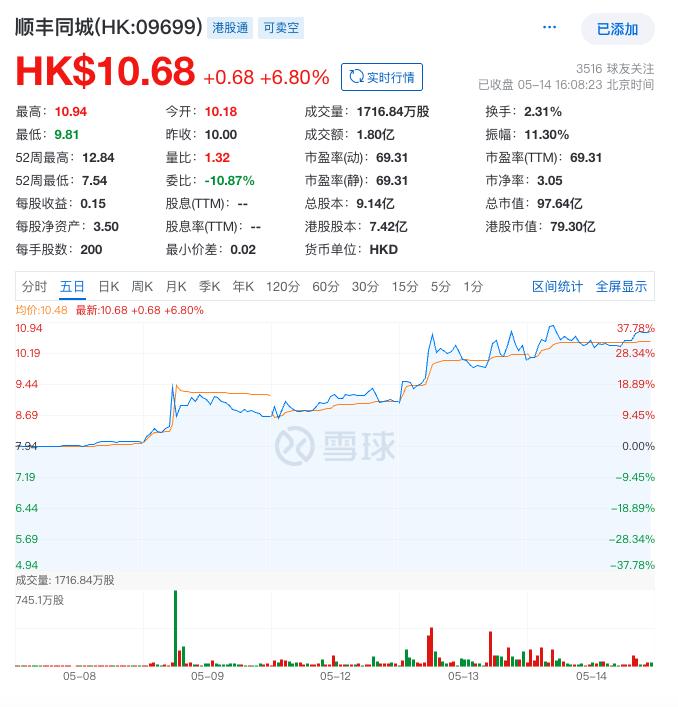
顺丰同城股价大涨,外卖大战的赢家其实是第三方即配
3 6 Ke· 2025-05-14 11:39
Core Viewpoint - The recent competition in the local life service sector, particularly in the food delivery market, has become a major focus of commercial competition in China, driven by the entry of JD.com into the market and the responses from Meituan and Ele.me [1][3]. Group 1: Market Dynamics - The market regulatory authorities have engaged with major platforms like JD.com, Meituan, and Ele.me to guide the industry towards healthier development rather than to stifle competition [1]. - The ongoing battle in the food delivery sector is part of a larger competition for the trillion-dollar instant retail market, which is crucial for consumer upgrades and the long-term development of the digital economy [1]. - The initial market reaction to JD.com's entry was one of fear, primarily due to concerns over price wars and the potential dilution of profit margins for all players involved [3][5]. Group 2: Competitive Landscape - The competition has led to increased delivery orders, benefiting third-party logistics providers like SF Express, which can capitalize on the surge in demand while maintaining operational efficiency [5][7]. - SF Express has positioned itself as a neutral third-party logistics provider, allowing it to benefit from the increased demand for delivery services without being tied to any single platform [7][10]. - The market has begun to recognize that the delivery sector is large enough to accommodate multiple players, and the competition may actually enhance the overall market rather than diminish it [5][8]. Group 3: Financial Performance and Growth - SF Express reported a 39% year-on-year increase in active merchant numbers, reaching 650,000, with significant new partnerships established with key accounts [13]. - The financial performance of SF Express has shown substantial growth, with both revenue and net profit increasing despite the competitive pressures in the market [14][15]. - The recent surge in SF Express's stock price indicates a market reassessment of its value, suggesting that investors are recognizing its unique position in the evolving landscape of instant retail [15].

DoorDash(DASH.US)业绩超预期 豪掷51亿美元双线收购
智通财经网· 2025-05-06 12:53
Group 1 - DoorDash announced two major acquisitions: a $1.2 billion cash purchase of hotel technology company SevenRooms Inc. and a $3.9 billion acquisition of London-based delivery platform Deliveroo Plc, reflecting its ambition for global expansion [1] - The acquisition of SevenRooms is expected to enhance DoorDash's high-end restaurant client base, while the Deliveroo acquisition opens up the UK and European markets [1][2] - DoorDash's Q1 financial results showed total revenue of $3 billion, slightly below analyst expectations, but net profit of $193 million exceeded market consensus, with total order volume reaching 732 million, a year-on-year increase of 18% [2] Group 2 - DoorDash plans to increase investment in sales and product features for SevenRooms to expand its market coverage and enhance its operational and marketing solutions [2] - The company expects total order value for the current quarter to be between $23.3 billion and $23.7 billion, aligning with Wall Street's expectations [3] - Despite strong consumer demand, ongoing investments in new business categories and international markets are putting pressure on DoorDash's profit forecasts, with adjusted EBITDA expected to be between $600 million and $650 million, below average expectations [3]
