可豆陪陪AI玩具

Search documents
AI玩具看着很美,但离成功还很远
Xin Lang Cai Jing· 2025-11-06 12:30
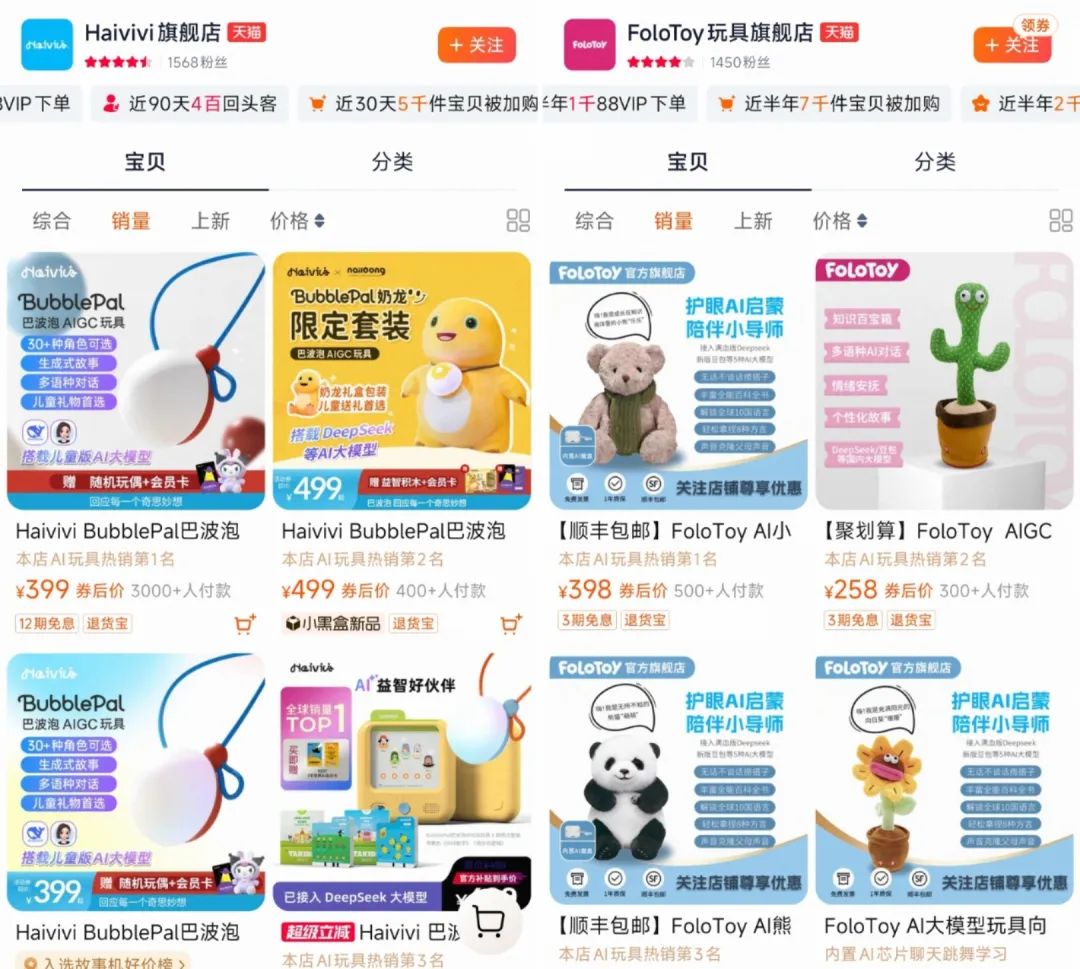
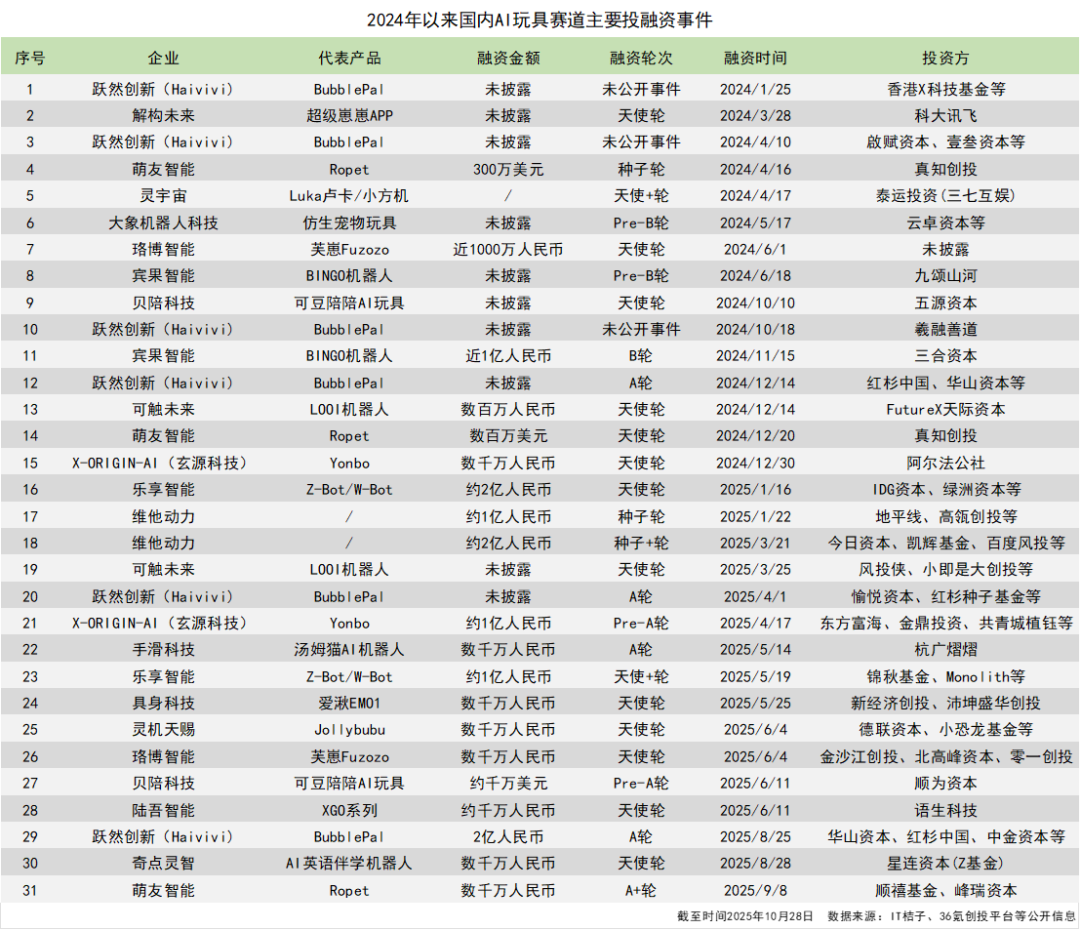
Core Insights - The AI toy industry is experiencing rapid growth, with significant investment and market potential, but faces challenges in hardware, user acceptance, and distribution channels [1][5][12] Investment and Market Activity - The AI toy sector has seen at least 31 investment events in 2024, with 16 major funding rounds since 2025, indicating a surge in both the number and amount of investments [2][4] - Major investment firms and tech companies are actively participating, with over 100 institutions involved in AI toy investments [4][5] Market Size and Growth Potential - The global AI toy market is projected to exceed $11 billion in 2024 and reach $58 billion by 2030, with an annual growth rate of over 20% [6] - In China, the market is expected to surpass $10 billion, with a compound annual growth rate exceeding 70% [6] Consumer Demand and Sales Performance - AI toys have shown impressive sales figures, with products like BubblePal selling over 250,000 units and generating over $10 million in revenue [6][7] - Sales of AI toys surged by 600% in the first half of 2025 compared to the previous period, with some stores introducing over 10 new AI toy models monthly [7] Profit Margins and Business Viability - AI toys offer higher profit margins compared to traditional toys, with basic models achieving 50-65% margins and high-end products reaching up to 90% [7] - The number of companies in the AI toy sector in China has reached 1,766, indicating a competitive landscape [7] Technological Advancements - The growth of AI toys is driven by advancements in AI technologies, including natural language processing and deep learning, which enhance user interaction [8][9] - The availability of affordable AI models has lowered development costs, making it easier for companies to enter the market [9] Market Segmentation and Target Audience - AI toys are expanding beyond traditional child-focused products to cater to a broader audience, including young adults and seniors, driven by emotional companionship needs [9][10] - Differentiated products are emerging to target specific demographics, such as educational toys for young children and companionship products for adults [9] Regulatory and Supply Chain Support - Government initiatives, such as the "Artificial Intelligence +" action plan, are promoting the integration of AI in various industries, including toys [10] - Guangdong province's robust toy manufacturing ecosystem supports the rapid development and production of AI toys [10] Challenges and Industry Concerns - Despite the promising outlook, the AI toy industry faces significant hurdles, including high hardware costs, user acceptance issues, and distribution challenges [12][13] - The industry has a high failure rate, with many startups struggling to survive due to operational difficulties and market competition [12][14] - User feedback indicates dissatisfaction with product performance, leading to high return rates of 30-40% [15]

BubblePal不到一年卖出1个亿,AI玩具的风吹到哪了?
3 6 Ke· 2025-06-27 00:49
Core Insights - The AI toy market is experiencing significant growth, with companies like Haivivi and FoloToy reporting impressive sales figures, indicating a shift from skepticism to acceptance of AI toys as a legitimate market segment [1][4][5] - The industry is witnessing a surge in investment, with at least 27 financing events recorded in 2024, including several multi-million dollar rounds, highlighting the increasing interest from investors [3][4] - AI toys are characterized by their ability to provide personalized interactions through advanced technologies such as multi-modal interaction and emotional analysis, setting them apart from traditional toys [5][6] Company Highlights - Haivivi's BubblePal has sold over 250,000 units since its launch, generating sales exceeding 100 million yuan [1] - FoloToy aims to sell 300,000 units this year, significantly increasing its sales target compared to the previous year [1] - Companies like Lobo Intelligent and Bepei Technology have also secured significant funding, indicating a robust investment landscape in the AI toy sector [2][3] Market Dynamics - The AI toy market is categorized into various segments, including smart pendants, interactive dolls, and robotic toys, each offering unique features and price points [5][10] - The price range for AI toys varies widely, with simpler models priced under 500 yuan and advanced robotic toys reaching several thousand yuan [10][11] - The market is primarily driven by children's products, but there is growing potential in emotional companionship toys targeting adults and seniors [11][14] Investment Trends - The AI toy sector has seen a mix of traditional toy manufacturers and tech startups entering the market, with established companies leveraging their IP to create AI-enhanced products [6][16] - Notable investments include Haivivi's partnerships with various venture capital firms and the strategic collaborations between traditional toy companies and tech firms [4][6][16] - The trend of integrating popular IPs into AI toys is gaining traction, with companies like FoloToy and Haivivi exploring collaborations with well-known brands to enhance market appeal [15][16] Future Outlook - The development of AI toys is expected to accelerate as technology costs decrease, allowing for more innovative products that can engage users on a deeper emotional level [14][21] - The potential for creating new IPs within the AI toy space is significant, with companies exploring unique designs and narratives to attract consumers [18][21] - As the market matures, the emergence of iconic brands similar to LABUBU is anticipated, driven by the intersection of technology and creative product design [21]