
吉普

Search documents
巨亏1800亿!全球第四大车企,栽在电动车上了?
电动车公社· 2026-02-27 16:07
Core Viewpoint - Stellantis, the world's fourth-largest automaker, reported its first annual loss in history, with a net loss of €22.3 billion (approximately ¥180 billion), raising concerns about its strategic direction and electric vehicle (EV) transition [1][5][6]. Group 1: Financial Performance - In 2025, Stellantis experienced a significant decline in net profit, dropping 70% year-on-year in 2024, and reported a net loss of €22.3 billion in 2025 [3][5]. - The company’s adjusted operating income turned negative at €842 million, compared to a profit of €8.648 billion in 2024, indicating a drastic shift in financial health [1][13]. - Stellantis' total shipments in 2025 were 5.484 million units, with a slight increase of 1% compared to 2024 [1][15]. Group 2: Strategic Challenges - The new CEO, Antonio Filosa, attributed the massive losses to a failed electric vehicle transition strategy, highlighting the misjudgment of the speed of energy transition and customer preferences [8][10]. - Stellantis undertook a costly business restructuring in 2025, amounting to €22.2 billion, primarily focused on adjusting future product plans and scaling down its EV supply chain [11][13]. - The company faced challenges due to overlapping brand positioning within its portfolio, making it difficult to implement a unified electric vehicle strategy [32][36]. Group 3: Market Dynamics - The North American market contributed over half of Stellantis' profits, while European sales, despite being nearly half of total volume, did not yield high average prices [56][59]. - The demand for electric vehicles in Europe and the U.S. remains weak, with Europe achieving only 19.7% of new car sales being electric and the U.S. below 10% [22][27]. - Stellantis' reliance on traditional fuel vehicles is evident as it plans to maintain production of V8 models and reduce the number of electric models in response to market demand [54][60]. Group 4: Future Outlook - Stellantis plans to invest over €50 billion by 2030 to build its electric vehicle supply chain, but the aggressive targets set by the previous CEO have been reassessed under the new leadership [47][48]. - The company is shifting its focus back to market demands and customer preferences, moving away from the previous aggressive electric vehicle transition goals [54][55]. - The automotive industry is witnessing a broader trend of traditional manufacturers reassessing their electric vehicle strategies, with many opting to continue producing internal combustion engine vehicles for a longer period [28][29].


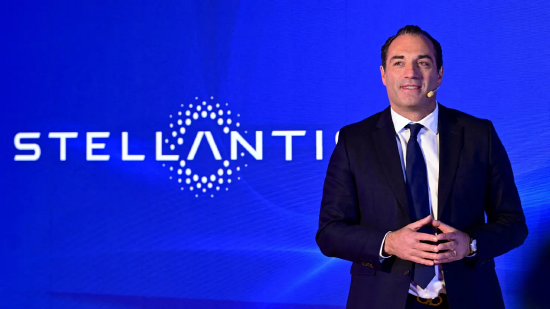
斯特兰蒂斯首席执行官称车企整合发展实力更强了
Xin Lang Cai Jing· 2026-02-06 15:27
Core Viewpoint - Stellantis is facing significant challenges, leading to calls for brand or company split, but the CEO Antonio Filosa insists on maintaining a unified approach for future development [2][10]. Group 1: Business Restructuring - Stellantis announced a business restructuring involving a €22 billion (approximately $26 billion) impairment charge, which includes scaling back electrification plans and reintroducing V8 engines in U.S. models [2][12]. - The impairment charge breakdown includes €14.7 billion (approximately $17.3 billion) related to product planning adjustments, €2.1 billion (approximately $2.5 billion) for electric vehicle supply chain adjustments, €4.1 billion (approximately $4.8 billion) for warranty costs, and €1.3 billion (approximately $1.5 billion) for restructuring European operations [4][12]. Group 2: Market Performance and Strategy - Stellantis has seen a significant decline in market share, with global sales dropping from 6.5 million vehicles in 2021 to an estimated 5.7 million in 2024, a decrease of 12.3%, and a 27% drop in U.S. sales [8][15]. - The company's market share in the U.S. has fallen from 11.6% to 8%, and its global market share is projected to decrease from 8.1% in 2020 to an estimated 6.1% in 2025 [16]. - The CEO emphasized that the core mission is to achieve business growth by placing consumer preferences at the center of the company's strategy [2][11]. Group 3: Financial Implications - Stellantis has canceled its dividend for 2026 and plans to issue €5 billion (approximately $5.9 billion) in non-convertible hybrid bonds [5][12]. - Analysts have noted that the impairment charge is significantly higher than those taken by competitors Ford and General Motors, which may lead to further declines in stock price [14].
特朗普格陵兰岛关税威胁引发汽车巨头股价大跌
Xin Lang Cai Jing· 2026-01-19 08:56
Group 1 - The core issue is President Trump's announcement to impose tariffs on several European countries, which has led to a significant drop in stock prices of major European automotive companies [1][5]. - The European Stoxx Automotive and Parts Index fell by 2.3% around 8:18 AM London time, with major companies like Volkswagen, BMW, and Mercedes-Benz experiencing stock declines between 2.5% and 4% [2][6]. - Ferrari's stock dropped approximately 2% during early trading, while Stellantis, which owns brands like Jeep, Dodge, Fiat, Chrysler, and Peugeot, saw its Milan-listed shares fall by 2% [2][6]. Group 2 - Trump stated that starting February 1, a 10% tariff will be imposed on the UK, Denmark, Norway, Sweden, France, Germany, the Netherlands, and Finland, as part of his strategy to pressure Denmark regarding Greenland [2][6]. - He also indicated that the tariff rate would increase to 25% from June 1 for the same countries [3][7]. - European political leaders are expected to hold emergency meetings in the coming days to discuss countermeasures, as the automotive industry is particularly vulnerable to tariff policies due to its highly globalized supply chain and strong reliance on North American production [4][8].