
咖啡贷

Search documents
云南亮出年度“光彩答卷”
Xin Lang Cai Jing· 2026-02-10 20:03
Core Viewpoint - The Yunnan Provincial Guangcai Business Promotion Association's 2025 work report highlights the significant contributions of private enterprises to high-quality development and common prosperity in Yunnan, emphasizing their role in rural revitalization, public welfare, and economic growth [1][7]. Group 1: Political Guidance and Training - Yunnan Province is enhancing political leadership, evidenced by 65 agricultural entrepreneurs participating in training at Zhejiang University and over 300 individuals engaging in red education and rural revitalization demonstrations [2]. - Youth entrepreneurs are actively involved in rural revitalization projects, translating ideals into tangible development momentum [2]. Group 2: Rural Revitalization and Investment - Rural revitalization is identified as a primary focus, with 9,219 private enterprises engaging in 8,201 villages, implementing 8,595 projects, and investing 51.203 billion yuan, creating stable employment for 564,600 individuals [3]. - Systematic innovations include expanding leadership groups, developing replicable models, and creating specialized financial products to address land use and financing challenges [3]. Group 3: Employment and Community Support - Employment initiatives connect 7,318 private enterprises with over 90,000 job opportunities, significantly benefiting local communities, particularly in Menglian County, where a sugar industry upgrade project is expected to generate over 1 billion yuan in output and create jobs for over 300 ethnic minority individuals [4]. - The integration of private enterprise development with regional stability and community support is emphasized, showcasing a model for sustainable development [4]. Group 4: Philanthropy and Social Responsibility - The Yunnan Guangcai Foundation allocated 5.17 million yuan for 22 projects in 2025, demonstrating a commitment to modern philanthropy with a focus on transparency and accountability [5][6]. - The foundation's projects address diverse community needs, including education, healthcare, and environmental concerns, while maintaining a high standard of operational transparency [6]. Group 5: Future Directions - The Guangcai Association aims to deepen initiatives like "Ten Thousand Enterprises Revitalize Ten Thousand Villages" and enhance collaboration with other organizations to ensure alignment with Yunnan's high-quality development goals [6].
山东省政协委员李新峰:优化营商环境创新金融支持 推动中小企业高质量发展│聚焦2026山东两会
Jing Ji Guan Cha Bao· 2026-01-26 15:29
Core Viewpoint - The article emphasizes the need for optimizing the business environment and innovating financial support to promote the high-quality development of small and medium-sized enterprises (SMEs) in Shandong Province [1]. Group 1: Current Situation of SMEs - Shandong Province has over 2.6 million SMEs, contributing more than 60% of the provincial GDP, over 70% of tax revenue, and around 80% of employment [2]. - SMEs face challenges such as delayed policy implementation, insufficient financing accessibility, and an uncoordinated development ecosystem [2]. Group 2: Recommendations for Optimizing Business Environment - A digital service system for enterprises should be established, integrating policies at provincial, municipal, and county levels to create an AI platform for precise policy matching and online applications [3][4]. - The approval process should be streamlined by merging various stages into one, reducing required documents, and implementing a "one-stop" service [4]. - A collaborative development mechanism should be established, selecting 100 leading enterprises to share resources and support SMEs in entering supply chains [4][5]. - A regulatory environment that is inclusive and cautious should be created, implementing a "quiet period" for enterprises to focus on operations without regular inspections [5]. Group 3: Financial Support Innovations - SMEs in Shandong face significant financing challenges, particularly in securing loans due to insufficient collateral and high thresholds for first-time loans [6]. - Innovative financial support models include tailored credit products for specific industries and the establishment of a unified credit evaluation platform [7][8]. - The promotion of "no repayment" loans and emergency transfer services is recommended to alleviate financial pressure on SMEs [8]. - A supply chain financing service platform should be developed, allowing core enterprises to extend credit to SMEs within their supply chains [9].
云南金融系统有力有效支持实体经济发展——精准滴灌 纾困兴业
Xin Lang Cai Jing· 2026-01-13 20:54
Core Viewpoint - The financial system in Yunnan is effectively supporting the real economy, with a notable increase in loan volume and a decrease in interest rates, contributing to high-quality economic development [1][2]. Group 1: Financial Support for Agriculture - As of November 2025, the total loan balance for agriculture in Yunnan reached 1.39 trillion yuan, significantly supporting the agricultural sector [2]. - Innovative financial products like "Cane Loan" and "Cloud Flower Loan" have been introduced to address specific financing needs in the sugarcane and jasmine flower industries, with the latter receiving 11 million yuan in loans [1][2]. - Agricultural facility mortgage loans in pilot areas reached 642 million yuan by the end of Q3 2025, marking a 45.6% year-on-year increase, addressing long-standing collateral issues in the agricultural sector [2]. Group 2: Financial Innovation and Technology - A technology-focused agricultural company received a 10 million yuan credit loan through the "Science and Technology Loan" program, enhancing its processing capacity by 40% and reducing loss rates by 15% [4]. - The balance of technology loans in Yunnan grew by 10.79% year-on-year, with loans to technology SMEs increasing by 15.65% [5]. - The establishment of a financing credit service platform has facilitated connections between 241 financial institutions and 183.7 million registered enterprises, leading to a total credit issuance of 573.5 billion yuan [6]. Group 3: Financial Support for Tourism and Elderly Care - The "Golden Travel Loan" product provided 500,000 yuan to support a hospitality business in Lugu Lake, showcasing financial support for the tourism sector [7]. - Loans for the elderly care industry increased by 133.64% year-on-year, with cultural, entertainment, transportation, and accommodation loans reaching 1.14 trillion yuan, a 70% increase compared to the end of the 13th Five-Year Plan [7][8]. - Financial resources are being directed towards developing a comprehensive financial ecosystem for tourism, including support for various new business models in the sector [8].
升“咖”正当时
Jin Rong Shi Bao· 2026-01-13 04:42
Core Viewpoint - The coffee industry in Baoshan, Yunnan, is undergoing a transformation driven by financial empowerment, addressing the challenges of branding and pricing while enhancing the income of coffee farmers [1][2]. Financial Empowerment - The People's Bank of China in Baoshan has initiated a financial transformation focusing on credit value discovery, converting soft information into assessable hard assets, and introducing specialized loan products like "Coffee Loan" and "Cloud Coffee Loan" [2]. - As of November 2025, the loan balance for the Baoshan coffee industry reached 568 million yuan, a year-on-year increase of 160.2%, benefiting 1,943 market entities [1][2]. Supply Chain Financing - Financial institutions are providing supply chain financial services, such as "Cloud Coffee Chain Financing," to support the seasonal and urgent funding needs of coffee procurement and processing [3]. - By November 2025, a total of 118 million yuan was allocated to coffee supply chain financial products, serving 796 operating entities and reducing the sales return cycle for farmers from 30-45 days to 7-15 days, with an average annual interest savings of approximately 2,100 yuan per household [3][4]. Asset Utilization - Innovative financing methods, including movable asset pledge financing, have been developed to support coffee processing enterprises by leveraging their inventory and accounts receivable [4]. - By November 2025, banks had provided 40 million yuan in accounts receivable pledge financing, supporting an additional 4,000 tons of coffee processing capacity and enabling 35 processing enterprises to expand their procurement radius by 3 to 5 administrative villages [4]. Integration and New Business Models - Financial institutions are developing customized credit products to support the integration of coffee with tourism and cultural experiences, enhancing the value of coffee-related businesses [5]. - By November 2025, loans for coffee tourism integration projects reached 88.68 million yuan, a 189.05% increase from the previous year, supporting the establishment of 8 projects and increasing average annual income for surrounding farmers by approximately 13,000 yuan [5][6]. Overall Impact - The comprehensive financial support has translated into enhanced competitiveness for the coffee industry, with the area under coffee cultivation expected to exceed 124,300 acres and the total output value projected to surpass 10 billion yuan by 2025 [6].
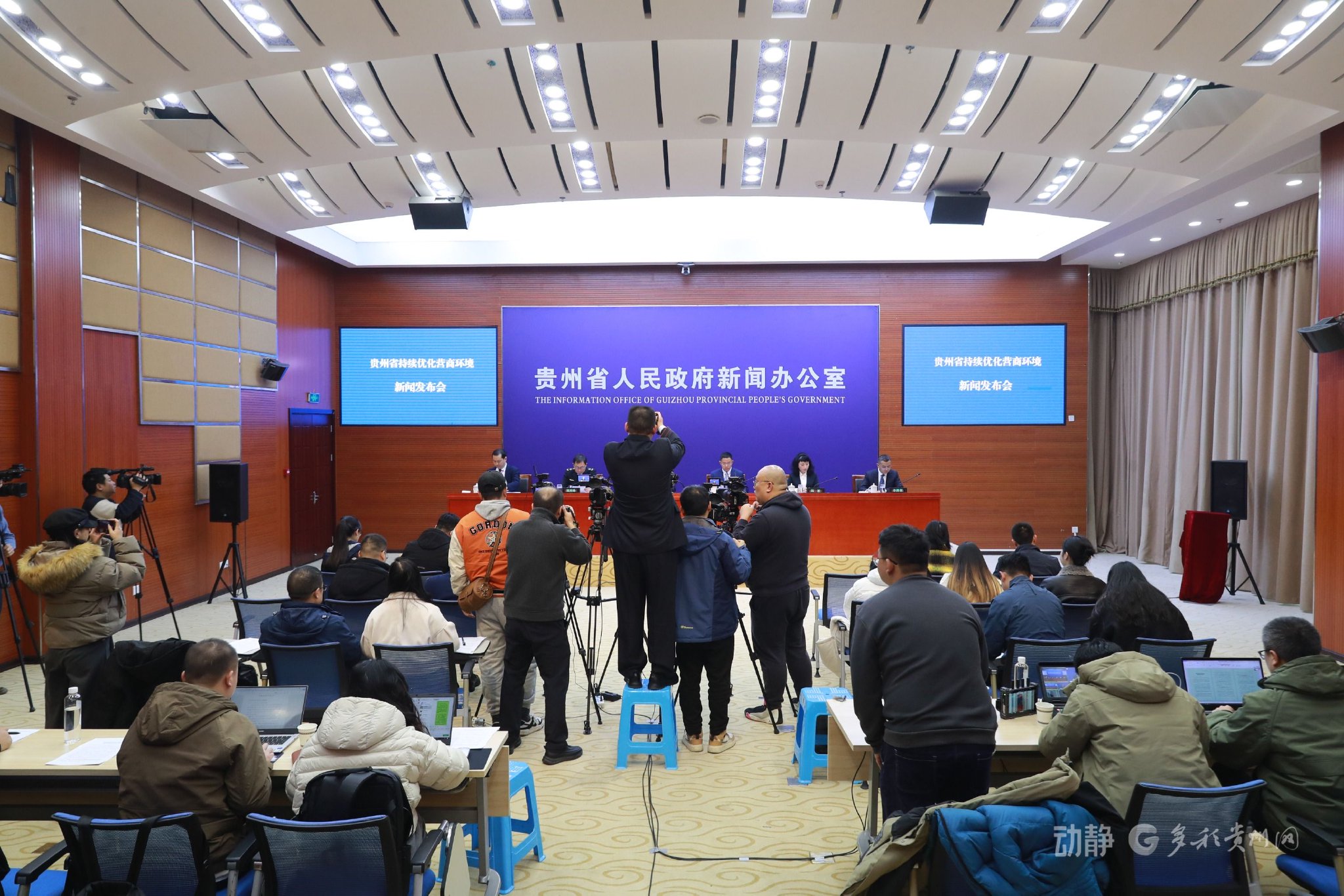
贵州推动营商环境持续优化
Xin Lang Cai Jing· 2025-12-29 19:19
Core Viewpoint - Guizhou Province is actively optimizing its business environment through various reforms and initiatives aimed at addressing key issues raised by enterprises and society, enhancing the overall investment climate in the region [1][2][3]. Group 1: Key Initiatives and Actions - The province has implemented a comprehensive plan to improve the business environment, addressing issues such as government debt to enterprises, irregular enforcement of laws, and interference in economic disputes [1]. - A special action has been launched to tackle financing difficulties for private and small to medium-sized enterprises, resulting in a 0.45 percentage point decrease in bank loan interest rates year-on-year [1][2]. - The introduction of innovative financial products like "Guishu Loan" and "Coffee Loan" has provided approximately 8.5 billion yuan in credit support [2]. Group 2: Reforms and Training - Continuous reforms include the "One Window" service model and the integration of artificial intelligence in government services, with 60% of the "Four Modernizations" fund allocated to private enterprises [2]. - Training programs for enhancing the business environment have reached 11,600 participants, with 98 officials sent to frontline services for practical experience [2]. - The establishment of a platform called "Enterprise Home" aims to streamline the handling of enterprise requests and improve service standards [2][3]. Group 3: Future Plans - In 2026, the province plans to continue targeted measures to address prominent business environment issues, focusing on breaking local protectionism and enhancing service capabilities [3]. - The development of a social credit system and a tailored business environment evaluation system will be prioritized to better reflect the unique characteristics of Guizhou [3].
贵州多措并举优化营商环境,2025年超八成企业认可改善成效
Xin Lang Cai Jing· 2025-12-29 09:58
Core Viewpoint - The Guizhou provincial government has prioritized optimizing the business environment, establishing a leadership group to implement significant improvements in this area [1][3]. Group 1: Government Initiatives - In 2025, President Xi Jinping emphasized the importance of optimizing the business environment during his visit to Guizhou, providing essential guidance for the province's efforts [3]. - The provincial government has developed the "Overall Plan for Optimizing the Business Environment in Guizhou," which includes collaborative efforts from various stakeholders, including representatives from the National People's Congress and local business associations [3][4]. - A series of measures have been implemented to address prominent issues raised by businesses, including the establishment of guidelines for investment and the resolution of government debts owed to enterprises [4][5]. Group 2: Financial Support and Investment - The average loan interest rate for enterprises has decreased by 0.45 percentage points year-on-year, with the balance of non-repayable loans for small and micro enterprises increasing by 86.42% [4]. - Guizhou has introduced innovative financial products, such as "Guizhou Data Loan" and "Coffee Loan," providing approximately 8.5 billion yuan in credit support [5]. - The province's "Four Modernizations" fund has allocated 60% of its investment to private enterprises [5]. Group 3: Training and Capacity Building - Over the past year, 11,600 officials have received training focused on enhancing their awareness of service, integrity, and compliance [6]. - The provincial government has established contact points for non-public economic organizations, with 185 enterprises identified as key contacts for support [6]. Group 4: Evaluation and Future Plans - According to a survey by the All-China Federation of Industry and Commerce, 82.54% of sampled enterprises believe that the business environment in Guizhou has improved [7]. - The provincial government acknowledges the need for further improvements in the business environment, including enhancing the efficiency of handling enterprise requests and increasing the service capabilities of officials [9]. - In 2026, Guizhou plans to continue implementing targeted measures to address outstanding issues in the business environment and to deepen reforms by benchmarking against advanced provinces [10][11].

金融“活水”润峡谷 怒江银行业特色金融服务助力乡村振兴
Zhong Guo Jin Rong Xin Xi Wang· 2025-12-26 07:15
Core Viewpoint - The banking industry in Nujiang Prefecture is leveraging financial support to promote high-quality development while balancing ecological protection and local economic needs [1] Group 1: Financial Support for Ecological Protection - The People's Bank of China in Nujiang has implemented policies to support biodiversity conservation and rural revitalization, emphasizing the integration of ecological and economic development [1] - Financial institutions are encouraged to focus on sustainable practices, as seen in the issuance of the "Financial Support for Biodiversity Conservation Implementation Plan" [1] Group 2: Transformation of Local Industries - The banking sector has adopted a "leading enterprise + cooperative + farmer" model to enhance the financial ecosystem for the grass fruit industry, resulting in a significant increase in production capacity [2] - A loan of 3 million yuan for the Linxia economy has quadrupled the production capacity of a local company, leading to an annual output value exceeding 70 million yuan and an average income increase of 20,000 yuan for farmers [2][3] Group 3: Financial Innovations for Agriculture - Financial products like "Tea Loan" and "Cloud Tourism Homestay Loan" have been introduced to support local farmers and the burgeoning homestay industry, facilitating access to credit [4] - A total of 49 homestays in the Nujiang region have received 44 million yuan in loans, enabling upgrades and improvements to their facilities [4] Group 4: Support for Small and Micro Enterprises - Continuous financial support has been provided to small enterprises, exemplified by a breeding farm that expanded its scale from zero to 68 animals with the help of incremental loans over seven years [5] - This support not only addresses financing challenges but also creates job opportunities for local residents [5] Group 5: Community-Centric Financial Services - Innovative service models have been developed to enhance financial accessibility, such as mobile banking services reaching remote areas [6] - The implementation of a transparent "three public" system for green credit ensures accountability and builds trust within the community [6] Group 6: Overall Impact on Local Development - The financial initiatives have fostered a sense of hope and prosperity in the region, with local residents experiencing improved livelihoods through various economic activities [7] - The collaboration between financial institutions and local communities is contributing to a sustainable development narrative in Nujiang Prefecture [7]