哈苏相机

Search documents
用镜头校准那些年的模样
Xin Lang Cai Jing· 2026-02-27 07:06
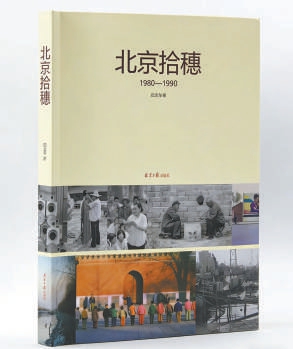
Core Perspective - The article discusses the photography collection "Beijing Harvest" by Ba Yier, which serves as a visual diary capturing the essence of Beijing life from 1980 to 1990, emphasizing the importance of everyday moments and the emotional connection to the city [3][15]. Summary by Sections Overview of the Photography Collection - "Beijing Harvest" is not just a photography book but a carefully woven visual diary consisting of over 400 film images that document the vibrant life and real pulse of Beijing during the 1980s [3][15]. - The author, Ba Yier, a Mongolian born and raised in Beijing, utilized high-quality photography equipment to capture the daily lives of ordinary people rather than grand narratives [3][13]. Themes and Structure - The collection is divided into five sections: Parks, Diversity, Commerce, Livelihood, and Culture, which together create a vivid panorama of life in 1980s Beijing [13]. - It highlights the slow yet warm pace of life, showcasing scenes of bustling markets, cultural activities, and the warmth of community interactions [13][14]. Emotional and Historical Significance - The photographs reflect a deep empathy and understanding of the subjects, capturing both the mundane and the extraordinary aspects of life, thus forming an emotional archive of Beijing's citizens [14][15]. - The book serves as a multidimensional archive of Beijing life, illustrating that history encompasses not only significant events but also the daily experiences of its residents [15][16]. Reflection on Memory and Daily Life - The collection encourages readers to reconnect with collective memories, evoking nostalgia for simpler times and everyday experiences that shaped the city [15][16]. - It emphasizes the value of documenting daily life, suggesting that even ordinary moments hold significant historical importance and should be cherished [16][17]. Call to Action - Ba Yier's work serves as a reminder that everyone can participate in preserving memories, whether through photography or other means, to combat the erosion of time [17].

徕卡要被卖掉了,中国公司或将接盘
3 6 Ke· 2026-01-26 13:19
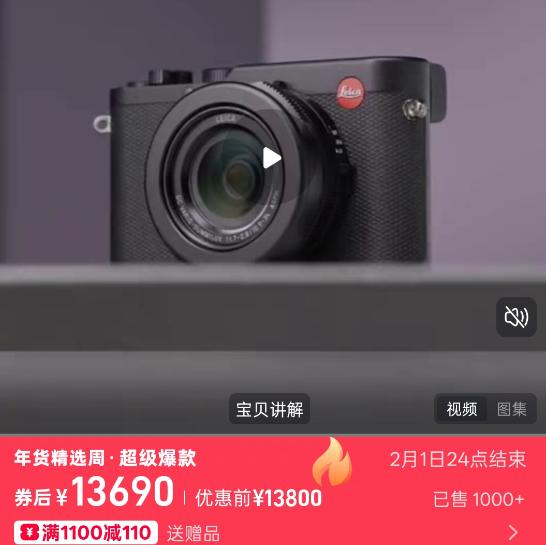
Group 1 - Leica, a century-old high-end camera brand, is seeking a new owner, with its two major shareholders considering selling the controlling stake for approximately €1 billion, equivalent to about 8.2 billion RMB [1][3] - Potential buyers include Chinese investment firm HSG (formerly Sequoia Capital China), European private equity firms, and Asian optical groups, although negotiations are still in the early stages [1][3] - Leica's revenue for the last fiscal year was €596 million, with growth slowing significantly to 7.6%, which is a core reason for the shareholders' decision to sell [3] Group 2 - Leica's high valuation is attributed not only to its historical brand strength but also to its collaborations with Chinese smartphone manufacturers [4] - The partnership with Huawei began in 2016, enhancing Huawei's high-end smartphone market presence by improving camera quality, leading to significant sales increases, such as the Huawei P9 selling over 12 million units, a 152% increase from its predecessor [6][4] - After the partnership with Huawei ended in March 2022, Xiaomi quickly took over, with a deeper collaboration that included Leica engineers directly involved in product development, resulting in the launch of over 20 smartphones together [7][9] Group 3 - DJI, a domestic drone giant, previously acquired the Swedish brand Hasselblad, showcasing a successful model of integrating a historic brand into a modern business framework [10][12] - DJI's investment in Hasselblad included strategic support and technology sharing, allowing both companies to thrive without interfering with Hasselblad's operations [12] - If HSG successfully acquires Leica, it could follow a similar path as DJI with Hasselblad, leveraging domestic resources to revitalize the brand and foster innovation [12]
首发经济成推动中国城市消费升级引擎
Xin Hua Wang· 2025-09-19 04:52
Core Insights - The article highlights the emergence of the "first-release economy" as a driving force for consumer upgrades in Chinese cities, particularly in Tianjin [2][3][5] Group 1: First-Release Economy - Tianjin is actively promoting the first-release economy as a key strategy to enhance urban consumption levels, focusing on attracting quality brands and new business formats [3][4] - The Tianjin Municipal Bureau of Commerce, along with eight other departments, has implemented measures to develop a first-release economic ecosystem, aiming to create a hub for both domestic and international brands [2][4] Group 2: Consumer Experience - The opening of flagship stores, such as the Hema Fresh store in Tianjin, has created a vibrant shopping environment, attracting large crowds and enhancing the shopping experience with innovative product offerings [2][3] - The DJI and Hasselblad fusion store in Tianjin has become a popular destination for tech enthusiasts, emphasizing immersive experiences and interactive spaces for consumers [3][4] Group 3: Cultural Integration - Tianjin is exploring the integration of art and commerce through initiatives like the Tianmei Art District, which combines shopping with public art exhibitions, enriching the consumer experience [4] - The first-release economy is evolving from merely introducing new products to encompassing diverse lifestyle consumption, including shopping, dining, and cultural experiences [4][5] Group 4: National Trends - The first-release economy is gaining traction nationwide, with cities like Shanghai and Beijing implementing policies to support the introduction of new flagship stores, enhancing consumer engagement and interaction [5] - The first-release economy is seen as a reflection of urban competitiveness, driving innovation across various sectors and creating new pathways for rapid consumer growth [5]