
土家织锦

Search documents
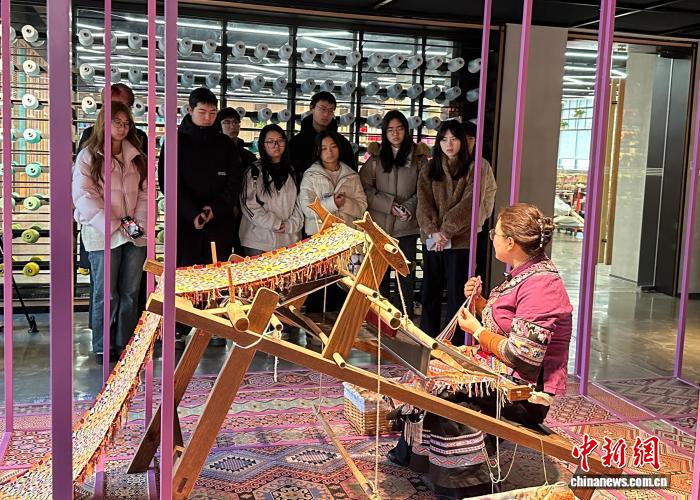
湖南张家界:“非遗+”赋能 土家织锦“织”出产业共富路
Zhong Guo Xin Wen Wang· 2026-01-29 00:03
Core Viewpoint - The integration of traditional Tujia weaving with modern design and technology is driving economic growth and cultural preservation in Zhangjiajie, Hunan Province. Group 1: Cultural Significance - Tujia weaving, known as "Xilankapu," serves as a "living text" for the Tujia people, encapsulating their history and cultural values through intricate patterns that reflect their observations of nature and aspirations for a better life [2][4]. - Each design, such as "Forty-eight Hooks" and "Magpie Disturbing Plum," carries deep cultural meanings, symbolizing unity and hope for a prosperous life [2]. Group 2: Economic Development - The company has developed over 600 products that blend traditional weaving with modern aesthetics, achieving sales in more than 30 countries and regions, with a projected revenue exceeding 90 million yuan by 2025 [2]. - The "Mama Factory" model has created job opportunities for over 700 women, allowing them to balance family responsibilities with stable income, averaging 6,000 to 7,000 yuan per month [4]. Group 3: Education and Training - A partnership with Zhangjiajie Tourism Vocational School aims to establish a training base, integrating weaving into the curriculum and producing over a hundred skilled "campus weavers" [6]. - The initiative encourages youth participation in traditional crafts, ensuring the continuation of Tujia weaving as a living practice rather than a museum artifact [6]. Group 4: Future Plans - The company plans to expand production and establish standardized workshops for intangible cultural heritage, enhancing international design collaborations to promote Tujia weaving globally [6].

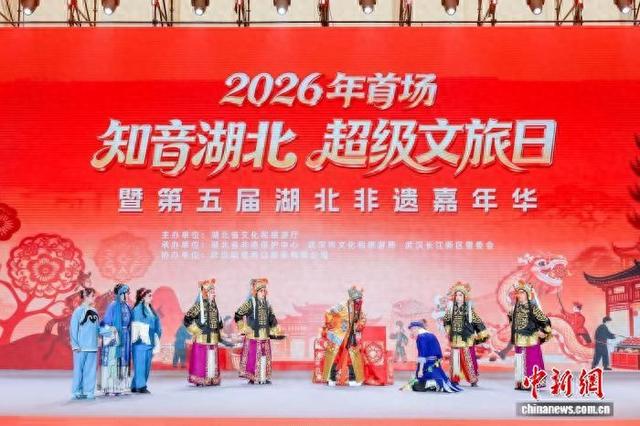
第五届湖北非遗嘉年华启幕
Xin Lang Cai Jing· 2026-01-17 13:35
Group 1 - The "Knowledge Hubei Super Cultural Tourism Day" and the 5th Hubei Intangible Cultural Heritage Carnival have commenced in Wuhan, showcasing nearly 200 intangible cultural heritage projects and over 500 inheritors, with more than 3,000 unique cultural tourism products on display [1][3] - The event integrates cultural exhibitions, skill exchanges, immersive experiences, and consumer benefits, featuring dynamic digital presentations of nine series and over 100 Hubei intangible cultural heritage items, highlighting the fusion of traditional crafts like Chu lacquerware and modern design [3][4] - The event includes various performances, such as regional poetry linked to local scenery, and showcases traditional arts like Huangmei opera and intangible cultural heritage lanterns, with interactive experiences and food stalls attracting large crowds [3][4] Group 2 - The "Knowledge Hubei Super Cultural Tourism Day" is held across four main venues in Huanggang, Jingzhou, Enshi, and Wuhan, each featuring unique local intangible cultural heritage projects and interactive activities [4] - During the carnival, various cultural activities such as Hubei opera performances, master lectures on intangible heritage, and local tourism promotions are scheduled to enhance public interest in visiting Hubei [4] - The event also includes the release of tourism discount policies, offering a total of 6 million yuan in consumer packages, 3 million yuan in ticket benefits, and 2.4 million yuan in consumption vouchers to encourage public participation [3]
金融如何助力 “非遗”传承与创新
Jin Rong Shi Bao· 2025-11-27 05:03
Core Insights - The development of intangible cultural heritage (ICH) in China emphasizes the balance between inheritance and innovation, particularly as ICH enters commercial fields, showcasing its cultural depth and appeal through collaborations with luxury brands [2][7] - Financial support is crucial for the productization, talent cultivation, and market promotion of ICH, enabling its effective release of cultural influence [2][3][6] Group 1: Current Status of ICH - As of December 2023, China has recognized over 100,000 representative projects of ICH across various levels, leading the world with 44 entries in the UNESCO ICH list, which totals 788 items from 150 countries [1] - The transition of ICH from small workshop operations to industrialization is exemplified by financial institutions supporting traditional crafts with modern technology [3] Group 2: Financial Support Mechanisms - Financial institutions are actively involved in the productization of ICH, as seen in the case of the Nanning branch of Industrial Bank linking traditional techniques to high-tech enterprises, resulting in over 40 patents and a transformation towards the health industry [3] - Agricultural banks in regions like Fujian and Chongqing are providing targeted financial support to local ICH practitioners, ensuring the sustainability and development of traditional arts [4][5] Group 3: Market Expansion and Promotion - Financial institutions are leveraging online and offline channels to broaden the sales avenues for ICH products, including the creation of online marketplaces and culturally themed banking services [6] - The international recognition of Chinese ICH is growing, with brands integrating traditional crafts into their offerings, indicating a significant opportunity for financial empowerment in this sector [7]