多菲角

Search documents
面包界的“隐形冠军”,正在中国闷声发财
虎嗅APP· 2026-01-16 13:34
Core Viewpoint - The article discusses the contrasting strategies of the global baking giant Bimbo Group in the Chinese market, highlighting its commitment to investment and localization despite a trend of foreign brands retreating from China [2][4]. Group 1: Bimbo's Market Position and Strategy - Bimbo Group is celebrating its 80th anniversary and 19 years in the Chinese market, amidst a challenging environment for foreign consumer brands [2]. - The company plans to invest $72 million (approximately 500 million RMB) in its Chinese operations from 2023 to 2024, indicating a strong belief in the market's potential [2]. - Bimbo's approach involves a multi-brand strategy, with products like "Manqueton" targeting health-conscious consumers and the Bimbo brand focusing on younger students and families [6]. Group 2: Localization and Brand Recognition - Bimbo has adopted a localized strategy, with a fully local team that has significant decision-making power, allowing it to adapt to the unique dynamics of the Chinese market [5]. - The company aims to enhance brand recognition through product strength, as seen with popular items like "Chabata" and "Super Cream" [4][5]. - Despite the focus on product-driven brand building, there remains a challenge in ensuring that consumers recognize the Bimbo brand behind its products [6][9]. Group 3: Channel Strategy and Market Challenges - Bimbo faces challenges in balancing traditional distribution networks with the rapid growth of new channels like e-commerce and O2O [6]. - The company is actively supporting its traditional channels while aggressively pursuing new ones, exemplified by the successful launch of a cheese burger in collaboration with Sam's Club [6]. - As Bimbo approaches its 20th anniversary in China, it recognizes the need to elevate its brand presence and adapt to the increasingly competitive health baking sector [10].

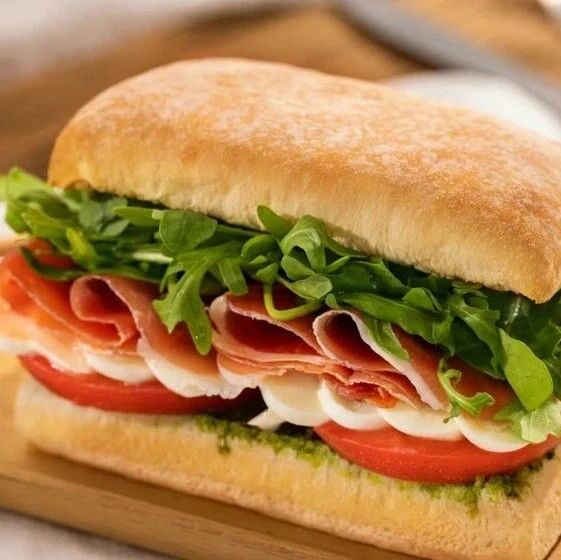
全球烘焙工业化的教科书:年销售额1600亿元的宾堡,如何用一片面包征服全球?
东京烘焙职业人· 2025-06-10 08:29
Core Viewpoint - The article highlights the significant growth and strategic evolution of Bimbo, a leading player in the global baking market, emphasizing its innovative approaches and market penetration strategies, particularly in China [3][12][18]. Group 1: Global Baking Market Overview - The global baking market reached a size of $440 billion in 2022, with the Americas accounting for 36.9% of the market share, and bread products dominating at 54.8% [3]. - Bimbo holds a 3.4% global market share, leading the industry ahead of competitors like Yamazaki (1.4%) and Flower Foods (0.7%) [3]. - As of 2023, Bimbo's annual revenue reached $22.5 billion (approximately 160 billion RMB), with a market capitalization exceeding $22.3 billion [3]. Group 2: Bimbo's Historical Growth - Founded in 1945 by Lorenzo Servitje in Mexico City, Bimbo started with 34 employees and faced early challenges, including product spoilage and competition [5]. - The introduction of glassine packaging in 1948 extended the shelf life of bread from 8 hours to 72 hours, revolutionizing the distribution of baked goods [5]. - Bimbo established a "central factory + capillary wholesale network" in the 1950s, covering 83% of small grocery stores in Mexico by 1963 [6]. Group 3: Global Expansion Strategy - Bimbo entered the U.S. market in 1984, initially facing losses but later adjusted its strategy through acquisitions, including Oroweat and Mrs. Baird's [7]. - The company expanded into Europe and Asia between 2000 and 2010, acquiring major local brands and significantly reducing waste rates in Spain [8]. - Bimbo implemented a "T+12 production rule," ensuring rapid order fulfillment and optimizing inventory turnover to 6.2 days [9]. Group 4: Insights from the Chinese Market - Bimbo's entry into China began with the acquisition of Beijing Panrico in 2006, followed by further acquisitions to create a multi-brand matrix [12]. - The company established a dual R&D center and regional factory cluster to adapt to China's market demands, achieving a 5-day inventory turnover [13]. - Bimbo's product innovation includes localized flavors and health-focused offerings, addressing the 35% of consumers seeking low-sugar options [14]. Group 5: Sustainable Growth Strategies - Bimbo's approach in China illustrates the importance of localizing global resources and adapting supply chain management to fit the e-commerce landscape [17]. - The company targets segmented markets with its three-brand strategy, avoiding direct competition in the short-shelf-life market [17]. - Bimbo's innovation extends into the snack sector, blurring the lines between baking and snacking, similar to successful strategies employed by other global brands [17]. Group 6: Future Outlook - Bimbo's extensive market presence across 34 countries and its diverse product range position it as a significant player in the global food industry [18]. - The company's strategic focus on health and sustainability is expected to redefine food consumption patterns in the future [18].