
大包子

Search documents
巴比食品20260212
2026-02-13 02:17
Summary of the Conference Call for Babi Foods Company Overview - **Company**: Babi Foods - **Date**: February 12, 2026 Key Points Industry and Market Dynamics - Babi Foods is benefiting from a rebound in fundamentals, particularly in the East China region, where there is a population return and reduced competition in the breakfast market [2][3] - The company primarily targets the breakfast needs of office workers in high-tier cities, which had been negatively impacted by population shifts and intense market competition in recent years [3] Financial Performance - In Q2 2025, Babi Foods reported its first year-on-year positive same-store sales growth, alongside a net increase in store count, marking a significant recovery post-pandemic [2][6] - The stock price has been on an upward trend since July 2025, driven by improvements in the company's fundamentals rather than broader market factors [3] Expansion Strategy - Babi Foods has adopted an aggressive acquisition strategy, completing significant acquisitions of three brands in 2025, resulting in hundreds of new stores [2][4] - The company plans to open 500 new dine-in Xiao Long Bao (soup dumpling) stores in 2026, with expectations that all will remain operational [4][16] - The total market capacity for Xiao Long Bao is estimated at nearly 20,000 stores nationwide, with Babi Foods aiming to capture a significant share [11] Product Focus and Profitability - The Xiao Long Bao business is viewed as a key growth driver, with a gross margin exceeding 60%, compared to 55-60% for traditional buns [7] - The pricing strategy for Xiao Long Bao is approximately 10 yuan per serving, higher than the 5-6 yuan for traditional buns, which is expected to enhance both revenue and net profit [7] Future Projections - Revenue growth is projected at 15% for 2026, with profits expected to reach 300 million yuan, and a potential increase to over 20% growth in 2027, with profits nearing 400 million yuan [4][20] - The company anticipates that the expansion of the Xiao Long Bao business will significantly contribute to overall profitability and market presence [19][20] Store Performance and Innovations - New store formats have shown promising results, with some locations achieving daily sales of over 10,000 yuan, significantly outperforming traditional bun stores [14] - The company is enhancing customer experience by upgrading store designs and emphasizing the "smoky atmosphere" concept, which includes visible food preparation [10] Acquisition Strategy - While acquisitions remain a critical part of Babi Foods' strategy, the focus for 2026 may shift towards opening new Xiao Long Bao stores, potentially reducing the number of acquisitions that year [8][9] - The company has identified 100-200 potential brands for future acquisitions, indicating a robust pipeline for growth [8] Market Valuation - If profits reach 400 million yuan, the company could achieve a market valuation of approximately 8 billion yuan based on a 20x price-to-earnings ratio [21] - The long-term outlook suggests that if the Xiao Long Bao business scales successfully, the market value could exceed 10 billion yuan, driven by increased revenue and profitability from both new stores and acquisitions [22] Conclusion - Babi Foods is positioned for significant growth through strategic acquisitions, product innovation, and market expansion, particularly in the Xiao Long Bao segment, which is expected to drive future profitability and enhance market valuation [2][4][20]

从“吃得饱”到“吃得好” 中国餐桌“食”代变迁见证“小康菜谱”新变化
Yang Shi Wang· 2025-09-23 03:41
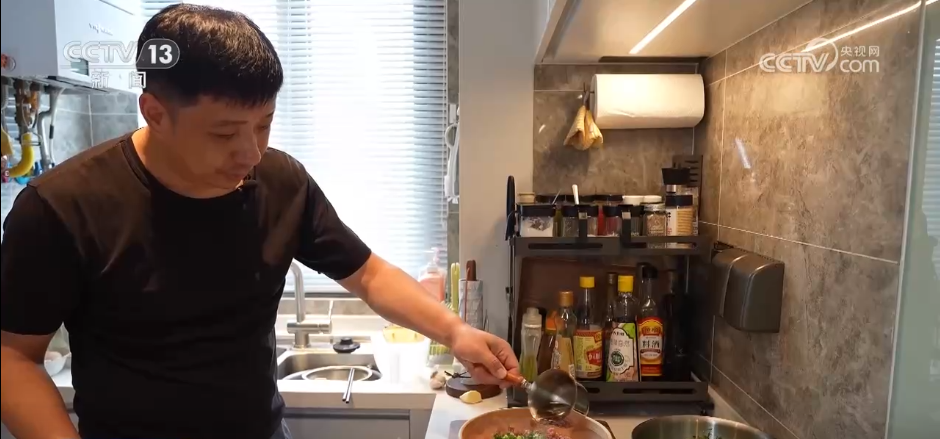
Core Viewpoint - The article highlights the transformation of breakfast habits in China, reflecting a shift from merely filling stomachs to providing balanced and nutritious meals, showcasing the evolution of food culture and consumer preferences in daily life [1]. Group 1: Breakfast Evolution - The breakfast choices of families have evolved significantly, with a focus on nutritional balance and variety, as seen in the example of a father preparing diverse meals for his children [3][5]. - The sharing of breakfast ideas on social media has gained popularity, with individuals documenting their creative breakfast preparations, leading to a wider appreciation for diverse and nutritious options [7]. Group 2: Regional Breakfast Specialties - Northern Chinese breakfasts are characterized by substantial carbohydrate-rich foods, while southern breakfasts often feature warm soups, such as the traditional Nanchang clay pot soup, which is rich in flavor and energy [11]. - In Anhui, the popular Huainan beef soup exemplifies the regional breakfast culture, showcasing a rich and aromatic broth made with various spices and ingredients [13]. - Modern breakfast trends include healthier options like oatmeal, whole grain bread, and yogurt, with innovative combinations emerging in different cities, catering to health-conscious consumers [15]. Group 3: Market Dynamics - Morning markets are bustling with activity, offering a wide variety of food options, reflecting the efficient flow of agricultural products from farms to tables, enhancing consumer access to fresh produce [21]. - In Kunming, local markets feature a rich assortment of seasonal and regional delicacies, with an emphasis on quality and variety, indicating a rise in consumer demand for unique and healthy food choices [23].

千味央厨(001215):受竞争环境制约 经营阶段性承压
Xin Lang Cai Jing· 2025-04-29 02:38
Core Viewpoint - The company is experiencing pressure on its operations due to a challenging external consumption environment, leading to a downward revision of profit forecasts for 2025-2026, while maintaining a "buy" rating based on expected recovery in the future [4] Revenue and Profitability - In 2024, the company's revenue and net profit attributable to shareholders were 1.87 billion and 80 million respectively, showing a year-on-year decline of 1.7% and 37.7% [1] - For Q4 2024, revenue and net profit attributable to shareholders were 500 million and 2 million respectively, with year-on-year declines of 11.9% and 94.7% [1] - In Q1 2025, revenue and net profit attributable to shareholders were 470 million and 20 million respectively, reflecting a year-on-year increase of 1.5% but a decline of 38.0% in net profit [1] Channel Performance - In 2024, revenue from distribution and direct sales channels decreased by 6.0% and increased by 4.3% respectively, influenced by economic conditions and competition in the restaurant market [1][2] - The company’s revenue from major product categories in 2024 included staple foods (910 million, -6.9%), snacks (440 million, -13.8%), baked goods (370 million, 0.0%), and frozen prepared dishes (140 million, +273.4%) [2] - The company maintained market leadership in fried products, while the pre-prepared dishes category showed significant growth [2] Profit Margin and Costs - The company's net profit margin decreased by 2.6 percentage points in 2024 and by 2.9 percentage points in Q1 2025, with a gross margin of 23.7% in 2024, remaining relatively stable [3] - Sales expense ratio increased by 0.7 percentage points to 5.4% in 2024, reflecting increased marketing efforts to cope with market competition [3] - Management expense ratio rose by 1.2 percentage points to 9.7% in 2024, indicating higher operational costs [3] Future Outlook - The company anticipates improvement in operations with a potential recovery in restaurant demand, maintaining a "buy" rating despite the current challenges [4] - The earnings per share (EPS) forecasts for 2025 and 2026 have been revised down to 0.91 and 1.05 respectively, with an introduction of a 2027 EPS forecast of 1.14 [4] - The target price is set at 29.40, based on a 28x price-to-earnings ratio for 2026, reflecting a decrease from the previous target of 35.11 [4]