天弘宁弘六个月持有期混合

Search documents
“降费潮”席卷全市场 公募基金行业生态或迎重塑
Xin Lang Cai Jing· 2026-01-30 15:35
Core Viewpoint - The public fund industry is experiencing a wave of fee rate adjustments, marking the entry into an era where management fees can reach as low as 0.15%, significantly reshaping the asset management industry's ecosystem and profit models [1][6]. Group 1: Fee Rate Adjustments - Seven fund companies, including Huaxia and Tianhong, have announced reductions in management fees for over ten products, with Huaxia's Financial Technology ETF management fee dropping from 0.5% to 0.15% and custody fees to 0.05%, reaching the industry's "floor price" [1][2]. - The reduction in bond fund fees has exceeded market expectations, with Tianhong's management fee for its six-month holding mixed fund decreasing from 0.7% to 0.3%, a drop of over 57% [1][2]. - The average scale of initiated funds is approximately 107 million yuan, with about 60% of products having scales below 100 million yuan, prompting companies to lower fees to attract more capital [3]. Group 2: Driving Forces Behind Fee Reductions - The fee reduction is driven by three main forces: regulatory guidance, market competition, and investor awareness [4][6]. - Regulatory guidance is a core driving force, with the China Securities Regulatory Commission's new regulations expected to generate annual savings of 30 billion yuan for investors [4][6]. - Market competition is a significant catalyst, as the number of fund products has exceeded 13,600, while the average scale of single products has decreased by 10% compared to the previous year [4][6]. Group 3: Impact on the Industry - The reduction of management fees to 0.15% will profoundly impact the public fund industry's ecosystem, leading to a restructuring of income sources for fund companies [6]. - For example, a mid-sized company managing 100 billion yuan could see annual income drop by 810 million yuan if management fees fall from 1.5% to 0.15%, with profit margins decreasing from 25% to below 5% [6]. - The fee reduction trend is expected to accelerate industry consolidation, with at least 30 fund companies projected to be merged or exit the market due to losses over the next three years [6]. Group 4: Future Trends - The industry is likely to see a tiered fee structure, with broad-based ETFs entering the 0.1% fee era, while actively managed equity funds maintain fees between 0.8% and 1.2% [7]. - Fund companies are expected to focus on professionalization, outsourcing sales and operations to third-party platforms, and becoming "boutique" firms rather than "department stores" [7]. - The proportion of institutional investors holding ETFs is anticipated to rise from 35% to 55% over the next three years, indicating a shift towards lower-fee products [7].
投顾周刊:央行行长表示2026年降准降息有空间
Sou Hu Cai Jing· 2026-01-25 00:46
Monetary Policy - The central bank will implement a moderately loose monetary policy in 2026, with room for rate cuts and reserve requirement ratio reductions. The focus will be on maintaining ample liquidity and managing expectations for the RMB exchange rate [1] - The central bank aims to support the stable development of the capital market through specific monetary policy tools [1] Fund Management - Multiple funds have announced fee reductions to lower investment costs for investors. For instance, 华夏基金 reduced the management fee of its financial technology ETF from 0.50% to 0.15% [1] - 天弘基金 also announced a reduction in management and custody fees for its mixed fund from 0.7% and 0.15% to 0.3% and 0.05% respectively [1] Banking Sector - The interest rates on large time deposits from local small and medium-sized banks have fallen below 2% due to ongoing declines in deposit rates [2] - Recent reports from several banks indicate that their wealth management business is experiencing a decline in the scale of funds raised compared to the scale of maturing products [2] Real Estate Market - The second-hand housing market has shown signs of recovery at the beginning of 2026, particularly in first-tier and strong second-tier cities, with a notable decrease in the number of listings in Shanghai [2] Fiscal and Financial Policies - A comprehensive policy package has been introduced to promote domestic demand, including a 500 billion yuan special guarantee plan for private investment and interest subsidies for loans to small and micro enterprises [3] Global Market Trends - Concerns over the Greenland crisis and fiscal pressures have triggered a global bond market sell-off, with significant increases in yields for long-term bonds in Japan and the U.S. [3] - The CEO of NVIDIA highlighted that AI has initiated the largest infrastructure buildout in human history, requiring substantial investments and skilled labor [4]

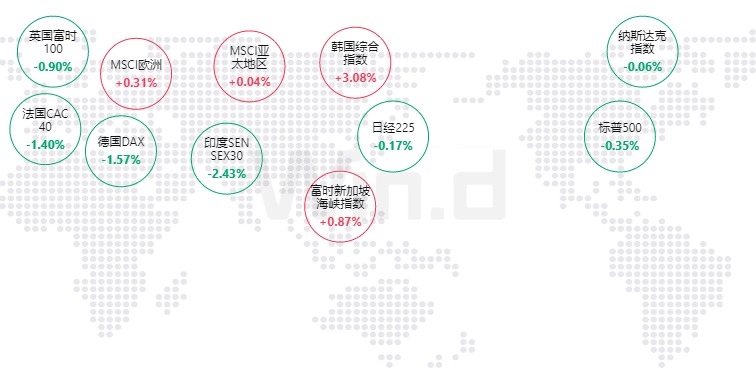
投顾周刊:央行行长表示2026年降准降息有空间
Wind万得· 2026-01-24 22:24
Monetary Policy - The central bank will implement a moderately loose monetary policy in 2026, with room for rate cuts and reserve requirement ratio reductions. The focus will be on maintaining ample liquidity and managing expectations for the RMB exchange rate [2][5]. Fund Management - Multiple funds have announced fee reductions to lower investment costs for investors. For instance, 华夏基金 reduced the management fee of its financial technology ETF from 0.50% to 0.15% and the custody fee from 0.1% to 0.05% [2][5]. Banking Sector - The interest rates on large time deposits from local small and medium-sized banks have fallen below 2%. It is predicted that the maturity scale of time deposits over one year will be around 50 trillion yuan in 2026 [3][5]. - The wealth management business of small and medium-sized banks is experiencing changes, with reports indicating that the scale of raised funds is lower than that of maturing funds [3][5]. Real Estate Market - The second-hand housing market in several regions continues to show a "tail-up trend" at the beginning of 2026, with notable recovery in transaction volumes in major cities like Beijing, Shanghai, and Shenzhen [3][5]. Fiscal and Financial Policies - A package of policies promoting domestic demand through fiscal and financial collaboration has been introduced, including a 500 billion yuan special guarantee plan for private investment and interest subsidies for loans to small and micro enterprises [5][6]. Global Market Trends - Concerns over the Greenland crisis and fiscal pressures have triggered a global bond market sell-off, with significant increases in yields for long-term bonds in Japan and the U.S. [6][6]. - NVIDIA's CEO highlighted that AI has initiated the largest infrastructure buildout in human history, requiring substantial investments and resources [6][6].




多只基金官宣降费!低费率基金持续扩容
Zhong Guo Ji Jin Bao· 2026-01-23 01:17
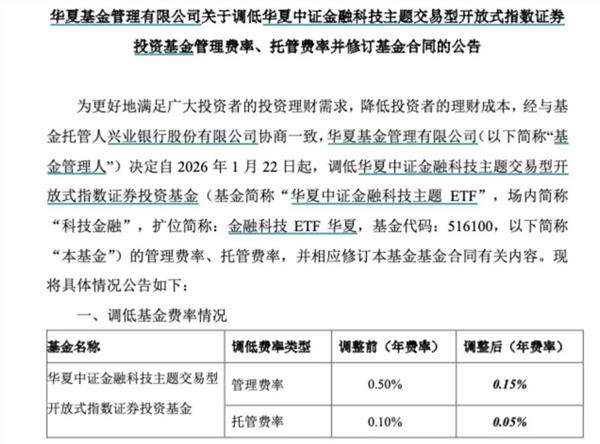
Core Viewpoint - The comprehensive fee reform in the public fund industry has been fully implemented, leading to a continuous trend of fee reductions among various funds to lower investment costs for investors and enhance their sense of returns [1][7]. Group 1: Fee Reductions Announced - Multiple funds have announced fee reductions, including Huaxia Fund, which lowered the management fee from 0.50% to 0.15% and the custody fee from 0.10% to 0.05%, achieving reductions of 70% and 50% respectively [3][5]. - Tianhong Fund reduced the management fee from 0.70% to 0.30% and the custody fee from 0.15% to 0.05%, with reductions of 57.1% and 66.7% respectively [5]. - Other funds, such as Guangfa and Huatai, have also announced similar fee reductions, with management fees dropping to as low as 0.15% and custody fees to 0.05% [6]. Group 2: Growth of Low-Fee Funds - As of January 1, the new regulations on public fund sales expenses have been implemented, marking the completion of a two-year fee reform process, resulting in an increase in low-fee funds [7]. - Currently, nearly 1,200 funds have annual management fees of 0.15% or lower, while over 2,400 funds have custody fees of 0.05% or lower, primarily consisting of stock index funds, bond funds, and money market funds [8]. - The management fees for public REITs generally range from 0.1% to 0.2%, with some products exceeding 0.5%, while custody fees can be as low as 0.01% [8]. Group 3: Industry Transformation - Industry experts believe that the public fund fee reform represents a systemic and structural reshaping of the industry ecosystem rather than a mere fee reduction [9]. - In the long term, this reform is expected to shift the industry focus from scale expansion to service enhancement, contributing to sustainable development within the industry [9].
降费、降费!又有基金出手
Zhong Guo Ji Jin Bao· 2026-01-22 22:55
Core Viewpoint - The comprehensive fee reform in the public fund industry has been fully implemented, leading to a continuous trend of fee reductions among various funds to lower investment costs for investors and enhance their return experience [1][7]. Group 1: Fee Reductions Announced - Multiple funds have announced fee reductions, including Huaxia Fund, which lowered the management fee from 0.50% to 0.15% and the custody fee from 0.10% to 0.05%, representing a reduction of 70% and 50% respectively [3][5]. - Tianhong Fund reduced its management fee from 0.70% to 0.30% and custody fee from 0.15% to 0.05%, with reductions of 57.1% and 66.7% respectively [5]. - Other funds, such as GF Fund and Huatai Baoxing, have also announced similar fee reductions, contributing to a broader trend of decreasing fund fees across the market [6]. Group 2: Impact of Fee Reform - As of January 1, 2026, the implementation of the "Publicly Raised Securities Investment Fund Sales Expense Management Regulations" marks the completion of a two-year fee reform process, resulting in a significant increase in the number of low-fee funds [7]. - Currently, nearly 1,200 funds have an annual management fee of 0.15% or lower, while over 2,400 funds have a custody fee of 0.05% or lower, primarily consisting of stock index funds, bond funds, and money market funds [7]. - The fee reform is seen as a systemic and structural transformation of the industry, shifting the focus from scale expansion to service enhancement, which is expected to promote sustainable development in the long term [8].
降费!降费!又有基金出手
中国基金报· 2026-01-22 16:07
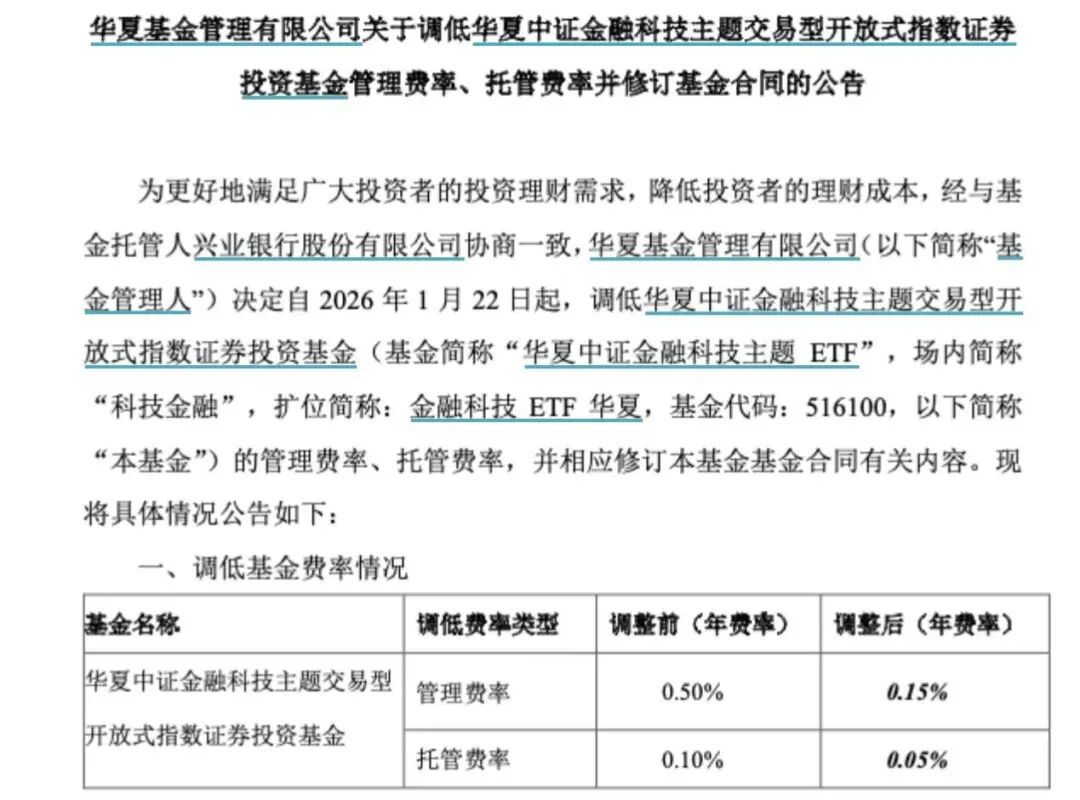
Core Viewpoint - Multiple funds have announced fee reductions to lower investment costs for investors and enhance their return experience, following a comprehensive fee reform that has been in place for over two years [2][3]. Group 1: Fee Reductions Announced - 华夏基金 has announced a reduction in management and custody fees for its Financial Technology ETF, effective January 22, 2026, with management fees decreasing from 0.50% to 0.15% (a 70% reduction) and custody fees from 0.10% to 0.05% (a 50% reduction) [5][7]. - 天弘基金 will lower the management fee from 0.70% to 0.30% (a 57.1% reduction) and the custody fee from 0.15% to 0.05% (a 66.7% reduction) for its Tianhong Ninghong six-month holding period mixed fund, effective January 21, 2026 [8]. - 海富通基金 will reduce the management fee for its Hai Futong Ruixiang one-year regular open bond fund from 0.50% to 0.40% starting January 21, 2026 [8]. Group 2: Market Trends in Fund Fees - As of January 1, 2026, the implementation of the "Publicly Raised Securities Investment Fund Sales Expense Management Regulations" marks the full realization of the fee reform, leading to an increase in low-fee funds [10]. - Nearly 1,200 funds now have annual management fees of 0.15% or lower, primarily consisting of stock index funds, bond funds, and money market funds, while over 2,400 funds have custody fees of 0.05% or lower [10]. - In the actively managed equity fund category, a unified fee cap was established on July 7, 2023, with management fees not exceeding 1.2% and custody fees not exceeding 0.2%, resulting in these rates becoming common [11]. Group 3: Industry Implications - The ongoing fee reductions indicate a systemic and structural transformation in the industry, moving from a focus on scale expansion to service enhancement, which is expected to contribute to sustainable industry development in the long term [11].