天然气电站

Search documents
日本兑现承诺,360亿输血美国,锁定油气+关键矿产领域!
Jin Shi Shu Ju· 2026-02-18 04:05
Group 1 - Japan has committed to a historic trade agreement with the U.S., initiating a $550 billion investment plan, with the first projects including $36 billion in oil, gas, and critical minerals investments [1][4] - The largest investment is a natural gas facility in Ohio, with a projected capacity of 9.2 GW, described by Trump as the "largest in history," with Japan investing $33 billion through SoftBank's subsidiary SB Energy [1][2] - A second project involves a deep-water crude oil export facility in the Gulf of Mexico, where Japan will invest $2.1 billion, expected to generate $30 billion in annual crude export revenue for the U.S. [2] Group 2 - Japan will also invest $600 million in a synthetic industrial diamond manufacturing plant in Georgia, which is crucial for advanced industrial and technological production [3] - The investment strategy aims to create resilient supply chains in key sectors such as energy and artificial intelligence, aligning with the core objectives of the trade agreement [1][4] - The projects are designed to ensure safe returns rather than high-risk investments, indicating Japan's preference for stable financial outcomes [4][5] Group 3 - The agreement includes a provision that if Japan does not fund the projects, the U.S. can reclaim some revenue or reimpose tariffs, which could significantly increase tariffs on Japanese goods [6] - The announcement coincides with the recent election victory of Prime Minister Sanae Takaichi, who has prioritized strengthening ties with the U.S. [6][7] - The projects reflect shared priorities in energy, artificial intelligence, and semiconductors, showcasing Japan's technological capabilities and understanding of the U.S. industrial landscape [6][7]
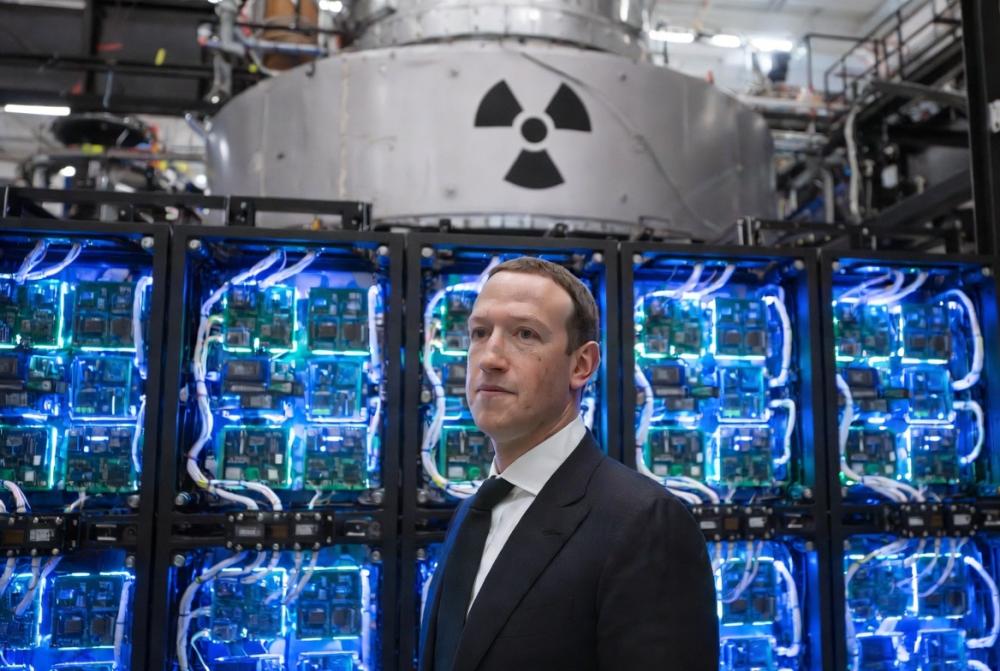
缺电、缺电、缺电!电网建设需7年,巨头们等不起,马斯克建电厂,谷歌买发电公司,扎克伯格押注核能
Jin Rong Jie· 2026-01-15 03:13
Group 1 - The core issue is the increasing electricity consumption of large AI data centers, which is projected to rise from 200 terawatt-hours (TWh) annually to 640 TWh by 2035, equivalent to Germany's total annual electricity usage [1] - There are over 4,000 large data centers in the U.S., with the potential to triple in number over the next four years, leading to significant strain on the aging electrical grid [1] - In Texas, data center electricity requests exceed 10 gigawatts (GW) monthly, but only about 1 GW is approved, resulting in potential increases in residential electricity costs by 25% in clustered data center areas [1] Group 2 - Tech giants are employing various strategies to address power shortages, such as xAI's establishment of a self-sufficient data center with gas turbines and Tesla batteries, and Google's acquisition of a power generation company for $4.8 billion [2] - Meta is investing in nuclear energy to power its AI supercomputing cluster, aiming for 6.6 GW of power by 2035, while Microsoft claims it will not raise electricity costs due to data centers [2] - Despite commitments to renewable energy, major companies still rely on natural gas and nuclear power, with significant portions of their electricity sourced from these non-renewable resources [2] Group 3 - The industry consensus is shifting towards a hybrid energy model combining solar and wind power with large battery storage, natural gas plants as backup, and nuclear power for long-term stability [3] - There is a surge in energy-related hiring among tech companies, with a 34% increase in recruitment for energy procurement and infrastructure roles, indicating a strategic shift in focus [3] - The competition for electricity has led to a reshaping of the energy sector, with companies like General Electric and Siemens seeing stock price increases, while local economies experience mixed impacts from data center developments [3]




硅谷最难的三个问题:缺电、缺电、还是缺电,硅谷大佬押注新能源
3 6 Ke· 2026-01-15 01:21
Group 1 - The core issue is the increasing electricity demand from AI data centers, which is straining the existing power grid and leading to rising electricity prices [2][4][7] - There are over 4,000 AI data centers in the U.S., and their number is expected to triple in the next four years, significantly increasing electricity consumption [2][3] - By 2035, U.S. data centers' electricity demand is projected to surge from 200 terawatt-hours to 640 terawatt-hours, equivalent to Germany's annual electricity consumption [3] Group 2 - The current power grid is unable to meet the demand from new data centers, with Texas only able to approve about 1 gigawatt of the tens of gigawatts requested monthly [4][7] - The construction of new power lines and plants takes several years, which is not feasible for tech giants needing immediate power solutions [8] - Major tech companies are exploring various energy sources, including natural gas, nuclear, and renewable energy, to ensure stable power supply for their operations [15][22] Group 3 - Elon Musk's xAI has built a data center with 200,000 GPUs and on-site power generation using gas turbines and Tesla batteries, while Google has acquired a power company to secure its energy needs [9][11] - Meta has signed agreements with nuclear energy companies to supply power for its AI supercomputing cluster, aiming for 6.6 gigawatts by 2035 [12][11] - Microsoft has committed to not passing on electricity costs to consumers, although the complexity of the power grid makes this challenging [14] Group 4 - The competition for energy talent is intensifying, with tech companies increasing hiring in energy-related positions by 34% since 2022 [16][18] - Companies like Amazon and Microsoft are aggressively recruiting energy experts to navigate the complexities of energy procurement and grid access [18][21] - The demand for energy professionals is reshaping the job market, with traditional energy sectors facing talent shortages as tech firms offer higher salaries [21] Group 5 - The AI-driven electricity crisis is reshaping the energy industry, benefiting manufacturers of gas turbines and storage devices, while also creating economic disparities in local communities [22][24] - The ongoing "electricity war" highlights the limitations of current energy systems in supporting rapid technological advancements [23][25] - The future of technology may increasingly depend on energy availability, emphasizing the need for sustainable and efficient power solutions [25][26]