
天然气发电

Search documents
海外政策周聚焦:特殊时期的访美,日本在中东问题上的困局
Western Securities· 2026-03-28 15:06
Investment and Economic Relations - Japanese Prime Minister Fumio Kishida's visit to the U.S. from March 18 to 22 resulted in the announcement of a second batch of investment projects totaling $73 billion, representing 20% of the $550 billion investment framework[1] - Japan's total investment in the U.S. has reached $109 billion, focusing on energy, electricity, and mineral projects, aligning with former President Trump's support for traditional energy[1] - Key projects include the construction of small modular reactors by GE and Hitachi in Tennessee and Alabama, and natural gas power facilities in Texas and Pennsylvania[1] Trade Relations and Economic Dependencies - Japan is progressing rapidly in trade agreements with the U.S., with American exports to Japan accounting for 18% of Japan's total exports in 2025, heavily reliant on automotive and semiconductor industries[2] - Japan's economic interests are intertwined with U.S. security alliances, making it difficult for Japan to adopt a confrontational stance against the U.S. in trade matters[2] Geopolitical Risks and Market Implications - Japan's energy security is precarious, with over 94% of its oil imports coming from the Middle East, leading to a complicated diplomatic relationship with Iran[3] - Optimistic scenarios suggest that if the Strait of Hormuz reopens, Japanese stocks could rise, particularly in the automotive and export manufacturing sectors, with potential yen appreciation[3] - Conversely, if Middle Eastern tensions persist, Japan could face heightened inflation risks, a widening trade deficit, and significant yen depreciation, leading to a bearish outlook for the stock market[3] Risk Factors - The report highlights the potential for geopolitical risks to exceed expectations, which could further complicate Japan's economic landscape[4]
中金 | 日本对美投资第一弹:360亿美元三大项目解析
中金点睛· 2026-03-11 23:36
Core Viewpoint - The first batch of projects under the US-Japan Strategic Investment Initiative has been agreed upon, with a total investment of approximately $36 billion, focusing on three major projects: natural gas power generation, crude oil export port construction, and synthetic diamonds [1][2]. Summary by Sections First Batch of Projects - The first batch includes three projects with a total investment of about $36 billion, which is 6.5% of the planned $550 billion investment in the US [2]. - The projects are: 1. Synthetic diamond project in Georgia 2. Crude oil export port construction in Texas 3. 9.2 GW natural gas power generation project in Ohio [2]. Natural Gas Power Generation - This project accounts for a significant portion of the first batch, with an investment of approximately $33 billion [3]. - It is linked to the increasing power demand from data centers and AI applications, making it the largest natural gas power project in history [3]. Crude Oil Export Port Construction - The port in Texas will serve as a crucial hub for US crude oil exports, with Japanese companies like Nippon Steel and JFE Steel showing interest in supplying equipment [3][4]. - The project aims to enhance the infrastructure for energy exports [3]. Synthetic Diamonds - Although smaller in scale, this project emphasizes economic security by reducing dependency on specific countries for key industrial materials [4]. - Japanese companies such as Asahi Diamond Industrial and Tazawa have expressed procurement interest [4]. Funding and Investment Framework - Japan is expected to transfer funds to US accounts within 45 business days following the agreement [4]. - Profit distribution will be 50% for both parties before investment recovery, and 90% for the US after recovery [4]. Impact of Supreme Court Ruling - Despite the US Supreme Court ruling against certain tariffs, Japan remains committed to the $550 billion investment plan [4]. - Japan's Economic Minister has confirmed ongoing negotiations to ensure favorable treatment in any new tariff measures [4]. Second Batch of Projects - Discussions are underway for a second batch of projects, focusing on nuclear power plant construction, LCD/OLED manufacturing, and copper smelting, with an estimated total investment exceeding $100 billion [4]. - The announcement of these projects is anticipated during the upcoming meeting between the Japanese Prime Minister and US officials [4]. Market Impact - The investment projects are expected to marginally benefit related companies in Japan and the US, but the overall impact on stock markets may be limited [5]. - The investment plan will be financed through the Japan Bank for International Cooperation and other mechanisms, minimizing pressure on the yen [5].


全国政协委员黎俊东:统筹绿色发展与电网安全,推动中国能源企业出海拓局
中国能源报· 2026-03-09 13:23
Core Viewpoint - The article emphasizes the importance of a diversified energy supply system in China, highlighting the roles of various energy sources, particularly solar, natural gas, and waste-to-energy, in achieving the country's carbon neutrality goals [1][2]. Group 1: Solar Industry Development - The solar power sector is identified as a key player in China's green low-carbon energy strategy, characterized by its low cost and environmental benefits, but it faces challenges in stability due to extreme weather conditions [1]. - To address the instability of solar power generation, it is crucial to enhance grid safety and develop a multi-energy complementary supply system, leveraging flexible power sources like natural gas [1]. Group 2: Industry Trends and Competition - The article discusses the trend of "anti-involution" in the domestic solar industry, urging companies to focus on technological upgrades and quality improvements rather than merely expanding scale, thus fostering differentiated competitiveness [2]. - Companies are encouraged to transition from homogeneous competition to value creation by leveraging core technological advantages, promoting a shift towards high-end and refined industry practices [2]. Group 3: Internationalization of Energy Enterprises - A number of Chinese energy and environmental companies, after establishing a strong domestic presence, are now pursuing international expansion, particularly in Southeast Asia, Central Asia, and Europe [2]. - The article notes that Chinese companies have made significant strides in power generation technology, especially in waste-to-energy, and now possess the capability to surpass international standards, enhancing their competitiveness in global markets [2].

国际首套零碳复温天然气压差发电系统投运
Xin Lang Cai Jing· 2026-02-27 15:21
Core Insights - The first international zero-carbon natural gas pressure differential power generation system has been officially put into operation in Qufu, Shandong, developed by the Institute of Engineering Thermophysics of the Chinese Academy of Sciences in collaboration with Zhongke Jiulang (Beijing) Energy Technology Co., Ltd [1][2] - This system can generate over 3.3 million kilowatt-hours of electricity annually, achieving complete autonomy in core equipment and processes with zero carbon emissions [1] Group 1 - The system functions as an "energy recovery device," converting wasted pressure energy during the pressure reduction process into electrical energy [1] - It employs an innovative "zero-carbon reheating" technology that can raise the outlet temperature to 0 degrees Celsius in winter without burning natural gas, thus preventing pipeline freezing and eliminating the energy consumption required for traditional reheating [1] - The system not only meets the electricity needs of the station itself but also allows excess electricity to be fed into the grid, demonstrating stable and reliable operation after multiple tests [1] Group 2 - The successful development and operation of this zero-carbon reheating natural gas pressure differential power generation system can effectively promote the rapid development of natural gas pressure differential power generation technology and industry [2] - It transforms the wasted pressure in natural gas networks into substantial zero-carbon electricity, supporting the construction of zero-carbon natural gas stations and contributing significantly to China's "dual carbon" goals [2]
直接认怂!日媒爆料:日本政府不敢撕毁5500亿美元的对美投资协议
Sou Hu Cai Jing· 2026-02-23 23:38
Group 1 - The U.S. Supreme Court ruled 6-3 that the large-scale tariffs imposed by the Trump administration were illegal, significantly impacting the legal framework for tariffs [3][5][28] - The ruling is expected to lower the average effective tariff rate in the U.S. from 16.9% to 9.1%, with potential refunds of up to $175 billion for tariffs already collected [5][33] - Following the ruling, Trump announced a "Plan B" to impose an additional 10% tariff on global imports for 150 days, utilizing a different legal provision [7][9] Group 2 - Japan's $550 billion investment commitment to the U.S. is now under scrutiny, as the legal basis for the agreement has been undermined by the Supreme Court ruling [11][15] - Despite the opportunity to renegotiate, Japan has chosen to continue with the investment projects to avoid potential retaliation from the U.S., particularly concerning the automotive sector [15][18][20] - The investment framework heavily favors the U.S., with only 1-2% being actual cash investment, while the majority consists of loans and guarantees, raising concerns about the economic viability for Japan [22][30] Group 3 - The Supreme Court's decision reflects a check on presidential power regarding tariff imposition, emphasizing that such decisions should be made by Congress [26][28] - The ruling may lead to prolonged disputes over tariff refunds and the legal basis of existing trade agreements, affecting international relations and trade dynamics [33][35] - The situation highlights the disparity in negotiation power between the U.S. and Japan, with Japan feeling compelled to maintain its commitments despite unfavorable changes in the legal landscape [30][31]
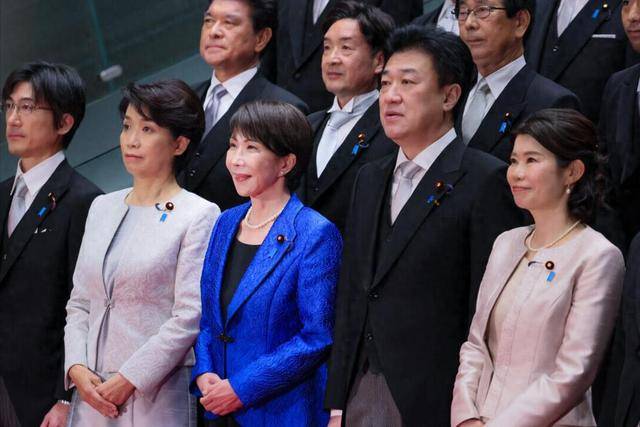
被英媒说中了,美国这次够狠,日本毫无招架之力,被拿捏也只能忍
Sou Hu Cai Jing· 2026-02-23 04:20
Group 1 - The trade framework agreement between the US and Japan involves Japan committing to invest $550 billion by 2029 in key sectors such as energy, semiconductors, and critical minerals, in exchange for a reduction in import tariffs from 25% to 15% [1][4][10] - The first three investment projects announced by the US include a $36 billion natural gas power plant in Ohio, a $2.1 billion crude oil export terminal in Texas, and a $600 million synthetic diamond factory in Georgia, emphasizing local supply chain development [3][6][10] - Japan's investment obligations are tied to the agreement, requiring government guarantees and corporate participation to ensure job creation and production in the US, which differs from previous agreements that focused on market access [4][12] Group 2 - The Texas crude oil export terminal is designed to enhance export efficiency by at least 10%, with an annual export capacity of 20 to 30 million barrels, thereby strengthening the US's position in the global energy market [6][10] - The synthetic diamond factory aims to localize production, reducing reliance on imported industrial diamonds, which previously constituted 80% of US demand, thus mitigating geopolitical risks in semiconductor manufacturing [6][10] - The agreement's stipulation of a 45-day funding commitment from Japan places significant pressure on Japanese companies, limiting their decision-making flexibility and increasing the risk of tariff reinstatement if project progress is slow [10][12][16] Group 3 - Japanese companies face challenges due to potential increases in operational costs from US environmental regulations, which could rise by 20%, while also contending with the threat of tariff retaliation for non-compliance [8][12] - The ongoing negotiations highlight Japan's precarious position, as it must balance the need for investment with the risks associated with US policy changes, leading to concerns about long-term profitability [12][14][16] - The US's strategy effectively leverages its negotiating power, compelling Japan to comply with investment commitments under the threat of tariffs, illustrating the complexities of economic interactions between major powers [12][14][16]

日本兑现承诺,360亿输血美国,锁定油气+关键矿产领域!
Jin Shi Shu Ju· 2026-02-18 04:05
Group 1 - Japan has committed to a historic trade agreement with the U.S., initiating a $550 billion investment plan, with the first projects including $36 billion in oil, gas, and critical minerals investments [1][4] - The largest investment is a natural gas facility in Ohio, with a projected capacity of 9.2 GW, described by Trump as the "largest in history," with Japan investing $33 billion through SoftBank's subsidiary SB Energy [1][2] - A second project involves a deep-water crude oil export facility in the Gulf of Mexico, where Japan will invest $2.1 billion, expected to generate $30 billion in annual crude export revenue for the U.S. [2] Group 2 - Japan will also invest $600 million in a synthetic industrial diamond manufacturing plant in Georgia, which is crucial for advanced industrial and technological production [3] - The investment strategy aims to create resilient supply chains in key sectors such as energy and artificial intelligence, aligning with the core objectives of the trade agreement [1][4] - The projects are designed to ensure safe returns rather than high-risk investments, indicating Japan's preference for stable financial outcomes [4][5] Group 3 - The agreement includes a provision that if Japan does not fund the projects, the U.S. can reclaim some revenue or reimpose tariffs, which could significantly increase tariffs on Japanese goods [6] - The announcement coincides with the recent election victory of Prime Minister Sanae Takaichi, who has prioritized strengthening ties with the U.S. [6][7] - The projects reflect shared priorities in energy, artificial intelligence, and semiconductors, showcasing Japan's technological capabilities and understanding of the U.S. industrial landscape [6][7]
国际首套零碳复温天然气压差发电系统正式投运
Yang Shi Xin Wen· 2026-02-13 15:41
Core Insights - The first international zero-carbon reheating natural gas pressure differential power generation system has been successfully developed and put into operation in Qufu, Shandong, with a maximum power output of 500 kW and an annual electricity generation of over 3.3 million kWh [1][2] Group 1 - The system achieves a 100% localization rate for core equipment and processes, breaking through the main technical bottleneck in the promotion and application of natural gas pressure differential power generation systems [1] - The innovative zero-carbon reheating process allows the system to maintain an outlet temperature above 0°C in winter without the need for external heating sources, thus eliminating reliance on gas heating furnaces [1] - The technology converts wasted pressure energy from natural gas pipelines into electricity, supporting the transition of natural gas stations into distributed zero-carbon power stations [2] Group 2 - The successful implementation of this system is expected to significantly promote the rapid development of natural gas pressure differential power generation technology and industry, aligning with national dual carbon strategy goals [2]
乔维奇透露美国欲在波黑建设天然气发电网络
Shang Wu Bu Wang Zhan· 2026-01-21 15:42
Core Insights - The president of the Croatian Democratic Union (HDZ) in Bosnia, Dragan Čović, has expressed strong support for U.S. investments in infrastructure and energy projects in Bosnia, particularly focusing on the construction of three natural gas power plants with a total capacity of 1200 megawatts [1] Group 1: Investment Projects - Investors plan to build three natural gas power plants, each with a capacity of 400 megawatts, located in Mostar, potentially in Kakani, and Tuzla [1] - The total installed capacity of the planned power plants will reach 1200 megawatts, indicating a significant investment in Bosnia's energy infrastructure [1] Group 2: Energy Consumption and Infrastructure - Bosnia's total natural gas consumption is only half of that of Zagreb, highlighting the potential for increased demand for natural gas in the region [1] - The development of these power plants is crucial for improving Bosnia's infrastructure, as the country currently imports a large amount of natural gas that lacks sufficient consumption avenues [1]
史上最赚的一笔PE投资--来自8年前一笔无人看好的“抄底”
Hua Er Jie Jian Wen· 2025-12-23 00:24
Core Insights - Energy Capital Partners (ECP) is set to achieve significant returns from its 2017 acquisition of Calpine, with total earnings exceeding $25 billion, surpassing the previous record set by Blackstone's Hilton project at $14 billion [1] - The upcoming sale of Calpine to Constellation Energy is expected to be completed next month, with approximately $18 billion of the payment in Constellation stock, which has risen nearly 50% since the announcement [1] Group 1: Investment Strategy - ECP's acquisition of Calpine was initially viewed as controversial due to an oversupply of natural gas and the rapid growth of renewable energy, leading to a pessimistic outlook on gas-fired power plants [2] - ECP identified Calpine as an undervalued asset capable of generating substantial cash flow and believed that natural gas would play a critical role in providing reliable power during the energy transition, which they estimate will take 30 to 40 years [2] Group 2: Market Dynamics - The unexpected surge in electricity demand was driven by factors such as manufacturing reshore, the growth of electric vehicles, cryptocurrency mining, and the subsequent AI boom, which significantly increased power requirements [3] - The launch of ChatGPT by OpenAI in November 2022 sparked an AI investment frenzy, leading to a spike in valuations for publicly traded power suppliers, providing Constellation with the necessary "currency" for the acquisition [3] Group 3: Operational Improvements - Following the acquisition in 2018, Calpine initiated several growth initiatives, including new battery storage projects and expansion of geothermal capacity, which doubled the company's profits and reduced debt levels during ECP's ownership [4] - Calpine distributed approximately $8.5 billion in cash to investors while under ECP's management, reflecting the successful operational enhancements made during this period [4]