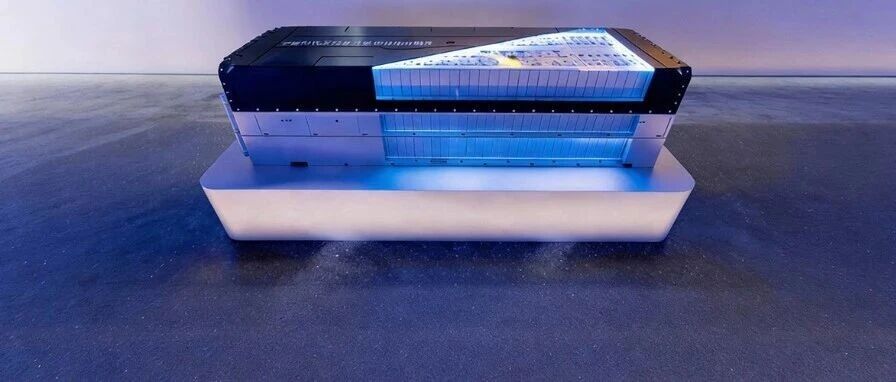
天行II轻商超充版电池

Search documents
渗透率30%却是"虚假繁荣"?宁德时代天行II让轻商电动化成确定性生意 | 头条
第一商用车网· 2026-01-28 06:33
Core Viewpoint - The penetration rate of new energy light commercial vehicles is expected to exceed 30% by 2025, but significant challenges remain for logistics drivers, including performance in low temperatures, intercity logistics mileage limits, and vehicle resale value assurance [1][2]. Group 1: Market Challenges - The regional disparity in new energy light truck registration is pronounced, with about 80% of registrations concentrated in coastal provinces like Guangdong, Zhejiang, and Jiangsu, while northern regions, especially in winter, show penetration rates below 5% [3][5]. - Low temperatures severely impact traditional lithium batteries, with capacity retention dropping to about 70% at -20°C and nearly non-functional at -30°C, leading to operational inefficiencies for logistics companies in northern markets [5][6]. - The intercity logistics market has a penetration rate of less than 12%, primarily due to battery range limitations, which restricts the ability of electric vehicles to handle cross-province orders [6][8]. Group 2: Solutions Offered by CATL - CATL's newly launched Tianxing II series aims to address these challenges with targeted technological upgrades and solutions, focusing on operational, revenue, and residual value aspects [8][19]. - The Tianxing II low-temperature version battery maintains over 92% capacity at -20°C and can operate even in extreme conditions, potentially activating a dormant market of 1.5 million vehicles in northern regions [11][19]. - The long-range version of the Tianxing II battery offers an industry-leading single-pack capacity of 253 kWh, enabling a range of 800 kilometers, thus allowing electric light commercial vehicles to handle intercity orders effectively [12][14]. Group 3: Financial Implications - The Tianxing II series aims to enhance the lifecycle profitability of electric commercial vehicles by ensuring stable battery residual values, which is crucial for the second-hand market [17][19]. - The long-range version's battery life is significantly improved, with a cycle life of 8,000 times, allowing vehicles to cover an additional 80,000 kilometers and earn approximately 150,000 yuan in extra freight [17][19]. - The introduction of a 10-year warranty with zero degradation in the first year addresses user concerns about battery performance and resale value, fostering confidence in purchasing new electric vehicles [17][19].


宁德时代钠电池,新进展
DT新材料· 2026-01-23 16:04
Core Viewpoint - CATL has launched the first mass-produced sodium-ion battery for light commercial vehicles, showcasing its advantages in low-temperature performance and potential applications in various sectors [1][3][5]. Group 1: Sodium-Ion Battery Launch - On January 22, CATL held a launch event for its light commercial vehicle all-scenario solution, introducing the Tianxing II light commercial low-temperature version battery, which is the first mass-produced sodium-ion battery in the sector [1]. - The sodium-ion battery maintains over 92% usable capacity at -20°C and supports plug-and-charge functionality even at -30°C when fully frozen [3]. Group 2: Performance and Applications - CATL's sodium battery exhibits superior low-temperature performance, carbon footprint, and safety, making it suitable for passenger and commercial vehicle applications [5]. - The company aims for large-scale application of sodium batteries in various fields, including battery swapping, passenger vehicles, commercial vehicles, and energy storage by 2026, creating a "dual-star" trend with lithium batteries [5]. Group 3: Market Insights - According to Jianghai Securities, the global sodium battery industry is expected to transition from "industrialization" to "scale application" by 2025, with the average price of sodium cells projected to drop from 0.52 yuan/Wh in 2025 to 0.25 yuan/Wh by 2030 [5]. - The SPIR research institute forecasts that the global sodium battery market for energy storage will reach 580 GWh by 2030, while the automotive sodium battery market may exceed 410 GWh [5]. Group 4: Advanced Battery Technologies - In the intercity scenario, CATL introduced the Tianxing II light commercial long-range battery, which combines the advantages of ternary lithium and lithium iron phosphate technologies, achieving a balance of safety, energy density, and cost [6][8]. - The battery can provide an impressive range of 800 kilometers and features self-repairing lithium anode materials and self-healing electrolyte technology to extend its lifespan [8]. - For urban distribution, the Tianxing II light commercial supercharging version can charge from 20% to 80% in 30 minutes at -15°C, improving charging speed by approximately 30% compared to the previous generation [8]. - The high-temperature supercharging version for last-mile logistics supports peak 4C charging, allowing for a 60% charge in just 18 minutes, with unique technology that reduces energy consumption by 5% [8].
宁德时代钠电池 新进展
Shang Hai Zheng Quan Bao· 2026-01-22 16:00
Core Viewpoint - CATL has made significant progress in sodium-ion battery technology, particularly in low-temperature performance, which addresses critical challenges in electric vehicle operation in cold environments [2][4][6]. Group 1: Sodium-Ion Battery Development - CATL launched the first mass-produced sodium-ion battery for light commercial vehicles, capable of maintaining over 92% usable capacity at -20°C and supporting charging even at -30°C [3][4]. - The sodium-ion battery's advantages include better low-temperature performance, lower carbon footprint, and enhanced safety, making it suitable for various applications including passenger and commercial vehicles [6]. Group 2: Market Outlook and Applications - By 2025, CATL plans to scale sodium-ion battery applications across multiple sectors, including battery swapping, passenger vehicles, commercial vehicles, and energy storage, indicating a trend of "sodium-lithium dual stars shining" [6]. - Research indicates that the global sodium battery market is expected to reach a capacity of 580 GWh for energy storage and over 410 GWh for automotive applications by 2030 [6]. Group 3: Multi-Scenario Solutions - The newly launched light commercial vehicle solutions cover diverse applications such as urban delivery, intercity logistics, and last-mile logistics [7]. - The long-range version of the sodium-ion battery can achieve an operational range of 800 kilometers, while the fast-charging version can charge from 20% to 80% in 30 minutes at -15°C, improving charging speed by approximately 30% [9]. Group 4: Technological Innovations - The hybrid chemical system battery combines the advantages of ternary lithium and lithium iron phosphate, achieving a balance of high safety, energy density, and cost-effectiveness [9]. - The high-temperature fast-charging version features unique self-regulating technology that reduces energy consumption by 5% and allows for rapid charging capabilities [9].