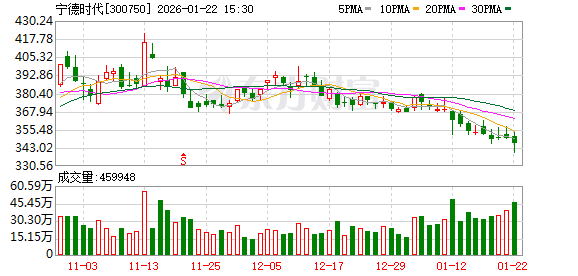
天行II轻商低温版电池

Search documents
密集官宣全固态电池,纯电车最后一块短板要被补齐了
Hua Er Jie Jian Wen· 2026-01-29 23:23
Core Viewpoint - The new energy vehicle (NEV) industry is experiencing a favorable shift due to changing geopolitical relations, with markets like Europe and Canada opening up to Chinese NEVs, which were previously hindered by tariffs and policy barriers [1][3] Group 1: Market Dynamics - European and Canadian markets are now welcoming Chinese NEVs, with the EU even suggesting price increases for these vehicles, alleviating pressure on domestic brands [1] - Concerns remain regarding the performance of Chinese NEVs in cold climates, particularly in Canada, where battery efficiency may be compromised [1][3] Group 2: Technological Advancements - CATL's "Tianxing II" sodium-ion battery, capable of maintaining 90% capacity at -40°C, represents a significant technological breakthrough for NEVs in extreme cold environments [2][3] - The market response to the "Tianxing II" battery has been muted, overshadowed by rumors of Huawei's solid-state battery, which reportedly offers a range of 3000 km and rapid charging capabilities [2][3] Group 3: Battery Technology Evolution - The NEV industry has transitioned from lithium-ion batteries, primarily led by Tesla, to lithium iron phosphate (LFP) batteries, which are cheaper and safer but have limitations in energy density [4][5] - CATL's fifth-generation LFP battery has achieved a range of nearly 1200 km, making it competitive against traditional lithium-ion technologies [5] Group 4: Future of Battery Technology - Sodium-ion batteries, like the "Tianxing II," are seen as a potential solution for extreme environments, but they do not fully address the industry's need for high-performance, cost-effective solutions [6][7] - Solid-state batteries are viewed as the next major breakthrough, with potential energy densities significantly higher than current lithium-ion technologies, promising ranges over 2000 km and rapid charging times [8][10] Group 5: Market Implications - The cost of batteries constitutes about 40% of the total cost of electric vehicles, making the development of solid-state batteries critical for competitive pricing and profit margins [10][11] - Major automotive and battery companies are racing to develop solid-state technology, with firms like Toyota and Samsung targeting commercial production by 2027 [11][12] Group 6: Challenges Ahead - Despite the promise of solid-state batteries, challenges such as high production costs, charging speed limitations, and the need for new manufacturing processes remain significant hurdles [14][15] - Experts predict that while solid-state technology may see technical advancements by 2030, widespread commercial availability may not occur until 2035 [15]



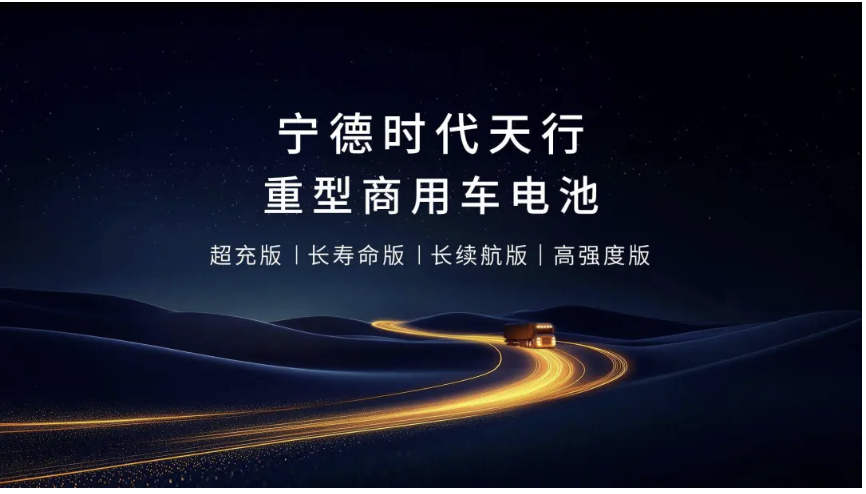
渗透率30%却是"虚假繁荣"?宁德时代天行II让轻商电动化成确定性生意 | 头条
第一商用车网· 2026-01-28 06:33
Core Viewpoint - The penetration rate of new energy light commercial vehicles is expected to exceed 30% by 2025, but significant challenges remain for logistics drivers, including performance in low temperatures, intercity logistics mileage limits, and vehicle resale value assurance [1][2]. Group 1: Market Challenges - The regional disparity in new energy light truck registration is pronounced, with about 80% of registrations concentrated in coastal provinces like Guangdong, Zhejiang, and Jiangsu, while northern regions, especially in winter, show penetration rates below 5% [3][5]. - Low temperatures severely impact traditional lithium batteries, with capacity retention dropping to about 70% at -20°C and nearly non-functional at -30°C, leading to operational inefficiencies for logistics companies in northern markets [5][6]. - The intercity logistics market has a penetration rate of less than 12%, primarily due to battery range limitations, which restricts the ability of electric vehicles to handle cross-province orders [6][8]. Group 2: Solutions Offered by CATL - CATL's newly launched Tianxing II series aims to address these challenges with targeted technological upgrades and solutions, focusing on operational, revenue, and residual value aspects [8][19]. - The Tianxing II low-temperature version battery maintains over 92% capacity at -20°C and can operate even in extreme conditions, potentially activating a dormant market of 1.5 million vehicles in northern regions [11][19]. - The long-range version of the Tianxing II battery offers an industry-leading single-pack capacity of 253 kWh, enabling a range of 800 kilometers, thus allowing electric light commercial vehicles to handle intercity orders effectively [12][14]. Group 3: Financial Implications - The Tianxing II series aims to enhance the lifecycle profitability of electric commercial vehicles by ensuring stable battery residual values, which is crucial for the second-hand market [17][19]. - The long-range version's battery life is significantly improved, with a cycle life of 8,000 times, allowing vehicles to cover an additional 80,000 kilometers and earn approximately 150,000 yuan in extra freight [17][19]. - The introduction of a 10-year warranty with zero degradation in the first year addresses user concerns about battery performance and resale value, fostering confidence in purchasing new electric vehicles [17][19].
电新行业周报:马斯克公布200GW光伏计划,Optimus预计2027年公开销售-20260125
Western Securities· 2026-01-25 11:05
Investment Rating - The report recommends investment in various sectors including commercial aerospace, solid-state batteries, and photovoltaic companies, highlighting specific companies for potential investment opportunities [1][2][3]. Core Insights - Elon Musk announced a plan to achieve 200GW of solar power capacity in the U.S. within three years, with a focus on space applications [1][51]. - The commercial aerospace sector remains robust, with recommendations for companies like Foster, Maiwei, and Mingyang Smart Energy [1]. - The solid-state battery sector is gaining traction, with a strategic partnership between Enjie and Enli Power to advance solid-state battery technology [2][54]. - The photovoltaic sector is highlighted with recommended stocks such as Aiko and suggestions to monitor other companies like Dike and Juhua Materials [1][2]. Summary by Sections Photovoltaic Sector - Musk's 200GW solar plan aims to support space AI and is expected to enhance the efficiency of solar power generation in space [1][51]. - Mingyang Smart Energy is acquiring 100% of Zhongshan Dehua, expanding its footprint in the energy sector [1][50]. - Recommended stocks in the photovoltaic sector include Aiko, with additional attention to Dike and Juhua Materials [1][2]. Solid-State Batteries - Enjie and Enli Power have signed a strategic cooperation agreement to promote the industrialization of solid-state batteries [2][54]. - The report emphasizes the importance of collaboration in overcoming key material and process bottlenecks in solid-state battery production [2][54]. Commercial Aerospace - The commercial aerospace sector is highlighted as a growth area, with recommendations for companies such as Foster and Maiwei [1]. - The report suggests monitoring companies like Hualing Cable and Liansheng Technology for potential investment opportunities [1]. Energy Storage - By the end of 2025, China's power storage capacity is projected to reach 213.3GW, with new energy storage installations expected to grow significantly [3]. - Recommended companies in the energy storage sector include Sunshine Power and Yiwei Lithium Energy [3]. Electric Vehicles - The report notes a significant increase in electric vehicle production and sales, with December 2025 seeing a production of 1.5348 million units, a year-on-year increase of 26.1% [9][12]. - Recommended stocks in the electric vehicle sector include CATL and Yiwei Lithium Energy [2]. Market Trends - The report indicates a 5.0% year-on-year growth in total electricity consumption in 2025, reaching 10,368.2 billion kWh [44]. - The electricity market transaction volume is expected to continue growing, with a notable increase in green electricity trading [45]. Pricing Trends - Prices for battery materials, including lithium and nickel, have shown upward trends, with battery-grade lithium carbonate reaching 171,000 CNY/ton, an increase of 8.23% [33][35]. - The report also notes price increases in battery cells and components, reflecting ongoing demand in the electric vehicle and energy storage markets [33][36].


宁德时代钠电池,新进展
DT新材料· 2026-01-23 16:04
Core Viewpoint - CATL has launched the first mass-produced sodium-ion battery for light commercial vehicles, showcasing its advantages in low-temperature performance and potential applications in various sectors [1][3][5]. Group 1: Sodium-Ion Battery Launch - On January 22, CATL held a launch event for its light commercial vehicle all-scenario solution, introducing the Tianxing II light commercial low-temperature version battery, which is the first mass-produced sodium-ion battery in the sector [1]. - The sodium-ion battery maintains over 92% usable capacity at -20°C and supports plug-and-charge functionality even at -30°C when fully frozen [3]. Group 2: Performance and Applications - CATL's sodium battery exhibits superior low-temperature performance, carbon footprint, and safety, making it suitable for passenger and commercial vehicle applications [5]. - The company aims for large-scale application of sodium batteries in various fields, including battery swapping, passenger vehicles, commercial vehicles, and energy storage by 2026, creating a "dual-star" trend with lithium batteries [5]. Group 3: Market Insights - According to Jianghai Securities, the global sodium battery industry is expected to transition from "industrialization" to "scale application" by 2025, with the average price of sodium cells projected to drop from 0.52 yuan/Wh in 2025 to 0.25 yuan/Wh by 2030 [5]. - The SPIR research institute forecasts that the global sodium battery market for energy storage will reach 580 GWh by 2030, while the automotive sodium battery market may exceed 410 GWh [5]. Group 4: Advanced Battery Technologies - In the intercity scenario, CATL introduced the Tianxing II light commercial long-range battery, which combines the advantages of ternary lithium and lithium iron phosphate technologies, achieving a balance of safety, energy density, and cost [6][8]. - The battery can provide an impressive range of 800 kilometers and features self-repairing lithium anode materials and self-healing electrolyte technology to extend its lifespan [8]. - For urban distribution, the Tianxing II light commercial supercharging version can charge from 20% to 80% in 30 minutes at -15°C, improving charging speed by approximately 30% compared to the previous generation [8]. - The high-temperature supercharging version for last-mile logistics supports peak 4C charging, allowing for a 60% charge in just 18 minutes, with unique technology that reduces energy consumption by 5% [8].
重磅消息!宁德时代发布行业首款实现量产钠离子电池,-40℃极寒仍可保持90%电量【附钠离子电池行业市场分析】
Qian Zhan Wang· 2026-01-23 07:26
Core Viewpoint - CATL has launched the first mass-produced sodium-ion battery for light commercial vehicles, showcasing significant advancements in low-temperature performance and cycle life, addressing key industry challenges in cold climates [2][5]. Group 1: Product Launch and Features - CATL introduced the 45kWh sodium-ion battery pack with an energy density of 175Wh/kg and a cycle life exceeding 10,000 times, achieving certification under the new national standard GB 38031-2025 [2]. - The battery maintains 90% usable capacity at -40°C and can be charged immediately at -30°C, solving winter range and charging issues for commercial vehicles in northern regions [2]. - Mass production is set to begin in July 2026, with plans to introduce both charging and battery swapping modes [2]. Group 2: Market Potential and Competitive Landscape - Sodium-ion batteries are seen as a potential alternative to lithium-ion batteries due to their lower cost and resource advantages, with sodium being significantly more abundant and cheaper to extract [5]. - The technology has attracted substantial investment and research resources, with major companies like Guoxuan High-Tech, BYD, AVIC Lithium Battery, and Times New Energy actively developing sodium-ion battery solutions [5][6]. - Despite the advantages, the commercial development of sodium-ion batteries is still in its early stages, with actual shipments in China reaching only 0.7GWh in 2023, indicating a need for further exploration of commercialization pathways [6]. Group 3: Future Outlook - The sodium-ion battery industry is transitioning from sample validation to commercial application, with expectations that by 2026, sodium batteries will enter a phase of large-scale application, significantly reducing lifecycle costs for users [9]. - As production scales up and energy density improves, costs are projected to decrease by half within the next two to three years, paving the way for sustainable commercialization [9].
宁德时代钠电池 新进展
Shang Hai Zheng Quan Bao· 2026-01-22 16:00
Core Viewpoint - CATL has made significant progress in sodium-ion battery technology, particularly in low-temperature performance, which addresses critical challenges in electric vehicle operation in cold environments [2][4][6]. Group 1: Sodium-Ion Battery Development - CATL launched the first mass-produced sodium-ion battery for light commercial vehicles, capable of maintaining over 92% usable capacity at -20°C and supporting charging even at -30°C [3][4]. - The sodium-ion battery's advantages include better low-temperature performance, lower carbon footprint, and enhanced safety, making it suitable for various applications including passenger and commercial vehicles [6]. Group 2: Market Outlook and Applications - By 2025, CATL plans to scale sodium-ion battery applications across multiple sectors, including battery swapping, passenger vehicles, commercial vehicles, and energy storage, indicating a trend of "sodium-lithium dual stars shining" [6]. - Research indicates that the global sodium battery market is expected to reach a capacity of 580 GWh for energy storage and over 410 GWh for automotive applications by 2030 [6]. Group 3: Multi-Scenario Solutions - The newly launched light commercial vehicle solutions cover diverse applications such as urban delivery, intercity logistics, and last-mile logistics [7]. - The long-range version of the sodium-ion battery can achieve an operational range of 800 kilometers, while the fast-charging version can charge from 20% to 80% in 30 minutes at -15°C, improving charging speed by approximately 30% [9]. Group 4: Technological Innovations - The hybrid chemical system battery combines the advantages of ternary lithium and lithium iron phosphate, achieving a balance of high safety, energy density, and cost-effectiveness [9]. - The high-temperature fast-charging version features unique self-regulating technology that reduces energy consumption by 5% and allows for rapid charging capabilities [9].