
南京新生圩长江大桥

Search documents
跨江建新桥,有何硬实力?
Yang Zi Wan Bao Wang· 2025-12-11 02:43
Core Viewpoint - The company, China Communications Second Highway Engineering Bureau Co., Ltd., is a key player in bridge construction in the Yangtze River Delta, contributing to regional development through innovative and high-quality bridge projects [1][2]. Group 1: Company Overview - The company focuses on "high-tech, special, and difficult" bridge construction, aiming to enhance its brand through high-quality projects with excellent market image and customer satisfaction [2]. - It has participated in the construction of several world-leading bridges in the Jiangsu section, including the Runyang Yangtze River Highway Bridge and the Su-Tong Yangtze River Highway Bridge [2]. Group 2: Technological Innovations - The Nanjing Xinxingxu Yangtze River Bridge, with a main span of 1,760 meters, is now the largest in China and the third largest in the world, showcasing the company's innovative capabilities [3]. - The construction of the bridge's north anchor block involved a large-scale caisson structure that required precise sinking to a depth of 50 meters, equivalent to nearly 17 stories [5]. - The project team implemented innovative techniques such as the "air curtain" method to facilitate the sinking of the caisson, significantly reducing friction and accelerating the process [6][8]. Group 3: Construction Techniques - The company has successfully integrated advanced construction methods, such as the "piling and freezing method," to address challenges posed by groundwater during the construction of the south anchor block of the Runyang Yangtze River Bridge [7]. - The use of a new drainage and non-drainage sinking method at the Taizhou Bridge achieved a precision level exceeding standard requirements by 50 times [11]. Group 4: Equipment Development - The company developed a fully automated hydraulic cable hoisting machine capable of lifting loads up to 740 tons, which played a crucial role in the construction of the Runyang Yangtze River Bridge [9]. - The introduction of a central double cable surface hoisting machine at the Jiangxinzhou Yangtze River Bridge ensured high precision and efficiency in the installation of the bridge's superstructure [10]. Group 5: Quality Control - The company maintains a rigorous standard for construction precision, achieving a center plane deviation of only 9 millimeters and a tilt of 0.0007 at the Nanjing Yangtze River Bridge's south anchor block [11]. - The construction of the Jiangxinzhou Yangtze River Bridge required meticulous operations within a 70-centimeter gap, ensuring that elevation and planar coordinate errors did not exceed 2 millimeters [11].

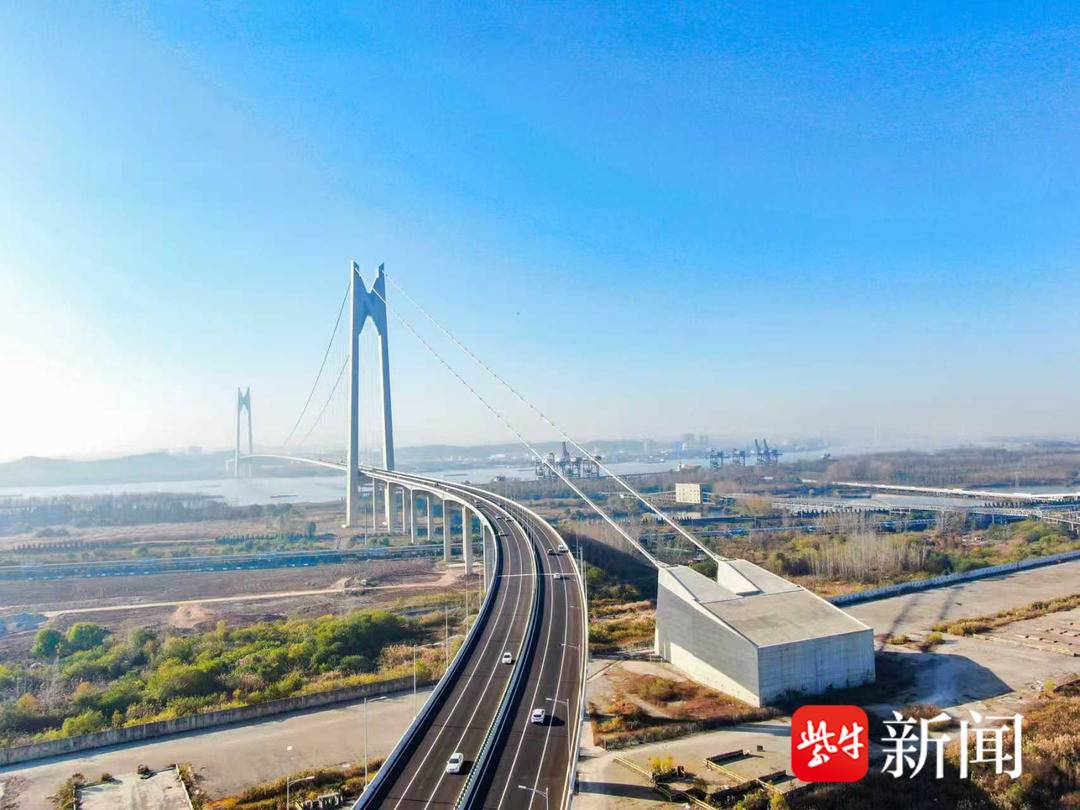
南京都市圈“超级桥梁群”崛起,“世界级桥梁”架起一体化发展“高速路”
Nan Jing Ri Bao· 2025-12-10 02:41
Core Insights - The newly opened and under-construction bridges in the Nanjing metropolitan area are significant engineering feats, enhancing regional integration and development [1][2][3] Group 1: Major Infrastructure Developments - The Nanjing Xinshengxu Yangtze River Bridge is the largest single-span suspension bridge in China and the third largest in the world, officially opened on November 26 [1] - The Hu-Yu-Rong (North Yangtze) High-Speed Railway Tongtai Yang Bridge, currently the longest bridge under construction globally at 172.9 kilometers, has completed 90% of its upper structure as of the end of November [1] - The Ma'anshan Yangtze River Road-Rail Bridge, the world's first double-main-span cable-stayed bridge exceeding 1,000 meters, achieved track connectivity on December 3 [1] Group 2: Regional Economic Impact - The Ma'anshan Yangtze River Road-Rail Bridge enhances the efficiency of transportation between the central and western regions and the core Yangtze River Delta, acting as a "strategic engine" for regional collaboration [2] - The Nanjing Xinshengxu Yangtze River Bridge reduces travel time between Nanjing and cities like Yangzhou and Zhenjiang, showcasing its significant role in regional connectivity [2] Group 3: Technological Innovations - The construction of the Ma'anshan Yangtze River Road-Rail Bridge involved advanced welding technologies and integrated solutions, resulting in significant improvements in process, efficiency, and quality [2] - The Hu-Yu-Rong High-Speed Railway Tongtai Yang Bridge employs smart temperature control systems and BIM modeling for precise construction, achieving millimeter-level accuracy in its assembly [3] Group 4: Future Development Plans - The National Development and Reform Commission's plan aims to establish approximately 180 river-crossing channels by 2025 and 240 by 2035 along the Yangtze River, with over 200 bridges currently built or under construction [4] - The ongoing development of "super bridges" in the Nanjing metropolitan area is expected to facilitate the free flow of development factors and enhance commuting efficiency, driving stronger regional integration [4]
城记 | 一周聚焦:织密 “黄金通道”,长三角立体交通建设再提速
Xin Hua Cai Jing· 2025-11-28 09:38
Core Insights - Transportation is identified as the "lifeblood" of regional development and a key engine for the high-quality advancement of the Yangtze River Delta integration [2] Group 1: Infrastructure Developments - The Jiaxing Nanhu Airport has received its operating license, becoming the 9th transport airport in Zhejiang and the 268th in China, with a capacity for 4 million passengers and 123,000 tons of international cargo annually [3] - The airport's 1-hour flight radius covers 325 million people, while the 2-hour radius encompasses 90% of China's GDP, and the 3-hour radius reaches 1.5 billion people globally [3] - The airport is expected to bring significant development benefits, including the establishment of the YTO Express Eastern Tian Di Port project, which aims to create a global air logistics hub and a multi-modal transport center [3] Group 2: Regional Transportation Projects - Major transportation projects in Jiaxing, such as the second phase of National Highway 524 and the Hangzhou-Shenzhen waterway renovation, have commenced, with the second phase of National Highway 524 setting records for speed, investment, and funding [4] - The expansion of the Zhajiasu Expressway, which began construction in September 2022, will enhance east-west connectivity by opening up 12 new roads [4] Group 3: General Aviation Development - The Hefei Feixi General Airport project has entered a substantive phase with a cooperation agreement signed, aimed at enhancing the general aviation transport network in Anhui province [5] - The airport is designed to support medium-sized aircraft and will bolster the low-altitude economy and general aviation industry, which are seen as strategic emerging industries [5] - The project is expected to facilitate deep cooperation in various fields, including aviation logistics and emergency rescue, contributing to the high-quality development of Anhui's low-altitude economy [5] Group 4: Bridge and Connectivity Enhancements - The Nanjing Xinshengxu Yangtze River Bridge has officially opened, marking the third river crossing completed during the 14th Five-Year Plan period [6] - Nanjing has built 15 river crossings, with the new bridge significantly reducing travel time from 1 hour to under 10 minutes between the main city and the Jiangbei New Area [6] - The bridge is expected to enhance the efficiency of transportation for research institutions and high-end manufacturing products, thereby fostering innovation and economic growth [6]

拥江发展再添“黄金动脉” 南京新生圩长江大桥昨日通车
Jiang Nan Shi Bao· 2025-11-27 07:14
Core Points - The Nanjing Xinxin River Yangtze Bridge officially opened on November 26, significantly reducing travel time across the river to under 10 minutes, marking a key development in Nanjing's urban infrastructure [1][3] - The bridge, part of the Nanjing urban planning, is a crucial connection between the main city and the Jiangbei New Area, enhancing regional economic collaboration [1][3] Summary by Sections Construction and Engineering Achievements - The bridge is described as a culmination of modern engineering technology, overcoming several world-class challenges and providing a "Nanjing solution" for similar bridge constructions [2] - Innovations include the development of the highest strength 2100Mpa main cable steel wire in China, saving 7,300 tons of steel, and ensuring safety under extreme conditions such as wind loads and earthquakes [2] - Research on the anchorage foundation's soil stress mechanisms improved the foundation's bearing efficiency by 30% [2] - The bridge features enhanced wind resistance measures and a fire protection system for the cable system, significantly improving safety and comfort for vehicles [2] Traffic Regulations and Functionality - From the day of opening, the bridge prohibits hazardous materials transport vehicles, medium and large trucks, motorcycles, non-motorized vehicles, and pedestrians, ensuring traffic safety and defining the bridge's primary function for passenger transport and light logistics [2] - This regulation aligns with the bridge's role in supporting regional economic development and passenger services [2] Impact on Regional Connectivity - The bridge's opening is expected to enhance the Yangtze River's crossing capacity and improve the regional road network, marking a new chapter in Nanjing's development strategy during the 14th Five-Year Plan [3]
南京新生圩长江大桥昨正式通车 全市已建成13处15条过江通道
Nan Jing Ri Bao· 2025-11-27 02:32
Core Viewpoint - The opening of the new Xinshengwei Yangtze River Bridge significantly enhances connectivity in Nanjing, reducing travel time across the river from one hour to ten minutes, and marks a shift from a "separated" to a "integrated" urban landscape [1][2]. Group 1: Infrastructure Development - The Xinshengwei Yangtze River Bridge is the sixth free river crossing in Nanjing, contributing to a total of 15 river crossings in the city, which facilitates urban integration [1]. - The bridge spans approximately 13.17 kilometers and serves as a crucial hub connecting Qixia District, Jiangbei New Area, and Liuhe District [1]. - The bridge is part of Nanjing's "high-speed road system" and helps alleviate traffic pressure on existing routes while promoting development in surrounding areas [2]. Group 2: Engineering and Technology - The bridge features a main span of 1,760 meters, making it the first in China and the third in the world of its kind, showcasing advanced engineering techniques [2]. - The construction involved overcoming several world-class technical challenges, providing a valuable "Nanjing solution" for similar bridge projects [2]. Group 3: Future Developments - Four additional river crossings are currently under construction in the Nanjing section of the Yangtze River, with key project milestones being achieved [3]. - The focus for the "14th Five-Year Plan" includes the development of multiple railway and metro river crossings, aiming to enhance the connectivity of the urban transport network [3]. - By the end of the "14th Five-Year Plan," the total number of river crossings in Nanjing is expected to reach 15 (17 routes), creating a more balanced, three-dimensional, and convenient cross-river transportation system [3].
南京新生圩长江大桥正式通车串联三大板块 物流通勤效率提升
Xin Hua Ri Bao· 2025-11-26 23:51
Core Points - The Nanjing Xinshengwei Yangtze River Bridge officially opened on November 26, marking a significant improvement in commuting efficiency, allowing for "minute-level" travel times between key areas in Nanjing [1] - The bridge spans 13.17 kilometers with a mainline design speed of 80 km/h and features six lanes in both directions, facilitating free passage [1] - The bridge connects major districts including Qixia, Jiangbei New Area, and the Economic Development Zone, alleviating traffic pressure on surrounding highways [1] Infrastructure Development - The bridge is designed as a suspension bridge with a main span of 1,760 meters, setting a record for similar bridges in China, and is capable of accommodating 50,000-ton vessels, enhancing shipping safety and efficiency [2] - Future plans for Nanjing's cross-river transportation system include multiple projects such as the Shangyuanmen Railway and Metro Line 4, aiming to establish a more balanced and convenient transportation network by the end of the 14th Five-Year Plan [2] - Currently, Jiangsu Province has completed 21 cross-river passages and has 8 under construction, with Nanjing having 6 free urban road crossings [2] Economic Impact - The bridge is expected to enhance logistics efficiency and business interactions, transforming regional competitive advantages into tangible benefits for local industries [1] - It will facilitate industrial collaboration between the southern and northern banks, promoting sectors such as new materials, electronic information, and advanced manufacturing [1] - The bridge will contribute to the formation of an innovative industrial network, linking various manufacturing corridors and technology innovation zones [1]
10分钟直达江北新区 南京新生圩长江大桥今天通车
Yang Shi Xin Wen Ke Hu Duan· 2025-11-26 02:56
Core Points - The Nanjing Xinxingwei Yangtze River Bridge officially opened on November 26, after over five years of construction [1][3] - The bridge serves as a crucial hub connecting Nanjing's main urban area with the Jiangbei New District, featuring a total length of approximately 13.17 kilometers and a main span of 1760 meters [1][3] Infrastructure and Economic Impact - The bridge is designed for a mainline speed of 80 km/h and consists of six lanes in both directions, enhancing transportation efficiency [1][3] - The innovative double-layer reinforcement technology was employed during construction to ensure the safety of the deep foundation pits [3] - Post-opening, travel time from Nanjing's main city to Jiangbei New District will be reduced from one hour to under ten minutes, significantly improving the Yangtze River's crossing capacity and regional road network [3]
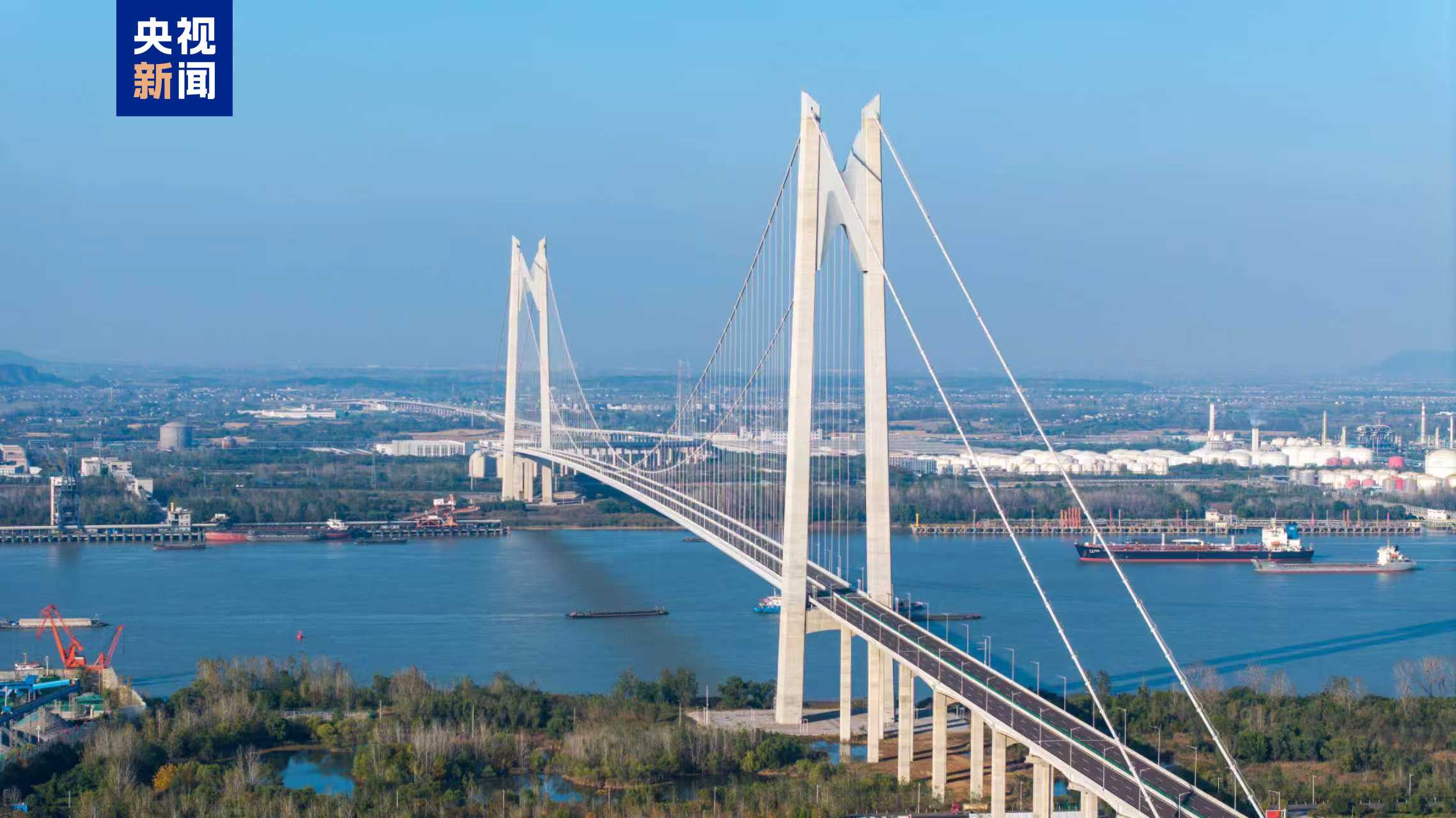
长江下游过江通道再增密 南京新生圩长江大桥通车
Zhong Guo Xin Wen Wang· 2025-11-26 02:44
Core Points - The Nanjing Xinxin River Yangtze Bridge has been completed and opened to traffic on November 26, 2023, marking a significant infrastructure development in Nanjing [1][3][5] Group 1: Project Overview - The bridge is a major project during the "14th Five-Year Plan" period for Nanjing's urban development, with a total length of approximately 13.17 kilometers and a design speed of 80 km/h, featuring six lanes in both directions [2] - The main span of the bridge is a single-span suspension bridge with a main span of 1760 meters, making it the largest of its kind in China and the third largest in the world [2] - The main tower of the bridge stands at 263.8 meters, equivalent to an 88-story building, and features a unique "N" shaped steel structure design inspired by the pinyin initial of Nanjing [2] Group 2: Construction Techniques - The construction team employed new technologies, including the dual-layer SMC method for anchorage wall reinforcement in large-span suspension bridges [2] - A movable soil excavation platform was developed to enhance efficiency by allowing excavation equipment to operate closer to the edge of the foundation pit [2] - The project also introduced a modular new process for concrete filling in deep foundation pits [2] Group 3: Impact on Transportation - The bridge establishes a rapid transit route between Nanjing's Jiangbei New Area and Qixia District, reducing travel time from one hour to just ten minutes between Qixia Avenue and Jiangbei Avenue [4] - This development is expected to significantly enhance the traffic capacity of the Yangtze River crossing in the lower reaches [4]
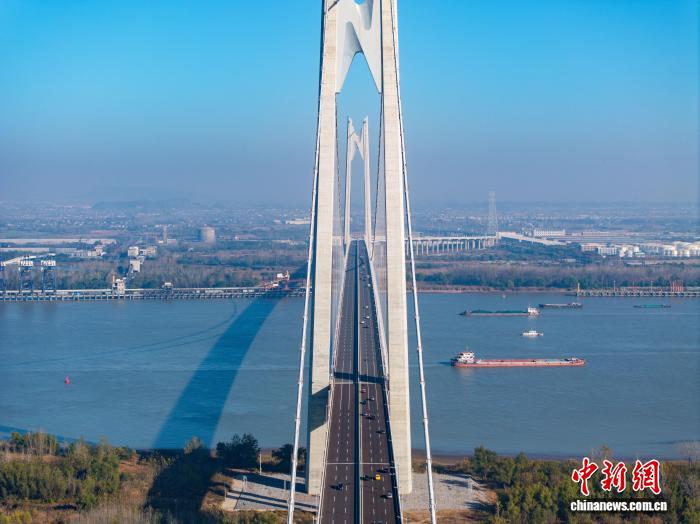
新生圩长江大桥今天将通车,南京以“中国跨度”撬动“拥江格局”
Nan Jing Ri Bao· 2025-11-26 02:31
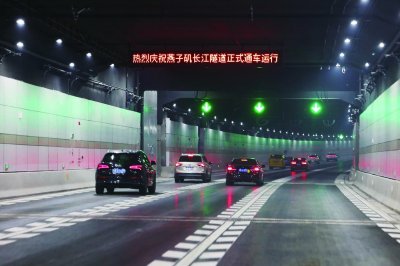
Core Insights - The opening of the Nanjing Xinshewei Yangtze River Bridge marks a significant milestone in the city's transportation infrastructure, being the third major river crossing completed during the 14th Five-Year Plan, enhancing the urban traffic layout and promoting regional integration [4][7][20]. Transportation Infrastructure Development - The Nanjing Xinshewei Yangtze River Bridge, with a main span of 1,760 meters, is recognized as the "first in China and third in the world" for its type, contributing to the city's goal of becoming a transportation hub [4][20]. - The bridge, along with the Yanziji Yangtze River Tunnel and the upcoming Ningyang Yangtze River Bridge, forms a network of crossings that significantly reduces travel time across the river, facilitating a more integrated urban experience [7][10][11]. Economic and Social Impact - The new bridge and tunnels have transformed commuting patterns, reducing travel times from 30 minutes to as little as 10 minutes for residents, thus enhancing the quality of life and economic opportunities in the region [10][11]. - The infrastructure improvements are expected to stimulate investment opportunities along the routes, as logistics efficiency increases for businesses [8][10]. Regional Integration and Urban Development - The development of these crossings is pivotal for the integration of the Nanjing metropolitan area, allowing for a more cohesive urban structure and promoting a "one-hour commuting circle" among Nanjing, Yangzhou, and surrounding areas [13][21]. - The transportation network is seen as a strategic link that not only connects cities but also integrates industrial chains, enhancing collaboration and economic growth across the region [21][22]. Future Plans and Projections - By the end of the 14th Five-Year Plan, Nanjing aims to have 15 river crossings, further solidifying its position as a key transportation hub and supporting its goal of becoming a globally influential center for industrial and technological innovation [17][20].
透过桥梁看中国(微观)
Ren Min Ri Bao· 2025-10-20 22:06
Core Viewpoint - The recent construction of bridges in China highlights the country's innovative capabilities and serves as a reflection of its economic and social development, facilitating connectivity and market integration across regions [1][2][3]. Group 1: Economic Impact - The completion of major bridges has significantly reduced travel times and improved logistics, such as the 常泰长江大桥, which cut travel time from 80 minutes to 20 minutes, enhancing economic integration between regions [2]. - The 港珠澳大桥 has become a vital artery for the Greater Bay Area, with cumulative import and export values exceeding 1 trillion yuan, showcasing the bridge's role in boosting economic activity [2]. - The construction of bridges is transforming remote areas, enabling them to participate in national development and share in modernization efforts, as seen with the completion of the 乔马桥 in Yunnan [3]. Group 2: Technological Innovation - China's bridge construction achievements, such as the 深中大桥 and 矮寨大桥, demonstrate significant technological advancements and the establishment of a comprehensive industry standard system [1]. - The ongoing development of bridges reflects a commitment to overcoming technical challenges and enhancing self-sufficiency in the construction industry, aligning with national strategic needs [1]. Group 3: Social Development - The construction of bridges is pivotal in addressing regional disparities in development, allowing previously isolated communities to access education and economic opportunities, as illustrated by the impact of the 乔马桥 on local residents [3]. - The narrative of bridge construction embodies the value of inclusivity in China's development strategy, ensuring that no region is left behind in the pursuit of modernization [3].