安佳因®

Search documents
神州细胞:安佳因®2025年销售下降的主要影响因素
Zheng Quan Ri Bao Zhi Sheng· 2026-02-09 12:28
Core Viewpoint - The sales of Anjiahin® are expected to decline significantly by 2025 due to several factors, including medical insurance cost control and substantial price reductions initiated by the company in response to national healthcare policies [1] Group 1: Sales and Market Impact - The decline in Anjiahin® sales is primarily influenced by the reduction in patient usage resulting from medical insurance cost control measures [1] - Starting from the third quarter of 2025, Anjiahin® will undergo significant price cuts to align with the national healthcare bureau's initiatives, aiming to make the medication more accessible to patients [1] Group 2: Treatment Guidelines and Patient Care - The revised "Chinese Guidelines for Hemophilia Treatment (2025 Edition)" has redefined treatment approaches for coagulation disorders, shifting from traditional preventive treatment to regular replacement therapy and from on-demand treatment to temporary replacement therapy [1] - The medical community is emphasizing the importance of preventive treatment, and the company hopes that adult patients will receive similar protections as pediatric patients [1] - The company anticipates that the recombinant factor VIII will receive equal treatment as blood-derived factor VIII in the future [1]

神州细胞:安佳因2025年销售下降的主要影响因素
Zheng Quan Ri Bao· 2026-02-09 12:12
Group 1 - The core viewpoint of the article highlights a significant decline in sales of the product Anjiaan® in 2025, attributed to several factors including medical insurance cost control leading to reduced patient usage [2] - The company has implemented a substantial price reduction for Anjiaan® starting from the third quarter of 2025 in response to the National Medical Insurance Administration's call, aiming to benefit patients and improve their survival conditions [2] - The revised "Guidelines for the Treatment of Hemophilia in China (2025 Edition)" has redefined treatment approaches for coagulation disorders, emphasizing the importance of preventive treatment and calling for better protection for adult patients similar to that of children [2]

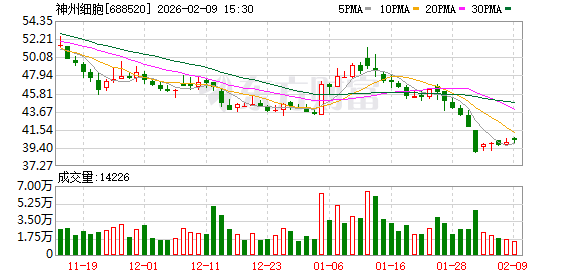
神州细胞:预计2025年年度净利润亏损5.8亿元到5.2亿元
Sou Hu Cai Jing· 2026-01-30 10:59
Core Viewpoint - Shenzhou Cell is expected to report a net loss attributable to shareholders of the parent company for the year 2025, ranging from -580 million to -520 million yuan, compared to the previous year [1] Group 1: Financial Performance - The company anticipates a significant decline in sales revenue due to ongoing healthcare cost control policies and multiple price reductions of its core product, Anjiah [1] - Overall operating revenue is expected to decrease compared to the same period last year [1] Group 2: Investment and Expenses - To facilitate market access and channel development for newly approved products, the company has increased upfront commercialization investments, including academic promotion and sales team formation, leading to a noticeable rise in sales expenses in the short term [1] - The company maintains a high level of research and development investment, with several ongoing projects entering critical confirmatory clinical trial stages during the reporting period [1]
神州细胞:2025年预亏5.2亿元~5.8亿元 同比由盈转亏
Mei Ri Jing Ji Xin Wen· 2026-01-30 10:31
Core Viewpoint - Shenzhou Cell (688520) is expected to report a net loss attributable to shareholders of the parent company between -580 million yuan and -520 million yuan for 2025, a significant decline from a net profit of 112 million yuan in the same period last year, indicating a shift from profit to loss due to industry healthcare cost control policies and price reductions of its core product Anjiah [2] Group 1 - The company's core product sales revenue has significantly decreased, leading to an overall decline in operating income compared to the same period last year [2] - The ongoing deepening of healthcare cost control policies in the industry has adversely affected the company's financial performance [2] - The price reductions of the core product Anjiah have contributed to the decline in sales revenue [2]
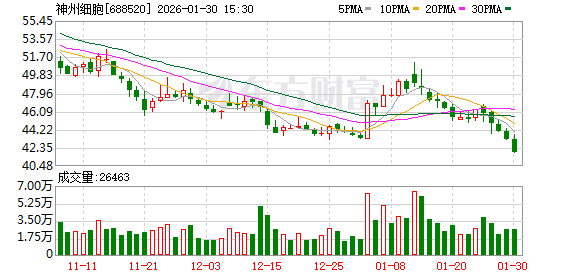
神州细胞:2025年全年预计净亏损5.20亿元—5.80亿元
2 1 Shi Ji Jing Ji Bao Dao· 2026-01-30 09:27
Core Viewpoint - Shenzhou Cell has released its annual performance forecast, expecting a net profit attributable to shareholders of the listed company to be between -520 million yuan and -580 million yuan for the year 2025, indicating a significant year-on-year decrease in net profit [1] Financial Performance - The expected net profit excluding non-recurring gains and losses for 2025 is projected to be between -503 million yuan and -563 million yuan [1] - The company's overall operating revenue is expected to decline compared to the previous year due to significant drops in sales revenue of its core product, Anjiah [1] Factors Affecting Performance - The decline in sales revenue is attributed to the ongoing deepening of industry medical insurance cost control policies and multiple price reductions of the core product [1] - To facilitate market access and channel development for newly approved products during the reporting period, the company has increased its upfront commercialization investments, including academic promotion and sales team formation, leading to a noticeable short-term increase in sales expenses [1] - The company continues to adhere to a research and development strategy of advancing multiple product pipelines, with several ongoing projects entering critical confirmatory clinical trial stages, resulting in sustained high levels of R&D investment that impact current profitability [1]
神州细胞(688520):产品销售阶段承压,临床管线值得期待
Western Securities· 2025-09-17 12:36
Investment Rating - The report maintains a "Buy" rating for the company, indicating an expected investment return that will outperform the market benchmark by over 20% in the next 6-12 months [3][11][6]. Core Insights - The company's revenue for the first half of 2025 was 972 million yuan, a decrease of 25.50% compared to the previous period, primarily due to regional price reductions and healthcare cost controls affecting the market for its core product, Anjain® [1][6]. - The company is focusing on expanding its market presence and ensuring competitive pricing in key provinces, aiming for a recovery in Anjain® sales [2][3]. - The company has made significant investments in R&D, totaling 388 million yuan, and has a robust pipeline with 13 products in clinical research stages, including innovative therapies targeting various cancers and autoimmune diseases [2][3]. Financial Summary - Revenue projections for 2025-2027 are estimated at 2.194 billion yuan, 2.543 billion yuan, and 3.021 billion yuan, reflecting a year-on-year growth of -12.7%, 15.9%, and 18.8% respectively [4][3]. - The net profit for 2025 is projected to be -33 million yuan, with a significant recovery expected in subsequent years, reaching 230 million yuan by 2027 [4][3]. - The company reported a gross margin of 94.79% in the first half of 2025, with expenses for sales, management, R&D, and finance at 43.4%, 8.8%, 39.0%, and 4.5% respectively [1][6].
神州细胞中报发布 多项研发成果蓄势待发
Zheng Quan Ri Bao· 2025-08-29 07:08
Core Viewpoint - The company reported a revenue of 972 million yuan for the first half of 2025 and is actively optimizing its capital structure through a private placement to raise up to 900 million yuan for R&D funding, reflecting confidence in its future prospects and commitment to investor interests [2][5]. Group 1: Financial Performance - The company's revenue for the reporting period was 972 million yuan, influenced by price reductions in its core product Anjain® due to regional alliance procurement and medical insurance cost control [3]. - The company is implementing a private placement plan to raise no more than 900 million yuan, which will enhance its capital structure and support R&D efforts [2][5]. Group 2: R&D and Innovation - The company is focusing on expanding its market presence and ensuring competitive pricing for its products, with new products gradually contributing to revenue growth [3]. - The self-developed antibody drugs Anpingxi®, Anjairun®, and Anbeizhu® have been included in the national medical insurance, covering various indications in autoimmune diseases, hematological malignancies, and solid tumors [3]. - The company has 13 products in clinical stages, targeting multiple disease areas, and is accelerating the transition of more candidates from preclinical to clinical research [4]. Group 3: Operational Efficiency - R&D investment remains around 390 million yuan, supporting 14 major products in clinical stages and optimizing clinical project priorities based on various factors [4]. - The company is enhancing its operational efficiency by controlling costs across various dimensions, including financial management, R&D project management, production processes, and operational management [6]. - A project management computer system has been trialed to improve R&D speed, quality stability, and cost-effectiveness [6].
神州细胞上半年由盈转亏 主力产品安佳因销售承压
Xin Lang Cai Jing· 2025-08-28 23:55
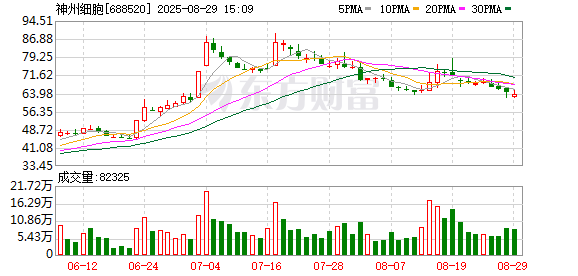
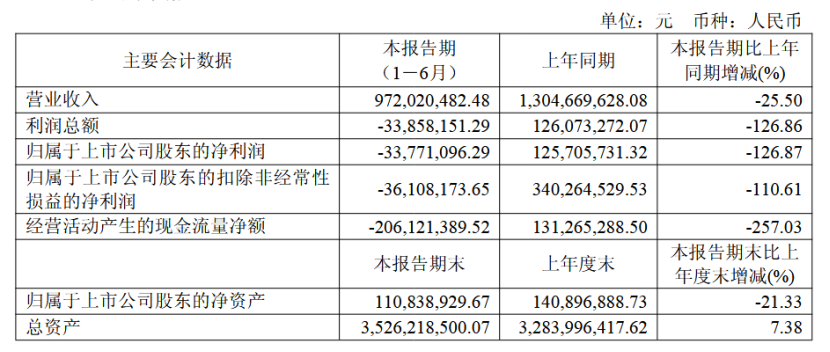
Core Insights - Shenzhou Cell reported a significant decline in revenue and profit for the first half of 2025, with revenue at 972 million yuan, down 25.50% year-on-year, and a net loss of 34 million yuan, reversing from profit to loss [1][3][4] Financial Performance - Revenue for the first half of 2025 was 972 million yuan, a decrease from 1.304 billion yuan in the same period last year, reflecting a 25.50% decline [3] - Total profit was -33.86 million yuan, compared to a profit of 126 million yuan in the previous year, marking a 126.86% decrease [3] - Net profit attributable to shareholders was -33.77 million yuan, down 126.87% from 125.71 million yuan year-on-year [3] - The company’s cash flow from operating activities was -206 million yuan, a significant drop from 131 million yuan in the previous year, indicating a 257.03% decline [6] Business Overview - Shenzhou Cell focuses on the research and commercialization of biopharmaceutical products, including treatments for cancer, autoimmune diseases, infectious diseases, and genetic disorders [4] - The main product, Anjain®, faced sales declines due to regional price reductions and healthcare cost controls, leading to a contraction in the overall market for recombinant factor VIII [4][5] Market Strategy - To counteract declining sales, Shenzhou Cell plans to implement targeted market strategies to secure procurement contracts in key provinces and improve pricing adjustments [4] - The company is also expanding its market presence internationally, having received approvals for Anjain® in Pakistan and Indonesia, and submitted applications in Vietnam [4] Legal and Compliance Issues - Shenzhou Cell is facing challenges related to a healthcare fraud case involving its subsidiary, which has raised concerns in the market [5] - The company maintains that the actions of a few individuals do not reflect its overall operational strategy and compliance standards [5] Capital and Funding - In June 2025, Shenzhou Cell announced a plan to issue A-shares to raise up to 900 million yuan, aimed at enhancing its core competitiveness and risk management capabilities [8] Market Performance - As of August 28, 2025, Shenzhou Cell's stock price was 64.28 yuan per share, down 1.85%, with a total market capitalization of 28.626 billion yuan [9]
科创板积极拥抱优质未盈利企业 构建培育新质生产力关键平台
Zheng Quan Ri Bao· 2025-06-14 04:21
Group 1 - Shanghai ChaoSilicon Semiconductor Co., Ltd. has had its IPO application accepted by the Shanghai Stock Exchange, despite being in a loss position until the end of 2024, exemplifying the trend of unprofitable tech companies being listed on the Sci-Tech Innovation Board [1] - The implementation of the "Eight Measures for Deepening the Reform of the Sci-Tech Innovation Board" has led to a significant increase in the overall technological innovation capability and market activity of listed companies on the Sci-Tech Innovation Board [1][2] - The capital market is increasingly embracing hard technology companies, as evidenced by the acceptance of multiple IPO applications from unprofitable firms in the semiconductor and biomedicine sectors [2][3] Group 2 - The global consensus is shifting from "profit worship" to "innovation value," emphasizing the importance of reinvesting profits into research and development rather than focusing solely on financial statements [3] - The successful listing of unprofitable tech companies is expected to create a strong demonstration effect and attract more innovative resources to the hard technology sector, aiding in the advancement of strategic emerging industries [3][4] - Since the establishment of the Sci-Tech Innovation Board, 54 companies have gone public while unprofitable, primarily in the new generation information technology and biomedicine sectors, with a total market value of approximately 1.43 trillion yuan [5] Group 3 - Companies like Beijing Shenzhou Cell Biology Technology Group and Shanghai MicroPort EP MedTech have successfully turned profitable after significant R&D investments, showcasing the potential for growth in the hard technology sector [6] - Regulatory bodies in China are enhancing the inclusivity of the capital market to better support tech companies, with plans to improve listing and investment systems [7] - The capital market's recognition of the "innovation time difference" allows for a system that values long-term innovation, which is crucial for driving high-quality economic development in China [7]
再增一单!未盈利企业IPO申请获上交所受理
证券时报· 2025-06-14 00:13
Core Viewpoint - The article discusses the acceptance of Shanghai Super Silicon Semiconductor Co., Ltd.'s IPO application on the Sci-Tech Innovation Board, highlighting the trend of unprofitable companies being welcomed into the capital market under the "Eight Measures for the Sci-Tech Innovation Board" policy [1][3][4]. Group 1: Company Overview - Shanghai Super Silicon is one of the earliest companies in China engaged in large-size silicon wafers for integrated circuits and is recognized as a national high-tech enterprise [5]. - The company plans to raise 4.965 billion yuan for projects related to the production of 300mm thin silicon epitaxial wafers and high-end semiconductor silicon material research and development [6]. Group 2: Market Context - Since the introduction of the "Eight Measures," three unprofitable companies have had their IPO applications accepted, indicating a shift in the capital market's approach to supporting hard technology enterprises [7]. - The article notes that the acceptance of Shanghai Super Silicon's IPO reflects the capital market's commitment to embracing hard technology companies that represent new productive forces [7]. Group 3: Policy and Market Trends - The "Eight Measures" aim to improve the identification mechanism for technology companies and support high-quality unprofitable tech firms in listing on the Sci-Tech Innovation Board [3][9]. - The article emphasizes that the global consensus is shifting from a focus on profitability to valuing innovation, as seen in the performance of major tech companies in the U.S. [10]. - As of now, 54 companies listed on the Sci-Tech Innovation Board were unprofitable at the time of their IPO, with a total fundraising of 202.731 billion yuan and a combined market value of 1.43 trillion yuan as of May 2025 [11][12]. Group 4: Future Outlook - The article suggests that the reforms in the capital market, particularly the Sci-Tech Innovation Board, will continue to evolve, providing a more inclusive environment for technology innovation and industry development [16].