
安防巡检四足机器人

Search documents
康迪科技签约浙大,共建智能机器人联合研发中心
Guan Cha Zhe Wang· 2026-01-05 10:13
当前北美地区拥有庞大的仓储物流体系,但面临人工成本高昂、劳动力短缺、巡检效率低下等突出难题,尤其是全球商品持续涌入美国市场的背景下,仓库 安保已成为供应链安全的核心环节。 1月5日,浙江大学与康迪科技集团在浙大紫金港校区正式签署合作协议,共同揭牌成立"浙江大学-康迪智能机器人联合研发中心",标志着校企双方在人工 智能与安防巡检机器人深度融合领域开启创新生态实践。 作为深耕可持续出行领域的高新技术企业,康迪科技正加速从传统制造向科技创新驱动型平台企业转型,构建起"以北美非公路出行产品为基,智能机器人 加能源换电装备为翼"的全新业务架构。 此次与浙江大学的战略合作,是其强化科技属性、拓展高附加值智能装备市场的关键布局,也是对"中国技术+海外场景+海外渠道"创新模式的进一步深 化。 在此之前,康迪科技已与杭州"六小龙"之一的云深处科技达成合作,聚焦高尔夫智能装备及安防巡检四足机器人领域,共同开发北美市场创新产品。 浙江大学副校长陈刚表示,学校高度重视此次合作,联合研发中心的成立将对贯彻创新驱动发展战略、推动技术成果转化、促进智能安防产业持续健康发展 产生积极影响,期待双方通过优势互补、资源共享,持续拓展合作空间,实 ...




康迪科技董事长董学勤:凭借“智能机器人+能源换电”构建第二增长曲线丨请回答2025
Sou Hu Cai Jing· 2025-12-24 11:00
Core Insights - The article discusses the transition of Chinese manufacturing from "brand going global" to "ecosystem and technology going global" by 2025, with a focus on sectors like renewable energy and smart robotics as key areas of international competition [1][4]. Group 1: Company Strategy - The company aims to transform from a traditional export model to a "technology + scenario + ecosystem" value leap, driven by a "three seas strategy" that solidifies its core business in electric off-road vehicles while entering new markets like smart robotics and battery swapping equipment [3][5]. - The company has successfully penetrated the North American market, with products available in over 1,000 retail stores, and has expanded its electric off-road vehicle sales to 35 countries and regions globally [4][6]. Group 2: Technological Advancements - The company has achieved significant breakthroughs in technology and commercialization, including the development of a quadruped robot for security inspections in the North American market, targeting a market worth billions [4][6]. - The company has become a supplier for CATL's battery swapping stations, marking its entry into the supply chain of a leading global battery manufacturer, with the first order already in progress [4][6]. Group 3: Partnerships and Trust - Trust from partners has become a core asset for the company, as evidenced by securing its first order for battery swapping station equipment from CATL and signing a quadruped robot order with Indonesia's GoTo Group, indicating international recognition of its technology [4][6]. Group 4: Future Outlook - The company envisions a three-tier leap in its strategy, focusing on "brand going global, intelligent manufacturing going global, and ecosystem going global," with a solid foundation in its core business of off-road vehicles [6]. - The company aims to capture high-growth opportunities in the battery swapping sector and ensure that new businesses enter a phase of scale and stability by 2026 [6].

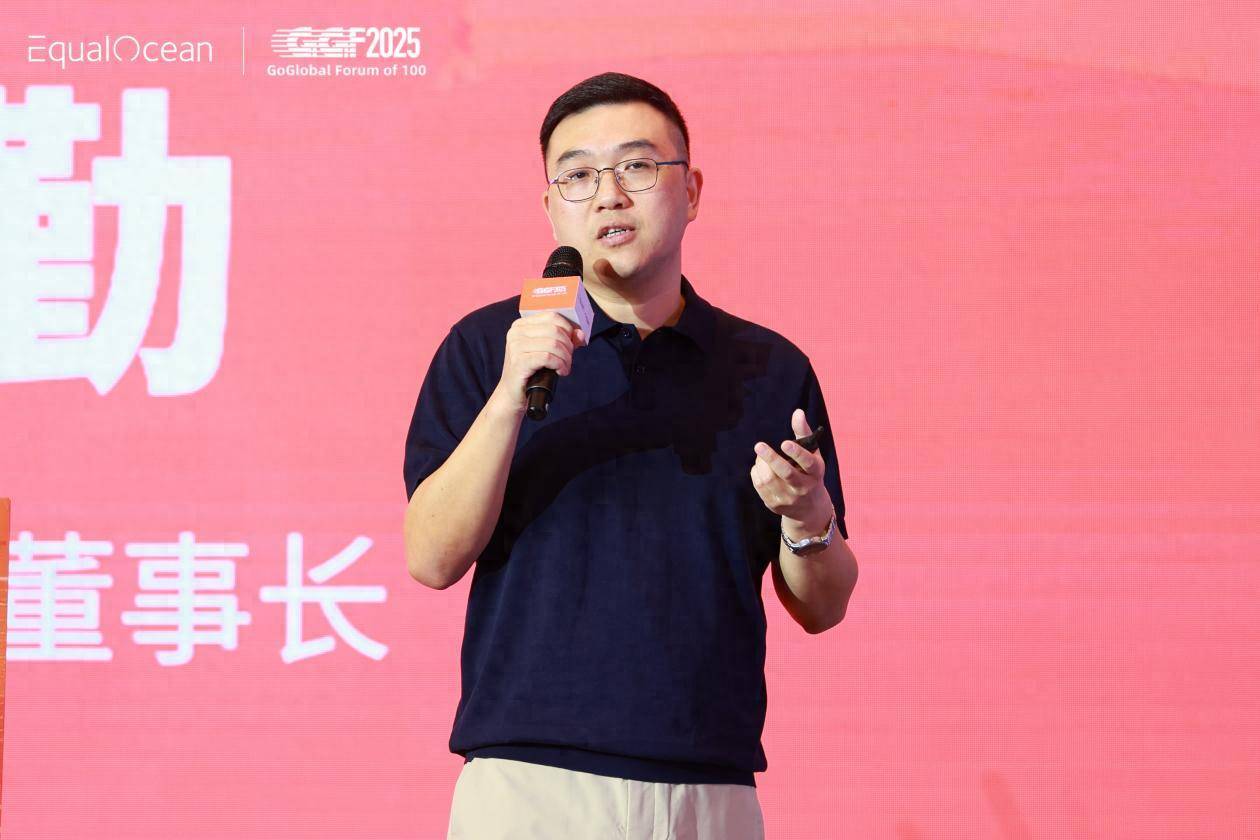
康迪科技参加EO出海全球化论坛,董事长分享“智造出海新范式”
Sou Hu Cai Jing· 2025-09-22 10:28
Core Insights - The "2025 EqualOcean Globalization Forum" held in Shenzhen focused on the future of Chinese companies going global, discussing investment opportunities, capital market trends, and brand building [2] - Dong Xueqin, Chairman of Kandi Technologies, presented a speech on the new paradigm of Chinese manufacturing going global, particularly Kandi's breakthrough in the North American off-road vehicle market [4] Group 1: Kandi's Global Strategy - Kandi has been deeply involved in the transportation sector for decades and has recently shifted its strategy to produce various electric off-road vehicles, targeting the North American market [4] - The differentiation of Kandi's products, particularly the "off-road vehicle," has allowed it to emerge as a leading brand in the North American market [4] Group 2: Technological Advantages - Kandi possesses a natural technological advantage in the electric off-road vehicle sector, having started mass production of electric vehicles in 2013 [5] - The design and development of electric off-road vehicles using automotive technology provide Kandi with a competitive edge in the market [5][7] Group 3: Product Development and Market Penetration - Kandi's electric golf carts and UTV farmer vehicles, designed on electric platforms, have gained significant traction in the North American market, which is predominantly gasoline-powered [7] - Kandi has established partnerships with major retailers like Costco and Lowes, enhancing its market presence and consumer recognition [7] Group 4: Future Innovations and Market Expansion - Kandi is transitioning from a manufacturing-focused company to a technology-driven enterprise, with plans to innovate in the "AI + Sports" sector by developing a caddy robot [8] - The company is also exploring the "AI + North American Industry" market by creating security robots to address high labor costs in the U.S. [10] - Kandi has begun expanding into Southeast Asia, providing delivery robots to major digital companies in Indonesia [10] Group 5: Strategic Partnerships and Future Goals - Kandi has become a supplier for CATL's battery swap equipment and has received its first order for heavy-duty truck battery swap devices [10] - The company aims to leverage its full-chain capabilities in exports and collaborations to create an industrial cluster effect overseas, positioning itself as a facilitator for Chinese technology going global [10]
康迪科技的“三海突围”:换电、机器人、全球化构筑美股中概股转型样本
Jin Rong Jie· 2025-08-13 14:19
Core Viewpoint - Kandi Technologies (KNDI.US) is undergoing a transformation from traditional manufacturing to a technology-driven platform, highlighted by its recent partnership with CATL for battery swap stations, which has led to a significant stock price increase [1][2]. Group 1: Battery Swap Business - Kandi's collaboration with CATL marks a significant milestone in its battery swap business, focusing on heavy-duty vehicle swap station construction [2]. - The partnership aligns with two major trends: U.S. policy incentives for clean energy infrastructure and the accelerating demand for electric heavy-duty vehicles, with the North American battery swap market expected to exceed $5 billion by 2024 [2]. - Kandi's battery swap technology has been in development for a decade, and this partnership is expected to leverage CATL's brand and distribution channels to quickly penetrate the market [2]. Group 2: Robotics Strategy - Kandi announced key initiatives at the World Artificial Intelligence Conference, including a partnership with Yundong Technology to develop smart golf equipment and security inspection robots for North America [3]. - The robotics strategy targets the North American security market, which exceeds $10 billion annually, and aims to address urgent needs for smart inspection due to high labor costs [3]. - Collaborating with Zhejiang University to establish a joint research institute will focus on environmental perception and motion control algorithms to commercialize robotics technology [3]. Group 3: Globalization Strategy - Kandi's chairman emphasized the need for a three-step approach to globalization: manufacturing, intelligent manufacturing, and ecological empowerment [4]. - The company has localized production in Texas for golf carts to avoid tariffs and is partnering with CBAT to build a lithium battery factory in the U.S., with the first phase expected to start production in 2026 [4]. - Kandi has successfully entered over 1,000 retail locations in North America, including Lowe's and Costco, and has a diverse dealer network [4]. Group 4: Financial Performance and Challenges - Kandi's financial data shows a revenue of $12.8 million in 2024, a 3.2% increase year-over-year, but a net loss of $50.95 million due to significant asset impairment and increased management costs [7]. - The company's revenue structure is heavily reliant on off-road vehicles and parts, which account for 91% of income, while new businesses like lithium batteries and battery swapping contribute less than 5% [7]. - Compared to industry peers, Kandi faces challenges in balancing its core business profitability while needing to sustain new business growth [7]. Group 5: Future Outlook - Kandi's transformation is entering a critical phase, with three main competitive advantages: synergy between battery swapping and robotics technologies, reuse of North American distribution channels, and benefits from U.S. policy incentives [8]. - The success of the battery swap station orders and the progress of the U.S. battery factory will significantly impact revenue in the short term [9]. - If battery swap and robotics revenue exceeds 30%, Kandi's valuation could shift from traditional manufacturing to intelligent equipment, potentially increasing its price-to-earnings ratio from 5x to 15x [9]. Group 6: Conclusion - Kandi's evolution reflects a broader shift in Chinese manufacturing from low-cost production to technology-driven solutions, with its strategic positioning in battery swapping and robotics benefiting from policy incentives and market growth [10]. - As of the report, Kandi's market capitalization stands at $120 million, and if new business segments gain traction, the company may experience a significant revaluation [10].