小思AI一对一

Search documents
中国电子电子行业研究报告
Haitong Securities International· 2025-09-29 08:16
Investment Rating - The report does not explicitly provide an investment rating for the industry or specific companies. Core Insights - Apple is developing an internal application similar to ChatGPT to prepare for a major overhaul of Siri, expected to launch in March 2026 [18][20] - The U.S. is considering a 1:1 rule for domestic versus overseas semiconductor production to reduce foreign dependence, which could impact companies like Apple [21][23] - U.S. EV sales are projected to increase by 21% year-over-year in Q3 2025, driven by a rush to purchase before the expiration of tax credits [26][27] Summary by Sections Apple and AI Development - Apple is testing a new app, code-named Veritas, to evaluate new features for Siri, which includes functionalities like searching personal data and photo editing [19][20] - The success of this software is crucial for Apple to regain competitiveness in the AI sector against rivals like Google and Samsung [20] Semiconductor Industry - The proposed 1:1 rule for semiconductor production could lead to tariffs for companies that do not meet the domestic production requirements [21][22] - Initial rules may allow companies to import chips without tariffs if they commit to domestic production [22][23] Electric Vehicle Market - Cox Automotive forecasts that U.S. EV sales will reach approximately 410,000 units in Q3 2025, representing a 21% increase from the previous year [26] - The EV market is expected to contract post-2025, prompting automakers to restructure their EV offerings [27]
腾讯研究院AI速递 20250929
腾讯研究院· 2025-09-28 16:01
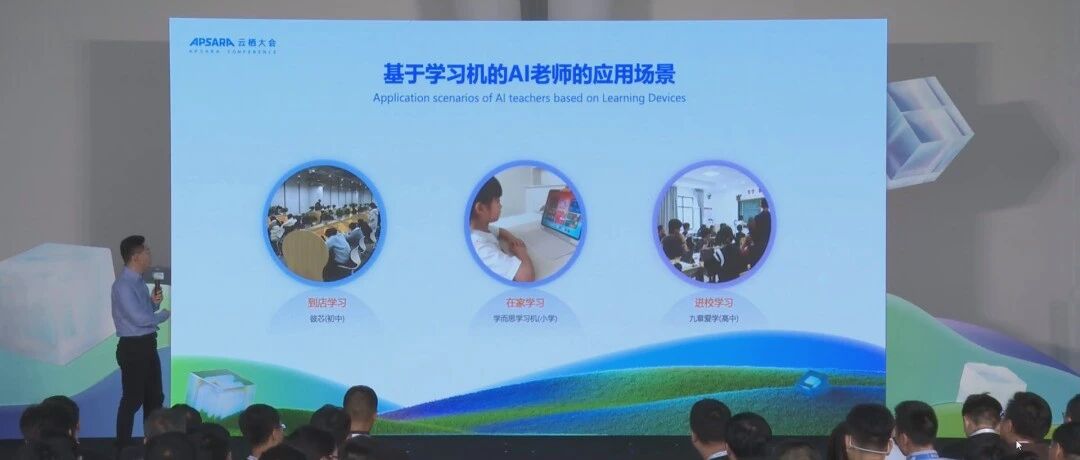
Group 1: OpenAI and Model Changes - OpenAI has been reported to reroute models like GPT-4 and GPT-5 to lower-capacity sensitive models without user knowledge [1] - The rerouting occurs when the system detects sensitive topics, and this judgment is based on subjective context [1] - OpenAI's VP stated that the changes are temporary and part of testing a new safety routing system, raising user concerns about rights [1] Group 2: Tencent's Hunyuan Image 3.0 - Tencent launched Hunyuan Image 3.0, the first industrial-grade native multimodal model with 80 billion parameters, recognized as the largest open-source model [2] - The model excels in semantic understanding, capable of parsing complex semantics and generating both long and short texts with high aesthetic quality [2] - Hunyuan Image 3.0 is based on Hunyuan-A13B, trained on 5 billion image-text pairs and 6 trillion tokens, and is available under Apache 2.0 license [2] Group 3: Kuaishou's KAT Series - Kuaishou's Kwaipilot team introduced KAT-Dev-32B (open-source) and KAT-Coder (closed-source) models, achieving a 62.4% solution rate on SWE-Bench Verified [3] - KAT-Coder reached a 73.4% solution rate, comparable to top closed-source models, utilizing a chain training structure [3] - The team developed entropy-based tree pruning technology and a large-scale reinforcement learning training framework, observing new capabilities in dialogue and tool usage [3] Group 4: AI Teachers by TAL Education - TAL Education's CTO proposed a grading theory for AI teachers, evolving from assistants (L2) to true teacher roles (L3) [4] - L3 AI teachers can observe students' problem-solving steps in real-time and provide targeted guidance, forming a data feedback loop [5] - The "XiaoSi AI One-on-One" program supports personalized education across various learning environments, achieving a 98.1% accuracy in math problem-solving [5] Group 5: Meta's Humanoid Robots - Meta plans to invest billions in humanoid robot development, equating its importance to augmented reality projects [6] - The focus will be on software development rather than hardware manufacturing, aiming to create industry standards [6] - A new "Superintelligent AI Lab" is collaborating with robotics teams to build a "world model" simulating real physical laws [6] Group 6: Richard Sutton's Critique on Language Models - Richard Sutton criticized large language models as a flawed starting point, emphasizing that true intelligence comes from experiential learning [7] - He argued that large models lack the ability to predict real-world events and do not adapt to changes in the external world [7] - Sutton advocates for a learning approach based on actions, observations, and continuous learning as the essence of intelligence [7] Group 7: RLMT Method by Chen Danqi - Chen Danqi's team proposed the RLMT method, integrating explicit reasoning into general chat models to bridge the gap between specialized reasoning and general dialogue capabilities [8] - RLMT combines preference alignment and reasoning abilities, requiring models to generate reasoning paths before final answers [8] - Experiments show RLMT models excel in chat benchmarks, shifting reasoning styles to iterative thinking akin to skilled writers [9] Group 8: DeepMind's Veo 3 Emergence - DeepMind's Veo 3 demonstrates four progressive capabilities: perception, modeling, manipulation, and reasoning [10] - The concept of Chain-of-Frames (CoF) allows Veo 3 to perform cross-temporal reasoning through frame-by-frame video generation [10] - Quantitative assessments indicate significant improvements over Veo 2, suggesting video models are becoming foundational in visual tasks [10] Group 9: NVIDIA's Future in AI Infrastructure - NVIDIA is transitioning from a chip company to an AI infrastructure partner, focusing on total cost advantages rather than individual chips [11] - AI inference is expected to grow by a factor of a billion, driven by three expansion laws, potentially accelerating global GDP growth [11] - Huang Renxun emphasizes the need for independent AI infrastructure in the sovereign AI era, advocating for maximizing influence through technology exports [11]






新一代AI教师是什么样?学而思让它从L2「助手」跃迁至L3「老师」
机器之心· 2025-09-28 00:32
Core Viewpoint - The article discusses the evolution of AI in education, emphasizing the transition from basic assistance (L1) to more interactive and personalized teaching roles (L3), ultimately aiming for a trustworthy learning partnership between AI and students [2][10][43]. Group 1: AI's Role in Education - The integration of AI in education is seen as a frontier for innovation, with the potential to enhance personalized learning experiences [2][5]. - Traditional classroom settings often fail to address individual student needs due to large class sizes and uniform teaching methods [3][5]. - AI companions can provide constant feedback and create a judgment-free environment, allowing students to explore and ask questions freely [5][42]. Group 2: AI Teacher Levels - The proposed "AI Teacher L1-L5" framework outlines the progression of AI capabilities in education, with L1 being basic assistance and L3 representing a more integrated teaching role [10][12]. - L2 AI tools serve as effective assistants, capable of tasks like grading and providing resources, but do not engage in true teaching [14][13]. - L3 AI aims to create a closed-loop interaction, where it can observe and respond to students' thought processes in real-time, resembling a human teacher [15][21]. Group 3: Hardware and Interaction - The transition to L3 requires specialized hardware to facilitate real-time interaction, as software alone cannot achieve the necessary complexity [16][17]. - The hardware enables AI to "see" and "hear" students, allowing for a more dynamic and responsive teaching experience [18][22]. - The design of the learning machine focuses on minimizing response times to maintain student engagement and reduce anxiety during learning [19][20]. Group 4: AI's Teaching Methodology - L3 AI teachers utilize a more interactive approach, guiding students through problem-solving rather than simply providing answers [21][24]. - The AI encourages critical thinking by prompting students with questions and suggestions, fostering a deeper understanding of the material [23][25]. - The learning machine incorporates various educational tools, such as interactive models and gamified learning experiences, to enhance student engagement [29][30][31]. Group 5: Content and Knowledge Base - The effectiveness of AI teachers is supported by a robust knowledge base, including optimized models for K12 education and extensive teaching resources [37][40]. - The combination of advanced AI capabilities and high-quality educational content ensures that AI can serve as a reliable learning partner [41][42]. - The ultimate goal is to create a seamless educational experience across different learning environments, allowing for personalized education regardless of location [42][43].