小象超市小程序

Search documents
即时零售竞争新焦点:盒马超盒算双线扩张vs小象前置仓优势博弈
Sou Hu Cai Jing· 2026-01-08 10:13
Group 1 - The core competition in the instant retail sector is intensifying, with major players like Hema and Xiaoxiang Supermarket engaging in a battle for market share across various channels, from community corners to high-end supermarkets [1][3] - Hema is facing operational challenges due to increased online orders and delivery delays, exacerbated by a shortage of manpower and inventory issues, particularly in popular products [3][6] - To address these challenges, Hema plans to implement a dual expansion strategy of "Super Box Calculation Stores + Front Warehouses" in key markets like Beijing, focusing on high-frequency essential products to differentiate itself from Xiaoxiang Supermarket [3][6] Group 2 - Xiaoxiang Supermarket has established a strong competitive advantage through a high-density front warehouse network and effective online-offline collaboration, allowing for significant market penetration [3][6] - Both companies are leveraging their mini-programs as critical competitive tools, with Hema's program helping to manage traffic and orders, while Xiaoxiang's program optimizes delivery scheduling [3][6] - The competition is shifting towards self-owned brands, with both Hema and Xiaoxiang Supermarket adapting their strategies to include self-branded products to enhance market presence and profitability [5][8] Group 3 - The growth of pure online models is facing limitations, highlighting the importance of offline store presence for brand recognition and customer engagement [6][8] - Hema's organizational coordination capabilities are currently lagging behind Xiaoxiang Supermarket, impacting its competitiveness in nationwide operations [6][8] - The future competitive landscape in the instant retail sector remains uncertain, with self-owned brands and offline stores becoming key elements in the ongoing battle [8]

美团小象超市北京首店开业:全渠道模式重构生鲜零售竞争格局
Sou Hu Cai Jing· 2025-12-22 18:59
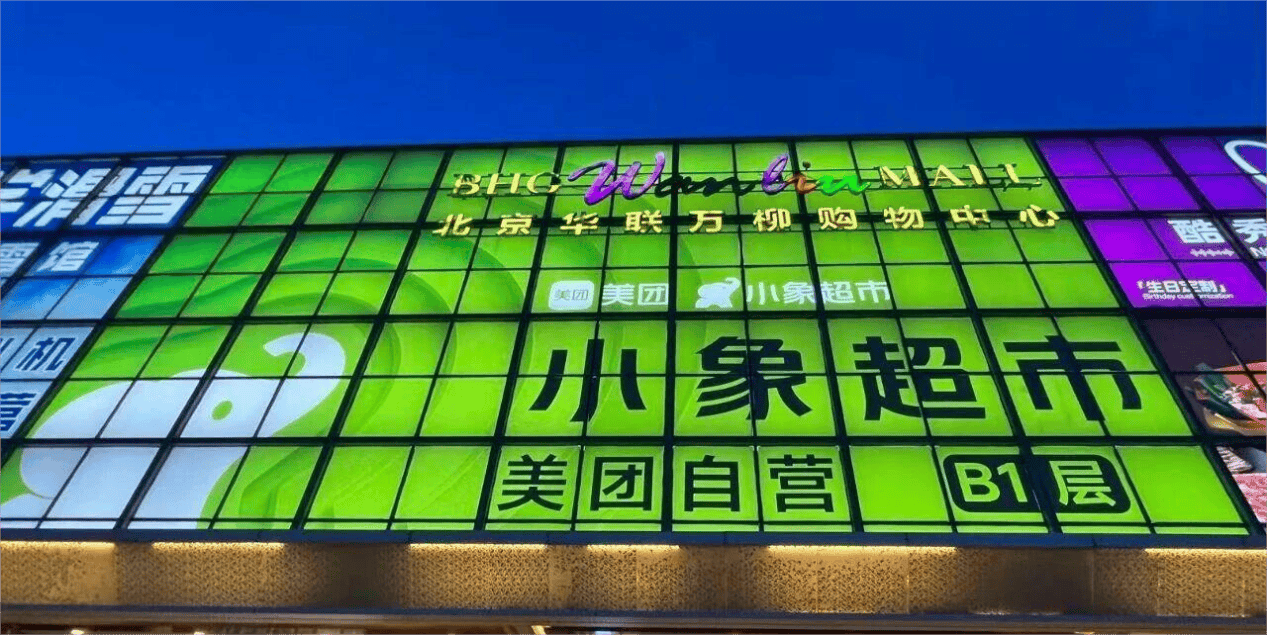
Core Insights - The entry of Meituan into the offline fresh retail market marks a significant shift in the industry, indicating the arrival of heavyweight players and pushing the transformation of fresh supermarkets into a new phase [1][10] - Major players like Alibaba and JD.com are already focusing on the offline experience, leading to a multi-channel competition landscape [1] Company Developments - Meituan's first Xiaoxiang supermarket opened in Beijing on December 19, 2025, completing its "home delivery + in-store" multi-channel strategy after seven years in the fresh e-commerce sector [3] - The Xiaoxiang supermarket, which evolved from the "30-minute quick delivery supermarket" Meituan Maicai launched in 2019, has established nearly 1,000 front warehouses across 20 cities [3] - The opening of the first store is a key demonstration of Meituan's commitment to fresh retail, following the shutdown of certain operations to focus on Xiaoxiang supermarkets [3] Industry Trends - The "offline large experience store + N warehouses" model is being adopted to build multi-channel touchpoints and solidify market position, resembling the Sam's Club model [3] - The Xiaoxiang supermarket app serves as the core hub for multi-channel coordination, enabling seamless integration of store and warehouse resources for rapid fulfillment [3] - The retail industry is transitioning from a transaction-based society to an experience-based society, with a focus on enhancing customer experience in fresh retail [8][10] Competitive Advantages - The Xiaoxiang supermarket emphasizes three core competitive strengths: enhanced offline experience, quality differentiation from discount supermarkets, and a focus on proprietary brands [6] - The store features a diverse consumption space with fresh food counters and customized services, aiming to create a shopping experience similar to that of "Pang Dong Lai" [6] - The opening period includes high-cost performance products to achieve differentiated competition and improve gross margins [6]