
小青柑

Search documents
“小果子”撬动大产业托起群众“甜蜜”生活 消费新变化、新趋势激发新活力
Yang Shi Wang· 2025-12-20 06:27
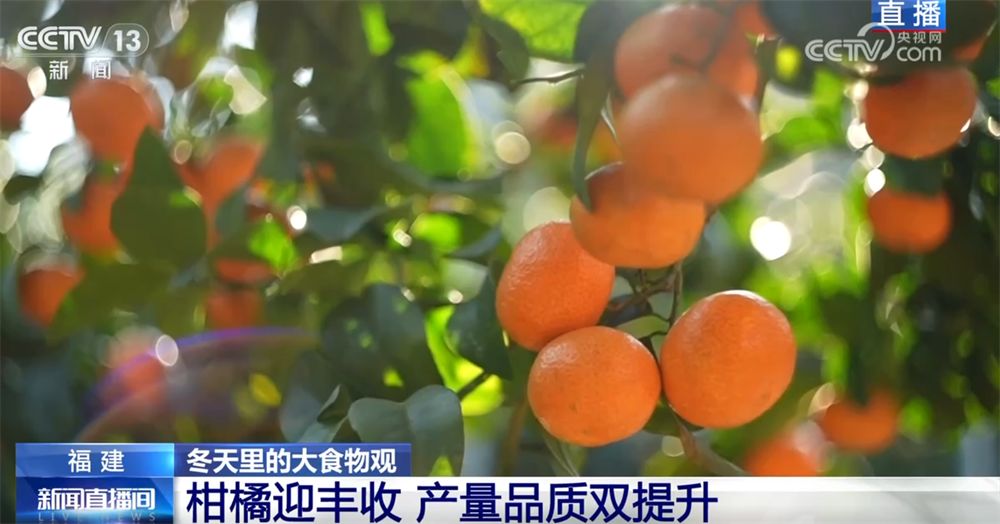
Core Insights - The article highlights the advancements in modern agricultural technology and logistics that allow for a year-round supply of citrus fruits in China, particularly focusing on oranges as a leading fruit in terms of area and production [1] Group 1: Citrus Production and Technology - The Ministry of Agriculture and Rural Affairs reports that there are over 90 varieties of citrus grown on more than 10,000 acres, with improved cultivation and storage techniques enabling year-round availability of fresh citrus fruits [1] - In a modern citrus planting demonstration garden in Shunchang County, approximately 350 acres are dedicated to 15 different citrus varieties, showcasing the quality and harvesting techniques that enhance fruit preservation [3][5] - The introduction of large-capacity drones for transporting fresh fruit has increased efficiency by seven times compared to traditional methods, particularly benefiting remote orchards [5] Group 2: Quality and Consumer Experience - The citrus fruits from this region are characterized by thin skin, high juice content, and sweetness, with a sugar content of 11.9, comparable to that of watermelon [10] - The local citrus industry has integrated with rural tourism, offering immersive experiences for visitors, including fruit picking and cultural education, while also developing a range of citrus-themed products [12] Group 3: Economic Impact and Industry Development - The citrus industry in Shunchang has evolved from traditional farming to a technology-driven model, achieving a production value of nearly 700 million yuan and benefiting over 60,000 farming households [15] - In Guangxi, the gold orange production has implemented digital standards across 12 townships, with a projected planting area of 231,000 acres and an expected total output of 287,000 tons by 2025 [19][22] Group 4: Market Trends and Consumer Behavior - The online interest in citrus fruits has surged, with a 25.8% increase in total search volume since November 7, and a 127.9% rise in consumer engagement [23] - The top five citrus-producing regions in China include Sichuan, Guangxi, Yunnan, Hunan, and Hubei, while the highest purchasing regions are Guangdong, Zhejiang, Hebei, Xinjiang, and Guangxi [26] - There is a growing trend towards the incorporation of citrus flavors in beverages and desserts, with products like "citrus latte" and "citrus yogurt" gaining popularity [29]

从一颗柑到“软黄金”:外籍网络达人感受侨乡江门产业新篇
Zhong Guo Xin Wen Wang· 2025-10-02 03:03
Core Viewpoint - The article highlights the innovative integration of technology in the traditional Chenpi (dried tangerine peel) industry in Jiangmen, Guangdong, showcasing how modern advancements are revitalizing this historical sector and enhancing its productivity and efficiency [1][3]. Group 1: Industry Overview - Jiangmen's Xinhui District is renowned as the "Home of Chenpi," benefiting from favorable agricultural conditions for growing Qinggan (green tangerines), which are essential for Chenpi production [1]. - The Chenpi industry is experiencing a transformation through the adoption of new technologies, which are becoming crucial for its development [1]. Group 2: Technological Integration - Advanced technologies such as drones for monitoring, smart irrigation systems, and electric power supply systems are being utilized to ensure efficient management of the orchards [1][2]. - Special equipment like robotic dogs and laser clearing devices are enhancing operational efficiency by performing tasks that traditionally required manual labor, thus improving safety and productivity [3]. Group 3: Quality Control and Value Addition - The aging process of Chenpi is critical, with longer-aged Chenpi being more aromatic and valuable, leading to its nickname "soft gold" [5]. - Strict standards are maintained throughout the production process, including optimal storage conditions monitored by remote systems to ensure quality and value retention [5].
2025中国人送礼不完全指南
Hu Xiu· 2025-05-17 12:33
Group 1 - The article discusses the art of gifting tea in a culturally nuanced manner, emphasizing the importance of understanding both tea and the recipient's preferences [1][2][3] - It outlines 20 subtle rules for gifting tea, aiming to help individuals navigate the complexities of tea gifting without falling for misleading sales tactics [3][4] - The guide is not intended to make someone a tea expert but serves as a practical "avoidance guide" to prevent awkward gifting situations [4][5] Group 2 - The article highlights that gifting tea should not be confused with business dealings; it is more about maintaining personal relationships [8] - It stresses the importance of knowing the recipient's taste in tea, as preferences can vary widely, and a mismatched gift can be seen as thoughtless [9][10] - Seasonal considerations are also important when selecting tea, with specific types recommended for different times of the year [11] Group 3 - The article provides a mnemonic for selecting universally accepted teas, suggesting that red and green teas are generally well-received [12] - It advises on the significance of the recipient's tea-drinking habits and the quality of tea to be gifted, indicating that higher quality is often appreciated [12][13] - Regional preferences for tea are noted, with specific recommendations for different areas in China, suggesting that thoughtful selection can enhance the gift's impact [13] Group 4 - The article suggests modern twists on traditional tea gifting, such as presenting tea in a way that appeals to younger audiences, like incorporating trendy tea drinks [13] - It warns against gifting certain types of tea, such as "小青柑," unless the quality is assured, indicating a focus on quality over quantity [14] - The significance of tea in social contexts, such as during family introductions or workplace interactions, is emphasized, highlighting its role in building relationships [15] Group 5 - The article discusses the importance of how one presents the tea, including the language used when discussing the gift, to avoid potential faux pas [16] - It introduces a "blame-shifting" tactic for discussing the quality of the tea, allowing the giver to deflect any criticism [17] - Finally, it suggests alternative gifts, such as cherries or crabs, if one is unsure about tea, emphasizing the principle of giving gifts that do not require reciprocation [18]