
小鹏汇天陆地航母分体式飞行汽车

Search documents
第二十一届长沙国际车展闭幕 年终汽车消费热潮涌动
Zhong Guo Xin Wen Wang· 2025-12-16 11:32
Group 1 - The 21st Changsha International Auto Show attracted 501,700 visitors and featured 71 participating brands, with a total transaction volume of 20,157 vehicles and an estimated transaction value of approximately 4.5 billion yuan [1][2] - The auto show highlighted the strong performance of new energy vehicles, which accounted for 70% of the 933 exhibited vehicles and 62.07% of the total transaction volume [2] - Major brands such as BYD and Xpeng showcased innovative technologies, including BYD's smart experience area and Xpeng's flying car, which received over 10 orders in a single day [1][2] Group 2 - The event served as a significant platform for the automotive industry, demonstrating consumer enthusiasm and industry vitality, which are expected to contribute to the development of the automotive sector by 2026 [3] - The auto show featured various activities, including a live broadcast competition and a "Super Smart Driving Conference," enhancing its appeal as a comprehensive experience space that integrates technology, culture, and trends [2] - The integration of manufacturer and government incentives attracted a significant number of consumers, with 37.93% of car buyers coming from outside Changsha, showcasing the event's influence [2]
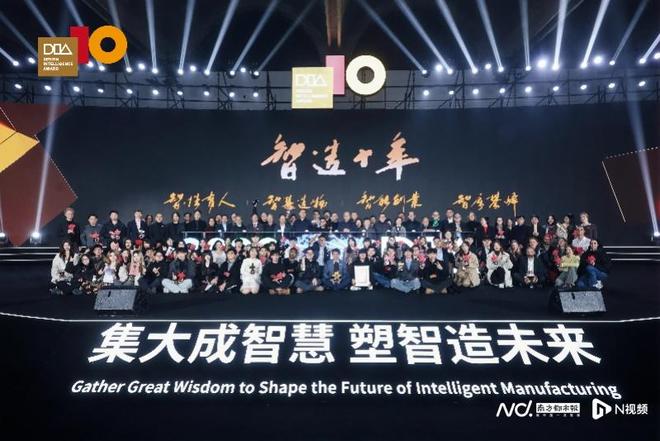
第十届中国设计智造大奖最终结果揭晓
Nan Fang Du Shi Bao· 2025-12-15 15:04
Core Insights - The 10th China Design Intelligence Award (DIA) ceremony was held, with Huawei's HarmonyOS ecosystem winning the "Grand Prize" [1][5] - Notable gold award winners included the "Rizhi" clinical decision support system, Leki smart glasses, Xiaopeng's split flying car, and Cannero WalkingTales [1] Group 1: Event Highlights - The DIA ceremony featured a strategic cooperation agreement between Cumulus and the China Academy of Art, aiming to enhance international collaboration in design education and innovation [5] - A new "Innovation Incubation Award" was introduced, with over 80 projects awarded and 26 advancing to the finals, involving participation from 29 renowned universities and several tech companies [8] Group 2: Participation and Impact - The 2024 DIA will see participation from 52 countries and regions, with over 1,600 companies, marking a 4% increase in new submissions compared to the previous year [7] - The awards reflect global design diversity and cross-cultural exchange, covering various industries such as smart transportation, AI, healthcare, and sustainable design [8][9] Group 3: Historical Context and Achievements - Over the past decade, the DIA has received more than 65,000 submissions from 87 countries, with a participation rate of 84% from leading innovation nations [14] - The awards have seen significant involvement from over 6,000 high-tech manufacturing companies and 800 educational institutions, with many projects achieving commercialization [14][15]

推动低空经济高质量发展 工信部:低空装备产业潜力巨大
Zhong Guo Jing Ji Wang· 2025-12-01 04:38
Core Insights - The low-altitude economy in China is rapidly developing, with significant potential driven by the integration of new energy and information technology [1][6] - The market size of China's low-altitude economy is projected to reach 1.5 trillion yuan by 2025 and exceed 3.5 trillion yuan by 2035 [1] Policy Developments - The Chinese government has initiated several policies to promote the low-altitude economy, including the "Strategic Plan for Expanding Domestic Demand (2022-2035)" and the inclusion of low-altitude economy in the government work report [2][6] - Local governments are actively developing their low-altitude economies, with plans such as Beijing's action plan to establish itself as a low-altitude economic innovation hub and Wuhan's implementation plan for an industrial cluster by 2027 [2][3] Industry Initiatives - Various regions, including Shenzhen and Anhui, have introduced regulations and plans to enhance low-altitude infrastructure, such as establishing takeoff and landing points and flight routes [3] - The development of low-altitude economic clusters has been established in key economic regions like Beijing-Tianjin-Hebei, Yangtze River Delta, and Pearl River Delta [3] Corporate Engagement - Numerous automotive companies are investing in the low-altitude economy, focusing on the development of eVTOL (electric vertical takeoff and landing) vehicles, with significant advancements reported [4] - Companies like XPeng, GAC, and Geely are making strides in the production and delivery of flying cars, with expected mass production dates ranging from 2025 to 2027 [4] Conference Insights - The 2025 Low Altitude Equipment Industry Innovation Development Conference highlighted the importance of building a systematic and intelligent low-altitude equipment industry [5][6] - Key discussions included the construction of a low-altitude intelligent network system and safety technology innovations, aiming to transition the low-altitude economy towards a more efficient and secure model [6] Research Outcomes - Five significant research outcomes were released at the conference, focusing on the development paths and standards for low-altitude intelligent networks and equipment [7] - These outcomes are expected to provide systematic support for the development of China's low-altitude industry, marking a significant step in technological innovation and application promotion [7]