低空装备

Search documents
申万宏源策略十五五规划解读:新增新型基础设施建设+新产业赛道十五五将带来哪些投资机会
Shenwan Hongyuan Securities· 2026-03-15 10:24
Core Insights - The "14th Five-Year Plan" framework remains largely intact, with a focus on five key areas: economic development, innovation-driven growth, social welfare, security, and green low-carbon initiatives. The details have been optimized to address current development challenges and social needs [1][2] - The new plan introduces a clearer policy direction, emphasizing the dual control of carbon emissions and energy structure transformation, shifting from energy consumption control to direct carbon emission management [3][2] - The plan expands the number of specialized columns from 20 to 23, focusing on strategic tasks and core capability enhancement rather than just project implementation [1][2] Investment Opportunities - New infrastructure construction focuses on five areas: integrated computing networks, satellite internet, information communication networks, data infrastructure, and low-altitude infrastructure. Key requirements include building a new generation of supercomputing facilities and enhancing satellite internet applications [1][2][10] - The new industry and new track development section identifies ten key areas for technological breakthroughs, including integrated circuits, embodied intelligence, biomanufacturing, new batteries, commercial aerospace, domestic large aircraft, low-altitude equipment, green hydrogen, brain-computer interfaces, and high-end medical devices [1][2][6] Traditional Infrastructure - The traditional infrastructure section retains its focus on transportation, energy, and water networks, with specific policy adjustments such as the renaming of the transportation section to "National Comprehensive Transportation Network Construction" and the energy section to "New Energy System" [1][2][7] Economic Reforms - The plan introduces multiple reforms in the socialist market economy, private economy, state-owned enterprises, and finance, aiming to enhance market vitality and innovation. This includes a focus on market-oriented pricing mechanisms and support for private enterprises to lead major technological breakthroughs [2][3]
每日市场观察-20260211
Caida Securities· 2026-02-11 02:47
Market Overview - On February 10, the Shanghai Composite Index rose by 0.13%, while the Shenzhen Component increased by 0.02%, and the ChiNext Index fell by 0.37%[3] - The total trading volume on February 10 was 2.12 trillion yuan, a decrease of approximately 150 billion yuan compared to the previous trading day[1] Sector Performance - The media, home appliance, and coal sectors saw significant gains, while real estate, food and beverage, and agriculture sectors experienced declines[1] - Major inflows of capital were observed in the film and television, IT services, and publishing sectors, while outflows were noted in photovoltaic equipment, military electronics, and batteries[3] Market Sentiment - Market strength weakened compared to Monday, reflected in reduced gains and trading volume[1] - The rise in media and entertainment stocks is attributed to the Seedance 2.0 event and the pre-Spring Festival timing, indicating a short-term speculative nature[1] Investment Strategy - Given the market's recent adjustments, a shift away from short-term thinking is advised, focusing on opportunities post-holiday in sectors like technology, non-ferrous metals, and chemicals[1] - Over 60% of private equity firms prefer to hold significant positions during the holiday, with 70% optimistic about post-holiday market performance[12]
低空经济利好!五部门发布
Xin Lang Cai Jing· 2026-02-10 07:34
Core Viewpoint - The implementation opinion released by the Ministry of Industry and Information Technology and other departments aims to strengthen the capacity of the information and communication industry to support the development of low-altitude infrastructure, emphasizing the importance of enhancing industrial supply capabilities and promoting the development of 5G-A technology [1][10]. Overall Requirements - The initiative is guided by Xi Jinping's thoughts and aims to enhance the technical foundation, industrial supply capacity, network support capability, and security assurance of the information and communication industry while promoting the construction of low-altitude communication networks [3][12]. - By 2027, the goal is to achieve a ground mobile communication network coverage rate of no less than 90% for low-altitude public air routes, improve multi-sensor integration solutions, and enhance navigation service levels [4][13]. Key Tasks - **Low-altitude Communication Network Coverage**: Focus on areas below 300 meters, utilizing existing 5G infrastructure and optimizing network coverage through various methods [5][14]. - **Multi-Detection Collaborative Service Capability**: Enhance detection and monitoring capabilities in key areas such as military facilities and large events, improving the ability to track low-altitude aircraft [6][15]. - **Navigation Precision Services**: Utilize the BeiDou ground enhancement system to improve the positioning speed and accuracy of low-altitude aircraft [6][15]. - **Low-altitude Intelligent Network System**: Leverage new information technologies like IoT and AI to support the development of low-altitude traffic management systems [7][16]. - **Trial Verification**: Conduct research and validation on key technologies for low-altitude communication, aiming to develop replicable solutions [7][16]. Industry Supply Capacity - The initiative promotes the development of the 5G-A industry, upgrades existing ground station functionalities, and accelerates the maturity of sensor fusion technologies while gradually reducing equipment costs [7][16]. Collaborative and Standardization Efforts - The plan encourages the sharing and collaborative construction of low-altitude infrastructure, supporting the establishment of a standard system for low-altitude technology industry development [8][17]. Regulatory Management - The initiative includes research on regulatory frameworks for telecommunications business access, equipment management, and emergency communication, aiming to enhance the management of drone communication resources [8][17]. Network and Data Security - A security assurance system for information infrastructure will be explored, focusing on network security and data protection measures [8][17]. Frequency Supply Optimization - Research will be conducted on low-altitude radio frequency resource planning to support the development of low-altitude communication and aircraft operations [8][17]. Organizational Assurance - Strengthening inter-departmental collaboration and local government coordination is essential for the successful implementation of the initiative, with a focus on funding and support for infrastructure development [9][18].
陕西质量强链赋能低空经济 多举措推动低空装备产业发展
Xin Lang Cai Jing· 2026-02-04 10:16
Core Viewpoint - The Shaanxi Provincial Market Supervision Administration is focusing on promoting high-quality development of strategic emerging industries, particularly in low-altitude equipment and semiconductor sectors, by addressing quality bottlenecks in the industry [1][2]. Group 1: Industry Development Initiatives - Shaanxi is establishing an advanced standard system, reliable inspection capabilities, and a unified certification mechanism to ensure high-quality development of low-altitude equipment [1][2]. - The provincial market supervision system has identified quality pain points, technical bottlenecks, and collaboration issues within the industry chain, facilitating cross-regional cooperation with five provinces [2][3]. - A quality innovation consortium for the low-altitude equipment industry chain has been formed, involving key universities, research institutions, and leading enterprises to tackle technical challenges [3][4]. Group 2: Standardization and Inspection - Shaanxi is exploring the conversion of military standards to civilian standards and has established a standardization technical committee for low-altitude equipment, identifying over 500 projects for service transformation [4]. - The province has completed the first batch of 356 CMA inspection projects, laying the groundwork for the transition of inspection capabilities from aviation equipment to low-altitude equipment [5]. - A low-altitude equipment inspection database has been created, providing a visualized decision-making basis for resource allocation and collaborative innovation [5]. Group 3: Future Directions - The provincial market supervision system plans to focus on market demand, key quality technology breakthroughs, and utilize AI for lifecycle inspection systems to enhance quality across the industry chain [5].

向新而行|中国制造 更加“亮丽”
Yang Shi Wang· 2026-01-28 02:07
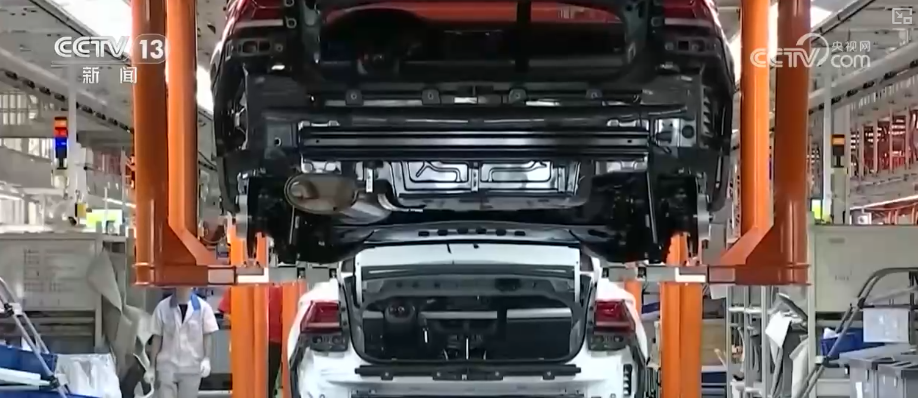
Group 1 - The core viewpoint of the article highlights the accelerated development of emerging industries in China, including new energy vehicles, photovoltaics, low-altitude equipment, and marine engineering equipment, enhancing the country's manufacturing reputation [2] - The Chinese government emphasizes the need for high-end, intelligent, and green development in the manufacturing sector, as stated by President Xi Jinping [2] - By 2025, the export scale of the "new three items" is expected to approach 1.3 trillion yuan, showcasing the growing prominence of Chinese manufacturing on the global stage [2]
向新而行丨中国制造 更加“亮丽”
Yang Shi Wang· 2026-01-28 01:56
Group 1 - The core viewpoint of the article highlights the accelerated development of emerging industries such as new energy vehicles, photovoltaics, low-altitude equipment, and marine engineering during the "14th Five-Year Plan" period, enhancing the reputation of Chinese manufacturing [1] - President Xi Jinping has emphasized the need to promote the high-end, intelligent, and green development of the manufacturing industry, guiding the nation towards advancing new industrialization [1] - By 2025, the export scale of the "new three items" is expected to approach 1.3 trillion yuan, showcasing the growing global prominence of Chinese manufacturing [1]
优势产业“强筋健骨”脱颖而出 供需两端发力打造新支柱产业为经济注入新动能
Yang Shi Wang· 2026-01-22 04:20
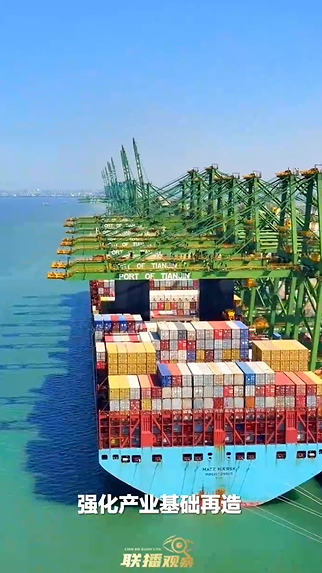
Group 1 - The core viewpoint is that the Ministry of Industry and Information Technology will implement actions to develop and strengthen emerging industries during the "14th Five-Year Plan" period [1] - A number of competitive industries such as new energy vehicles, photovoltaics, low-altitude equipment, and marine engineering equipment have accelerated their development [5] - The added value of industries like integrated circuits and electronic materials increased by 26.7% and 23.9% year-on-year, respectively, while industrial robot production rose by 28% and new energy vehicle sales reached 16.49 million units, up 28.2% year-on-year [9] Group 2 - The Ministry will implement actions to create national demonstration bases for emerging industry development and accelerate the cultivation of new pillar industries [13] - Future industry initiatives will include the implementation of strategic major technology projects and the establishment of future industry pilot zones, supported by increased government investment [17]
首届山东低空装备产业链创新创业大赛举办
Xin Lang Cai Jing· 2026-01-13 18:48
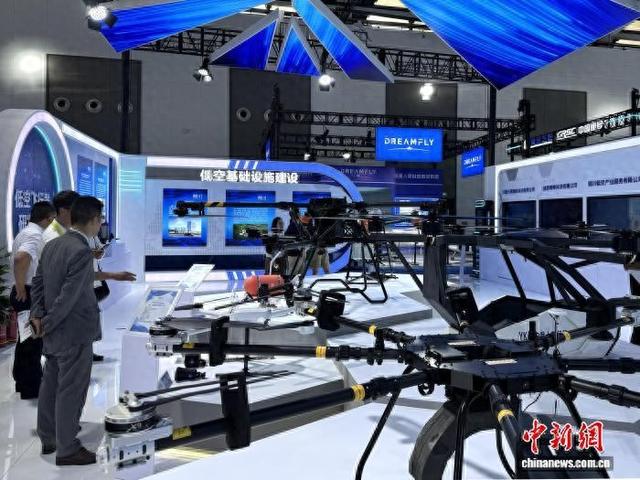
Core Viewpoint - The first Shandong Province Low Altitude Equipment Industry Chain Innovation and Entrepreneurship Competition aims to leverage the competition to attract talent, promote production, and strengthen the industry chain, seizing opportunities in the low-altitude economy and driving innovation and demonstration applications in the province's low-altitude equipment industry [1] Group 1: Event Overview - The competition was held in Rizhao and was themed "Intelligent Low Altitude, Chain Driving Future" [1] - It was co-hosted by multiple provincial departments including the Shandong Provincial Industry and Information Technology Department and the Shandong Provincial Federation of Trade Unions [1] - A total of 216 entries were received from various enterprises, universities, and research institutions, resulting in 56 awarded projects across different categories [1] Group 2: Industry Development Initiatives - The event released the "Shandong Province Low Altitude Equipment Application Scenario Cultivation and Open Ecological Co-construction Initiative" and the first batch of low-altitude equipment application scenario demands [1] - 20 organizations signed an agreement to co-build the low-altitude industry chain ecosystem [1] - Companies such as Shandong Meteorological Research Institute and Shandong Feiao showcased their innovations aimed at promoting high-quality development in the low-altitude equipment industry [1]

财达证券每日市场观-20260105
Caida Securities· 2026-01-05 12:25
Market Overview - On December 31, 2025, the Shanghai and Shenzhen indices experienced mixed performance, with a total trading volume of CNY 2.07 trillion, a decrease of approximately CNY 90 billion from the previous trading day[1] - The market showed stability despite more stocks declining than rising, with notable gains in the aerospace, media, real estate, and non-ferrous metals sectors, while telecommunications, agriculture, and electronics faced declines[1] - The total trading volume for the year exceeded CNY 400 trillion, marking a year-on-year growth of over 60%, achieving a historical high[3] Sector Performance - The aerospace sector is rapidly regaining strength, with leading stocks reaching new highs and increasing trading volumes, indicating a sustained upward trend[1] - The non-ferrous metals sector is also performing steadily, supported by historical price increases in precious metals and a weak US dollar, suggesting a potential for long-term growth[1] - The top three sectors for net capital inflow on December 31 were aerospace equipment, military electronics, and advertising marketing, while the semiconductor, components, and photovoltaic equipment sectors saw the largest outflows[4] Regulatory Developments - The Ministry of Transport has initiated measures to promote the integration of public transportation data with enterprise data, aiming to enhance efficiency across various sectors, including logistics and green technology[5] - New regulations for green product certification have been introduced, covering 122 product categories and involving over 8,000 certified enterprises, marking a significant shift towards comprehensive regulatory oversight[7] Economic Indicators - The price of live pigs increased by 1.7% month-on-month in late December 2025, reflecting ongoing trends in agricultural pricing[8] - Natural gas consumption in November 2025 was reported at 36.28 billion cubic meters, a year-on-year increase of 5.1%, although total consumption for the first eleven months showed a slight decline of 0.1%[8] Investment Insights - The recent regulatory changes in fund sales fees aim to enhance investor returns by capping service fees for equity funds at 0.4% and for index and bond funds at 0.2%, promoting a shift towards long-term holding[12][14]

前瞻全球产业早报:元旦假期上海日均消费122亿元
Qian Zhan Wang· 2026-01-05 10:40
Group 1 - During the "14th Five-Year Plan" period, China's low-altitude equipment industry is expected to maintain an annual growth rate of over 10% [2] - By December 30, 2025, over 1,081 companies have registered, with 3,623 products filed and more than 5.29 million units [2] - The traditional general aviation equipment development is progressing steadily, with over 70 domestic models completing airworthiness certification [2] Group 2 - Shandong Province is projected to exceed a GDP of 10 trillion yuan by 2025, becoming the third province in China to achieve this milestone [3] - The province aims to implement strategies to stabilize employment, businesses, and market expectations, with economic indicators expected to outperform national averages [3] Group 3 - The National Railway Group anticipates its total revenue to exceed 1 trillion yuan for the first time in 2025, with a year-on-year growth of 3.1% [4] - The Group plans to strengthen budget constraints and cost control, achieving savings of 19.7 billion yuan compared to the budget [4] - By the end of 2025, the asset-liability ratio is expected to decrease to 62.5%, down 1 percentage point from the previous year [4] Group 4 - Shanghai's average daily consumption during the New Year holiday reached 12.2 billion yuan, a 2.5% increase compared to the previous year [5] - The city is providing up to 100 million yuan in support for high-innovation projects in eVTOL and industrial-grade drones [5] Group 5 - The免税烟草制品交易管理平台 has officially launched, requiring all related enterprises to conduct transactions through this platform [6] Group 6 -宇树科技's green channel for A-share listing has been suspended, but the listing process itself is still ongoing [7] - The suspension is attributed to concerns over the current market bubble in the robotics sector [7] Group 7 - 罗马仕 has initiated a restructuring plan named "Rebirth Plan" to regain new 3C certification and restore its sales system by the first quarter of 2026 [8] Group 8 - 亿纬锂能 plans to quickly re-submit its Hong Kong IPO application after its previous submission expired, stating that this is a normal process [9] Group 9 - Apple's AI features are currently in a gray testing phase for certain domestic devices, with full functionality expected to be available on newer models [10] Group 10 - Enchem has approved a five-year supply agreement with 宁德时代 for 350,000 tons of electrolyte, which is expected to significantly enhance its sales and market share [13] Group 11 - 长鑫科技集团 has submitted an IPO application to the Sci-Tech Innovation Board, aiming to raise 29.5 billion yuan, marking the second-largest fundraising in the board's history [16] - 石头科技 has received a notice from the regulatory authority for its overseas listing, officially starting its Hong Kong IPO process [16]