
小鹏汽车P7

Search documents
谁在带队小鹏机器人:IRON背后的关键人物
自动驾驶之心· 2025-11-13 00:04
Core Viewpoint - The article discusses the development and leadership behind Xiaopeng Motors' humanoid robot project "IRON," highlighting the key figures and their contributions to the project. Group 1: Leadership and Team Structure - Mi Liangchuan is identified as the key figure leading the Xiaopeng robot business, responsible for overseeing the technical direction and product implementation of the humanoid robot project [7][19][20]. - The team behind IRON includes notable members such as Chen Jie, who focuses on reinforcement learning, and Ge Yixiao, the founding director of the intelligent mimicry department [45][52]. - Liu Xianming, head of Xiaopeng's autonomous driving department, is also contributing to the robot's development by improving the visual-language alignment (VLA) system [60][63]. Group 2: Technical Innovations - The design of IRON incorporates human-like features, particularly its spine-like structure, which enhances its movement capabilities [9][10][11]. - The development of a self-developed generative controller has increased the robot's freedom of movement, particularly in its front foot [15] - The team experienced significant advancements in IRON's capabilities within a short period, attributed to improvements in data and computational power [13][14]. Group 3: Historical Context and Development Path - Xiaopeng Motors began its foray into robotics by acquiring a startup focused on quadruped robots, which laid the groundwork for its humanoid robot ambitions [73][76]. - The company faced internal debates regarding the direction of its robotics efforts, particularly whether to pursue humanoid robots, which were initially met with skepticism [86][90]. - Following the emergence of AI advancements, the company pivoted towards humanoid robotics, leading to the creation of the first humanoid robot, PX5, which set the stage for the IRON project [91][100]. Group 4: Market Position and Future Outlook - Xiaopeng Motors is positioning humanoid robots as a third growth curve alongside smart and flying vehicles, indicating a strategic shift in focus [100]. - The company has garnered significant financial resources, with nearly 50 billion RMB available for research and development, enhancing its competitive edge in the robotics sector [46].


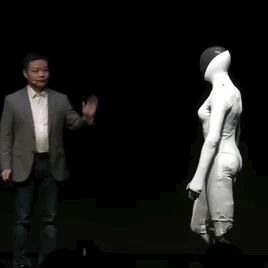
谁在带队小鹏机器人:IRON背后的四位关键人物
量子位· 2025-11-10 12:02
Core Viewpoint - The article discusses the development and significance of Xiaopeng's humanoid robot "IRON," highlighting the key figures behind its success and the strategic direction of Xiaopeng in the robotics sector. Group 1: Key Figures in Xiaopeng Robotics - Mi Liangchuan is identified as the core leader of Xiaopeng's robotics division, overseeing the technical roadmap and product implementation of the humanoid robot project [5][6][15]. - Mi Liangchuan's background includes significant experience in AI and autonomous driving, having previously worked at NVIDIA for ten years before joining Xiaopeng [23][30][37]. - Other notable team members include Chen Jie, who specializes in reinforcement learning and joined Xiaopeng for its early technological advancements and strong financial backing [41][42][45], and Ge Yixiao, the founding director of the newly established intelligent mimicry department [48][50]. Group 2: Development of the IRON Robot - The design of IRON is inspired by human anatomy, particularly its spine and muscle structure, which contributes to its advanced movement capabilities [7][8][11]. - The robot's development faced challenges, including internal debates on whether to pursue humanoid robotics, but the emergence of AI technologies reignited interest in this direction [82][84]. - Following a restructuring of the robotics team, the development of IRON accelerated, leading to the creation of the first humanoid robot, PX5, which laid the groundwork for IRON [88][96]. Group 3: Strategic Direction of Xiaopeng - Xiaopeng is positioning humanoid robotics as a key growth area alongside its automotive and flying car ventures, indicating a strategic diversification [96]. - The company has made significant investments in talent acquisition, offering competitive salaries to attract top experts in the field [78]. - Xiaopeng's market valuation is highlighted, with a current market cap of approximately $21.3 billion, contrasting sharply with Tesla's $1.43 trillion valuation, indicating the competitive landscape in the robotics market [108].
21现场|P7怎么这么便宜?何小鹏:我们把四驱版价格打了下来
2 1 Shi Ji Jing Ji Bao Dao· 2025-08-28 13:17
Core Viewpoint - Xiaopeng Motors has launched its new P7 model with a price range of 219,800 to 301,800 yuan, emphasizing a focus on "extremity" in its features and pricing strategy [1] Pricing Strategy - The pricing for the P7 was carefully considered, with initial discussions suggesting a higher price point before settling on the current range to enhance competitiveness [1] - The four-wheel drive version's price was adjusted downwards after discussions, reflecting the company's desire to make the model more appealing to consumers [1] Product Features - The P7 comes standard with features such as Ultra and dual-chamber air springs, which are part of the company's commitment to delivering high-quality performance [1] - The company expresses confidence that the sales of the four-wheel drive version will exceed expectations due to its appealing driving experience [1]