小鹏VLA

Search documents
何小鹏“约赌”马斯克,小鹏能否成为“中国特斯拉”?
阿尔法工场研究院· 2025-12-15 00:06
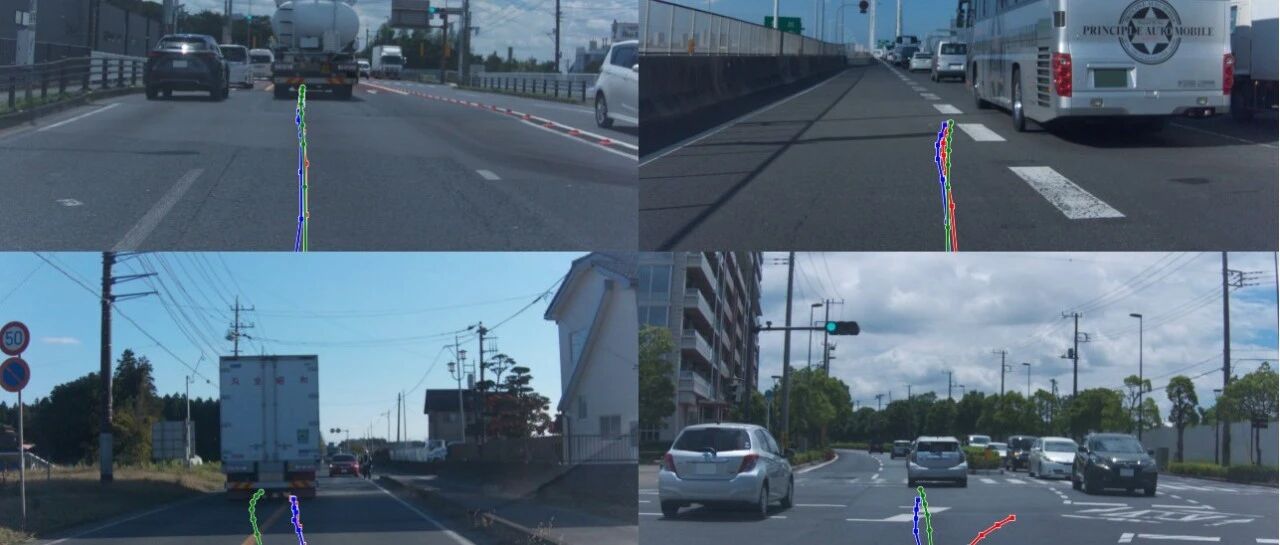
Core Viewpoint - The article discusses the competitive landscape of autonomous driving technology, focusing on Xiaopeng Motors' ambitions to surpass Tesla's Full Self-Driving (FSD) capabilities by 2026, as indicated by a public bet made by CEO He Xiaopeng [5][6]. Group 1: Xiaopeng's Strategy and Technology - He Xiaopeng has made a public bet that Xiaopeng's VLA technology will match Tesla's FSD V14.2 capabilities by August 30, 2024, highlighting the competitive nature of the autonomous driving sector [5]. - Xiaopeng's VLA technology is currently not at par with Tesla's FSD V14.2, but the company plans to release VLA 2.0 in the next quarter, which aims to improve its capabilities significantly [6][7]. - The second-generation VLA model will eliminate the "language translation" step, allowing for direct generation of action commands from visual signals, enhancing the vehicle's ability to navigate complex environments [7]. Group 2: Future Projections and Industry Trends - By 2026, Xiaopeng anticipates that its Robotaxi will begin trial operations, with the Ultra model expected to significantly outperform other autonomous driving products in the market [7][8]. - The company is investing heavily in AI and autonomous driving technology, with projected annual R&D expenditures reaching 50 billion yuan, of which 30 billion yuan will be allocated to AI [8]. - He Xiaopeng believes that the next decade will see a larger scale application of L4 autonomous driving, with vehicles becoming "embodied intelligent cars" that integrate with humanoid robotics [8]. Group 3: Competitive Landscape - The competition in autonomous driving is not just about algorithms but also involves data, computing power, and engineering capabilities, as highlighted by Tesla's rapid iteration speed [9]. - The outcome of the public bet will determine whether Xiaopeng can establish itself as a legitimate competitor to Tesla, potentially leading to a reevaluation of the company's market position [9].


基于准确的原始材料对比小鹏理想VLA
理想TOP2· 2025-11-20 10:42
Core Viewpoint - The article discusses the advancements in autonomous driving technology, particularly focusing on the VLA (Vision-Language-Action) architecture developed by Li Auto and the insights shared by Xiaopeng's autonomous driving head, Liu Xianming, during a podcast. Liu emphasizes the removal of the intermediate language component (L) to enhance scalability and efficiency in data usage [1][4][5]. Summary by Sections VLA Architecture and Training Process - The VLA architecture involves a pre-training phase using a 32 billion parameter (32B) vision-language model that incorporates 3D vision and high-definition 2D vision, improving clarity by 3-5 times compared to open-source models. It also includes driving-related language data and key VL joint data [10][11]. - The model is distilled into a 3.2 billion parameter (3.2B) MoE model to ensure fast inference on vehicle hardware, followed by a post-training phase that integrates action to form the VLA, increasing the parameter count to nearly 4 billion [13][12]. - The reinforcement learning phase consists of two parts: human feedback reinforcement learning (RLHF) and pure reinforcement learning using world model-generated data, focusing on comfort, collision avoidance, and adherence to traffic regulations [15][16]. Data Utilization and Efficiency - Liu argues that using language as a supervisory signal can introduce human biases, reducing data efficiency and scalability. The most challenging data to collect are corner cases, which are crucial for training [4][6]. - The architecture aims to achieve a high level of generalization, with plans to implement L4 robotaxi services in Guangzhou based on the current framework [4][5]. Future Directions and Challenges - Liu acknowledges the uncertainties in scaling the technology and ensuring safety, questioning how to maintain safety standards and align the model with human behavior [5][18]. - The conversation highlights that the VLA, VLM, and world model are fundamentally end-to-end architectures, with various companies working on similar concepts in the realm of Physical AI [5][18]. Human-Agent Interaction - The driver agent is designed to process short commands directly, while complex instructions are sent to the cloud for processing before execution. This approach allows the system to understand and interact with the physical world like a human driver [17][18]. - The article concludes that the traffic domain is a suitable environment for VLA implementation due to its defined rules and the ability to model human driving behavior effectively [19][20].

做自动驾驶VLA的这一年
自动驾驶之心· 2025-11-19 00:03
Core Viewpoint - The article discusses the emergence and significance of Vision-Language-Action (VLA) models in the autonomous driving industry, highlighting their potential to unify perception, reasoning, and action in a single framework, thus addressing the limitations of previous models [3][10][11]. Summary by Sections What is VLA? - VLA models are described as multimodal systems that integrate vision, language, and actions, allowing for a more comprehensive understanding and interaction with the environment [4][7]. - The concept originated from robotics and was popularized in the autonomous driving sector due to its potential to enhance interpretability and decision-making capabilities [3][9]. Why VLA Emerged? - The evolution of autonomous driving can be categorized into several phases: modular systems, end-to-end models, and Vision-Language Models (VLM), each with its own limitations [9][10]. - VLA models emerged as a solution to the shortcomings of previous approaches, providing a unified framework that enhances both understanding and action execution [10][11]. VLA Architecture Breakdown - The VLA model architecture consists of three main components: input (multimodal data), processing (integration of inputs), and output (action generation) [12][16]. - Inputs include visual data from cameras, sensor data from LiDAR and RADAR, and language inputs for navigation and interaction [13][14]. - The processing layer integrates these inputs to generate driving decisions, while the output layer produces control commands and trajectory planning [18][20]. Development History of VLA - The article outlines the historical context of VLA development, emphasizing its role in advancing autonomous driving technology by addressing the need for better interpretability and action alignment [21][22]. Key Innovations in VLA Models - Recent models like LINGO-1 and LINGO-2 focus on integrating natural language understanding with driving actions, allowing for more interactive and responsive driving systems [22][35]. - Innovations include the ability to explain driving decisions in natural language and to follow complex verbal instructions, enhancing user trust and system transparency [23][36]. Future Directions - The article raises questions about the necessity of language in future VLA models, suggesting that as technology advances, the role of language may evolve or diminish [70]. - It emphasizes the importance of continuous learning and innovation in the field to keep pace with technological advancements and user expectations [70].