
小鹏VLA 2.0

Search documents
智能汽车主线周报:小鹏VLA 2.0上车在即,看好智能化
Soochow Securities· 2026-03-09 03:24
Investment Rating - The industry investment rating is "Overweight," indicating an expected outperformance of the industry index relative to the benchmark by more than 5% over the next six months [24]. Core Insights - The smart automotive index decreased by 2.0%, while the index excluding Tesla increased by 1.6%. The index excluding complete vehicles fell by 5.8%. As of March 6, 2026, the smart automotive index PS (TTM) is 14.0x, placing it in the 93rd percentile since the beginning of 2023 [2][8][13]. - Key developments in the industry include the full rollout of Xiaopeng's second-generation VLA, the launch of new laser radar by Hongmeng Zhixing, and the resumption of Robotaxi services by WeRide in Dubai [2][15]. - The investment recommendation emphasizes a strong outlook for the L4 RoboX theme in 2026, favoring B-end software stocks over C-end hardware stocks [2]. Summary by Sections Industry Performance Review - The smart automotive index has shown varied performance, with a notable decline in the overall index and a mixed performance among key stocks [2][8]. - The top-performing stocks include Xidi Zhijia, JD Logistics, Ruqi Mobility, and Tesla, while stocks like Cao Cao Mobility and Pony.ai faced declines [14]. Key Changes in the Industry - Xiaopeng's second-generation VLA is set for full rollout this month, and new products from various companies are being introduced, indicating ongoing innovation in the sector [2][15]. - The industry is witnessing significant advancements in autonomous driving technology, with companies like Horizon Robotics entering mass production phases [2]. Investment Recommendations - Recommended stocks include Xiaopeng Motors, Horizon Robotics, and various other companies across different segments such as Robotaxi and Robovan [2]. - The report suggests focusing on both downstream application dimensions and upstream supply chain dimensions for investment opportunities [2].
智能汽车主线周报:小鹏VLA2.0上车在即,看好智能化-20260309
Soochow Securities· 2026-03-09 03:20
Investment Rating - The industry investment rating is "Overweight," indicating an expected outperformance of the industry index relative to the benchmark by more than 5% over the next six months [24]. Core Insights - The smart automotive index decreased by 2.0%, while the index excluding Tesla increased by 1.6%. The index excluding complete vehicles fell by 5.8%. As of March 6, 2026, the smart automotive index PS (TTM) is 14.0x, placing it in the 93rd percentile since the beginning of 2023 [2][8][13]. - Key developments in the industry include the full rollout of Xiaopeng's second-generation VLA, the launch of new laser radar technology by Hongmeng Zhixing, and the resumption of Robotaxi services by WeRide in Dubai [2][15]. - The investment recommendation emphasizes a strong outlook for the L4 RoboX segment in 2026, favoring B-end software companies over C-end hardware companies. Preferred stocks include Xiaopeng Motors, Horizon Robotics, and WeRide [2][19]. Market Performance Review - The smart automotive index performance shows a decline of 2.0%, with the index excluding Tesla up by 1.6% and the index excluding complete vehicles down by 5.8% [8][12]. - The top-performing stocks in the smart automotive sector include Xidi Zhijia, JD Logistics, and Tesla, while the worst performers include Cao Cao Mobility and Pony.ai [14]. Company Dynamics - Xiaopeng Motors announced that its second-generation VLA will begin full rollout this month, with expectations for L4 fully autonomous driving within the next 1 to 3 years [15]. - WeRide is set to resume its Robotaxi operations in Dubai this week, indicating a recovery in autonomous vehicle services [15].
特斯拉的对手,不是比亚迪、不是理想、不是小米、更不是蔚来,而是它:卖车是副业,技术才是王牌!
Xin Lang Cai Jing· 2026-03-05 23:33
Core Insights - Morgan Stanley's report highlights a significant misjudgment in the global capital markets regarding XPeng Motors, indicating that the company is shifting its focus from merely selling cars to developing a comprehensive autonomous driving "operating system" [1][3]. Group 1: Technological Advancements - XPeng's second-generation VLA (Vision-Language-Action) model, launched in March 2026, is defined as the world's first "physical world large model," achieving a 12-fold increase in inference speed and reducing response latency from 200 milliseconds to 80 milliseconds, which translates to a nearly 3-meter reduction in braking distance at 80 km/h [3]. - In comparative tests, XPeng's VLA 2.0 required only one takeover in complex driving scenarios, while Tesla's FSD needed five, indicating a significant technological leap and a shift in competitive logic [3]. Group 2: Business Strategy - In July 2023, Volkswagen invested approximately $700 million in XPeng for a 4.99% stake to co-develop two B-class electric vehicles, which has evolved into a strategic partnership where Volkswagen acts as the first external customer for XPeng's VLA 2.0 technology [5][6]. - XPeng's revenue model is tied to sales through a "technology service fee," with projections suggesting that software revenue could exceed 20 billion yuan by 2027 [6]. Group 3: Market Valuation - The current market valuation of XPeng reflects only its status as an "automaker," failing to account for its technology licensing and Robotaxi business, which are undervalued at zero [11]. - Morgan Stanley notes a "cognitive framework mismatch," as the market evaluates XPeng using manufacturing industry P/E ratios, while the company is transitioning to a high-margin, replicable software and technology licensing platform [11]. Group 4: Future Vision - XPeng's ambitions extend beyond autonomous driving, aiming to create a "physical AI ecosystem" based on the VLA model, which includes plans for Robotaxi operations, flying cars, and humanoid robots, with the goal of becoming the first company to mass-produce these technologies in the same year [12][14][15]. - The competition with Tesla is framed as a battle for defining the next generation of human-machine interaction, with XPeng positioning itself as a potential "arms dealer" for autonomous technology [8][20]. Group 5: Structural Risks - Morgan Stanley assigns a 30% valuation weight to the potential success of XPeng's technology licensing, highlighting risks if the technology does not expand beyond Volkswagen or if Robotaxi scaling faces obstacles [18]. - The company's value is described as being in a "Schrödinger's cat" state, dependent on key signals such as the emergence of a second OEM customer, Robotaxi operational metrics, and the stability of cash flow from dual-power models [18][19].



L4无人驾驶近在眼前!何小鹏试驾特斯拉FSD V14后发文
Xin Lang Cai Jing· 2025-12-30 11:04
Core Insights - The founder of Xpeng Motors, He Xiaopeng, shared his experience of test-driving Tesla's FSD V14.2 in the U.S., indicating that while the 2024 FSD may still be considered "decent L2 assisted driving," the latest version brings L4 autonomous driving within reach [1][4] - He Xiaopeng believes that true fully autonomous driving will arrive in both the Chinese and U.S. markets by 2026, skipping the L3 stage and moving directly from L2 to L4 [3][8] - Xpeng's upcoming Ultra model will be based on a unified model to achieve full-scene autonomous driving and Robotaxi functionality, positioning it as the next generation of smart vehicles [3][8] Differences Between L2 and Full Autonomous Driving - He Xiaopeng summarized the core differences between L2 and fully autonomous driving into four aspects: capability, scenarios, reassurance, and efficiency, with "reassurance" being particularly critical [6][9] - He emphasized that the complexity of Chinese road conditions far exceeds that of the U.S., and the Xpeng VLA 2.0 test version performs smoothly in various driving situations, instilling confidence in drivers [6][9] - The VLA system is evolving rapidly, with advancements occurring at a pace of "one month equating to a year," and the VLA 2.0 is set to be officially released soon [6][9]

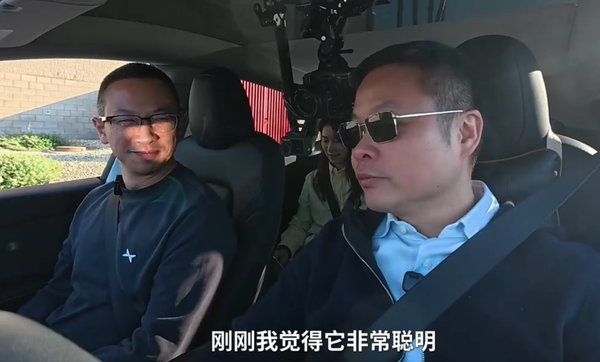
何小鹏与智驾团队打赌:如果明年达不到特斯拉FSD水平,智驾负责人将裸奔
Xin Lang Cai Jing· 2025-12-11 13:14
Core Viewpoint - The CEO of Xpeng Motors, He Xiaopeng, has made a bet with the autonomous driving team regarding the performance of the upcoming Xpeng VLA compared to Tesla's FSD V14.2 in Silicon Valley by August 2026 [1][4]. Group 1: Company Developments - Xpeng VLA 2.0 is set to be released in the next quarter, with high expectations for its performance and stability [1][3]. - The company is under pressure to ensure that the first version of VLA meets high standards, aiming for a remarkable launch [1][3]. Group 2: Industry Comparisons - During a recent test drive in Silicon Valley, the FSD V14.2 was found to have significantly improved, transitioning from L2 high-level assisted driving to a near L4 level of comfort and safety [1][3]. - The test drive lasted approximately 5 hours, during which standard vehicles and RoboTaxi operated seamlessly under a unified model, showing substantial improvement over the previous year's performance [1][3]. Group 3: Future Aspirations - The CEO expressed confidence in a future where a unified self-driving system and hardware platform will allow users to bypass L3 and directly access L4 capabilities in vehicles [1][3].