
崔西一品

Search documents
极端天气导致减产,西红柿身价同比上涨超80%
3 6 Ke· 2026-01-22 08:17
Core Viewpoint - The price of tomatoes has surged significantly, with average prices reaching 7.56 yuan/kg in January 2026, a 77% increase from 4.27 yuan/kg in January 2025, driven by extreme weather and reduced supply [1][11]. Price Trends - The average wholesale price of tomatoes from January 1 to 16, 2026, was 8.61 yuan/kg, up 80.9% from 4.76 yuan/kg in January 2025 [1][11]. - Despite some price corrections, overall prices remain at historically high levels [1]. Supply Chain Challenges - Extreme weather in northern production areas has led to a significant drop in tomato yields, with reports of reductions varying by region and management practices [2][11]. - The combination of heavy rainfall and viral diseases has caused supply imbalances, affecting retail prices [2][11]. Farmer Experiences - Farmers in Shouguang reported that extreme weather disrupted the growth cycle of tomatoes, leading to lower yields and delayed market entry [3][4]. - The cost of production has increased due to adverse weather conditions, with total costs rising from approximately 4,000 yuan to over 6,000 yuan per greenhouse [4][6]. Market Segmentation - High-end tomato brands, such as "Cui Xi Yi Pin," have maintained stable prices around 20 yuan/kg, contrasting with the volatility in the broader market [8][9]. - The market shows a clear segmentation, with different pricing for various tomato types based on quality and packaging [10]. Future Outlook - Experts predict that the high prices for tomatoes may persist until late March 2026, after which a seasonal decline is expected [13]. - The current price surge is seen as a normal market reaction to supply shocks, with potential for market self-regulation as consumers may shift to alternative vegetables [13].
极端天气导致减产 西红柿身价同比上涨超80%
经济观察报· 2026-01-22 07:28
Core Viewpoint - The price of tomatoes has surged over 80% year-on-year due to significant production declines caused by extreme weather events in 2025, affecting supply and leading to a market imbalance [1][2][4]. Price Trends - As of January 20, 2026, the average price of tomatoes reached 7.56 yuan/kg, a 77% increase from 4.27 yuan/kg in the same period of 2025 [2]. - From January 1 to 16, 2026, the average wholesale price was 8.61 yuan/kg, up 80.9% from 4.76 yuan/kg in January 2025 [2]. Production Challenges - Tomato production has faced significant declines due to extreme weather, with reductions varying by region and management practices [3][4]. - Farmers reported a production decrease of approximately one-third due to adverse weather conditions, with some areas experiencing losses of up to two-thirds [7][16]. Cost Implications - The cost of tomato cultivation has increased significantly, with additional expenses for pest control and protective measures due to weather-related challenges, raising total costs from around 4,000 yuan to over 6,000 yuan per greenhouse [7][8]. - In 2025, the cost of pesticides alone increased by over 30%, from approximately 2,000 yuan/acre to nearly 3,000 yuan/acre [8]. Market Segmentation - The market has shown a clear segmentation, with high-end brands maintaining stable prices while traditional farmers struggle with fluctuating prices [11][13]. - For example, the "Cui Xi Yi Pin" brand maintains a purchase price of 20 yuan/kg, targeting quality-sensitive consumers [11][12]. Supply Chain Dynamics - The supply chain has been affected by increased costs associated with high-quality production methods and the need for advanced agricultural technology [11][12]. - The overall vegetable market in China, with over 3 billion acres and more than 800 million tons of production, has a strong self-regulating capacity, which may help stabilize prices in the long term [17].

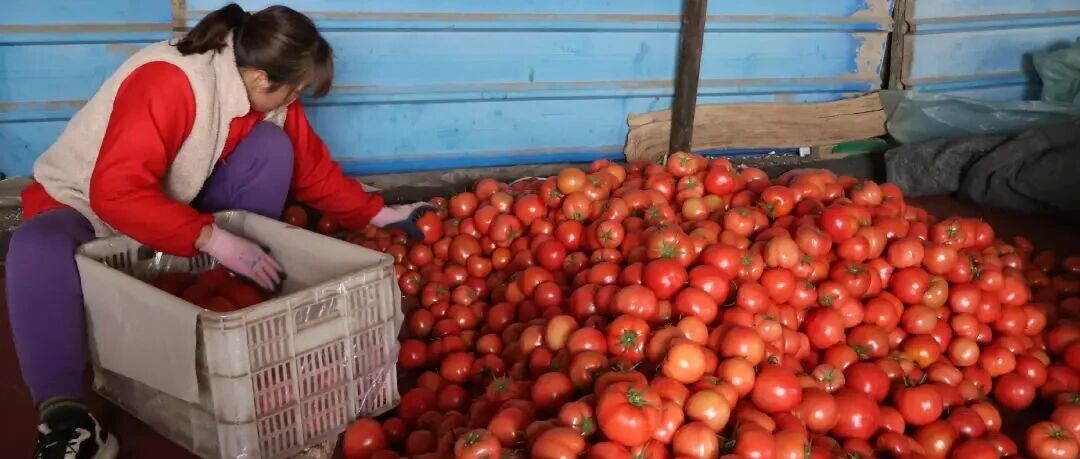
极端天气导致减产 西红柿身价同比上涨超80%
Jing Ji Guan Cha Bao· 2026-01-22 05:26
Core Insights - The price of tomatoes has surged significantly, with average prices reaching 7.56 yuan/kg in January 2026, a 77% increase from 4.27 yuan/kg in January 2025 [1] - The average wholesale price for tomatoes from January 1 to 16, 2026, was 8.61 yuan/kg, marking an 80.9% year-on-year increase from 4.76 yuan/kg in January 2025 [1] - Extreme weather conditions in 2025 have led to a notable decline in tomato production, affecting supply and causing price fluctuations [2][11] Price Dynamics - The recent surge in tomato prices is attributed to extreme rainfall and viral diseases affecting northern production areas, leading to a supply-demand imbalance [2] - Despite some price corrections, overall prices remain high compared to historical levels [1] - The market shows a divergence where bulk tomato prices have increased, while some premium brands maintain stable prices [8] Production Challenges - Farmers report significant production declines due to adverse weather conditions, with some areas experiencing a reduction of up to one-third in yield [5][11] - The cost of production has increased, with additional expenses for pest control and protective measures due to extreme weather [6][12] - The average yield for tomatoes has dropped from approximately 1.5 to 2 million kg per acre to about 1 million kg per acre in 2025 [4] Market Segmentation - High-end tomato brands like "Cui Xi Yi Pin" maintain stable prices around 20 yuan/kg, targeting quality-sensitive consumers [8][9] - Traditional smallholder farmers face challenges due to limited information and bargaining power, leading to price disparities in the wholesale and retail markets [10] - The wholesale market shows clear price differentiation based on packaging and quality, with prices ranging from 6.0 yuan/kg for standard tomatoes to 9.2 yuan/kg for premium varieties [10] Future Outlook - Experts predict that the high price of tomatoes may persist until late March 2026, followed by a seasonal decline [13] - The current price surge is seen as a normal market reaction to short-term supply shocks, with expectations for market self-regulation in the long term [13] - There is a cautionary note regarding potential overexpansion by farmers in response to high prices, which could lead to future market downturns [13]