工业多模态大模型

Search documents
【财经分析】为全国产业结构升级探路——广东践行“两业协同”高质量发展新路径
Xin Hua Cai Jing· 2026-02-25 12:35
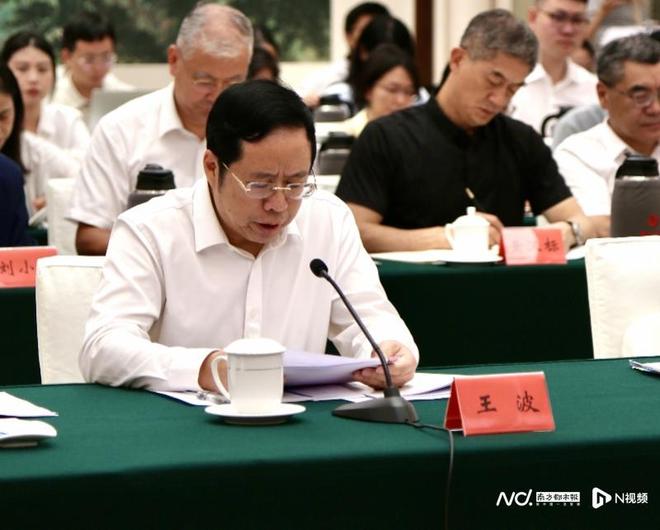
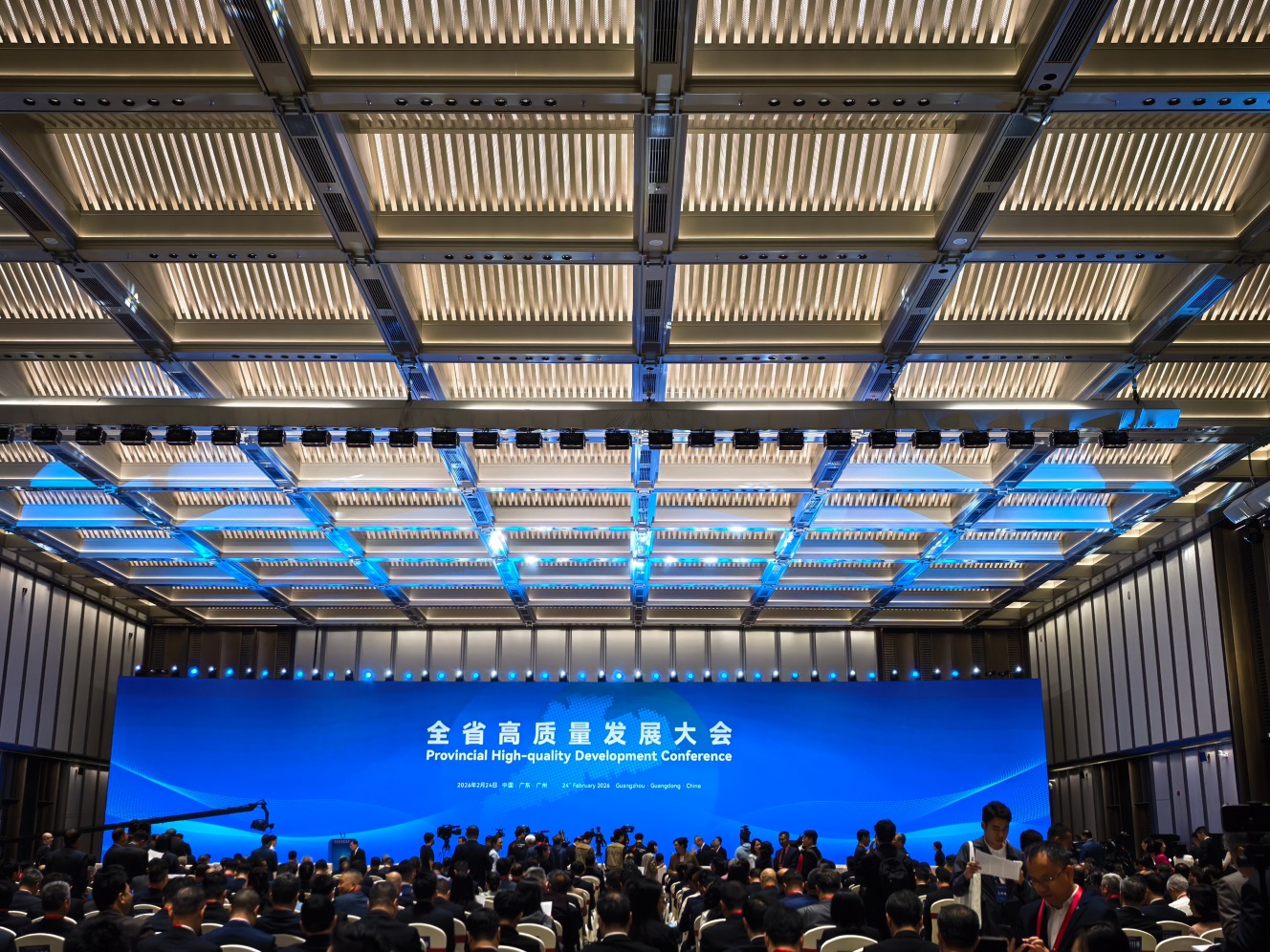
当机器的轰鸣与数据的流动在岭南深度交融,一场关于制造业与服务业协同发展的深刻变革,正在广东这片改革开放的热土上澎湃展开。 2026年农历正月初八,广东连续第四年在春节后首个工作日召开全省高质量发展大会,主题聚焦"制造业与服务业协同发展"。在"制造强省"与"服务高地"相 互成就中打开产业发展新天地,这既是广东对全球产业竞争趋势的主动应对,也为全国产业结构升级探路。 制造业之强:牵引服务业迭代升级 "广东制造"拥有难以撼动的厚实家底。广东有全部31个制造业大类,工业规模约占全国八分之一。2025年,全省工业增加值4.89万亿元,高新技术企业超7.7 万家,区域创新能力连续9年居全国第一。 从中山古镇几公里内搞定定制灯饰全链条,到深圳华强北几小时"攒"出智能硬件原型机,"一小时产业圈"的效率正是广东制造强大配套能力的生动写照。 在珠海格力电器,智能工厂的数字化率达100%、智能化率达93%。"我们构建了厂房、管网、设备、安全、工艺、质量、生产多维度数字孪生系统,实时感 知运行状态、预警异常。"格力电器相关负责人说,通过全流程协同高效运营,交期缩短40%,供方准时交付率达100%。 格力的智能工厂并非孤例。在广东,制 ...

专访思谋吕江波:“AI+”时代,工业智能体正在变成必选项
Nan Fang Du Shi Bao· 2026-01-12 02:20
Group 1 - The "14th Five-Year Plan" emphasizes the core role of technology and innovation, presenting opportunities for transforming cutting-edge technologies into stable and scalable productivity [5][6] - The shift in smart manufacturing from point automation to "system intelligence" is highlighted, with industrial intelligence becoming essential for enhancing production efficiency and resilience [6][7] - The integration of visual perception, multi-modal large models, and execution capabilities is crucial for creating autonomous industrial intelligence systems that can operate in real production environments [6][7] Group 2 - The development of new productive forces relies not only on technological leadership but also on the ability to reconstruct production methods and expand efficiency boundaries [7][8] - The company focuses on creating a "evolutionary and executable" industrial intelligence system, ensuring stable operation and continuous iteration in complex scenarios [7][8] - Global validation of industrial intelligence systems is essential, with the company serving over 300 leading manufacturing enterprises across various regions, demonstrating the adaptability and ongoing evolution of its solutions [8][9] Group 3 - The core goal for 2026 is to transition industrial intelligence from capability building to ecological scale deployment, emphasizing the standardization and platformization of technology [9][10] - The company aims to enhance the stability and generalization of its systems in complex production scenarios, facilitating efficient replication across industries [9][10] - The focus will shift from "usable" AI to "user-friendly and easy to use" AI, with a competitive edge gained through long-term integration into production and decision-making systems [10] Group 4 - The company's globalization strategy involves embedding industrial intelligence deeply into global manufacturing systems, facing challenges related to compliance and industry ecosystems [11][12] - Establishing "systemic trust" is critical, requiring a balance between global standards and local practices to ensure reliable and reproducible systems [11][12] - Future strategies will prioritize deep empowerment and ecosystem co-construction over mere market coverage, focusing on key industries and scenarios to create reusable standardized delivery systems [11][12]

关于广东AI与机器人产业,这场高规格会议释放了哪些信号?
Nan Fang Du Shi Bao· 2025-07-12 02:20
Core Viewpoint - Guangdong's artificial intelligence and robotics industry is experiencing significant growth and has established itself as a national leader, but it faces several challenges that need to be addressed for sustainable development [2][3][6]. Industry Scale and Technological Strength - Guangdong's industrial robot production has ranked first in the country for five consecutive years, with a production volume of 246,800 units, accounting for 44% of the national total [3]. - The core AI industry in Guangdong is projected to exceed 220 billion yuan in 2024, representing a year-on-year growth of approximately 25% [3]. - The region hosts over 1,500 core AI enterprises and 147 "little giant" companies in the AI sector, the highest in the nation [4]. Key Challenges and Bottlenecks - There is a notable weakness in foundational key technologies, with insufficient open-source ecosystem development and a lack of high-quality data [6][7]. - The gap between technology and application needs is evident, particularly for small and medium-sized enterprises facing high costs and low AI implementation rates [6][7]. - The high cost of humanoid robots and the lack of universal standards for components hinder large-scale deployment [7]. Recommendations for Development - The report suggests enhancing government functions to accelerate industry growth, focusing on key technology breakthroughs and supporting enterprise innovation [9][10]. - It is recommended to establish a legal framework to support the development of AI and robotics, including specific legislation and monitoring of existing policies [10][11]. - Suggestions include creating demonstration application scenarios and lowering entry barriers for SMEs to facilitate technology implementation [9][11].

走访多地,这场调研看到了广东AI与机器人产业的哪些趋势?
Nan Fang Du Shi Bao· 2025-07-11 08:40
Core Insights - Guangdong's artificial intelligence and robotics industry shows strong growth potential, with the core industry scale expected to exceed 220 billion yuan in 2024, reflecting a year-on-year increase of approximately 25% [3] - The industrial robot production in Guangdong reached 246,800 units, accounting for 44% of the national total, marking five consecutive years of being the highest in the country [3] - The province has over 1,500 core AI enterprises and 147 "little giant" companies in the AI sector, leading the nation in quantity [3] Industry Strengths - Guangdong's industrial chain competitiveness is highlighted by a complete "chip-algorithm-terminal-application" structure [3] - Significant technological breakthroughs have been achieved, such as Huawei's Ascend 910B chip and the world's first industrial multimodal large model by Simo Technology [4] - The province is set to establish 31 national-level intelligent manufacturing pilot demonstration factories and 99 excellent scenarios by the end of 2024, leading the country [5] Regional Advantages - The proximity to Hong Kong and Macau enhances collaborative development, with Hong Kong focusing on foundational algorithm research and Macau on specialized disciplines [5] - Guangdong's emerging industries, including new energy and quantum technology, have also made significant progress, with the new energy sector becoming the ninth trillion-level cluster [5] Challenges Identified - Key technological support is insufficient, with a lack of high-quality data and limited public data availability hindering industry growth [6] - The application of AI in various sectors is still shallow, with fragmented and homogeneous government applications [6] - The market for embodied intelligent robots faces multiple obstacles, including a lack of large-scale training environments and high costs limiting commercial viability [7] Recommendations - Strengthening government functions to accelerate industry development, focusing on key technology breakthroughs and enhancing core technology support [8] - Promoting legislative measures to support the development of the AI and robotics industry, including a comprehensive legal framework [10] - Enhancing talent acquisition and funding support to address structural talent shortages and improve financing conditions [7]