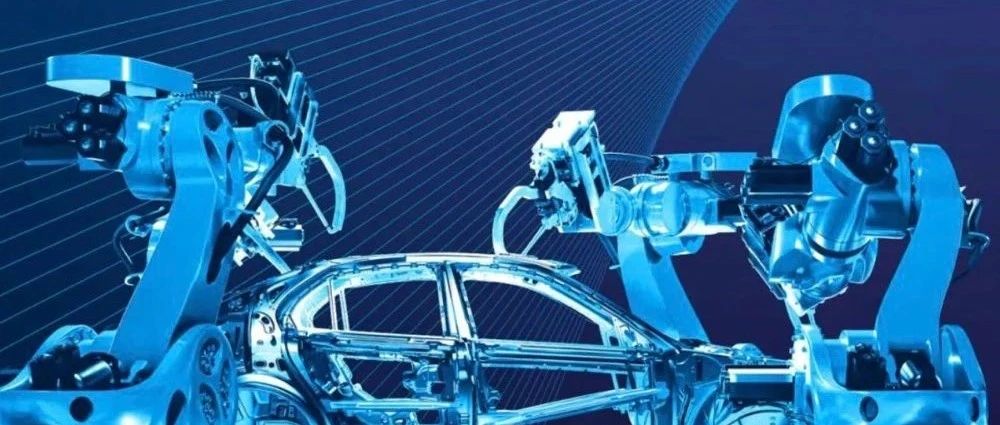
工业AI智能体

Search documents
思谋科技冲港股IPO引争议:对赌赎回条款压顶、高管股权激励“零元购”
凤凰网财经· 2026-03-27 12:15
招股书显示,思谋科技成立于2019年,由计算机视觉科学家贾佳亚博士创立,核心业务为提供工业AI智能体,涵盖机器人、边缘AI传感器及智能体软 件系统,聚焦消费电子、新能源电池等多场景的智能化解决方案。 01 对赌赎回条款压顶,思谋科技被"逼"上IPO独木桥 凭借全栈自研技术优势,思谋科技已成为2025年中国收入规模最大的工业AI智能体提供商,以5.8%的市场份额位居行业首位,累计交付近14万个智 能体,服务全球超730家企业客户,IDG资本、红杉中国、联想集团等明星机构均为其股东,上市前最新估值达12.3亿美元(约合人民币85亿元)。 业绩层面,思谋科技呈现"高增长、高亏损"的鲜明反差。2023年至2025年,公司营收从4.85亿元攀升至10.86亿元,两年复合增长率约49.7%,毛 利率也从30.5%稳步提升至37.3%,规模效应逐步释放,核心业务工业AI智能体收入占比已达78.5%,其中边缘AI传感器业务2025年同比增长超 来源丨凤凰网财经《IPO观察哨》 近日,工业AI领域头部企业思谋科技(SmartMore Inc.)正式向港交所递交招股说明书,拟登陆主板上市,摩根士丹利、中金公司及德意志银行担任 联 ...


IPO周报|宇树科技科创板IPO获受理;思谋科技冲刺港交所
IPO早知道· 2026-03-22 12:58
一周IPO动态,覆盖港股、美股、A股。 本文为IPO早知道原创 作者|C叔 微信公众号|ipozaozhidao 宇树科技 科创板|递交招股书 据 IPO早知道消息,宇树科技股份有限公司(以下简称"宇树科技")的科创板IPO申请于3月20日获 受理,中信证券担任保荐人,拟募集资金42.02亿元。 成立于 2016年的宇树科技坚持通用机器人核心技术全栈自研,持续丰富产品矩阵,引领了高性能通 用机器人产业的创新和规模化落地,取得了四足机器人、人形机器人全球市场的主要份额,尤其在海 外市场具有较高知名度与市场占比。 2022年至2024年、以及2025年前三季度,宇树科技四足机器人销量合计超 30,000 台,奠定了在全 球四足机器人市场的优势地位;同时,自 2023 年自研推出首款人形机器人 H1 及 2024 年推出中型 人形机器人G1 以来,宇树科技的人形机器人产品销量实现了快速增长,2025年人形机器人出货量 已超5,500 台(纯人形,不含轮式双臂机器人),出货量全球第一。 财务数据方面。 2025年,宇树科技营收 17.08亿元,同比增长335.36%;扣非后净利润6.00亿元, 同比增长674.29% ...

贾佳亚创办的思谋科技冲刺港交所:或成「工业AI智能体第一股」,年营收近11亿元
IPO早知道· 2026-03-16 07:00
Core Viewpoint - SmartMore Inc. aims to redefine the global manufacturing operating system using AI, positioning itself as the first "Industrial AI Intelligent Agent" stock in the market [3][4]. Company Overview - Founded in 2019 by Dr. Jiajiaya, SmartMore has over 25 years of experience in academia and technology, with a focus on AI applications in manufacturing [3][4]. - The company provides industrial AI intelligent agents, including robots, edge AI sensors, and intelligent software systems, enhancing autonomy and automation in manufacturing [4][6]. Market Position - By December 31, 2025, SmartMore is projected to serve over 730 clients globally, including major companies like Tesla and BOE Technology Group, across various industry verticals [4][6]. - SmartMore is recognized as the largest provider of industrial AI intelligent agents in China by 2025, with a comprehensive ecosystem built on proprietary technology [6][10]. Product Offerings - SmartMore's industrial AI intelligent agents consist of three main components: robots for adaptive and efficient production, edge AI sensors for real-time processing, and intelligent software systems for complex decision-making [8]. - The company has achieved several industry-first breakthroughs, including comprehensive visual inspection of complex surfaces and real-time identification challenges in harsh environments [8]. Financial Performance - Revenue projections for SmartMore from 2023 to 2025 are 485 million, 756 million, and 1.086 billion CNY, with year-on-year growth rates of 55.9% and 43.7% for 2024 and 2025, respectively [9]. - The gross profit margin is expected to rise from 30.5% in 2023 to 37.3% in 2025, indicating a positive trend in profitability [9]. Industry Insights - The global industrial AI intelligent agent market is expected to grow from 14.6 billion CNY in 2023 to 36.7 billion CNY by 2025, with a compound annual growth rate (CAGR) of 58.6% [10]. - The Chinese market for industrial AI intelligent agents is projected to expand from 5.8 billion CNY in 2023 to 14.8 billion CNY by 2025, with a CAGR of 59.9% [10]. Investment and Valuation - SmartMore has attracted investments from notable firms, including IDG Capital and Sequoia China, and achieved a valuation of 1.23 billion USD prior to its IPO [11][12]. - The funds raised from the IPO will primarily be used for technology and product development, commercial expansion, strategic partnerships, and general corporate purposes [12].

麦肯锡重磅报告:2030年中国智能制造十大关键预测
机器人圈· 2025-07-09 09:15
Core Viewpoint - The report by McKinsey highlights the accelerating transformation of the global smart manufacturing and industrial automation industry, driven by advancements in Industry 4.0 and generative AI technologies, with China, Japan, and Western Europe expected to lead the automation revolution by 2030 [12][15]. Industry Overview - The global industrial automation market is projected to reach approximately $108.3 billion by 2025, with China's market exceeding 250 billion RMB, accounting for over one-third of the global market [2][16]. - The report emphasizes the importance of policies such as the "14th Five-Year Plan for Intelligent Manufacturing" in promoting digital transformation and intelligent upgrades in China's manufacturing sector [13]. Key Trends and Directions - The report identifies three major technological trends: platformization, agility, and intelligence, along with ten key technological development directions that will drive advancements in industrial automation and smart manufacturing [2][8]. - The trends include the establishment of software-defined intelligent manufacturing platforms, model-driven design approaches, and the integration of artificial intelligence and low-code/no-code development tools [4][6][7]. Market Segmentation - The industrial automation market is segmented into continuous flow manufacturing and discrete manufacturing, with significant growth potential in both areas. Continuous flow manufacturing is expected to see spending reach approximately $76 billion by 2025, while discrete manufacturing is experiencing faster growth rates [16][17]. - The report highlights the increasing importance of industrial IoT software and cloud services, which are projected to grow at a rate of 18% [33]. Challenges and Opportunities - The global manufacturing industry faces unprecedented risks, including trade tensions and economic slowdowns, which necessitate a reevaluation of production and supply chain strategies [14]. - The report suggests that leveraging industrial automation can enhance production efficiency and address these challenges, positioning companies to better navigate the evolving landscape [15]. Technological Innovations - Key technologies such as artificial intelligence, virtual PLCs, digital twins, and low-code/no-code development are significantly enhancing the performance of industrial automation and robotics [2][36]. - The integration of multi-source heterogeneous data is crucial for achieving product quality and operational efficiency, enabling a more data-driven approach to manufacturing [47][48]. Future Outlook - The report anticipates that the global and Chinese industrial automation markets will experience accelerated growth over the next five years, driven by labor market changes and technological breakthroughs [33][34]. - By 2030, it is expected that 8 billion jobs globally could be replaced by machines due to advancements in automation and AI technologies [35].