
IndustryGPT

Search documents
NextX系列:颠覆性技术周刊第10期(2026.03.14-2026.03.20):量子存储器实验突破:浙大联合研发桶式QRAM,查询保真度达80.9%
GUOTAI HAITONG SECURITIES· 2026-03-22 12:08
Investment Rating - The report does not explicitly provide an investment rating for the industry Core Insights - The report highlights significant advancements in quantum storage technology, specifically the development of a barrel-type QRAM with a query fidelity of 80.9% by Zhejiang University [3] - The technology sector experienced 128 financing events globally, with 96 occurring domestically in China, indicating robust investment activity [9] - The semiconductor and AI sectors are noted for their high turnover rates and fluctuating valuations, with the semiconductor index experiencing a 2.05% decline last week [21][25] Financing Overview - During the period from March 14 to March 20, 2026, the technology industry saw a total of 128 financing events, with 96 in China and 32 internationally. The leading sectors for domestic financing were advanced manufacturing (44 events), artificial intelligence (28 events), and enterprise services (11 events) [9] IPO Updates - Lantu Automotive successfully listed on the Hong Kong main board on March 19, 2026, focusing on high-end smart electric vehicles [10] - Simou Technology submitted its prospectus for an IPO on the Hong Kong main board, aiming to redefine industrial automation through AI [14] - Huayan Robotics passed the listing hearing for the Hong Kong main board, specializing in collaborative robots for industrial automation [17] - Jizhi Technology also passed the listing hearing, providing AI computer vision solutions for various industries [19] Market Performance Tracking - The report notes a mixed performance in the stock market, with the Shanghai Composite Index down 3.38% and the Shenzhen Component Index down 2.90%, while the ChiNext Index rose by 1.26% [21] - The semiconductor index saw a weekly decline of 2.05%, while the AI index increased by 1.2% [25] Advanced Semiconductor Developments - Research from the Indian Institute of Science Education and Research has shown that copper doping can significantly reduce dark current in MoS2 photodetectors, enhancing their performance [28] - A study from Hanyang University indicates that controlling oxygen partial pressure during IGZO channel deposition can optimize the memory window in ferroelectric FETs [34] - Seoul National University has developed a programmable rectifier for neuromorphic computing, addressing issues of leakage and non-linearity in crossbar arrays [40]
贾佳亚创办的思谋科技冲刺港交所:或成「工业AI智能体第一股」,年营收近11亿元
IPO早知道· 2026-03-16 07:00
Core Viewpoint - SmartMore Inc. aims to redefine the global manufacturing operating system using AI, positioning itself as the first "Industrial AI Intelligent Agent" stock in the market [3][4]. Company Overview - Founded in 2019 by Dr. Jiajiaya, SmartMore has over 25 years of experience in academia and technology, with a focus on AI applications in manufacturing [3][4]. - The company provides industrial AI intelligent agents, including robots, edge AI sensors, and intelligent software systems, enhancing autonomy and automation in manufacturing [4][6]. Market Position - By December 31, 2025, SmartMore is projected to serve over 730 clients globally, including major companies like Tesla and BOE Technology Group, across various industry verticals [4][6]. - SmartMore is recognized as the largest provider of industrial AI intelligent agents in China by 2025, with a comprehensive ecosystem built on proprietary technology [6][10]. Product Offerings - SmartMore's industrial AI intelligent agents consist of three main components: robots for adaptive and efficient production, edge AI sensors for real-time processing, and intelligent software systems for complex decision-making [8]. - The company has achieved several industry-first breakthroughs, including comprehensive visual inspection of complex surfaces and real-time identification challenges in harsh environments [8]. Financial Performance - Revenue projections for SmartMore from 2023 to 2025 are 485 million, 756 million, and 1.086 billion CNY, with year-on-year growth rates of 55.9% and 43.7% for 2024 and 2025, respectively [9]. - The gross profit margin is expected to rise from 30.5% in 2023 to 37.3% in 2025, indicating a positive trend in profitability [9]. Industry Insights - The global industrial AI intelligent agent market is expected to grow from 14.6 billion CNY in 2023 to 36.7 billion CNY by 2025, with a compound annual growth rate (CAGR) of 58.6% [10]. - The Chinese market for industrial AI intelligent agents is projected to expand from 5.8 billion CNY in 2023 to 14.8 billion CNY by 2025, with a CAGR of 59.9% [10]. Investment and Valuation - SmartMore has attracted investments from notable firms, including IDG Capital and Sequoia China, and achieved a valuation of 1.23 billion USD prior to its IPO [11][12]. - The funds raised from the IPO will primarily be used for technology and product development, commercial expansion, strategic partnerships, and general corporate purposes [12].


SmartMore Inc.(H0453) - Application Proof (1st submission)
2026-03-15 16:00
Application Proof of SmartMore Inc. (the "Company") (Incorporated in the Cayman Islands with limited liability) WARNING The publication of this Application Proof is required by The Stock Exchange of Hong Kong Limited (the "Stock Exchange") and the Securities and Futures Commission (the "Commission") solely for the purpose of providing information to the public in Hong Kong. Hong Kong Exchanges and Clearing Limited, The Stock Exchange of Hong Kong Limited and the Securities and Futures Commission take no res ...
SmartMore Inc.(H0453) - 申请版本(第一次呈交)
2026-03-15 16:00
香港交易及結算所有限公司、香港聯合交易所有限公司及證券及期貨事務監察委員會對本 申請版本的內容概不負責,對其準確性或完整性亦不發表任何聲明,並明確表示,概不對 因本申請版本全部或任何部份內容而產生或倚賴該等內容而引致的任何損失承擔任何責任。 SmartMore Inc. (「本公司」) (於開曼群島註冊成立的有限公司) 的申請版本 警 告 本申請版本乃根據香港聯合交易所有限公司(「聯交所」)及證券及期貨事務監察委員會(「證 監會」)的要求而刊發,僅用作提供資訊予香港公眾人士。 本申請版本為草擬本。本申請版本內所載資訊並不完整,亦可能會作出重大變動。閣下閱 覽本文件,即代表閣下知悉、接納並向本公司、其聯席保薦人、整體協調人、顧問或包銷 團成員表示同意: 本公司招股章程根據香港法例第32章公司(清盤及雜項條文)條例送呈香港公司註冊處處長 登記前,本公司不會向香港公眾人士提出要約或邀請。倘在適當時候向香港公眾人士提出 要約或邀請,有意投資者務請僅依據於香港公司註冊處處長註冊的本公司招股章程作出投 資決定,招股章程的文本將於發售期內向公眾人士刊發。 13169 \ (Project Sirius Redacted) ...
AI是“摆设”还是“解药”?测测你的企业AI化指数
吴晓波频道· 2026-03-11 00:29
Core Viewpoint - The article emphasizes the transformative impact of AI on Chinese enterprises, highlighting both the rapid adoption and the challenges faced in integrating AI into business operations. It calls for a systematic review of AI applications to identify value and pathways for successful transformation [2][5][20]. Group 1: AI Adoption Trends - By 2025, the proportion of industrial enterprises in China applying large models and intelligent agents is expected to rise from 9.6% in 2024 to 47.5% [5] - The application of AI technology in large-scale manufacturing enterprises is projected to exceed 30% by 2025, with the core AI industry scale surpassing 1.2 trillion yuan [5][21]. Group 2: Challenges in AI Implementation - Many enterprises adopt AI due to peer pressure rather than genuine business needs, leading to AI being treated as a decorative technology rather than a solution to real problems [10] - The hidden costs of AI implementation are significant, with estimates indicating that optimizing a single workstation can cost around 100,000 yuan, while comprehensive factory-level transformations may require investments of millions [12][13]. - The uncertainty of returns on AI investments is a major concern, as only 39% of companies report achieving substantial financial returns despite 88% having adopted AI [13][14]. Group 3: Long-term Value Assessment - The difficulty in quantifying long-term benefits of AI investments creates a dilemma for companies, as immediate returns are often not visible [14][16]. - A significant portion of enterprises (66%) are still using AI to optimize existing processes rather than innovating new business models, indicating a gap in deep transformation [18][19]. Group 4: Policy and Economic Shifts - The introduction of the term "intelligent economy" in government reports marks a shift towards integrating AI into the core of economic transformation, emphasizing the need for businesses to not only adopt AI but to leverage it for redefining business models [21][24]. - The cost of AI technology has decreased significantly, with the output cost of mainstream models dropping over 99% in the past three years, which is expected to stimulate broader application and revenue growth [25][26]. Group 5: Future Directions - Despite the challenges, the trend towards AI adoption is expected to accelerate, with 94% of enterprises indicating they will continue investing in AI regardless of short-term results [27][28]. - Companies are urged to develop a clear understanding of their current position in AI adoption to effectively navigate the transition and avoid pitfalls [31][32].

打败GPT-5.2,嵌入真实工业生产,这个大模型什么来头?
量子位· 2026-03-09 04:13
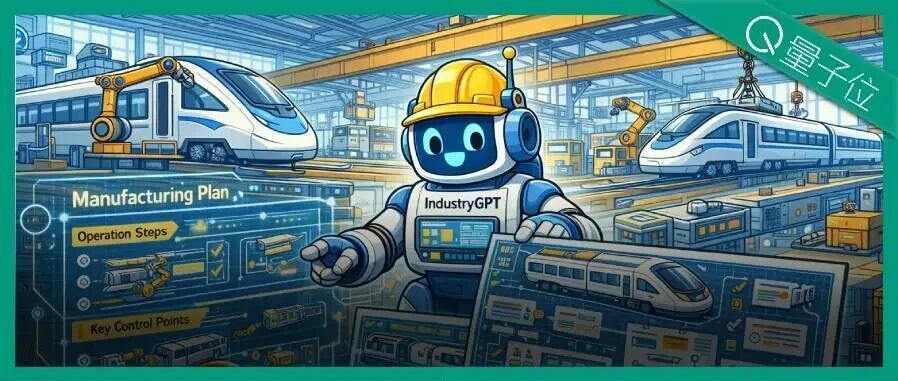
Core Viewpoint - The article discusses the performance of various AI models in industrial practice exams, highlighting the limitations of general-purpose models in real industrial contexts and the superiority of IndustryGPT from Simo Technology in specialized industrial applications [2][4][6]. Group 1: Industrial AI Examination Results - A series of three industrial practice exams revealed that even top models like GPT-5.2 Thinking (high) and Gemini-3.1-Pro struggled in real industrial engineering contexts [2][4]. - IndustryGPT outperformed these general models in all three exams, demonstrating its capability in industrial knowledge breadth and depth [3][11]. - The exams highlighted the structural differences in AI requirements between general and industrial scenarios, emphasizing the need for compliance, rigor, and reliability in industrial applications [26][39]. Group 2: Assessment Methodology - The first exam assessed the breadth of industrial knowledge using the SuperGPQA dataset, where IndustryGPT achieved state-of-the-art (SOTA) results [9][11]. - The second exam focused on the depth of industrial knowledge, with IndustryGPT leading significantly, especially in high-difficulty questions, achieving over a 20% relative performance improvement [14][18]. - The third exam evaluated practical decision-making capabilities, aligning with professional qualification standards, where IndustryGPT again demonstrated superior performance in regulatory compliance and complex decision-making [20][24]. Group 3: Industrial AI Requirements - The article identifies three core capabilities that industrial AI must possess: boundary control, compliance with regulations, and task execution [39][40][42]. - IndustryGPT's training paradigm emphasizes these capabilities, ensuring that the model operates within safety boundaries and adheres to strict industrial standards [41][44]. - The discussion contrasts two main approaches to industrial AI: general models with industry fine-tuning versus native industrial models like IndustryGPT, which are designed from the ground up to meet industrial needs [46][49]. Group 4: Practical Applications and Impact - IndustryGPT has been successfully integrated into various industrial scenarios, significantly improving efficiency and reducing risks in processes such as quality inspection and complex production line management [28][29][36]. - The model's ability to automate the generation of manufacturing plans and manage complex production environments demonstrates its practical value in real-world applications [32][34][36]. - The article concludes that the true measure of AI in manufacturing is not just intelligence but its ability to be effectively implemented in production environments [53][54].
基于工业大模型、Agent构建电子产品工业AI智能装备解决方案,每年节省百万级资源损耗 | 创新场景
Tai Mei Ti A P P· 2025-09-05 10:59
Core Insights - The consumer electronics industry is facing multiple structural challenges, including talent shortages, quality control difficulties, and limitations of traditional machine vision solutions [1] Group 1: Industry Challenges - There is a significant demand for quality inspection engineers due to rising technical barriers, but competition for skilled labor is leading to a shortage of quality workforce [1] - The complexity of defects in consumer electronics products presents challenges in quality control, as manual inspection is prone to systemic errors and cannot keep pace with high production demands [1] - Traditional machine vision solutions are limited by their algorithmic generalization capabilities, making them costly to adapt to diverse product types and defects, which hinders flexible production [1] Group 2: Proposed Solutions - The solution focuses on appearance quality inspection of electronic devices and components, utilizing an industrial large model and intelligent agent technology to create a comprehensive defect detection ecosystem [2] - IndustryGPT, the world's first industrial multimodal large model, serves as a generative AI engine for industrial applications, integrating throughout the entire process from data labeling to model training and deployment [2] - The SMore ViMo intelligent industrial platform offers a full-stack intelligent capability for industrial manufacturing, supporting seamless transitions from data management to deployment [3] Group 3: Implementation and Results - The five-axis AI-AOI integrated device enables AI-driven defect detection for various electronic products, significantly improving detection accuracy and efficiency [3] - The solution can detect over 16 types of defects simultaneously, with a false rejection rate below 5% and a defect detection time of only 2 seconds per item [4] - The algorithm model supports different product types, reducing costs and enhancing overall efficiency, potentially saving manufacturers millions in resource waste annually [5]