
防晒霜

Search documents
2026中国防晒护肤品市场洞察报告
青眼情报· 2026-03-30 05:50
Investment Rating - The report indicates a market investment rating of "Cautious" due to the current challenges in growth and regulatory pressures in the sunscreen industry [28]. Core Insights - The sunscreen market is approaching a "full protection" era, with a market size nearing 300 billion yuan, but growth is under pressure, showing a decline in retail sales by 7.8% in 2025 compared to the previous year [3][29]. - Consumer demand is shifting towards higher cost-performance, efficacy segmentation, and safety compliance, necessitating innovation and precise positioning to find new growth points amidst market contraction and intensified competition [28][29]. Market Development Status and Competitive Landscape - The sunscreen market is experiencing a concentration increase, with the top 5 brands holding a market share of 36.51%, indicating a shift from a fragmented market to a focus on leading brands [44]. - The price segment of 51-100 yuan is identified as the main battleground, with a sales volume share of 38.08% and a sales revenue share of 32.29% [37]. - Regulatory changes are pushing the industry towards safer and more standardized products, with new guidelines on sunscreen agents being implemented [24][25]. Consumer Demand and Behavior Insights - The core consumer demographic is predominantly young adults aged 18-40, with a significant portion being female [84]. - There is a high awareness of the "defense and repair" concept among consumers, with over 71% recognizing this type of sunscreen [99]. - Basic sunscreen products dominate the market, but multi-functional products are gaining traction, reflecting consumer demand for integrated solutions [106]. Trends: Product Innovation and Industry Evolution - Innovations in protective technology are leading to the development of full-spectrum and environmental protection products [15]. - The trend of "sunscreen +" is emerging, where products combine sun protection with additional skincare benefits [15]. - The market is witnessing a significant shift towards professional and precise formulations to cater to specific consumer needs [15]. Regulatory Environment - New regulations from the National Medical Products Administration are tightening the quality control requirements for sunscreen agents, which will impact product formulations and market dynamics [24][25]. Pricing Dynamics - The pricing strategy is crucial, with the 51-100 yuan segment being the most competitive, while lower-priced products struggle to contribute significantly to revenue [42]. Brand Performance and Channel Differentiation - Leading brands like Mistine and Anessa dominate across multiple sales channels, showcasing their broad influence [46]. - Different platforms exhibit varying brand performances, indicating the need for tailored marketing strategies [46]. Consumer Pain Points - Key consumer pain points include product texture, efficacy, and safety, with a significant number of users expressing dissatisfaction with the greasiness and ineffectiveness of current products [139][140].
知行数据观察:防晒品类
知行咨询· 2026-03-27 08:55
Investment Rating - The report indicates a positive investment outlook for the sunscreen industry, projecting a market size growth from 8.5 billion to 22.4 billion by 2028, reflecting a clear expansion trend [9][10]. Core Insights - The sunscreen market in China is experiencing a shift from explosive growth to a more stable, demand-driven expansion, with a notable increase in multifunctional products that combine skincare benefits with sun protection [11][12]. - Consumer awareness regarding sunscreen usage has significantly increased, with over 70% of consumers using sunscreen frequently, indicating a shift from situational to daily skincare necessity [14][15]. - The online sales of sunscreen products are expected to grow steadily from 2023 to 2025, with a notable increase in sales and volume, particularly on platforms like Douyin [17][19]. Market Overview - The sunscreen market is categorized into physical, chemical, and hybrid formulations, each with distinct advantages and disadvantages, catering to different consumer needs [7][8]. - The market size is projected to grow from 8.5 billion in 2015 to 22.4 billion by 2028, with a compound annual growth rate (CAGR) indicating a shift towards refined consumer demands [9][10]. Product Performance - Basic sunscreen efficacy has seen a decline of 6%, while additional skincare benefits such as moisturizing, repairing, and soothing have shown significant growth rates of 15%, 45%, and 116% respectively, highlighting a shift in consumer preferences towards multifunctional products [11][12]. - The average price of sunscreen products varies, with basic sunscreen averaging 121 yuan, while products with added benefits like moisturizing and repairing are priced higher, reflecting their perceived value [12]. Consumer Behavior - The report highlights that consumers prioritize protection effectiveness, safety, and skin feel when purchasing sunscreen, with additional benefits and environmental attributes being secondary considerations [14][15]. - The frequency of sunscreen application is high, with 87% of consumers aware of the need for reapplication, particularly during outdoor activities [14][15]. Online Sales Trends - The online market for sunscreen is expected to see dual growth in sales and volume from 2023 to 2025, with Douyin emerging as a key player, surpassing traditional platforms like Taobao in growth rates [17][19]. - The average price of sunscreen products on Douyin is increasing, indicating a shift towards higher-end products, while Taobao has experienced fluctuations in pricing [19][21]. Brand Dynamics - The brand landscape in the sunscreen category shows a concentration of market share among top brands, with Mistine leading in both Taobao and Douyin platforms, while new and domestic brands are gaining traction [29][30]. - The competitive dynamics differ between platforms, with Taobao showing higher brand concentration and Douyin exhibiting a more fragmented market with rapid growth among emerging brands [29][31].
汕头“数字枢纽”加快推动本地特色产业乃至全国产业走向全球 春节不打烊 广货出海忙
Nan Fang Ri Bao Wang Luo Ban· 2026-02-24 08:45
Core Insights - The Shantou Cross-Border Digital Economy Industrial Park has attracted 130 companies since its launch, serving as a digital platform for local products to reach global markets [1][2] - The West Moon & 1688 Shantou Cross-Border Selection Center operates a digital B2B platform, serving over 100 brands and facilitating nearly 100,000 daily shipments [2] - The collaboration between Shantou's textile and apparel industry and Thailand's Charoen Pokphand Group marks a significant milestone, with orders valued at nearly 10 million yuan [3] Group 1 - The Shantou Cross-Border Digital Economy Industrial Park is the first of its kind in Guangdong, focusing on an innovative model of "industrial belt + cross-border e-commerce" [1] - The West Moon platform provides a comprehensive solution for cross-border sellers, including product selection, sales, and fulfillment, enabling lightweight operations [2] - The platform has established over 30 self-operated warehouses overseas, covering regions such as North America, Europe, and Southeast Asia [2] Group 2 - The rise of industrial clusters in the Chaoshan region has led to an increase in the export of local products, with significant orders being fulfilled for the first time by companies like Guangdong Bailian [3] - The Shantou Cross-Border Digital Economy Industrial Park aims to innovate cross-border data flow and serve as a new hub for cross-border digital economy [3] - Companies like Baoshuan Cross-Border are focusing on building a one-stop cross-border service ecosystem to enhance local enterprises' global outreach [3]
为什么皮肤科医生不显老?真正的养颜秘诀你也可以学会
Yang Shi Xin Wen· 2026-02-13 02:14
Core Insights - The article emphasizes that 90% of skin issues stem from a damaged skin barrier rather than mere dehydration, highlighting the importance of proper skincare routines [1][2]. Group 1: Skin Barrier Damage - The skin barrier, composed of a lipid layer, stratum corneum, and moisture, serves as the first line of defense against external stimuli. Factors such as temperature fluctuations, dry air, and UV exposure can weaken this barrier, leading to symptoms like dryness and redness [2]. - Improper skincare habits, such as using hot water, harsh cleansers, and frequent exfoliation, can exacerbate barrier damage [3][4]. - Scratching and the use of irritating skincare products can further harm the skin barrier [5]. Group 2: Symptoms Requiring Medical Attention - Signs of potential inflammation or skin disease include erythema (red patches), papules (small raised bumps), exudation (fluid discharge), and severe itching, which may disrupt sleep [6]. Group 3: Sensitive Skin Groups - Elderly individuals may experience thinner, drier skin with reduced barrier function, necessitating enhanced moisturizing [7]. - Infants require specialized moisturizing products due to their delicate skin [8]. - Adults may face skin issues due to genetic predispositions or poor habits, such as frequent scratching or inadequate post-cleansing moisturization [9]. - Individuals who over-care for their skin, such as through excessive cleansing or reliance on strong exfoliants, may inadvertently damage their skin barrier [10]. Group 4: Three-Step Skin Repair Method - The recommended skincare routine consists of cleansing, moisturizing, and sun protection. Gentle cleansing is advised to avoid over-intervention [12]. - Proper moisturizing involves distinguishing between hydration (adding moisture), water retention (preventing moisture loss), and overall moisturizing to maintain skin hydration [13]. - Different skin types should select appropriate products: creams for dry skin, lightweight formulations for oily skin, and a combination for mixed skin types [14][15][16]. Group 5: Expert Recommendations - Simplifying skincare routines to meet the basic functions of cleansing, moisturizing, and sun protection is encouraged, avoiding excessive layering of products [17]. - The order of application should follow a "thin to thick" principle, starting with toners and ending with sunscreen [19]. - Strict sun protection is crucial to prevent UV damage, which can silently harm the skin barrier [21]. Group 6: Sensitive Skin Care and Advanced Recommendations - For sensitive skin, it is vital to enhance moisturizing to repair the barrier and minimize external irritants, avoiding exfoliating products [23]. - In cases of mild discomfort, applying a thick layer of moisturizer can provide relief [24]. - Caution is advised with cosmetic procedures; treatments like hydrating injections should only be performed when the skin barrier is intact [25].

快手电商启动“心动情人节”活动,联合大牌美妆打造节日礼赠消费狂欢
Sou Hu Cai Jing· 2026-02-11 07:54
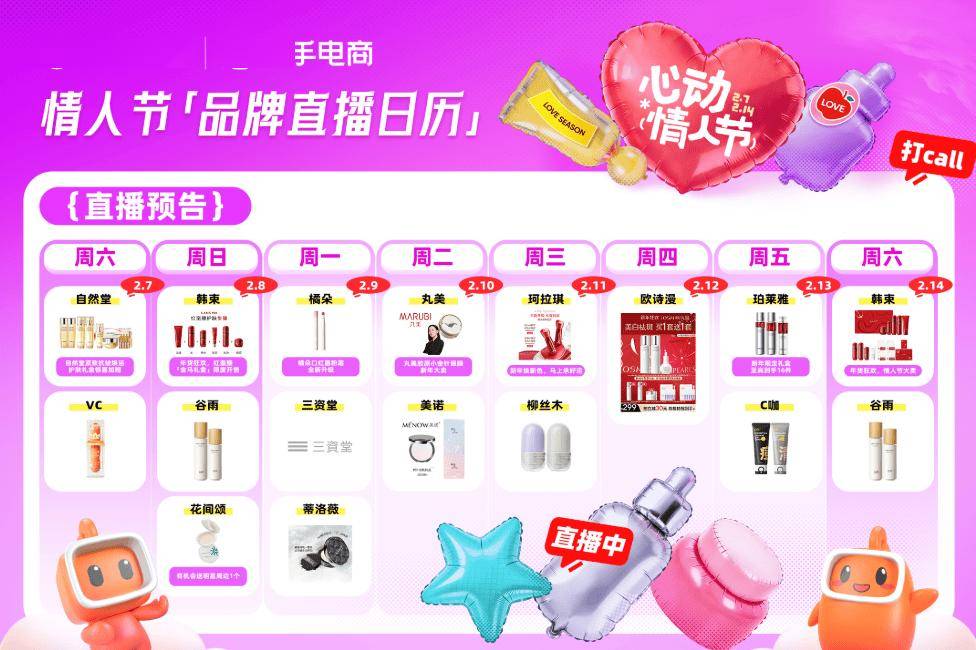
Core Insights - The upcoming Valentine's Day has led to a surge in consumer demand for gifting, particularly in the beauty sector, which is seen as a key medium for expressing emotions and intentions [1][5] - Kuaishou E-commerce is launching a themed campaign titled "New Spring, New Look, Big Brand Gifts for Loved Ones" from February 7 to 14, featuring various promotions and live-streaming events with major beauty brands [1][5] Group 1: Campaign Details - The campaign includes participation from numerous beauty brands such as Naturando, Han Shu, Gu Yu, Orange Du, Marubi, Oushiman, and Proya, offering special live-streaming events and discounted beauty products [1][3] - Users can engage in interactive activities on Kuaishou, such as sharing videos related to Valentine's Day gifts, with opportunities to win prizes like gold bracelets and Kuaishou merchandise [3][4] Group 2: Consumer Behavior and Trends - Kuaishou reported significant growth in Valentine's Day-related metrics, with a 310.8% month-over-month increase in total video views and a 70.7% increase in GMV for beauty purchases driven by search behavior [2][4] - The demand for beauty products is strong, with notable increases in searches for gift sets and practical items like facial cleansers and sunscreens, reflecting a trend towards more refined and practical gift choices [4][5] Group 3: Market Insights - The Valentine's Day celebration has evolved into a significant marketing opportunity, intertwining emotional expression with consumer behavior, as evidenced by the rising popularity of related topics and search terms [3][4] - The "he economy" is gaining traction, with men's skincare sets emerging as a notable category, indicating potential growth in this segment during Valentine's Day [4]

海南产经新观察:离岛免税新政落地百日红利惠及多方
Zhong Guo Xin Wen Wang· 2026-02-09 09:40
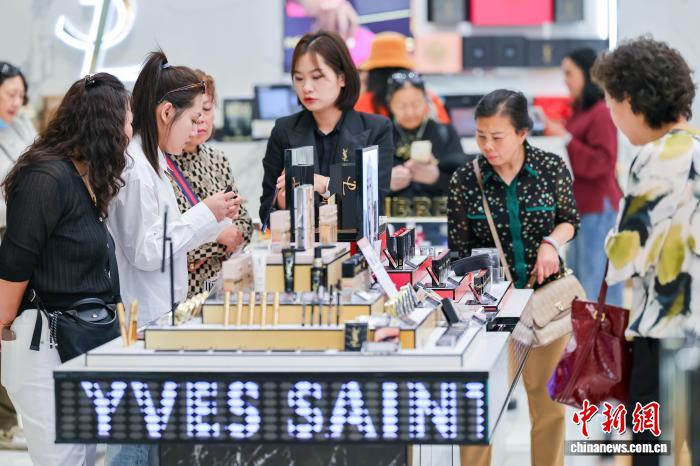
Core Insights - The new duty-free policy in Hainan has been in effect for 100 days, resulting in a shopping amount of 11.585 billion yuan, a year-on-year increase of 14.71% [1] - The policy adjustments include expanding the range of goods, allowing domestic products to be sold duty-free, and increasing the eligible consumer base to include departing travelers and local residents [1] Group 1: Policy Impact - The new policy has led to a surge in consumer traffic and sales at duty-free stores, significantly boosting domestic economic circulation and stimulating the internal market [1] - Local residents can now enjoy the "buy and pick up" service for 15 categories of goods after just one departure record within a calendar year, enhancing their shopping experience [3][5] Group 2: Consumer Experience - Departing travelers can now benefit from a duty-free shopping limit of 100,000 yuan, with popular categories including cosmetics, digital products, and duty-free alcohol [5] - The convenience of picking up purchases at the airport has been highlighted by travelers, indicating a positive shopping experience [5] Group 3: Product Range Expansion - The number of duty-free product categories has increased from 45 to 47, with new additions including pet supplies and portable musical instruments, broadening consumer choices [6] - Domestic products, including clothing, scarves, coffee, and tea, are now allowed in duty-free stores, enhancing the selection available to both domestic and international travelers [7][9] Group 4: Regulatory Measures - The Hainan customs authority is implementing advanced regulatory measures to ensure the effective management of duty-free goods, including remote video inspections and automated auditing processes [9] - The customs authority aims to maintain a healthy shopping environment while preventing illegal activities related to the new policy [9]
美妆行业更新:美护修复,关注高成长与边际改善
GUOTAI HAITONG SECURITIES· 2026-02-08 06:35
Investment Rating - The report assigns an "Accumulate" rating for the cosmetics industry, indicating a positive outlook for selected companies within the sector [5]. Core Insights - The beauty industry is expected to maintain steady growth in 2026, driven by product innovation and the rising trend of domestic brands. The report suggests a bottom-up selection of high-growth products and brands with strong potential, as well as companies that exhibit resilience amid product and channel changes [2][5]. Summary by Sections Industry Overview - The report highlights that the cosmetics sales during the off-peak season have shown marginal improvement. It suggests focusing on products and brands with strong growth momentum and resilience in the face of changing product and channel dynamics [2]. Key Investment Points - The report identifies two main lines of investment: 1. **High-Growth Companies**: Companies like RuYuchen, BeiJiaJie, MaoGePing, LinQingXuan, and ShangMei are expected to perform well due to strong fundamentals and product innovation [5]. 2. **Brands with Strong Asset Value**: Companies such as BeiTaiNi and PoLaiYa are anticipated to see marginal improvements following adjustments in their channels and product structures [5]. Market Performance - According to data from the National Bureau of Statistics, the retail sales of cosmetics in December 2025 grew by 8.8% year-on-year, significantly outpacing the overall retail growth of 0.9%. The annual retail sales for cosmetics in 2025 reached 465.3 billion yuan, reflecting a 5.1% year-on-year increase [5]. Company Valuations - The report provides a valuation table for key companies, indicating their earnings per share (EPS) and price-to-earnings (PE) ratios for 2025E, 2026E, and 2027E. For instance, RuYuchen has an EPS of 0.59 yuan for 2025E with a PE of 60, while BeiTaiNi has an EPS of 1.10 yuan for 2025E with a PE of 43 [7].


申万宏源研究晨会报告-20260123
Shenwan Hongyuan Securities· 2026-01-23 01:10
Group 1: Gold Market Analysis - The bull market for gold is not over, with macro factors remaining optimistic and short-term fluctuations driven by geopolitical events [3][11][13] - Key macro pricing factors for gold have not changed, indicating a sustained upward potential in the medium to long term [3][13] - Micro indicators show that while gold price deviations are high, the RSI is healthy, and ETF inflows continue to rise, suggesting no clear direction for gold prices [3][13] Group 2: Semiconductor Industry Insights - TSMC's revenue for December 2025 is projected to grow by 20.4% year-on-year, driven by high-margin advanced processes and strong demand from AI/HPC sectors [4][12] - The advanced process capacity is fully loaded, with HPC accounting for 55% of revenue and 3nm technology representing 28% of wafer revenue [4][12] - TSMC's guidance for Q1 2026 indicates revenue between $34.6 billion and $35.8 billion, with a gross margin of 63%-65%, reflecting strong demand visibility in AI [4][14] Group 3: Beauty Industry Trends - The South Korean beauty market has undergone several growth and decline phases, with the current phase focusing on global market expansion and reducing reliance on China [18][20] - New brands like APR and Silicon2 are outperforming traditional giants, indicating a shift in market dynamics and consumer preferences [20] - The report highlights the importance of innovation in product formulation and packaging, with South Korean brands leading in areas like cushion packaging and functional skincare products [20]
从韩国美妆发展看如何重建新增长动能:品牌格局重塑,全球战略扩张
Shenwan Hongyuan Securities· 2026-01-22 11:06
Investment Rating - The report rates the industry as "Overweight," indicating a positive outlook for the sector compared to the overall market performance [2][14]. Core Insights - The South Korean beauty market has undergone several phases of growth and decline, providing valuable lessons for domestic brands. The report outlines four significant cycles of growth and recession in the industry, highlighting the importance of strategic adjustments in response to market changes [4]. - The current phase (around 2023) marks a new growth opportunity as the industry diversifies its export strategies and reduces reliance on the Chinese market, thus revitalizing growth [4][5]. - The report emphasizes the stark contrast in stock performance between traditional beauty giants and emerging brands, with companies like APR and Silicon2 showing significant growth in overseas markets [5][6]. Summary by Sections Industry Development Phases - The first phase (1980-1999) saw initial growth followed by a recession due to economic downturns, with foreign brands dominating the market [4]. - The second phase (2000-2009) experienced recovery with the rise of affordable brands like Etude House, leading to market expansion [4]. - The third phase (2010-2019) was characterized by a boom driven by Chinese tourists, but later faced decline as visitor numbers fluctuated [4]. - The fourth phase (2023 onwards) focuses on global market expansion and strategic diversification to mitigate risks associated with reliance on China [4]. Stock Performance Analysis - Traditional giants like Amorepacific and LG Household & Health Care have seen stock price pressures due to slowing demand from China and the rise of local brands [5]. - In contrast, emerging brands such as APR and Silicon2 have thrived, with APR's market value surpassing that of traditional players by 2025 [5]. Innovation and Market Trends - South Korea leads in product innovation, particularly in formulations and packaging, such as cushion compacts and advanced skincare ingredients [6]. - The integration of medical aesthetics with beauty products is highlighted as a key trend, enhancing consumer experience and driving industry growth [6]. Investment Recommendations - The report recommends several companies for investment based on their market positioning and growth potential, including brands with strong channel and brand matrices like Shiseido and Proya, as well as those with promising product pipelines like Aimeike [7][8].
2025年防晒产品电商消费趋势
知行咨询· 2026-01-22 09:10
Investment Rating - The report does not explicitly provide an investment rating for the sunscreen industry [2] Core Insights - The sunscreen e-commerce market is experiencing a slowdown in growth, with Tmall's sales declining and market share dropping to 35.4%. In contrast, Douyin's sales surged by 58% in 2023, capturing a market share of 52.4% [8][9] - The overall sales of sunscreen products on Taobao are projected to decline by 17.9% in 2024, with significant drops in specific categories such as sunscreen sprays and other products [11] - Douyin is emerging as a dominant platform for sunscreen sales, with sunscreen cream sales reaching 51.8 billion, a 40.1% increase year-on-year [16] Summary by Sections E-commerce Trends - Tmall's sales are declining, with a 20% drop expected in 2024, while Douyin is rapidly gaining market share [8][9] - The sales figures for 2022 to 2024 show a stark contrast between platforms, with Douyin's growth outpacing Tmall and JD [10] Product Categories - Sunscreen cream remains the leading category with a projected sales figure of 33.5 billion in 2024, but it is expected to decline by 13.6% [11] - Sunscreen sprays are facing a significant decline of 38.2% in sales [11] Brand Performance - The top brands in the sunscreen market include Mistine, Anessa, and Cosme Decorte, with varying growth rates. Mistine is projected to have a sales figure of 6.4 billion in Douyin, showing a growth of 58.7% [19] - In Tmall, Mistine and Anessa are also leading but are experiencing declines in sales [21] - JD's top brand, Anessa, is expected to see a sales drop of 28.6% [24] Market Dynamics - The report highlights a shift in consumer preferences towards platforms like Douyin, which is reshaping the competitive landscape of the sunscreen market [8][16] - The overall market is characterized by a mix of declining sales in traditional platforms and robust growth in emerging channels [8][11]