开悟世界模型(Kairos 3.0)

Search documents
AI下一程:从“单点突围”到“生态共进”
Huan Qiu Shi Bao· 2025-12-19 06:13
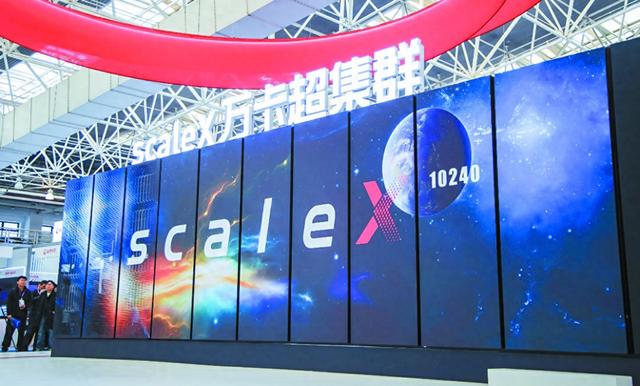
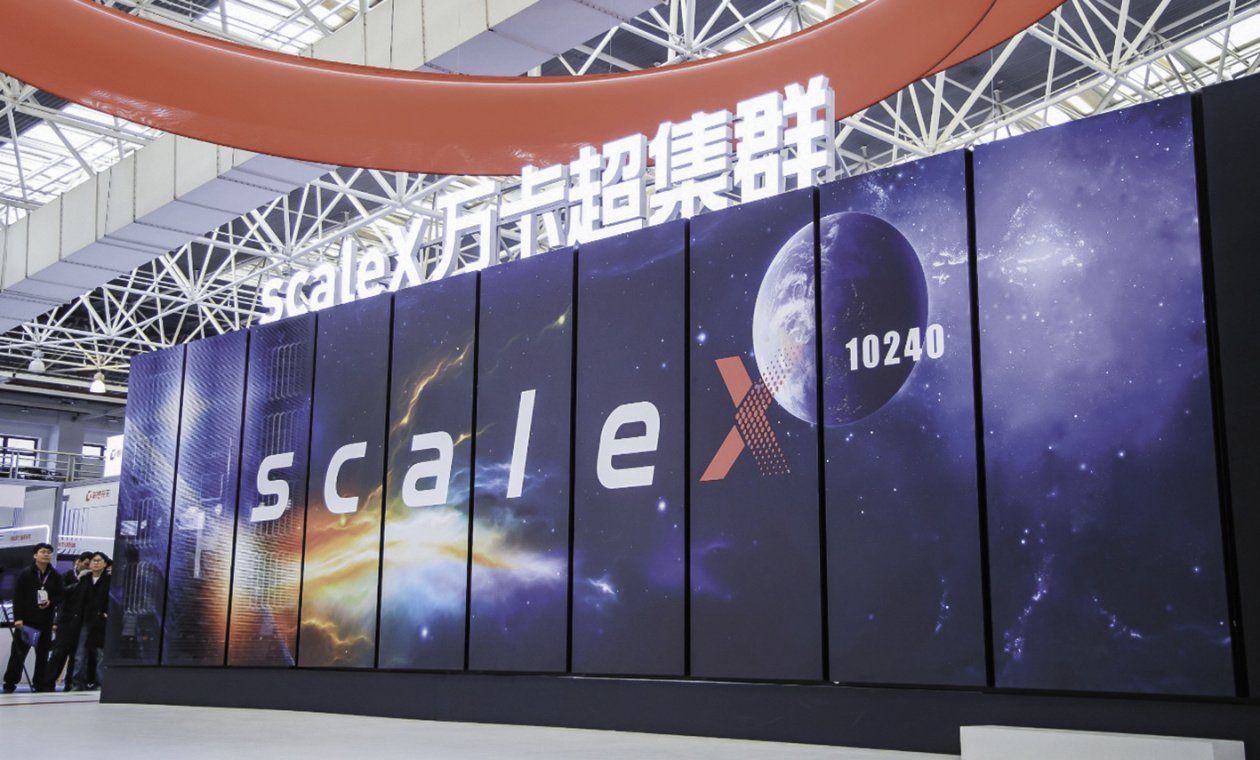
Core Insights - The core theme of HAIC2025 is the importance of "open computing" in driving AI industry collaboration and overcoming existing challenges in the Chinese AI sector [3]. Group 1: AI Development and Challenges - AI is becoming a core engine for new productivity, but traditional scaling methods are insufficient for sustaining rapid AI iteration [2]. - The Chinese AI industry faces two main challenges: breaking through the computing power bottleneck and achieving inclusive computing power [3]. - The current closed systems are expensive, and there is a mismatch in supply and demand for computing resources, which hinders the development of small and medium enterprises [3]. Group 2: Technological Innovations - The scaleX supercluster, designed for trillion-parameter models and complex tasks, was showcased at HAIC2025, featuring innovations in architecture and performance [4]. - The scaleX supercluster has achieved a 20-fold increase in computing density per cabinet and supports multiple brands of AI acceleration cards, significantly lowering overall ownership costs [4]. Group 3: Strategic Collaborations - Strategic partnerships were formed during HAIC2025, including collaborations between SenseTime, Daxiao Robotics, and Inspur to advance world models on domestic computing platforms [5]. - The new Kairos 3.0 world model supports complex scene modeling and interaction generation, demonstrating deep compatibility with the scaleX supercluster [5]. Group 4: Future Directions in AI - Future AI development is characterized by "two supers," "one openness," and "two integrations," emphasizing the need for high-density computing and open ecosystems [5]. - The AI supercluster represents a promising direction, overcoming traditional communication bottlenecks and enhancing computational efficiency [5]. Group 5: AI+ Applications - HAIC2025 highlighted numerous successful AI+ applications, including the launch of the world's first multimodal language model focused on geographic sciences [6]. - Examples of AI+ applications include the use of AI in the rapid iteration of domestic electric vehicles and smart road systems in Gansu province for traffic management [6].


《环球时报》记者探访2025人工智能创新大会:AI下一程,从“单点突围”到“生态共进”
Huan Qiu Wang· 2025-12-18 22:49
Core Insights - Artificial Intelligence (AI) is becoming the core engine driving the development of new productive forces, but traditional scaling methods are no longer sufficient for maintaining rapid iteration in AI technology [1] - The key paths for advancing AI technology and industrial upgrading in China are collaboration and integration [2] Industry Developments - China is promoting "AI+" at the national strategic level, aiming for a comprehensive layout in response to rapid technological advancements [2] - The AI+ model, driven by large models, has permeated nearly all industries within a few years, but faces challenges such as high-end computing power shortages and high application costs [2][3] - The HAIC2025 conference emphasized "open computing" to combine the advantages of various AI industry chain enterprises, moving from isolated technological breakthroughs to collaborative industrial ecosystems [2][3] Technological Innovations - The scaleX supercluster, designed for trillion-parameter models and complex tasks, was showcased at HAIC2025, achieving a 20-fold increase in computing density per cabinet and significantly lowering overall ownership costs [4] - The supercluster supports multiple brands of AI acceleration cards and is compatible with mainstream computing ecosystems [4] Future Directions - The future of AI development is characterized by "two supers," "one openness," and "two integrations," focusing on ultra-node and ultra-density computing, open ecosystems, and the integration of various computing resources [6][7] - AI superclusters are seen as a promising direction, overcoming traditional communication bottlenecks and enhancing computational efficiency [7] Practical Applications - The HAIC2025 conference highlighted numerous successful AI+ applications, including the world's first multimodal language model focused on geographic science, which addresses global change and sustainable development issues [8] - Examples of AI+ applications include the rapid iteration of domestic electric vehicles, supported by AI computing in design and testing, and the "5G+ smart highway" project in Gansu province, which utilizes AI for traffic management [8]
商汤科技、大晓机器人与中科曙光战略签约,聚焦具身智能全栈国产化
Xin Lang Cai Jing· 2025-12-18 09:52
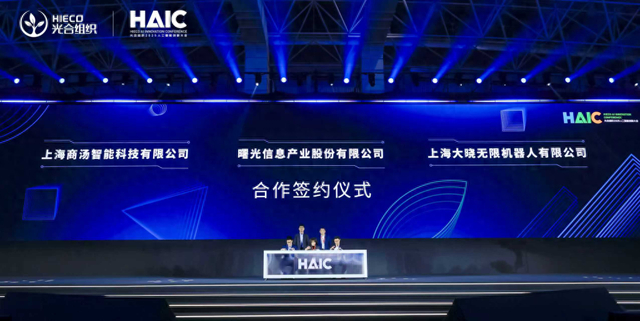
Core Insights - A strategic partnership has been established among SenseTime, Daxiao Robotics, and Zhongke Shuguang to advance domestic AI infrastructure and embodied intelligence technologies [1] Group 1: Strategic Collaboration - The collaboration focuses on leveraging SenseTime's multimodal base models and spatial intelligence technology, combined with Daxiao Robotics' expertise in world models, and Zhongke Shuguang's capabilities in domestic computing power and "super node + super cluster" systems [1] - The three parties aim to enhance the efficient training and inference of world models on domestic computing platforms, promoting an integrated ecosystem of "computing infrastructure + world models + embodied intelligence" [1] Group 2: Product Development - Daxiao Robotics, led by co-founder Wang Xiaogang, unveiled the new generation "Kairos 3.0" world model, which supports scene modeling and interactive generation in multi-perspective, long-sequence, and complex dynamic environments [1] - The new model has been deeply adapted to Zhongke Shuguang's scaleX ten-thousand-card super cluster products [1] Group 3: Comprehensive Solutions - The partnership will also focus on creating comprehensive solutions for embodied intelligence technology development aimed at robotics manufacturers, covering key aspects such as model development, computing support, and engineering deployment [1]