
开源鸿蒙AI PC

Search documents
软通动力“无力”?第三季度PC出货量逆市跌13%
Xi Niu Cai Jing· 2025-12-05 09:25
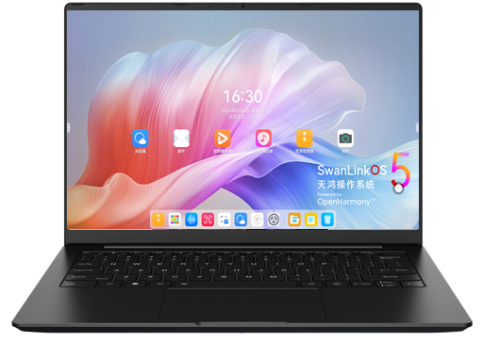
Market Overview - According to Omdia's latest report, the total shipment volume of the Chinese PC market is expected to reach 11.3 million units in Q3 2025, representing a year-on-year growth of 2% [2][3]. Company Performance - Lenovo maintains its leading position with a market share of 39% and a growth rate of 14% in Q3 2025 [3][4]. - Huawei's PC shipments decreased by 7% year-on-year, but the launch of its HarmonyOS PC is anticipated to redefine market dynamics in the medium to long term [4]. - SOTU Power, which includes brands like Mechanical Revolution and Tongfang, experienced a significant decline in shipments, down 13% year-on-year, making it the only major brand to see a double-digit drop [4][6]. - In Q1 2025, SOTU Power had a remarkable growth rate of 111%, surpassing Apple and HP in shipments, but this momentum did not continue into Q3 [5]. Financial Performance - SOTU Power reported total revenue of 25.38 billion yuan for the first three quarters of 2025, but its net profit was only 98.89 million yuan, indicating a mismatch between revenue and profitability [6]. - The company faced cash flow issues, with a net cash flow from operating activities of -1.61 billion yuan and a net cash flow from investing activities of -1.5 billion yuan [6][8]. - As of September 30, SOTU Power's inventory reached 6.36 billion yuan, a 54.4% increase year-on-year, while accounts receivable stood at 6.46 billion yuan, tying up significant capital [6][8]. Product Strategy - SOTU Power has transitioned into hardware manufacturing after integrating Tongfang's computer-related business, creating a dual-driven model of "software services + hardware manufacturing" [8][9]. - The company has launched several products, including AI PCs and open-source Harmony AI PCs, and established an AI PC research institute to tackle core technologies, although these efforts have yet to translate into competitive market strength [9].


持续突破!软通动力以开源鸿蒙之力筑牢数字经济底座
Quan Jing Wang· 2025-05-09 05:19
Core Viewpoint - The autonomous control of basic software and hardware has become a core support of national technology strategy, with the open-source HarmonyOS breaking technical barriers and empowering the safe and high-quality development of digital China [1] Group 1: AI Empowerment and Open Source HarmonyOS - The company focuses on integrating AI technology with open-source HarmonyOS, contributing over 1 million lines of code to the OpenHarmony community and investing more than 800 person-months in community development [2] - The launch of SwanlinkOS SDK by Honghu Wanlian promotes modular and customizable development of the technology architecture [2] - A project for integrating AI in various industries such as mining, transportation, and education has been initiated in collaboration with educational institutions and enterprises [2] Group 2: Full-Stack Capability Enhancement - The company plans to launch the open-source HarmonyOS AI PC and smart interactive tablets in 2024, with a focus on enhancing user experience through continuous R&D investment [3] - Collaboration with Huawei aims to develop an industry application ecosystem for the open-source HarmonyOS AI PC, providing end-to-end product and service capabilities [3] - Solutions for multi-screen collaboration and the integration of Deepseek large model applications have been developed to support the education sector [3] Group 3: Accelerated Application Scenarios and Scale Effects - In the residential service sector, 12,000 social security self-service terminals have been deployed, setting a benchmark for digital services [7] - The company has launched the WeOS open-source HarmonyOS industrial operating system and development toolchain to accelerate the adaptation of industrial equipment [7] - Recognition for a transportation project highlights the successful engineering application of open-source HarmonyOS [7] Group 4: Collaborative Innovation Ecosystem - The company has established partnerships with universities and industry leaders to create a collaborative ecosystem for open-source HarmonyOS, focusing on talent cultivation and industry standards [8] - The establishment of an industrial operating system laboratory with partners aims to enhance product technical support [8] - Future plans include deepening the integration of AI and operating systems, contributing to the development of China's autonomous operating systems and core technologies [8]
软通动力(301236):营收高增长,鸿蒙+机器人贡献长期成长动力
Bank of China Securities· 2025-05-03 13:45
Investment Rating - The report maintains an "Accumulate" rating for the company [1][6] Core Views - In 2024, the company achieved significant revenue growth of 78.13%, reaching RMB 31.316 billion, while the net profit attributable to shareholders decreased by 66.21% to RMB 180 million. The long-term growth drivers are expected to come from the HarmonyOS and robotics sectors [1][6][9] - The company is positioned to benefit from the expanding market for AI PCs and humanoid robots, with a forecasted revenue growth of 11.4% in 2025 and 14.2% in 2026 [6][9] Summary by Sections Financial Performance - In 2024, the company reported a revenue of RMB 31.316 billion, a year-on-year increase of 78.13%. However, the net profit attributable to shareholders was RMB 180 million, down 66.21% from the previous year [1][9] - The company's gross margin for 2024 was 12.46%, a decrease of 6.80 percentage points year-on-year, and the net profit margin was 0.58%, down 2.46 percentage points [9] Revenue Projections - Revenue projections for 2025-2027 are RMB 34.882 billion, RMB 39.847 billion, and RMB 45.771 billion, respectively, with corresponding net profits of RMB 393 million, RMB 570 million, and RMB 703 million [6][8] Market Position and Growth Opportunities - The company is expected to gain from the transition to AI PCs, with a projected 40% of global PC shipments being AI PCs by 2025. The company's PC shipments are expected to grow by 106% in 2024, increasing its market share to 9% [9] - The humanoid robot market in China is projected to reach RMB 750 billion by 2029, with the company actively developing related products and partnerships [9]