彭博终端

Search documents
预告 | 2026年4月彭博终端用户专享课程
彭博Bloomberg· 2026-04-01 06:04
Group 1 - The article highlights the launch of new Bloomberg fixed income product series seminars starting from January 2026, aimed at providing in-depth experience with various fixed income products on the terminal [4] - The seminars are designed to assist both new and experienced terminal users in systematically learning and mastering Bloomberg's fixed income functionalities [5] - Future courses will cover topics such as bond analysis, foreign exchange, equities, commodities, derivatives, and quantitative applications [5][6] Group 2 - A new series of industry research and equity product seminars is introduced to help users analyze industry research and equity products on the Bloomberg terminal [6] - The seminars will cater to both beginners and advanced users, focusing on the advanced functionalities of the terminal in different industry research and equity products [6] - Upcoming sessions include fundamental analysis tools and insights into healthcare and innovative pharmaceuticals [9][10] Group 3 - The article outlines a series of basic courses for Bloomberg terminal users, aimed at enhancing understanding of commonly used functionalities [7] - Specific courses include an introduction to Bloomberg Excel API for data retrieval and charting tools [7] - The schedule includes various specialized sessions on credit bond analysis, options, multi-asset risk management, and investment portfolio performance analysis [8][12] Group 4 - The article provides a detailed schedule of upcoming seminars, including topics on precious metals market insights, macroeconomic analysis, and the use of Bloomberg economic models [15] - The seminars are structured to provide comprehensive training and insights into the macroeconomic landscape and its impact on various markets [15]

香港家族办公室的发展新阶段:能力与资本并重
彭博Bloomberg· 2026-03-30 06:04
Core Insights - The Hong Kong family office industry has rapidly developed due to a series of policy advantages, transforming into a significant global investment and operational hub for family offices [1] - The focus is shifting from mere "quantity growth" to creating a sustainable and deep ecosystem that supports long-term investment needs [1] - Key components of this ecosystem include a strong talent pool, quality governance frameworks, comprehensive professional services, and advanced technological infrastructure to support investment decisions [1] Investment Trends - Over 90% of surveyed family offices view Hong Kong as a primary investment region, reflecting a trend towards diversifying investment strategies amid geopolitical uncertainties [2] - Family offices are increasing allocations to private markets and virtual assets, moving beyond traditional stock investments [2] - The demand for risk management tools, professional services, and advisory support is rising significantly due to evolving investment needs [2] Institutionalization of Family Offices - "Institutionalization" is becoming a critical milestone for the next phase of family office development, transitioning from family-led investment tools to resilient, institutionalized investment entities [3] - Establishing a clear decision-making framework is essential for ensuring consistency, transparency, and accountability in investment processes [3] - A more institutionalized family office sector can enhance overall market transparency and operational efficiency, boosting Hong Kong's attractiveness as an international wealth and asset management hub [3] Technological Empowerment - The availability of technological support for family offices is greater than ever, with AI-driven research tools and real-time risk monitoring systems reshaping investment and operational processes [5] - The effectiveness of technology relies heavily on the quality and reliability of underlying data, which is crucial for the success of the institutionalization process [5] - There is a persistent demand for hybrid talent that combines professional skills, judgment, and adaptability to manage complex family needs, which remains in short supply [5] Future Outlook - Hong Kong's core competitive advantages include international connectivity, diverse professional services, and a coherent regulatory environment, making it a gateway for wealthy families to access mainland China [6] - Continuous investment in consulting capabilities, talent education, and platforms for industry collaboration is necessary to maintain growth momentum [6] - The ability to provide clear governance structures, robust succession frameworks, and advanced investment and risk management processes will determine Hong Kong's long-term competitiveness [6]

AI,正在“杀死”哪些软件?
虎嗅APP· 2026-03-27 00:16
Group 1 - The core viewpoint of the article is that AI is significantly accelerating its impact on the software industry, leading to a potential reshaping of traditional software roles and functionalities [5][6]. - AI tools are increasingly replacing standard software functions, with companies like OpenAI and Anthropic enhancing their capabilities in various professional fields, indicating a shift towards AI as a primary execution tool [6][7]. - The development costs and timelines for software are being compressed due to AI programming tools, which can reduce development time from weeks to days, thus decreasing the scarcity of software itself [6][11]. Group 2 - The first category of software most affected by AI includes those that provide "general functions," which are often standardized and can be easily integrated into AI tools, making them vulnerable to replacement [14][15]. - The second category consists of software with "interactive attributes," which may be harder to replace, but those that can be described in simple language are at risk [17][18]. - Examples of software at high risk of being replaced include coding tools like Sublime Text and office applications like ProcessOn and Youdao Cloud Note, as AI programming assistants gain popularity [18][19]. Group 3 - Software companies are exploring three main transformation paths in response to AI's impact: shifting from tool provision to delivering results, embedding within AI ecosystems, and redesigning their business models around AI [24][25][26]. - The first path involves integrating AI capabilities into business processes to provide customized solutions rather than just tools [25]. - The second path focuses on becoming specialized service providers for AI models, potentially being called upon frequently by larger AI platforms [26]. - The third path is a more comprehensive transformation, embedding AI throughout the company's operations, which poses higher demands on technical capabilities and industry understanding [29].

彭博看大宗 | 黄金VS原油:伊朗冲突的两种情景
彭博Bloomberg· 2026-03-25 06:07
Core Viewpoint - The article discusses the contrasting trends of gold and oil prices amid the Iran conflict, suggesting that gold may act as a leading indicator while oil prices are supported by the risk of prolonged conflict. Both assets face significant "buy high, sell low" risks by 2026 [3][8]. Group 1: Gold and Oil Price Trends - Since the outbreak of the Iran conflict until March 18, gold prices have dropped nearly 10%, while oil prices surged approximately 50%, indicating a potential shift in market dynamics [3]. - Gold prices reached a premium of 2.2 times its 60-month moving average by the end of February, the highest level since 1980, suggesting a potential peak [4]. - The gold-to-oil ratio peaked in January, with 1 ounce of gold exchanging for about 50 barrels of WTI crude oil by March 18, down from 79 barrels on February 27, indicating a significant reversal potential [6]. Group 2: Market Signals and Predictions - The S&P 500 index relative to U.S. GDP is at a historical high, with CPI hovering below 3%, suggesting a potential normalization towards 0% [4]. - By 2026, gold may face downward pressure if the Strait of Hormuz returns to safe navigation, potentially dropping to around $4,000 per ounce, while oil prices may also encounter similar resistance [8]. - Historical patterns indicate that Brent crude oil prices reaching $120 per barrel often lead to declines towards $40, raising concerns about a potential global energy crisis and economic recession [10].

【播客】谁也别想动我的彭博终端
Datayes· 2026-03-18 13:05
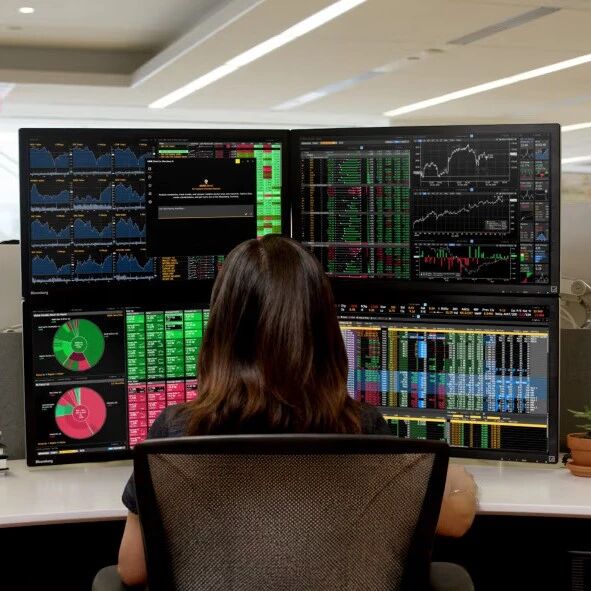
Core Viewpoint - The article discusses the intense competition between the tech sector and Wall Street regarding the potential of AI tools to challenge the Bloomberg Terminal, which is valued at $30,000, with proponents claiming that tools like Perplexity can replicate its functionality at a significantly lower cost [1] Group 1: Technology vs. Finance - Tech supporters argue that AI tools can provide similar services to the Bloomberg Terminal at a fraction of the cost [1] - Financial professionals express skepticism about the capabilities of AI tools compared to the established Bloomberg Terminal [1] Group 2: Importance of Bloomberg Terminal - The Bloomberg Terminal is essential for traders and investment research teams, used for tracking and analyzing asset prices, executing trades, and communicating with clients and peers through its "Instant Bloomberg" feature [1] - Users have developed a deep connection with the Bloomberg Terminal, with some spending more time on it than with their spouses, highlighting its significance in their professional lives [1]
预告 | 2026年3月彭博终端用户专享课程
彭博Bloomberg· 2026-03-03 02:48
Core Insights - The article highlights the launch of a new series of fixed income product seminars by Bloomberg starting in January 2026, aimed at enhancing user experience with various fixed income products on the Bloomberg terminal [4][5]. Training Programs - The seminars are designed to assist both novice and experienced Bloomberg terminal users in mastering the functionalities related to fixed income products, including advanced features for seasoned users [5][6]. - Upcoming courses include topics such as bond analysis, foreign exchange, equity markets, and portfolio management, scheduled throughout March 2026 [10][11]. Course Schedule - Specific sessions include: - "Investment Portfolio Creation and Analysis" on March 10, 2026 [10] - "Introduction to Bloomberg Terminal Government Bond Futures" on March 11, 2026 [10] - "Introduction to Foreign Exchange and Derivatives Analysis Tools" on March 5, 2026 [11] - "Fund Screening and Analysis Workflow" on March 19, 2026 [10] User Engagement - The article encourages non-terminal users to engage with Bloomberg by scanning a QR code for demonstrations of terminal functionalities and applications [13].
当 AI 敲开华尔街的大门:Perplexity 与彭博终端的秩序之战
美股研究社· 2026-02-27 10:23
Core Viewpoint - The emergence of AI capabilities, exemplified by Perplexity AI, poses a significant challenge to the traditional financial information order established by Bloomberg Terminal, allowing users to access financial data and analysis without the need for expensive systems or specialized training [1][7]. Group 1: The Challenge to Traditional Financial Systems - Perplexity AI's demonstration indicates a shift from complex command-based systems to user-friendly natural language interfaces, fundamentally altering how financial data is accessed and analyzed [7]. - Bloomberg Terminal, a symbol of financial identity and information fortress, generates over $10 billion annually from subscriptions, with around 350,000 terminals in use globally [3][6]. - The high pricing of Bloomberg services is not due to the difficulty of obtaining data but rather the deep moat created by its data integration, analytical tools, and exclusive trading network [6]. Group 2: The Impact of AI on Information Access - AI models can now structure and analyze financial data in real-time, significantly lowering the cost of information access and democratizing financial analysis [7][11]. - The traditional SaaS model of financial terminals, which relies on high switching costs and a closed ecosystem, is being challenged by AI applications that offer low marginal costs and widespread distribution [9][11]. - The shift towards AI-generated insights raises questions about compliance and accountability in financial decision-making, as the responsibility for AI-generated recommendations remains unclear [11]. Group 3: Future of Financial Data Companies - The valuation models of financial data companies are under scrutiny as the cost of information distribution approaches zero, challenging the sustainability of high subscription fees [11][15]. - The control over cognitive frameworks is crucial; whoever controls the AI models influences how users perceive market information, which could shape market consensus [11][15]. - The true competitive advantage for Wall Street lies not just in data but in speed, network, and trust, which AI may not easily replicate [13]. Group 4: The Evolving Landscape of Financial Services - The transition to AI in finance suggests a re-evaluation of the roles of traditional financial institutions, which may need to shift from providing information to offering deeper insights and execution services [15]. - The next decade may see a paradigm shift from a "data-driven" to a "model-driven" era, where the efficiency of AI models becomes the key differentiator in the financial landscape [15]. - While the existing order may not collapse overnight, it is being gradually disrupted, necessitating adaptation from those who rely on traditional systems [15].


十年垂直软件研发经验:我对行业抛售潮的看法
阿尔法工场研究院· 2026-02-24 04:05
Core Viewpoint - The software and services sector has experienced a significant market decline, with nearly $1 trillion in market value lost in recent weeks, highlighting the volatility and potential risks in the industry [1][2]. Group 1: Market Dynamics - The S&P 500 Software and Services Index has seen a 20% decline this year, with companies like FactSet and S&P Global experiencing substantial market value losses of 60% and 30% respectively [1]. - The market sell-off is characterized as panic selling, with the underlying causes linked to the disruptive impact of large language models (LLMs) on traditional vertical software [2][36]. Group 2: Competitive Barriers - There are ten competitive barriers supporting vertical software, with LLMs systematically undermining some while reinforcing others [2][3]. - The barriers include learned interfaces, business logic, public data access, talent scarcity, bundling, proprietary data, regulatory lock-in, network effects, transaction embedding, and system of record [3]. Group 3: Impact of Large Language Models - LLMs have fundamentally disrupted learned interfaces, which were previously a significant barrier due to the extensive training required to master complex software [4][7]. - The traditional business logic embedded in vertical software is being simplified into easily understandable formats, allowing for rapid development and deployment of functionalities that previously took years to establish [10][12]. - Public data access has become commoditized, as LLMs can now interpret and extract information from complex documents without the need for specialized software [16][18]. Group 4: Talent and Development - The scarcity of talent, which was a barrier to entry in vertical software development, has been reversed by LLMs, allowing industry experts to directly translate their knowledge into software functionalities without needing extensive programming skills [19][20]. - The development process has been streamlined, with complex coding tasks being replaced by simpler documentation formats that can be created in a fraction of the time [14][15]. Group 5: Future of Vertical Software - The future of vertical software is uncertain, with the potential for increased competition as LLMs lower the barriers to entry, allowing more players to enter the market [34][37]. - Companies that possess proprietary data or regulatory advantages are likely to maintain their competitive edge, while those relying on public data may face significant challenges [24][26]. Group 6: Industry Transformation - The transformation in the industry is not instantaneous but rather a gradual shift, with existing contracts and customer relationships providing some stability in the short term [36][39]. - The emergence of general-purpose platforms, such as Microsoft’s Copilot, poses a significant threat to traditional vertical software by enabling functionalities that were previously exclusive to specialized software [40][41].


香港中文大学团队问鼎彭博全球交易挑战赛
彭博Bloomberg· 2026-01-30 06:05
Core Insights - The Bloomberg Global Trading Challenge saw participation from over 11,000 students across more than 396 universities globally, marking a record high for the event [7] - The team "Bear Bull" from The Chinese University of Hong Kong achieved an outstanding return of over 400%, securing the championship title [1][4] - The competition involved a total of over 72,000 trades executed during the five-week period, with each team starting with a virtual fund of $1 million [7] Group 1: Team Performance - The "Bear Bull" team, guided by Professor Haynes Yung, consisted entirely of female members and demonstrated exceptional investment strategies [1][8] - The second and third places were claimed by the "P&L" team from City University of Hong Kong and the "Worm Dragon" team from Hong Kong University of Science and Technology, respectively [3][4] Group 2: Educational Impact - The competition provided students with valuable practical experience, enhancing their market analysis skills and understanding of real-world financial environments [8] - Bloomberg Education aims to connect learners with the financial markets through immersive learning experiences and offers various online certificate courses [9][10]

预告 | 2026年2月彭博终端用户专享课程
彭博Bloomberg· 2026-01-29 07:08
Core Viewpoint - The article highlights the launch of a series of Bloomberg terminal training sessions focused on fixed income products, aimed at both beginners and advanced users, to enhance their understanding and application of various financial tools and market analysis [4][5]. Group 1: Training Sessions Overview - A new series of fixed income product seminars will begin in January 2026, providing in-depth experiences with various fixed income products on the Bloomberg terminal [4]. - The training sessions are designed to help new users systematically learn about Bloomberg terminal's fixed income functionalities and assist experienced users in mastering advanced features for different fixed income products [5][6]. Group 2: Upcoming Courses - Upcoming courses include: - Basic tools for terminal users, focusing on customizing personal workspaces [6]. - Liquidity analysis tools for fixed income products scheduled for February 10 [7]. - Stock valuation tools and global macroeconomic data analysis tools are also part of the curriculum [8]. Group 3: Course Schedule - A detailed schedule for February includes: - Introduction to floating rate bond functionalities on February 3 [9]. - Global macroeconomic data analysis tools on February 12 [9]. - Stock valuation tools on February 26 and a seminar on MBS market outlook on February 27 [9].