微型日经225指数期货合约

Search documents
日本股市和日元汇率走势背离
Qi Huo Ri Bao Wang· 2026-01-22 01:53
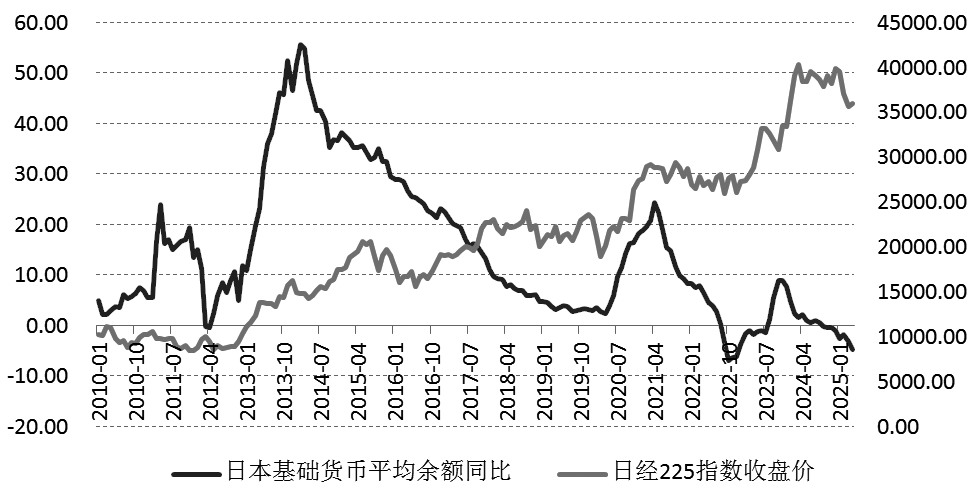
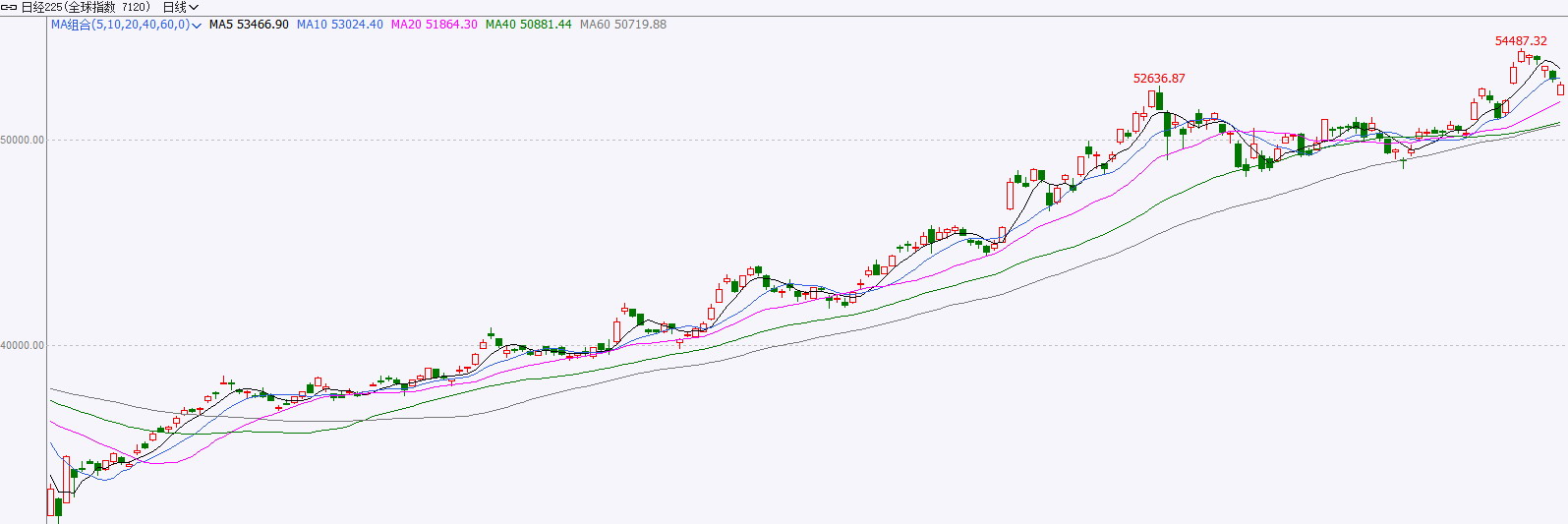
Group 1 - The Japanese stock market has been performing strongly, with the Nikkei 225 index reaching a historical high of 54,487.32 points on January 14, 2026, while the yen has depreciated against the dollar, with the exchange rate peaking at 159.46, reflecting a nearly 1% decline since the end of the previous year [1] - The rise in the Japanese stock market is not driven by economic fundamentals, as the economy remains weak, evidenced by a 1.8% year-on-year decline in real GDP in Q3 2025, marking a return to negative growth since Q1 2024 [2] - Factors contributing to the stock market's rise include continued liquidity, the Bank of Japan's asset purchase program, and increased foreign investment, with overseas investors holding a record 32.4% of Japanese stocks in FY2024 [3][5] Group 2 - The yen's depreciation is attributed to inflationary pressures and expansionary fiscal policies, which have raised concerns about debt sustainability, with government debt projected to be around 263% of GDP in 2025 [7][8] - The Bank of Japan's low interest rates, despite recent increases, and the ongoing asset purchase program have made the stock market attractive to both domestic and international investors [3][5] - The structural issues facing the Japanese economy, including weak domestic demand and shrinking exports due to U.S. tariffs, contrast sharply with the stock market's performance, indicating a lack of stability [2][10]

关税冲击叠加流动性收紧 日本股市下行风险加大
Qi Huo Ri Bao Wang· 2025-05-22 01:00
Economic Challenges - Japan's economy faced two major challenges: weak consumer market performance and export impacts due to tariffs [2][8] - In Q1 2025, Japan's GDP contracted by 0.2% quarter-on-quarter, marking the first decline since Q2 2024, with annualized GDP shrinking by 0.7% [2] - Private consumption remained flat in Q1, contributing only 0.1 percentage points to GDP growth, while net exports negatively impacted GDP growth by 3.3 percentage points due to a 0.6% decline in exports [2][3] Inflation and Consumer Spending - High inflation has led to stagnation in consumer spending, with the GDP deflator index rising by 3.3% year-on-year in Q1, surpassing the previous year's 3.1% [2] - Despite a 4.3% increase in employee compensation in Q1, real disposable income for households fell by 2.5% year-on-year, marking the third consecutive month of negative growth [3] Export and Tariff Impacts - The appreciation of the yen and U.S. tariffs have significantly impacted Japan's exports, with a reported 8.2% appreciation against the dollar as of May 20 [3][4] - In March, Japan's export growth slowed to 5.6% year-on-year, down from 9% the previous year, indicating a decline in export performance [3] Automotive Industry and Tariffs - The U.S. imposed a 25% tariff on key automotive parts, which could severely affect Japan's automotive industry, a critical sector contributing 50% of manufacturing output and 30% of total exports [4] - Estimates suggest that U.S. tariffs could reduce Japan's GDP by 0.59% and lead to a potential profit loss of nearly $30 billion in the automotive sector [4] Monetary Policy and Market Conditions - The Bank of Japan is in a difficult position, needing to balance interest rate normalization with the risk of further economic suppression and currency depreciation [5] - As of May 10, the Bank of Japan's total assets decreased by 3.6% year-on-year, indicating tightening liquidity conditions [5][7] Bond Market and Liquidity Issues - Japan's bond market is experiencing significant sell-offs due to tariff impacts and quantitative tightening, leading to liquidity pressures [7] - The auction for 20-year government bonds on May 20 was the worst since 2012, with a bid-to-cover ratio dropping to 2.5 times, reflecting market concerns [7] Overall Market Outlook - Japan's economy is under pressure from weak consumption and tariff impacts, with the potential for significant risks in the stock market [8] - Investors may consider using micro Nikkei 225 index futures to hedge against these risks in the current economic climate [8]