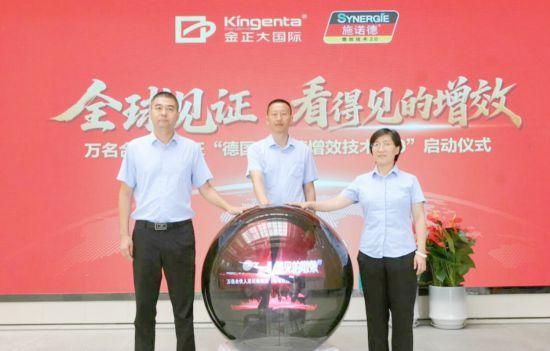
德国施诺德增效技术2.0

Search documents
金正大集团:以“中国方案”助世界粮安
Zhong Guo Hua Gong Bao· 2025-12-31 09:13
Core Viewpoint - The article highlights the significant contributions of Jinzhengdai Group in enhancing China's food security through innovative agricultural technologies, particularly in the field of controlled-release fertilizers, and its commitment to global agricultural sustainability [1][2][3]. Group 1: Achievements and Innovations - Jinzhengdai Group has been awarded the National Technology Invention Award for its project on "Green Bio-based Materials Coating Controlled-release Fertilizers," marking its third national technology award [2]. - The controlled-release fertilizer technology developed by Jinzhengdai is recognized as internationally leading, addressing issues such as fertilizer resource waste and soil quality decline [2][3]. - The company has achieved significant advancements in bio-based materials for fertilizers, which offer better performance and lower costs compared to traditional petrochemical materials, resulting in crop yield increases of over 5% and fertilizer savings of 15%-20% [3]. Group 2: Research and Development - Jinzhengdai has established a comprehensive R&D system with multiple national research platforms, focusing on soil health and nutrient efficiency [4]. - The company has received 63 provincial and ministerial-level scientific awards and holds 392 patents, including 283 invention patents, demonstrating its strong commitment to innovation [5]. - The introduction of the "Germany Schnorr Efficiency Technology 2.0" aims to enhance fertilizer efficiency and promote sustainable agricultural practices [10][11]. Group 3: Global Expansion - Jinzhengdai has initiated a global promotion of its controlled-release fertilizer technology, establishing a model factory in the Netherlands, marking a significant milestone in exporting Chinese agricultural technology [6][7]. - The company has signed strategic agreements with partners in Southeast Asia and Europe, showcasing its commitment to international collaboration and technology sharing [7][8]. - Jinzhengdai's participation in the FAO Global Partnership Conference highlights its role as a representative of Chinese agricultural technology on the global stage [8][9]. Group 4: Future Outlook - The company aims to continue its mission of enhancing agricultural efficiency and farmer income while contributing to global food security and sustainable agricultural development [12]. - Jinzhengdai emphasizes the importance of open collaboration and resource integration to accelerate innovation and improve competitiveness in the agricultural sector [9][12].

金正大集团:以“中国方案”助世界粮安
Zhong Guo Hua Gong Bao· 2025-12-31 07:18
Core Viewpoint - The article emphasizes the critical role of food security in China's national prosperity and the significant contributions of Jinzhengdai Group in enhancing agricultural productivity through innovative fertilizer technologies, particularly during the 14th Five-Year Plan period [1][5][23]. Group 1: Achievements and Innovations - Jinzhengdai Group has been recognized three times with national science and technology awards, highlighting its leadership in the fertilizer industry and its successful export of proprietary fertilizer technology to Europe [5][11]. - The company has developed a bio-based membrane controlled-release fertilizer technology that addresses global challenges in fertilizer resource waste and soil quality decline, achieving international leading standards [5][7]. - The new bio-based controlled-release fertilizers can increase crop yields by over 5% and reduce fertilizer usage by 15%-20% compared to traditional petrochemical-based fertilizers [7][8]. Group 2: Global Expansion and Collaboration - Jinzhengdai Group has initiated a global promotion of its controlled-release fertilizer technology, establishing a model factory in the Netherlands and expanding into Southeast Asia [13][14]. - The company has formed strategic partnerships with agricultural enterprises in Indonesia and other regions to enhance its market presence and share its innovative technologies [14][15]. - Jinzhengdai Group has been recognized by the FAO for its contributions to global food security and has actively participated in international forums to share its agricultural technology advancements [15][18]. Group 3: Research and Development - The company has established a comprehensive R&D system, including multiple research institutes and laboratories, and has accumulated numerous awards and patents in the field of fertilizer technology [8][9]. - Jinzhengdai Group collaborates with international research institutions, such as the German Schnoor Institute, to integrate advanced agricultural technologies into the Chinese market [20][25]. - The introduction of the German Schnoor efficiency technology 2.0 is expected to significantly enhance fertilizer efficiency and contribute to sustainable agricultural practices [21][22]. Group 4: Future Outlook - Jinzhengdai Group aims to continue its mission of enhancing agricultural efficiency and farmer income while ensuring national food security and promoting sustainable agricultural development [23].

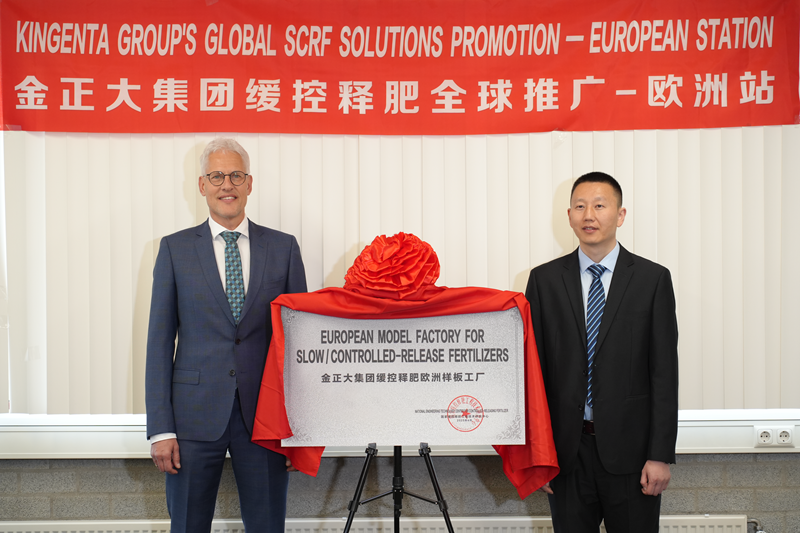
德国施诺德增效技术2.0全面发力,硬核赋能氮肥产业绿色转型
新华网财经· 2025-12-19 09:28
Core Viewpoint - The introduction of the German Schnorr Efficiency Technology 2.0 by Jinzhe Group marks a significant advancement in China's nitrogen fertilizer industry, aiming to break the long-standing price competition and promote high-quality development through technology and ecological priorities [2][9]. Group 1: Industry Challenges - The domestic nitrogen fertilizer industry faces dual challenges: structural overcapacity and low nitrogen utilization rates, with production capacity expected to reach 73.8 million tons by 2025, while effective market demand is only around 65.5 million tons, leading to a supply-demand imbalance [5][6]. - Traditional nitrogen utilization rates in China range from 30% to 42.6%, significantly lower than developed countries, resulting in over 60% of nitrogen being wasted, which exacerbates agricultural costs and environmental issues [5][6]. Group 2: Need for Transformation - The industry must transition from a focus on cost competition to value creation to unlock broader development opportunities [6]. - The shift from price competition to value enhancement is not optional but essential for survival, as highlighted by the increasing demand for high-quality, efficient, and environmentally friendly nitrogen fertilizers, which is growing at over 15% annually [7]. Group 3: Technological Advancements - The German Schnorr Efficiency Technology 2.0, introduced by Jinzhe Group, enhances nitrogen fertilizer efficiency, potentially increasing utilization rates to over 65%, while reducing fertilizer application and agricultural production costs [9][11]. - This technology aligns with the long-term goals of green, low-carbon, and efficient development in the nitrogen fertilizer industry, addressing issues of soil degradation and environmental pollution [9][16]. Group 4: Strategic Collaborations - Strategic partnerships have been formed between Jinzhe Group, Mingquan Group, and Hebei Dongguang Chemical, focusing on the large-scale application of the new technology through a shared model that includes capacity, technology, marketing, and data [13][14]. - The collaboration aims to create a "technology + capacity + market" synergy, leveraging the strengths of each partner to drive innovation and market penetration [14][24]. Group 5: Future Outlook - The implementation of the Schnorr Efficiency Technology 2.0 is expected to resolve the overcapacity issue in the nitrogen fertilizer industry and enhance agricultural production efficiency, addressing long-standing problems of low utilization and environmental pollution [16][24]. - This model not only capitalizes on China's production scale and complete industrial chain but also offers a replicable solution for nitrogen fertilizer industry upgrades in developing countries [24].

德国施诺德增效技术2.0落地中国 推动氮肥产业绿色升级
Ren Min Wang· 2025-12-18 08:57
Core Viewpoint - The collaboration between Jinzhe Group and leading domestic urea producers aims to promote the application of German Schneider's efficiency-enhancing technology in the nitrogen fertilizer sector, addressing industry challenges such as overcapacity and environmental pressures [1][2]. Industry Challenges - The nitrogen fertilizer industry, particularly urea, faces significant challenges including overcapacity and stringent environmental policies, making transformation essential for survival [2][4]. - Over the past three years, over ten strict environmental policies have been implemented, leading to the elimination of outdated production capacity, while the demand for high-quality, environmentally friendly nitrogen fertilizers has been growing at an annual rate exceeding 15% [2][4]. Technological Innovation - The German Schneider efficiency-enhancing technology 2.0 focuses on controlling nitrogen release rates to better match crop nutrient needs, potentially increasing nitrogen utilization rates to over 65% [4]. - This technology aims to achieve dual goals of "reducing input while increasing efficiency and protecting soil while increasing income" [4]. Strategic Collaboration - Jinzhe Group plans to deepen cooperation with Mingquan Group through a "five-sharing" model, which includes sharing capacity, technology, market solutions, digital communication, and demonstration data [4]. - The collaboration forms a synergistic combination of "technology + capacity + market," with Schneider providing core technology, Jinzhe leveraging market and agricultural service advantages, and Dongguang Chemical focusing on industrial production transformation [4]. Industry Transformation - The collaboration signifies a shift in the competitive focus from price and scale to technological content, product quality, and ecological value, which may alleviate current overcapacity pressures in the nitrogen fertilizer industry [7]. - This model provides a reference framework for the green upgrade of traditional industries in China and other developing countries [7].
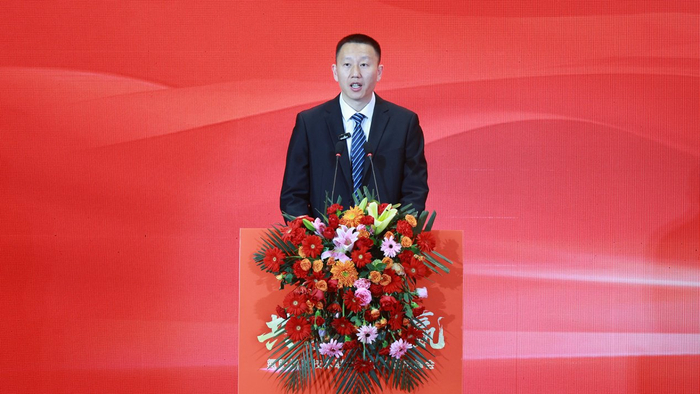
德国施诺德增效技术2.0落地中国 推动氮肥产业绿色升级
Ren Min Wang· 2025-12-18 08:41
Core Insights - The conference "Shared Win: Nitrogen Fertilizer Efficiency Technology Joint Cooperation and Application Summit" was held in Tai'an, Shandong, where Jinzhe Group signed strategic cooperation agreements with leading domestic urea producers to promote the application of German Schnorr's efficiency technology 2.0 in the nitrogen fertilizer sector, addressing industry challenges of overcapacity and environmental pressures [1][2] Industry Challenges - The nitrogen fertilizer industry, particularly urea, faces significant challenges, including internal price pressures from overcapacity and external constraints from strict environmental policies. The industry must transition to survive, as highlighted by the China Nitrogen Fertilizer Industry Association [2] - Over the past three years, more than ten stringent environmental policies have been implemented, leading to the elimination of outdated production capacity. The demand for high-quality, environmentally friendly nitrogen fertilizers is growing at an annual rate exceeding 15% [2] Technological Advancements - The German Schnorr efficiency technology 2.0 aims to enhance nitrogen utilization efficiency to over 65% by controlling the release rate of nitrogen to better match crop nutrient needs throughout their growth cycles. This technology is expected to achieve both reduced input costs and increased yields while minimizing environmental impact [5] - Jinzhe Group's president emphasized the potential for significant upgrades in basic fertilizers through advanced technology, which can help farmers lower costs and increase profits [5] Collaborative Efforts - The collaboration involves a "five-sharing" model, where partners share production capacity, technology, market solutions, digital communication, and demonstration data. Mingquan Group plans to add 5 million tons of large particle urea capacity within three years [5] - The partnership creates a synergistic combination of technology, production capacity, and market access, with each company playing a specific role: Schnorr provides core technology, Jinzhe Group offers market and agricultural services, and Dongguang Chemical focuses on industrial production [5] Strategic Implications - This collaboration represents a transformative model centered on technology, shifting the competitive focus from price and scale to technological content, product quality, and ecological value. It aims to alleviate overcapacity pressures in the nitrogen fertilizer industry and serves as a reference framework for green upgrades in traditional industries in China and other developing countries [7]
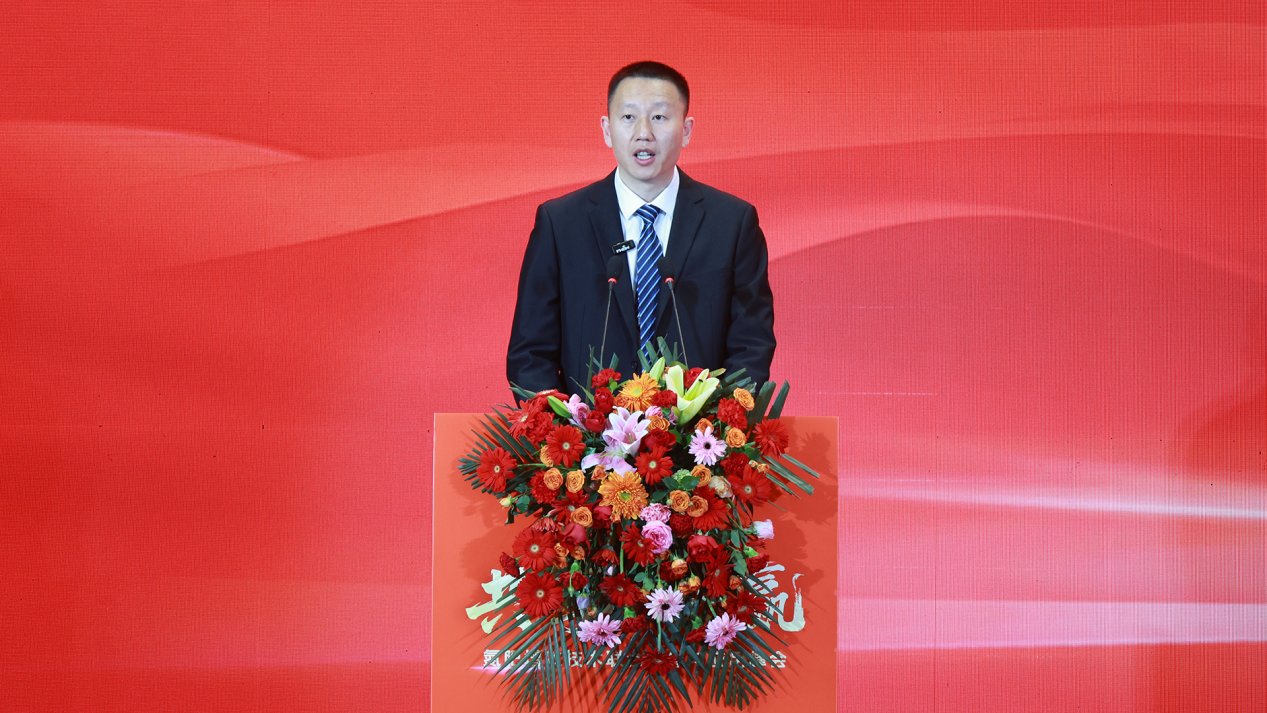
整合全球农业科技资源 金正大护航粮食安全再发力
Ren Min Wang· 2025-12-02 07:40
Core Viewpoint - The fertilizer industry is entering a critical period of continuous innovation and rapid development over the next decade, with global collaboration and integration becoming mainstream [1]. Group 1: Industry Trends - The conference focused on global agricultural development and discussed how to leverage cutting-edge agricultural technology to drive industry transformation and enhance food security [3]. - The fertilizer industry faces urgent tasks for transformation and upgrading, as highlighted by the Secretary-General of the China Phosphate and Compound Fertilizer Industry Association, emphasizing the need for product innovation and a shift towards service-oriented production [3]. Group 2: Technological Advancements - The bio-based coated slow-release fertilizer technology led by the company is set to gain recognition from the Food and Agriculture Organization of the United Nations by 2025, supporting agricultural quality and efficiency in China [5]. - The latest 2.0 enhancement technology from the German Schnoor Institute incorporates unique nutrient leakage prevention, plant vaccines, and microbial activation, improving fertilizer efficiency while reducing agricultural production costs [5]. Group 3: Future Directions - The agricultural sector is transitioning from "experience-based fertilization" to "precision nutrition," with enhanced and functional fertilizers identified as key directions for market demand and industry transformation [6]. - The company plans to promote integrated technological solutions through platforms like the FAO, utilizing experimental demonstrations and digital methods [6]. - The company aims to implement the strategy of "storing grain in the land and technology," leveraging 27 years of technological accumulation and industry practice to contribute to global food security and green agricultural development [6].
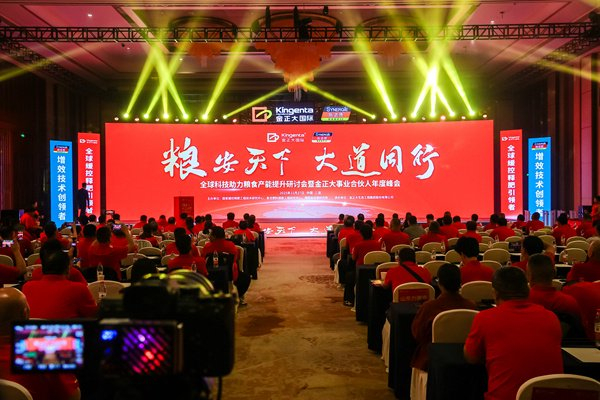
金正大携手万名合伙人共同启动“德国施诺德增效技术2.0”全球示范田建设活动
Ren Min Wang· 2025-08-28 18:17
Core Viewpoint - The company is launching the "German Schneider Efficiency Technology 2.0" globally, aiming to enhance agricultural productivity through innovative fertilizer solutions and partnerships with global stakeholders [1][3][5]. Group 1: Launch Event - On August 26, the company held an online event to kick off the global demonstration of "German Schneider Efficiency Technology 2.0" with over 18,000 partners [1][3]. - The event was part of the company's 27th anniversary celebration, emphasizing the commitment to agricultural innovation and collaboration [1][3]. Group 2: Strategic Initiatives - The company has been actively pursuing a "go out, bring in" strategy, focusing on international expansion of slow-release fertilizers [3]. - Significant milestones include the establishment of an overseas slow-release fertilizer factory in the Netherlands and partnerships in Indonesia and Southeast Asia [3]. Group 3: Technology and Impact - The upgraded "Efficiency Technology 2.0" promises more stable and pronounced effects, with crop yield increases ranging from 15% to 30% across various crops [4]. - The technology employs unique nutrient retention, plant vaccine, and microbial activation techniques to enhance fertilizer efficiency and reduce environmental impact [4]. Group 4: Future Plans - The company plans to provide free trial products to partners and will upgrade all its brands and products in the second half of the year [4]. - Future initiatives include the construction of millions of acres of demonstration fields globally, reinforcing the commitment to sustainable agricultural practices [5].