
快手圈圈

Search documents
快手圈圈,能圈住“附近”的生意吗?
3 6 Ke· 2026-01-27 12:54
Core Insights - The competition in the local lifestyle sector remains intense, with major internet platforms like Alibaba, Douyin, and Kuaishou actively engaging in various strategies to capture market share [1][2][6][10] Market Overview - The O2O market in China is projected to reach 33,076.1 billion yuan in 2024, growing by 18.7% year-on-year, with home services accounting for 17,718.6 billion yuan and in-store services for 15,357.5 billion yuan [1] - By 2028, the O2O market is expected to exceed 59,000 billion yuan [1] Company Strategies - Kuaishou has launched the "Kuaishou Circle" app, focusing on local services such as recruitment and home services, aiming to leverage its existing user base [2][14] - Kuaishou's local lifestyle division has seen significant growth, with GMV increasing 25 times and buyer numbers growing 23 times in 2023 [8] - Douyin continues to expand its market share in local services, reporting a 59% year-on-year increase in total transaction volume for 2025 [10] Competitive Landscape - Major players like JD.com and Alibaba are investing heavily in local services, with JD.com committing 1 billion yuan to enhance home services and Alibaba upgrading its local service offerings through AI technology [1][17] - The competition has shifted from merely acquiring traffic to focusing on service depth and ecosystem breadth, indicating a strategic pivot in the industry [22][23] Organizational Changes - Kuaishou has restructured its local lifestyle division, integrating it with its commercial and e-commerce teams to enhance operational efficiency and focus on service delivery [11][13] - The leadership change aims to streamline business objectives and improve collaboration across departments [11] Future Trends - The local lifestyle sector is witnessing a resurgence as companies explore previously overlooked service areas, such as recruitment and home services, which were once deemed low-margin and high-effort [15][22] - The evolution of local services is expected to redefine how digital platforms interact with real-world needs, emphasizing the importance of trust and service quality [23][24]


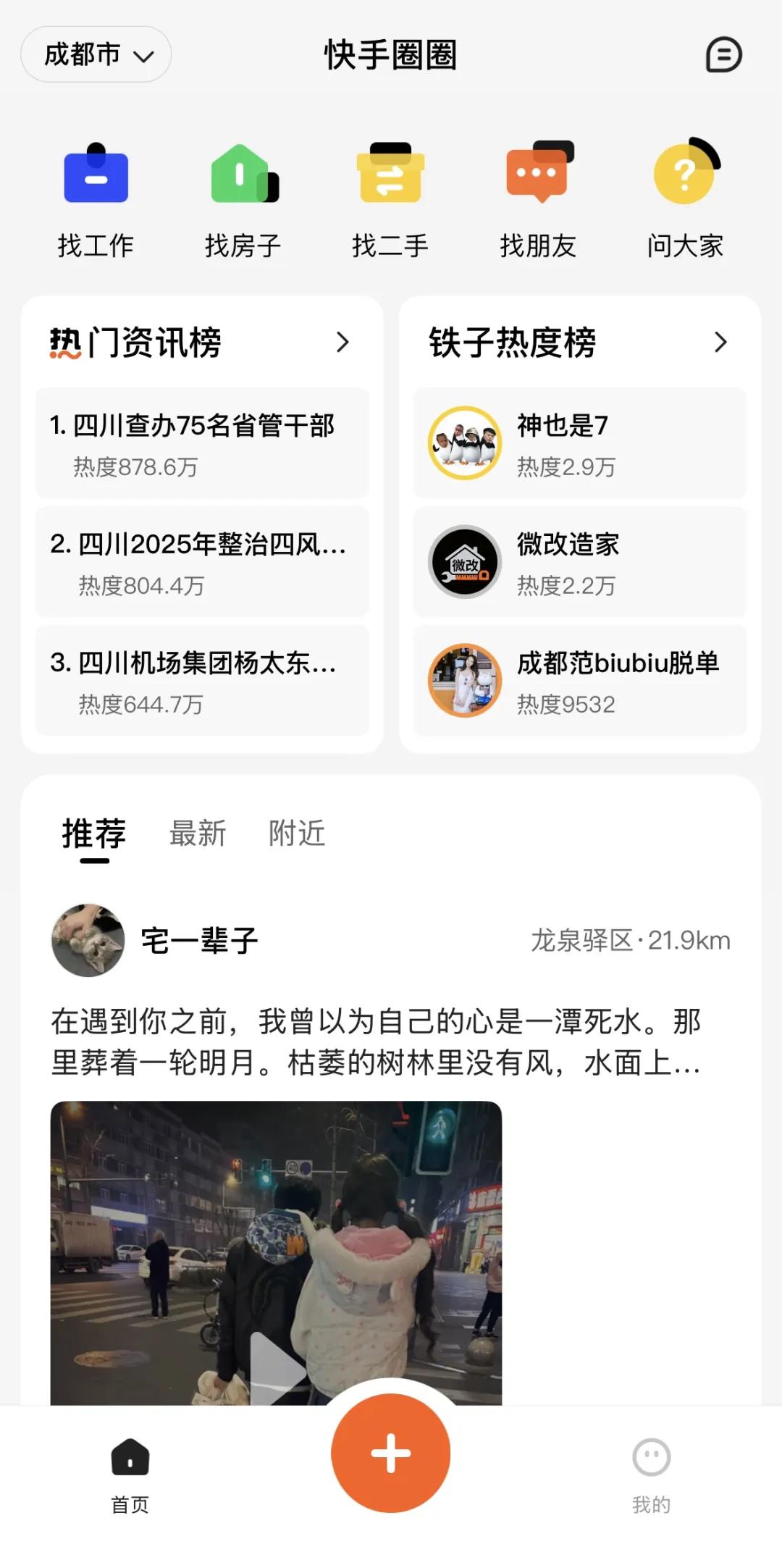
快手将推出“圈圈”App, 滴滴上线家政搬家入口,大厂抢食58同城
3 6 Ke· 2026-01-14 00:27
Core Insights - Kuaishou is set to launch a new app called "Kuaishou Circle," which will serve as a life service information platform, focusing on services such as recruitment and home services, akin to 58.com [1][4] - Didi has also entered the life services sector by adding independent sections for home services and moving services within its Didi Chuxing app, indicating a deeper engagement in this market [1][5] Industry Trends - The local life service market is expanding beyond traditional group buying and food delivery, with major players like Kuaishou, Didi, Meituan, Douyin, and JD.com intensifying their efforts in this space [2][3] - The competition is shifting from merely acquiring traffic to enhancing service capabilities and ecosystem collaboration, as the market for local life services is projected to be worth trillions [14][15] Competitive Landscape - Kuaishou and Didi are accelerating their entry into the local life service market, leveraging their existing user bases and operational experiences to explore new growth engines [4][5] - Didi's strategy includes offering competitive pricing for cleaning services and utilizing its ride-hailing drivers for additional service roles, which may lead to challenges in service quality and standardization [10][12] Challenges and Opportunities - The local life service sector faces significant challenges, including the need for service standardization and quality control, as exemplified by the struggles of 58.com [11][13] - Companies like JD.com are attempting to address these issues through direct control over service quality and training, contrasting with the third-party model adopted by many competitors [12][13] Market Dynamics - The competition in the local life service market is becoming increasingly complex, with new entrants like Kuaishou and Didi joining established players, leading to a more fragmented landscape [3][14] - The focus on lower-tier cities is growing, with data indicating that online penetration rates for local life services in new tier cities are outpacing those in first-tier cities [15][16]
