快手超市

Search documents
快手布局线下商超,电商“老五”开始反击?
3 6 Ke· 2025-11-18 00:34
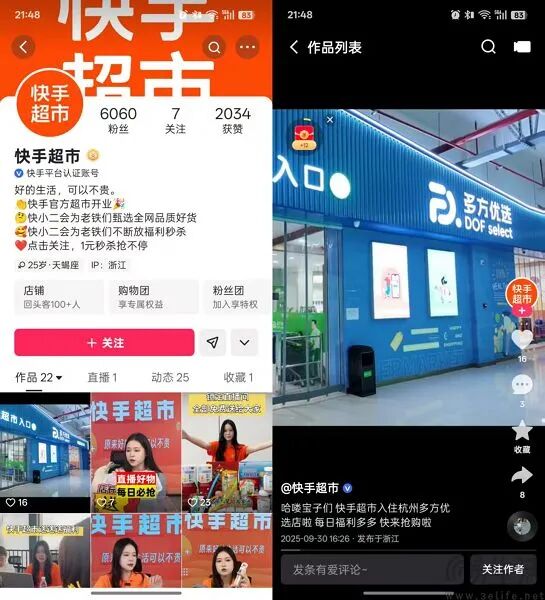
Core Insights - Kuaishou Supermarket has officially entered the Zhejiang local chain supermarket market through a "store-in-store" model, marking its offline debut just 11 months before launching its self-operated e-commerce business in October 2024. This move reflects the company's response to the challenges faced by the e-commerce sector, particularly the saturation of online growth and increasing regulatory pressures [1] Group 1: Industry Trends - The Chinese e-commerce market has solidified into a competitive landscape dominated by four major players: Alibaba, JD.com, Pinduoduo, and Douyin, with Kuaishou ranking fifth and facing a widening gap. The decline in online traffic growth and rising customer acquisition costs have made traditional "traffic + low price" models unsustainable [2] - Major platforms are shifting focus to offline strategies, with Meituan launching its own discount supermarket, Alibaba upgrading its Hema stores, and JD.com adopting a large store model. This shift is driven by the realization that online traffic has peaked and offline efficiency is becoming crucial [2][4] Group 2: Growth Challenges - Kuaishou's GMV growth has significantly slowed, dropping from 78% in 2021 to an expected 12% in the first half of 2025, which is well below the industry average. The company's reliance on a "white label" product expansion model is facing scrutiny due to regulatory investigations into false marketing and product quality issues [5] - The AI business, seen as a potential growth avenue, has underperformed, generating only 250 million yuan in Q2 2025 while incurring 3.4 billion yuan in R&D expenses. This financial strain highlights the company's weak profitability and the need for offline retail as a viable option for cash flow [6] - Frequent organizational changes and strategic adjustments have led to a lack of coherent execution in Kuaishou's e-commerce strategy, further complicating its entry into the offline market [8] Group 3: Offline Strategy - The "store-in-store" model adopted by Kuaishou in collaboration with Multi-Party Selection allows for a low-risk entry into offline retail by leveraging existing local supply chains and customer bases without incurring heavy operational costs [10] - However, this model presents challenges in brand recognition and scalability, as it relies heavily on the partner's store network, which may limit Kuaishou's long-term strategic autonomy [10][11] Group 4: Future Outlook - Kuaishou's offline expansion faces significant challenges, including established competitors with first-mover advantages and a lack of operational experience in offline retail. The company must overcome its supply chain weaknesses and regulatory risks to succeed [13] - Despite these challenges, there are opportunities in the untapped lower-tier markets and potential collaborations with local supermarkets to create a unique ecosystem that combines online and offline resources [14] - The success of Kuaishou's offline strategy will depend on its ability to enhance its brand, build a regional supply chain, and integrate online content with offline retail effectively [15]


将超市开到线下,快手也在寻求新的增量
3 6 Ke· 2025-11-03 12:57
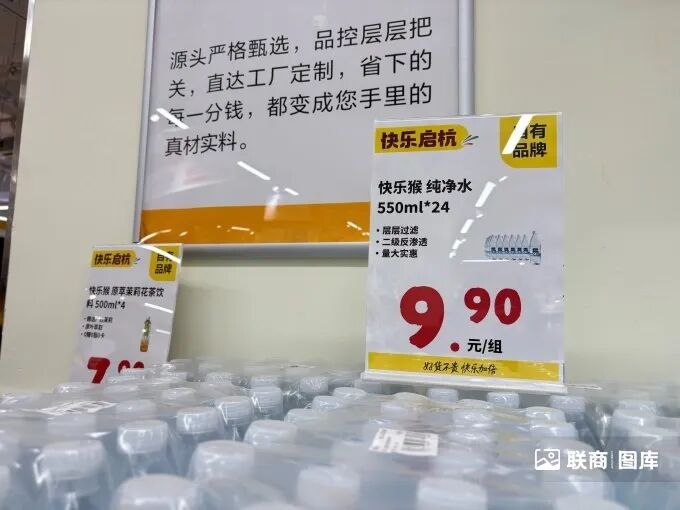
Core Viewpoint - Kuaishou is expanding into offline retail to seek growth amidst declining e-commerce performance and increasing competition from major players like Alibaba and JD.com [1][3] E-commerce Performance - Kuaishou's GMV growth has slowed from 78% in 2021 to 17% in 2024 [3] - The company is under investigation for violations of e-commerce laws, highlighting issues like false marketing and counterfeit products [3] - Kuaishou's AI business, seen as a new growth avenue, generated only 250 million yuan in Q2 2025, accounting for less than 1% of total revenue [3] Offline Retail Strategy - Kuaishou's entry into offline retail appears to be a response to competitive pressures rather than a confident expansion [4] - Unlike competitors who have established various offline formats, Kuaishou has primarily relied on third-party products without building its own brand [6][8] - The company has opted for partnerships with supermarkets rather than launching its own discount retail brand, indicating a cautious approach [8] Market Dynamics - Kuaishou's local life services have seen significant growth, with GMV in new tier cities increasing by over 220% [9] - The company is focusing on new tier cities, where it has a greater impact compared to higher-tier cities [9] Competitive Landscape - Competitors like Alibaba and JD.com have developed integrated online and offline ecosystems, while Kuaishou has yet to establish a strong presence in instant retail [8] - Kuaishou's "store-in-store" model may reduce exploration costs but could also affect its brand perception [8] Conclusion - Kuaishou faces significant challenges in its offline retail strategy, needing to navigate competitive pressures and internal limitations to achieve sustainable growth [11]