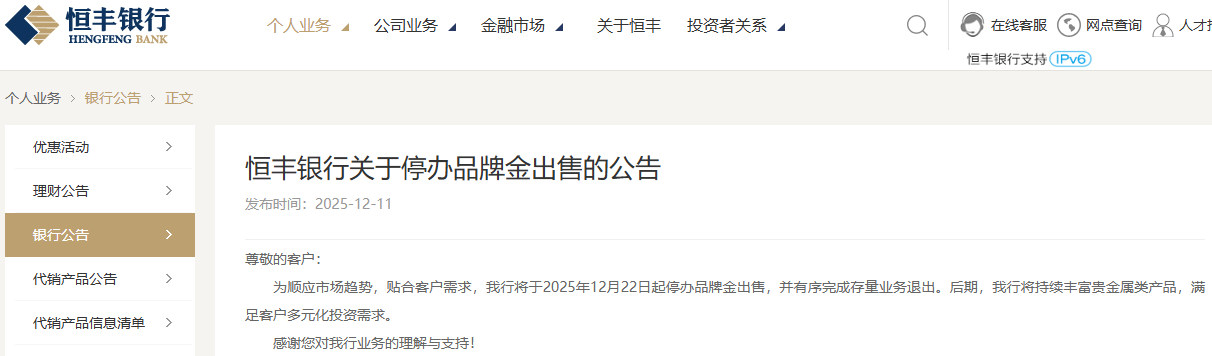
恒裕金

Search documents
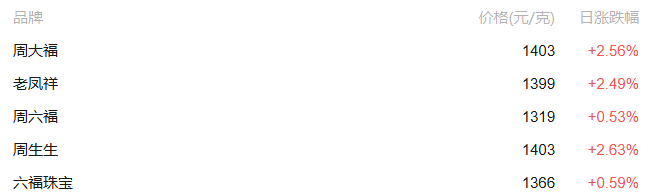
金价爆了!银行再出手
Shen Zhen Shang Bao· 2025-12-23 09:50
Core Viewpoint - The gold market is experiencing a significant surge, with prices reaching new highs, prompting banks to tighten their gold investment policies and shift focus from speculative trading to more stable investment strategies [2][4][13]. Group 1: Gold Price Trends - International gold prices have continued to rise, with the price of gold in RMB surpassing 1400 yuan per gram for the first time on December 23 [2]. - On December 23, the London spot gold price approached $4490 per ounce, breaking the previous high of $4381 per ounce at the end of October [4]. - The Shanghai Gold Exchange's spot gold price reached 1014 yuan per gram, while the main futures contract on the Shanghai Futures Exchange hit 1018 yuan per gram, both marking new highs [4]. Group 2: Bank Policy Adjustments - Banks are implementing measures such as closing "zombie accounts," halting speculative business, and raising margin requirements to tighten access to gold investments [4][10]. - Hengfeng Bank has stopped selling its branded gold bars and closed trading access for related accounts, while other banks like ICBC and China Bank have also announced similar closures for accounts with no holdings [5][7][9]. - Banks are shifting from high-risk speculative products to more stable offerings, with a focus on protecting investors and managing financial risks [9][10]. Group 3: Investment Strategy Shift - The tightening of gold investment policies is seen as a move to encourage investors to transition from short-term speculation to long-term asset allocation [10][12]. - Banks are raising the entry barriers for gold ETFs, with high minimum asset requirements for investors, effectively discouraging those with lower risk tolerance [12]. - The overall strategy reflects a response to the volatile market conditions and aims to promote a more rational approach to gold investment, emphasizing value over speculation [13][14].

黄金税收新政显效,恒丰银行首度退出自营品牌金销售
Huan Qiu Wang· 2025-12-15 09:15
Core Viewpoint - The new gold tax policy implemented at the end of October 2023 is significantly impacting the gold market, leading to strategic adjustments by banks in their gold sales operations [1][2] Group 1: Regulatory Changes - Hengfeng Bank announced it will cease its "Hengyu Gold" brand sales starting December 22, 2023, marking the first bank to exit self-branded gold sales under the new regulatory environment [1] - The Ministry of Finance and the State Taxation Administration issued a notice that strictly differentiates between investment and non-investment gold, imposing high compliance requirements on trading members [1] - The new policy increases the complexity and risk of internal accounting and usage declaration for banks, with severe penalties for non-compliance, including the suspension of tax benefits [1] Group 2: Market Dynamics - There is a structural change in market demand, with a shift towards more convenient and cost-effective gold investment products like gold ETFs and paper gold, despite rising gold prices [2] - The design costs, inventory requirements, and slow turnover of self-branded gold products pose significant risks, especially under high price volatility, leading to potential inventory devaluation [2] - The new tax policy favors non-physical gold products by exempting them from VAT for transactions without physical delivery, further diminishing the commercial viability of physical gold [2] Group 3: Strategic Adjustments - The exit of Hengfeng Bank may signal a broader trend among smaller banks facing operational pressures in self-branded gold sales, potentially leading to more exits in the future [2] - Banks are transitioning from self-selling physical gold to a "light asset" model, focusing on promoting standardized products like gold ETFs and accumulation gold, thus evolving from product sellers to asset allocation service providers [2]