护理服务

Search documents
新春走基层|泰州姜堰:“晒晒”护理院老人的幸福“年”
Xin Lang Cai Jing· 2026-02-15 13:49
Core Viewpoint - The article highlights the warm and festive atmosphere at the Taizhou Shencheng Qinhuh Nursing Home, where staff and volunteers engage with elderly residents to celebrate the upcoming Lunar New Year, emphasizing the importance of care and community for the elderly [2][3][5][6]. Group 1: Activities and Engagement - The nursing home organized various activities for the elderly, including health exercises led by social workers, arts and crafts, and traditional games, creating a lively and engaging environment [3][5]. - Residents participated in making Spring Festival decorations and enjoyed music and games, fostering a sense of community and joy among them [3][6]. Group 2: Care and Support - Caregivers at the nursing home provide comprehensive support, including daily health monitoring, personal care, and companionship, ensuring that residents feel comfortable and cared for [5][6]. - The nursing home staff, including nurses and caregivers, often sacrifice their own family time during the holidays to ensure that the elderly are not left alone, highlighting their dedication to the residents [5][6]. Group 3: Community and Family Atmosphere - The nursing home serves as a family-like environment for over 200 elderly residents, many of whom are without family, creating a supportive community where they can celebrate together [5][6]. - Residents expressed gratitude for the care they receive, feeling a sense of belonging and happiness despite their circumstances, which reflects the positive impact of the nursing home’s services [6].


健康服务在身边
Xin Lang Cai Jing· 2026-02-14 18:45
Core Viewpoint - The article highlights the implementation of the "Health Door Knocking" initiative by a local hospital, which provides personalized home medical and nursing services for elderly individuals who are high-risk, disabled, or have mobility issues, thereby improving access to healthcare for senior citizens [1]. Group 1 - The initiative aims to offer systematic and personalized medical services to elderly residents, particularly those who face challenges in accessing healthcare facilities [1]. - The program has been positively received by elderly individuals, as it allows them to receive medical attention without the need to travel to hospitals [1]. - The hospital's medical staff are responsive and provide timely home visits to address the healthcare needs of the elderly [1].
精研医术践初心 恪尽职守担使命
Xin Lang Cai Jing· 2025-12-25 22:30
Core Viewpoint - Tianjin Kanghui Hospital has been awarded the title of "Pioneer of Public Welfare Responsibility in the New Era," highlighting its commitment to public service and its exemplary role as a private medical institution [1] Group 1: Service Excellence - The hospital emphasizes a "patient-first" service core, featuring ten well-planned "one-stop service centers" to ensure patients can complete all necessary processes within fifty meters of the consultation room [2] - The hospital aims to be a service benchmark in the private medical sector, encapsulating its service philosophy in actionable guidelines: "10 meters of attention, 3 meters of greeting, 1 meter of help" [2] Group 2: Home Care Services - To address the challenges faced by disabled and semi-disabled individuals in home care, the hospital has formed specialized nursing teams and launched an online nursing service platform, allowing professional care to be delivered directly to patients' homes [3] Group 3: Academic and Professional Development - The hospital fosters a strong academic atmosphere, regularly hosting high-level seminars and case discussions to enhance clinical practice and knowledge sharing among medical professionals [4] - Talent development is a core focus, with the hospital organizing recognition events to encourage excellence and dedication among its medical staff [4] Group 4: Community Engagement and Social Responsibility - The hospital extends its social responsibility beyond its walls, conducting health lectures and screenings in communities and nursing homes, thereby promoting health awareness [6] - Since its establishment, the hospital has provided nearly 1.5 million yuan in fee reductions for veterans and other beneficiaries, demonstrating its commitment to supporting these groups [6] Group 5: Contribution to National Health Initiatives - In response to the "Healthy China" strategy, the hospital has become a key player in promoting healthcare development in western regions, offering remote consultations and training to enhance local medical capabilities [7] - The hospital's approach integrates quality, warmth, compassion, and responsibility, translating national health narratives into practical daily services [7]
日本从印度引进护工
券商中国· 2025-12-15 23:37
Group 1 - The core viewpoint of the article highlights Japan's initiative to address its aging population and caregiver shortage by training and importing nursing staff from India, with a notable increase in the number of Indian caregivers in Japan by 73% compared to the previous year [1][2]. - Japan began recruiting Indian caregivers in 2022, with approximately 300 Indian caregivers currently in the country, and plans to recruit experienced personnel from India starting in 2024, providing them with about 9 months of language and nursing skills training [1]. - The Japanese government estimates a shortage of 570,000 caregivers by the fiscal year 2040 due to population aging, indicating a significant demand for foreign caregivers [2]. Group 2 - The Japanese nursing service provider "Japan Property Insurance Nursing Company" has already assisted 6 Indian caregivers in working in Japan this year, reflecting the early stages of this recruitment initiative [1]. - Local governments in Japan, such as Shizuoka and Ibaraki, are actively organizing seminars and visits to India to enhance understanding and acceptance of Indian caregivers among local service providers and the public [1]. - Experts suggest that Japan needs to improve the overall employment environment for foreign caregivers and demonstrate stable career paths in the nursing industry to attract more talent from abroad [2].

应对老龄化 日本从印度引进护工
Xin Hua She· 2025-12-15 05:06
Core Insights - Japan has started training and importing caregivers from India to address severe aging and caregiver shortages, with approximately 300 Indian caregivers currently in Japan, marking a 73% increase from the previous year [1] Group 1: Recruitment and Training - The Japanese nursing service provider, Japan Property Insurance Nursing Company, will recruit experienced caregivers from India starting in 2024, providing about 9 months of Japanese language and caregiving skills training [1] - The company has already assisted 6 Indian caregivers in working in Japan this year [1] Group 2: Government Initiatives - The Shizuoka Prefectural Government has organized multiple seminars for local nursing service providers to enhance their understanding of Indian caregivers and promote acceptance among local residents [1] - The Ibaraki Prefectural Government has sent personnel to India to inspect local Japanese language schools and recruitment agencies [1] Group 3: Future Projections - The Japanese government estimates that due to population aging, the shortage of caregivers in Japan will reach 570,000 by the fiscal year 2040 [1] - A senior researcher from Mitsubishi UFJ Research and Consulting, Makoto Kato, believes there is significant potential in importing caregivers from India, emphasizing the need for Japan to showcase stable career paths in the caregiving industry [1]
南京新百跌2.00%,成交额2.62亿元,主力资金净流出1195.83万元
Xin Lang Cai Jing· 2025-11-14 01:55
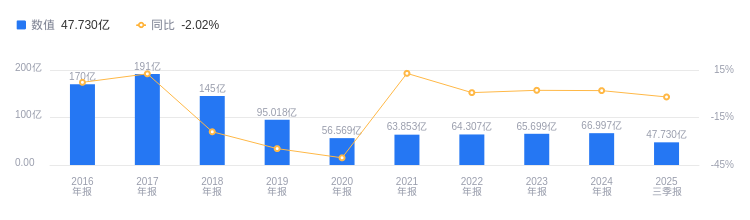
Core Viewpoint - Nanjing Xinbai's stock price has shown significant volatility, with a year-to-date increase of 28.96% and a recent decline of 2.00% on November 14, 2023, indicating potential market fluctuations and investor sentiment shifts [1][2]. Financial Performance - For the period from January to September 2025, Nanjing Xinbai reported a revenue of 4.773 billion yuan, a year-on-year decrease of 2.02%, and a net profit attributable to shareholders of 212 million yuan, down 4.14% compared to the previous year [3]. - The company has cumulatively distributed 1.117 billion yuan in dividends since its A-share listing, with 88.3827 million yuan distributed over the last three years [4]. Shareholder and Market Activity - As of September 30, 2025, the number of shareholders increased by 13.85% to 45,700, while the average circulating shares per person decreased by 12.17% to 25,485 shares [3]. - Nanjing Xinbai has appeared on the "Dragon and Tiger List" twice this year, with the most recent instance on July 24, 2023, where it recorded a net buy of -17.0404 million yuan [2]. Business Overview - Nanjing Xinbai, established on May 14, 1991, and listed on October 18, 1993, operates in various sectors including retail, healthcare, and elder care services. Its main revenue sources are health and elder care (36.97%), pharmaceutical manufacturing (23.74%), and medical services (15.26%) [2]. - The company is categorized under the comprehensive industry sector and is associated with concepts such as stem cells, gene sequencing, private hospitals, new retail, and undervalued stocks [2].

南京新百的前世今生:营收47.73亿行业第六,负债率26.47%低于行业平均,毛利率41.64%高于同类
Xin Lang Cai Jing· 2025-10-30 13:04
Core Viewpoint - Nanjing Xinbai is a leading enterprise in the commercial and health elderly care industry in China, with significant investment value due to its unique full industry chain resources [1] Group 1: Business Performance - In Q3 2025, Nanjing Xinbai achieved a revenue of 4.773 billion, ranking 6th in the industry, with the top company, Zhejiang Agricultural Shares, generating 33.084 billion [2] - The company's net profit for the same period was 285 million, placing it 4th in the industry, with the leading company, Dongyangguang, reporting 919 million [2] Group 2: Financial Ratios - As of Q3 2025, Nanjing Xinbai's debt-to-asset ratio was 26.47%, lower than the industry average of 53.00%, indicating strong solvency [3] - The gross profit margin for Q3 2025 was 41.64%, higher than the industry average of 18.56%, reflecting strong profitability [3] Group 3: Management and Shareholder Structure - The chairman, Cai Yong, has a strong educational background and extensive experience, while the president, Zhang Xuan, has maintained a stable salary of 1.06 million in 2024 [4] - As of September 30, 2025, the number of A-share shareholders increased by 13.85% to 45,700, with an average holding of 25,500 shares, a decrease of 12.17% [5]
老,无所“依”|青山资本2025年度研究报告
首席商业评论· 2025-09-16 04:16
Core Insights - The article discusses the profound and rapid aging of the population in China, highlighting the complexities and internal diversities within the elderly demographic, which is often overlooked by society and market research [4][10][18]. Group 1: Demographic Changes - The median age in developed economies has increased from 30 to 43 years over the past 50 years, with projections indicating it will reach 47 years by 2075. Emerging economies have seen a rise from 19 to 30 years [5]. - Global life expectancy has risen from 62 to 75 years in the last 50 years, with developed economies seeing an increase from 72 to 82 years [8]. - By the end of 2024, China's population aged 60 and above is expected to reach 310 million, accounting for 22% of the total population, marking the country’s entry into a deeply aging society [10]. Group 2: Aging Process and Definitions - Aging is a natural biological process experienced by nearly all animals, characterized by various physiological changes [12]. - The definition of "elderly" has evolved over time, with the World Health Organization defining elderly individuals as those aged 60 and above, while in developed countries, the age is often set at 65 [14]. Group 3: Internal Diversity of the Elderly Population - The elderly population in China is marked by significant internal diversity, with varying experiences and backgrounds leading to different consumption behaviors and needs [16][18]. - Historical events, such as the Great Chinese Famine and the Cultural Revolution, have created distinct generational experiences that influence the current elderly population's values and consumption patterns [20][21]. Group 4: Economic Disparities - There is a stark disparity in income among retirees in China, with pensions for civil servants being 28 times higher than those for rural residents [24]. - The elderly population's wealth is substantial, with the total wealth of individuals aged 60 and above in China reaching 78.4 trillion yuan, averaging 264,000 yuan per person [25]. Group 5: Consumption Patterns - The elderly consumer market is complex and multifaceted, with a significant portion of the population exhibiting low consumption levels despite the overall market potential [28][69]. - Many elderly individuals prioritize essential spending and exhibit high price sensitivity, often focusing on tangible benefits rather than abstract services [60][63]. Group 6: Digital Engagement - Approximately 52% of elderly individuals in China are internet users, indicating a significant digital divide where many remain disconnected from online resources [71]. - The COVID-19 pandemic has accelerated digital engagement among the elderly, with many being forced to learn to use smartphones for essential services [78]. Group 7: Market Opportunities - The elderly market presents a vast opportunity for businesses, but it requires a nuanced understanding of the diverse needs and preferences within this demographic [28][69]. - Companies must focus on tailored services and products that address the specific challenges faced by different segments of the elderly population, rather than adopting a one-size-fits-all approach [69].

南京新百上半年营收32.12亿元同比降1.20%,归母净利润1.66亿元同比增0.76%,毛利率下降2.71个百分点
Xin Lang Cai Jing· 2025-08-29 11:25
Core Viewpoint - Nanjing Xinbai's 2025 semi-annual report indicates a slight decline in revenue but a modest increase in net profit, highlighting mixed financial performance in the first half of the year [1][2]. Financial Performance - The company's revenue for the first half of 2025 was 3.212 billion yuan, a year-on-year decrease of 1.20% [1]. - The net profit attributable to shareholders was 166 million yuan, reflecting a year-on-year increase of 0.76% [1]. - The net profit excluding non-recurring items was 135 million yuan, showing a year-on-year decline of 23.86% [1]. - Basic earnings per share stood at 0.12 yuan [1]. Profitability Metrics - The gross profit margin for the first half of 2025 was 42.87%, down 2.71 percentage points year-on-year [2]. - The net profit margin was 6.65%, a decrease of 0.58 percentage points compared to the same period last year [2]. - In Q2 2025, the gross profit margin was 42.65%, down 4.22 percentage points year-on-year and 0.46 percentage points quarter-on-quarter [2]. - The net profit margin for Q2 2025 was 3.23%, down 0.88 percentage points year-on-year and 7.00 percentage points quarter-on-quarter [2]. Expense Management - Total operating expenses for the first half of 2025 were 951 million yuan, a decrease of 96.4 million yuan compared to the previous year [2]. - The expense ratio was 29.59%, down 2.61 percentage points year-on-year [2]. - Sales expenses decreased by 6.08%, while management expenses decreased by 15.85% [2]. - Research and development expenses increased by 3.83%, and financial expenses rose significantly by 53.88% [2]. Shareholder Information - As of the end of the first half of 2025, the total number of shareholders was 40,200, a decrease of 1,797 shareholders or 4.28% from the previous quarter [2]. - The average market value per shareholder increased from 202,200 yuan to 225,300 yuan, reflecting an increase of 11.44% [2]. Company Overview - Nanjing Xinbai, established on May 14, 1991, and listed on October 18, 1993, operates in various sectors including retail, healthcare, and elderly care [3]. - The main revenue sources are health and elderly care (31.77%), pharmaceutical manufacturing (24.30%), and professional technical services (17.41%) [3]. - The company is categorized under the comprehensive industry and is associated with concepts such as stem cells, private hospitals, and the elderly care industry [3].
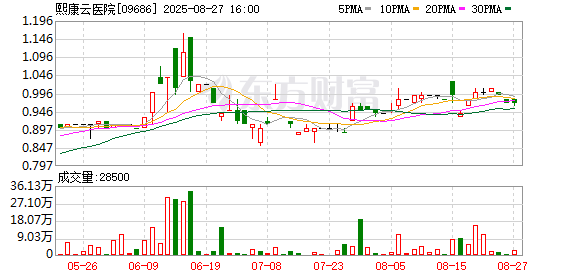
熙康云医院(9686.HK):2025年上半年营收1.79亿元,亏损同比缩窄
Zheng Quan Shi Bao Wang· 2025-08-27 14:27
Core Insights - The company reported a revenue of 179 million yuan for the first half of 2025, with a significant year-on-year growth of 41.4% in nursing services, which has become a new growth engine for the business [2] - The adjusted net loss for the period was 38.4 million yuan, representing a year-on-year reduction of 25.1% [2] Business Model and Performance - The company operates on a "city cloud hospital platform" as its core business model, with over 36,000 medical institutions connected to the platform as of June 30, 2025, including 3,303 hospitals, which is a year-on-year increase of 24.5% [2] - The number of registered doctors on the platform reached 147,000, marking an 8.0% year-on-year growth, while the number of registered nurses with over five years of clinical experience reached 145,000, showing a substantial year-on-year increase of 34.1% [2] Revenue Breakdown - In the first half of 2025, the nursing services segment generated a revenue of 34.62 million yuan, reflecting a significant year-on-year increase of 41.4% [2] - The medical services segment reported a revenue of 69.83 million yuan, as the company optimized its structure by focusing on specialized operations of internet hospitals [2] - The health management services segment achieved a revenue of 74.15 million yuan, with a year-on-year growth of 10.5% [2]