
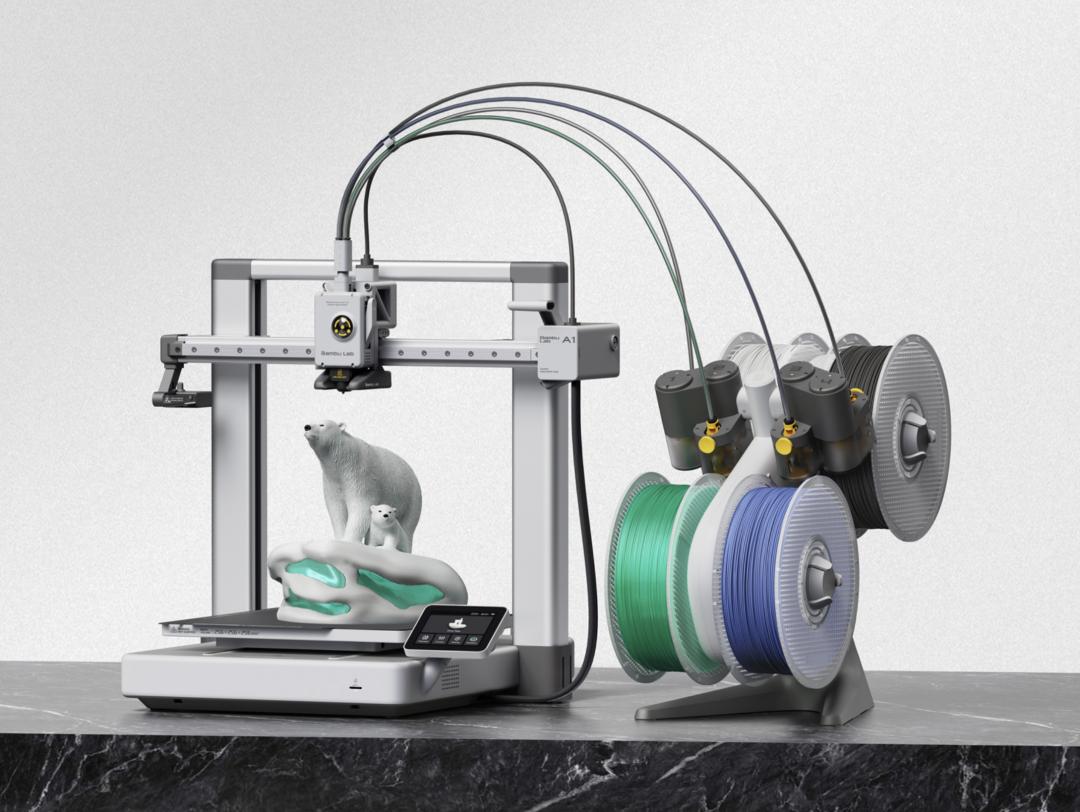
拓竹A1

Search documents
腾讯投资拓竹,3D打印市场卷疯了:大疆才是幕后超级赢家?
3 6 Ke· 2025-11-26 03:45
Core Insights - Bambu Lab, a rapidly growing company in the 3D printing sector, has achieved the highest sales in desktop 3D printers globally for three consecutive years and is valued at approximately $10 billion [1] - The global 3D printer market is projected to reach $24.61 billion in 2024, with a compound annual growth rate (CAGR) of 18.5% from 2024 to 2034 [3] - The consumer-grade 3D printer market is expected to see annual shipments grow from over 4 million units to 20 million units in the next five years, and then to 50 million units in the following five years [3] Company Overview - Bambu Lab's revenue is estimated to be around 6 billion RMB in 2024, with a shipment volume of approximately 1.2 million units, capturing about 29% of the global consumer-grade 3D printer market [1] - The company was founded by a team from DJI, which has contributed to its rapid growth and technological advancements in the 3D printing space [1][7] Market Dynamics - The competition in the consumer-grade 3D printer market is intensifying, with major players like Tencent and DJI investing in various companies, including Bambu Lab and Creality [5][12] - Bambu Lab has partnered with Tencent Cloud to integrate its 3D model platform MakerWorld with Tencent's 3D generation technology, which is seen as a key driver for market growth [3] Competitive Landscape - The "Shenzhen Four Kings" of consumer-grade 3D printers, which includes Bambu Lab, Creality, Zongwei Lifan, and Smart 3D, dominate approximately 95% of the entry-level 3D printer market [16][17] - Bambu Lab's current revenue significantly exceeds that of its competitors, with Smart 3D projected to reach 1.6 billion RMB in 2024 and 2.5 billion RMB in 2025 [13] Technological Advancements - Bambu Lab has leveraged technologies from its founders' experience at DJI, such as brushless motors and laser radar, to enhance the performance and capabilities of its 3D printers [7][9] - The integration of generative AI is lowering the barriers for users in 3D modeling, which is expected to further stimulate the growth of the 3D printing market [3] Future Outlook - The consumer-grade 3D printer market is still in its early development stages, with significant growth potential as major tech companies like Tencent and DJI continue to invest and innovate [22] - The market is being compared to the early days of the robotic vacuum cleaner industry, suggesting a potential for explosive growth in the coming years [22]


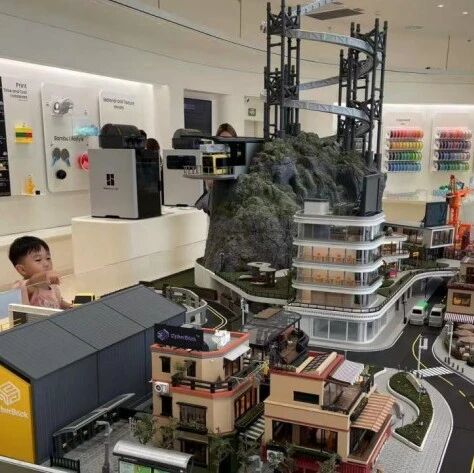
大疆离职员工,「打印」出一个百亿独角兽
创业邦· 2025-11-05 03:18
Core Insights - Bambu Lab, a Shenzhen-based tech unicorn, has captured nearly 30% of the global consumer 3D printing market within four years of its establishment, with a valuation exceeding 100 billion RMB [6][7][12] - The company’s revenue surged from 2.7 billion RMB in 2023 to 6 billion RMB in 2024, marking a year-on-year growth of approximately 33 billion RMB [7][12] - Bambu Lab's products have been recognized for their industrial-grade performance at consumer prices, gaining significant attention from influencers and media [6][12] Company Overview - Founded in 2020 by former DJI core team members, Bambu Lab aims to revolutionize the 3D printing industry, which was previously dominated by "farmers" operating multiple machines [6][10][12] - The company’s first product, the Bambu Lab X1, launched in 2022, was well-received, generating nearly 50 million RMB in crowdfunding within a month [12][13] - Bambu Lab has shifted its strategy from targeting niche enthusiasts to attracting new users by offering affordable and user-friendly 3D printers [13][14] Market Position and Growth - In 2024, Bambu Lab's sales volume reached approximately 1.2 million units, achieving a market share of 29% in the global consumer 3D printing segment [16][21] - The company benefited from government subsidies and influencer promotions, significantly boosting its domestic sales [16][21] - Bambu Lab's rapid growth has led to a substantial increase in its workforce, expanding from 139 to 571 employees between 2022 and 2024 [20][21] Technological Advancements - Bambu Lab's competitive edge lies in its innovative technology and product development, with a focus on creating high-quality, user-friendly machines [18][19] - The company has maintained a strong emphasis on product perfection before market release, contrasting with industry norms of relying on user feedback for improvements [19][20] - Bambu Lab's latest H2D printer integrates laser engraving and cutting capabilities, showcasing its technological leadership [19] Challenges and Competition - As Bambu Lab grows, it faces increasing pressure in customer service and product support, particularly as the user base expands [25][26] - The company is also encountering competition from other established players in the 3D printing market, which are launching similar products at competitive prices [26] - Legal challenges have emerged, including a patent infringement lawsuit from Stratasys, which could impact Bambu Lab's revenue in the U.S. market [26]
新消费带动 3D打印设备产量大增
Shang Hai Zheng Quan Bao· 2025-06-17 19:32
Core Viewpoint - The production of 3D printing equipment in China has seen significant growth, with a year-on-year increase of 40% in May, surpassing industrial robots and new energy vehicles, driven primarily by the rising sales of consumer-grade 3D printers domestically and internationally [1][4]. Group 1: Production Growth - In April, the production of 3D printing equipment grew by 60.7% year-on-year, while the first quarter saw a 44.9% increase [1]. - The surge in production is attributed to three main factors: the maturation of the 3D printing content ecosystem, the establishment of a scalable production model in the consumer-grade sector, and the decrease in equipment prices [1][3]. Group 2: Market Demand - The new consumption trend is driving demand for consumer-grade 3D printing devices, which are becoming essential tools for various consumer groups, including hobbyists and individual merchants [1][2]. - The popularity of the LABUBU IP figures has further fueled interest in 3D printing, with many consumers creating derivative designs using consumer-grade printers [2]. Group 3: Technological Advancements - The rapid iteration of 3D printing technology is solidifying the foundation for industry growth, with improvements in product performance and printing speed [3]. - Companies like Tuozhu Technology have consistently released new products since 2020, focusing on enhancing speed, color variety, and precision [3]. Group 4: Export Growth - The international market has become a strategic growth point for Chinese 3D printing companies, with consumer-grade devices leading the export growth [4]. - From January to April 2025, China exported 1.4 million units of 3D printing equipment, amounting to over 2.9 billion yuan, with consumer-grade devices accounting for 94% of the total export volume [4]. - The significant drop in prices for consumer-grade 3D printing devices has catalyzed their overseas sales, with average prices for exports to the U.S. around 2,100 yuan (approximately 293 USD) [4].