
消费级3D打印设备

Search documents
国金证券:AI时代个性化物理实现核心入口 2026年有望迎来iPhone时刻
智通财经网· 2026-02-26 01:45
Core Viewpoint - The report from Guojin Securities indicates that consumer-grade 3D printing is becoming a key pathway for AI to connect with the physical world, with a projected global market size of $4.1 billion by 2024 and a CAGR of 28.6% over the next five years [1] Group 1: Industry Transition and Growth - The industry is transitioning from industrial tools to consumer products, with expectations of a significant acceleration in growth by 2026, comparable to the "iPhone 4 moment" [2] - The market is experiencing structural growth, driven by the adaptation of industrial-grade technology to consumer needs, with key players addressing consumer pain points through AI modeling and automated processes [3] Group 2: Device Sector Insights - The device sector is expected to be the core growth engine, accounting for 51% of the market share, with advancements in multi-color printing and efficiency improvements anticipated to drive further adoption [1][2] - The current challenges include adapting industrial products for consumer use, with significant improvements in usability and success rates achieved through AI and closed-loop control systems [3] Group 3: Material Sector Dynamics - The material sector is seeing increased demand as the device market accelerates, with PLA being the dominant material due to its ease of use and environmental benefits [4] - The core competitive advantage in materials lies in modification technologies that enhance properties like toughness and heat resistance, which are crucial for consumer adoption [4]

爱司凯:目前没有生产可用于消费级3D打印的设备
Mei Ri Jing Ji Xin Wen· 2026-02-04 05:03
Group 1 - The company, 爱司凯, stated on February 4 that it currently does not produce equipment for consumer-grade 3D printing [2]


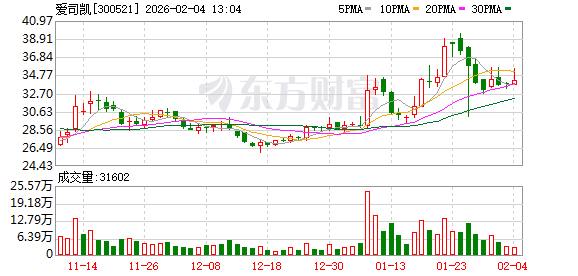
爱司凯(300521.SZ):目前没有生产可用于消费级3D打印设备
Ge Long Hui· 2026-02-04 04:02
Group 1 - The company Aisike (300521.SZ) currently does not produce equipment suitable for consumer-grade 3D printing [1]
爱司凯:目前没有生产可用于消费级3D打印设备
Jin Rong Jie· 2026-02-04 03:56
Group 1 - The company currently does not produce materials suitable for consumer-grade 3D printing devices [1]
AI浪潮下造物权革命-3D打印飞入寻常百姓家
2026-01-12 01:41
Summary of 3D Printing Industry Conference Call Industry Overview - The global 3D printing market is approximately $25 billion, equivalent to about 170 billion RMB, with a projected annual growth rate of nearly 20% from 2024 to 2034 [2][10] - The consumer-grade 3D printing market is valued at around $4 billion, representing 16% of the total 3D printing industry, and is expected to grow at a faster rate than the overall industry [2][10] Key Insights and Arguments - The consumer-grade 3D printing market is driven by improvements in product capabilities (e.g., automatic leveling, laser monitoring, AI modeling), decreasing prices (basic models below smartphone prices), and enhanced brand effects, significantly optimizing user experience and expanding the market [1][6] - The 3D printing industry value chain consists of upstream materials (20%), midstream equipment (28%), and downstream services (52%), with midstream equipment being the technological source and value center crucial for upgrading upstream and downstream [1][7] - China holds a significant position in global consumer-grade 3D printing equipment exports, with North America accounting for about 35%, Europe for about 30%, and the Asia-Pacific region for about 26% [8] Future Growth Potential - The consumer-grade 3D printing market is expected to see high growth rates, particularly in 2025, with ongoing acceleration thereafter [2][10] - By 2030, the industry is projected to reach sales levels exceeding 10 million units, similar to the 2D printer market [10] - The introduction of multi-head, multi-color 3D printing technology in 2026 is anticipated to significantly reduce waste and printing time, driving broader applications of mixed-color products [15] Notable Companies and Investment Opportunities - Companies to watch include upstream material provider Jialin Technology, midstream company Chuang 3D (expected to go public), and various emerging service providers [9][14] - The 3D printing materials market is diverse, with a strong focus on PLA, which constitutes over 50% of consumer-grade applications [11] Additional Considerations - The service sector around 3D printing technology is crucial, providing manufacturing and design solutions, with significant potential in both domestic and overseas markets [12][13] - The trend of brand materials being tied to equipment is expected to enhance user experience and product quality [11]
中金:消费级3D打印千亿市场乘风而起 产业链迎来广阔天地
智通财经网· 2025-11-25 03:51
Group 1 - The consumer-grade 3D printing market has a positive growth outlook, with a high industry concentration, where leading companies have established strong competitive barriers through multi-dimensional advantages [1][3] - The global consumer-grade 3D printing market is projected to reach USD 4.1 billion in 2024 and grow to USD 16.9 billion by 2029, with a compound annual growth rate (CAGR) of 33.0% [3] - The top five manufacturers in the global consumer-grade 3D printer market are expected to hold over 70% market share in 2024, driven by continuous investment in printing performance, user experience, material compatibility, and software ecosystem [3] Group 2 - The rise of AI technology is expected to accelerate the arrival of a "mass creation" era in 3D printing, making it a mainstream tool for personalized expression and on-demand physical customization in daily life [2] - Chinese brands are leading globally in the consumer-grade 3D printing sector, leveraging differentiated product lines, competitive pricing, and independent platforms to expand internationally [4] - The industry benefits from a complete upstream and downstream supply chain and industrial cluster effect in China, allowing for high cost-performance products that can adapt to rapid iterations and large-scale production of consumer goods [4]
国金证券:消费级3D打印或迎来行业突破
Mei Ri Jing Ji Xin Wen· 2025-10-23 00:19
Core Insights - The production characteristics of 3D printing, particularly small batch quick returns, align with the personalized and differentiated consumer demands emerging from the new consumption wave [1] - With the long-tail effect of technology becoming apparent and leading companies deepening market education, consumer-grade 3D printing may be on the verge of a breakthrough in the industry [1] Equipment Sector - 3D printing equipment is entering a critical moment for widespread adoption as consumer products [1] Material Sector - It is recommended to focus on companies that have entered or are capable of entering the supply chain of major equipment manufacturers [1]
6.18犀牛财经早报:医药主题基金迎上报高峰 韵达空包诈骗案公布结果
Xi Niu Cai Jing· 2025-06-18 01:43
Group 1 - The innovative drug sector has become a hot investment area, with approximately 30 new pharmaceutical-themed funds reported in the second quarter, matching the total for the entire year of 2024 [1] - The valuation of the pharmaceutical industry is considered high but not in a bubble phase, with potential for continued value increase as clinical data improves [1] - Dividend-themed funds are gaining traction as safe-haven investments, with several ETFs reaching record high shares, indicating their growing allocation value [1] Group 2 - Active equity funds are experiencing significant net value fluctuations, indicating that fund managers are beginning to build positions, with some funds ending their issuance early due to favorable entry points [2] - Multiple companies have announced share buyback plans, with a total buyback amount of 71.71 billion yuan this year, reflecting a commitment to shareholder value [2] Group 3 - Hong Kong's IPO financing has surged over 500% year-on-year, totaling 779.88 billion HKD, driven by favorable policies and market conditions [3] - The production of 3D printing equipment has increased by 40% year-on-year, outpacing other sectors, attributed to rising demand and improved technology [3] Group 4 - A new stringent battery safety regulation will shift the focus from energy density to safety performance, impacting major battery manufacturers like CATL and BYD [4] - The payment industry is witnessing a concentration of market share among larger players, while smaller firms face market exit and regulatory challenges [4] Group 5 - Chinese scientists have made advancements in developing an efficient "artificial leaf" for solar hydrogen production, enhancing the efficiency of water-splitting reactions [5] - JD.com plans to apply for stablecoin licenses in major currency countries to reduce cross-border payment costs significantly [5] Group 6 - Yunda Express has faced penalties related to a fraud case, with 58 franchise outlets fined or suspended for regulatory violations [6] - Baoneng Auto has denied rumors of dissolution, asserting that operations are normal and new vehicles are set to launch [7] Group 7 - Fuwai Group has passed the Hong Kong Stock Exchange hearing, aiming for an IPO after previous unsuccessful attempts, with significant losses reported [7] - Anshun Xixiu Industrial Investment has been listed as an executor due to a rental contract liability amounting to 212.6 million yuan [8] Group 8 - Tianwei Video has completed the acquisition of a 70% stake in Tianqing Digital for 84.28 million yuan, integrating it into its financial reports [9] - Weichuang Electric has set an inquiry transfer price of 38.79 yuan per share, with significant interest from institutional investors [10] Group 9 - Baoxin Technology's subsidiary's planned acquisition of a 40% stake in Jiangsu Yingsu has been halted due to the counterparty's unilateral termination [11]
新消费带动 3D打印设备产量大增
Shang Hai Zheng Quan Bao· 2025-06-17 19:32
Core Viewpoint - The production of 3D printing equipment in China has seen significant growth, with a year-on-year increase of 40% in May, surpassing industrial robots and new energy vehicles, driven primarily by the rising sales of consumer-grade 3D printers domestically and internationally [1][4]. Group 1: Production Growth - In April, the production of 3D printing equipment grew by 60.7% year-on-year, while the first quarter saw a 44.9% increase [1]. - The surge in production is attributed to three main factors: the maturation of the 3D printing content ecosystem, the establishment of a scalable production model in the consumer-grade sector, and the decrease in equipment prices [1][3]. Group 2: Market Demand - The new consumption trend is driving demand for consumer-grade 3D printing devices, which are becoming essential tools for various consumer groups, including hobbyists and individual merchants [1][2]. - The popularity of the LABUBU IP figures has further fueled interest in 3D printing, with many consumers creating derivative designs using consumer-grade printers [2]. Group 3: Technological Advancements - The rapid iteration of 3D printing technology is solidifying the foundation for industry growth, with improvements in product performance and printing speed [3]. - Companies like Tuozhu Technology have consistently released new products since 2020, focusing on enhancing speed, color variety, and precision [3]. Group 4: Export Growth - The international market has become a strategic growth point for Chinese 3D printing companies, with consumer-grade devices leading the export growth [4]. - From January to April 2025, China exported 1.4 million units of 3D printing equipment, amounting to over 2.9 billion yuan, with consumer-grade devices accounting for 94% of the total export volume [4]. - The significant drop in prices for consumer-grade 3D printing devices has catalyzed their overseas sales, with average prices for exports to the U.S. around 2,100 yuan (approximately 293 USD) [4].