
拓竹H2D

Search documents
对话拓竹陶冶:我们一群工程师,一起造个朴素的硬核公司
晚点LatePost· 2026-01-26 03:06
Core Viewpoint - The article discusses the entrepreneurial journey of TuoZhu, a leading company in the 3D printing industry, highlighting its rapid growth and innovative approach to product development, which has led to annual revenues exceeding 10 billion yuan within three years of product launch [2][4]. Group 1: Company Background and Growth - TuoZhu was founded by a group of engineers who previously worked on world-class products, and they initially considered various projects before settling on 3D printing, which they initially dismissed as unviable [2][5][13]. - The company has achieved significant market success by transforming 3D printers into user-friendly devices with AI capabilities, automating many previously manual processes [4][6]. - TuoZhu's first product, the X1, raised nearly 50 million yuan through crowdfunding on Kickstarter, showcasing the strong market demand for their innovative approach [6][21]. Group 2: Product Development and Innovation - The company emphasizes a culture of engineering excellence, with a team composed primarily of engineers who are encouraged to experiment and innovate [5][6]. - TuoZhu's approach includes the integration of advanced technologies such as AI and laser radar into their products, which has redefined the capabilities of 3D printers [21][30]. - The company has focused on solving user pain points, such as the difficulty of operating traditional 3D printers, by developing a product that minimizes the need for manual adjustments [15][18]. Group 3: Market Position and Strategy - TuoZhu positions itself not merely as a hardware company but as a facilitator of personal manufacturing, aiming to enhance user experience and satisfaction [50]. - The company has built a robust ecosystem around its products, including a community platform (MakerWorld) that supports user-generated content and model sharing, which has significantly increased user engagement [50][51]. - TuoZhu's strategy includes investing heavily in community development, with plans to gradually introduce monetization opportunities for contributors, ensuring a sustainable ecosystem [51].


大疆离职员工,「打印」出一个百亿独角兽
创业邦· 2025-11-05 03:18
Core Insights - Bambu Lab, a Shenzhen-based tech unicorn, has captured nearly 30% of the global consumer 3D printing market within four years of its establishment, with a valuation exceeding 100 billion RMB [6][7][12] - The company’s revenue surged from 2.7 billion RMB in 2023 to 6 billion RMB in 2024, marking a year-on-year growth of approximately 33 billion RMB [7][12] - Bambu Lab's products have been recognized for their industrial-grade performance at consumer prices, gaining significant attention from influencers and media [6][12] Company Overview - Founded in 2020 by former DJI core team members, Bambu Lab aims to revolutionize the 3D printing industry, which was previously dominated by "farmers" operating multiple machines [6][10][12] - The company’s first product, the Bambu Lab X1, launched in 2022, was well-received, generating nearly 50 million RMB in crowdfunding within a month [12][13] - Bambu Lab has shifted its strategy from targeting niche enthusiasts to attracting new users by offering affordable and user-friendly 3D printers [13][14] Market Position and Growth - In 2024, Bambu Lab's sales volume reached approximately 1.2 million units, achieving a market share of 29% in the global consumer 3D printing segment [16][21] - The company benefited from government subsidies and influencer promotions, significantly boosting its domestic sales [16][21] - Bambu Lab's rapid growth has led to a substantial increase in its workforce, expanding from 139 to 571 employees between 2022 and 2024 [20][21] Technological Advancements - Bambu Lab's competitive edge lies in its innovative technology and product development, with a focus on creating high-quality, user-friendly machines [18][19] - The company has maintained a strong emphasis on product perfection before market release, contrasting with industry norms of relying on user feedback for improvements [19][20] - Bambu Lab's latest H2D printer integrates laser engraving and cutting capabilities, showcasing its technological leadership [19] Challenges and Competition - As Bambu Lab grows, it faces increasing pressure in customer service and product support, particularly as the user base expands [25][26] - The company is also encountering competition from other established players in the 3D printing market, which are launching similar products at competitive prices [26] - Legal challenges have emerged, including a patent infringement lawsuit from Stratasys, which could impact Bambu Lab's revenue in the U.S. market [26]
3亿众筹创新高3D打印“三国杀”
2 1 Shi Ji Jing Ji Bao Dao· 2025-06-25 07:11
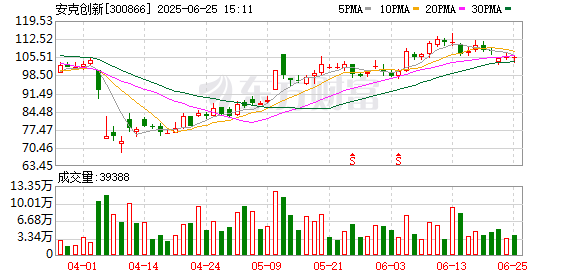
Group 1 - The core viewpoint is that 3D printing is rapidly gaining recognition and acceptance in the consumer market, with significant crowdfunding success for products like the eufyMake E1 printer [2][3][5] - Anker Innovation's eufyMake E1 has raised over $42 million on Kickstarter, marking it as the highest crowdfunding project across all categories on the platform [2] - The production of 3D printing equipment saw a year-on-year increase of 40% in May, following a 60.7% increase in April, indicating strong market growth [3] Group 2 - The eufyMake E1 is positioned as the world's first consumer-grade UV printer capable of full-color 3D texture printing, addressing previous limitations of traditional UV printers [5][6] - Anker Innovation aims to fulfill high expectations for product delivery following the crowdfunding success, as past experiences with 3D printers have not met customer satisfaction [6] - The competitive landscape includes companies like TuoZhu and ChuangXiang SanWei, which have established themselves in the consumer-grade 3D printing market [7] Group 3 - The 3D printing market is characterized by two main technologies: Fused Deposition Modeling (FDM) and Stereolithography (SLA), with FDM currently holding a market share approximately 4-5 times that of SLA [7] - Anker Innovation's revenue is significantly derived from North America, which constitutes 45% of its income, making it crucial for the company to navigate tariff impacts effectively [9] - The average price increase for Anker's top 100 products on Amazon in the U.S. was about 30% as of April 2025, indicating potential short-term sales impacts due to pricing strategies [9]

计算机行业点评报告:消费级3D打印迎来奇点时刻,关注产业投资机会
Soochow Securities· 2025-06-18 10:04
Investment Rating - The report maintains an "Overweight" rating for the industry [1] Core Insights - The consumer-grade 3D printing market is experiencing rapid growth, with a 40% year-on-year increase in production as of May 2025 [4][9] - In April 2025, the entry-level market for consumer-grade 3D printers was the only segment to show growth, with a 26% increase in shipments, driven by strong performances from brands like TuoZhu and ChuangXiang SanWei [4][9] - Chinese manufacturers dominate the global consumer-grade 3D printer market, supplying 96% of entry-level printers worldwide in 2024 [12] - The cultural and creative industries are driving demand for consumer-grade 3D printers, allowing users to create unique DIY products [15] - The introduction of advanced products like TuoZhu's H2D printer, which can achieve speeds of over 1000 mm/s, is expected to enhance market growth [19][23] Summary by Sections 1. Consumer-grade 3D Printing Demand and Global Leadership - Consumer-grade 3D printers are designed for home or small studio use, offering advantages in size, cost, and ease of operation compared to industrial models [9] - The production of 3D printing equipment in China reached 3.778 million units in 2024, with a total export value of 8.16 billion yuan [9][12] 2. Transition from B2B to B2C in 3D Printing - The consumer-grade 3D printing sector is transitioning from a productivity tool to a consumer product, similar to the impact of Douyin on video creation [15] - The emotional value provided by 3D printing, allowing for the creation of unique items, is a key driver of demand [15] 3. Investment Recommendations - The report suggests that the rapid development of the cultural and creative industries will sustain high demand for consumer-grade 3D printers [23] - Key investment targets include JinChengZi (mirror and laser controllers), HaiZheng ShengCai (consumables), and HuiNa Technology (potential injection of 3D printing assets) [23]
新消费带动 3D打印设备产量大增
Shang Hai Zheng Quan Bao· 2025-06-17 19:32
Core Viewpoint - The production of 3D printing equipment in China has seen significant growth, with a year-on-year increase of 40% in May, surpassing industrial robots and new energy vehicles, driven primarily by the rising sales of consumer-grade 3D printers domestically and internationally [1][4]. Group 1: Production Growth - In April, the production of 3D printing equipment grew by 60.7% year-on-year, while the first quarter saw a 44.9% increase [1]. - The surge in production is attributed to three main factors: the maturation of the 3D printing content ecosystem, the establishment of a scalable production model in the consumer-grade sector, and the decrease in equipment prices [1][3]. Group 2: Market Demand - The new consumption trend is driving demand for consumer-grade 3D printing devices, which are becoming essential tools for various consumer groups, including hobbyists and individual merchants [1][2]. - The popularity of the LABUBU IP figures has further fueled interest in 3D printing, with many consumers creating derivative designs using consumer-grade printers [2]. Group 3: Technological Advancements - The rapid iteration of 3D printing technology is solidifying the foundation for industry growth, with improvements in product performance and printing speed [3]. - Companies like Tuozhu Technology have consistently released new products since 2020, focusing on enhancing speed, color variety, and precision [3]. Group 4: Export Growth - The international market has become a strategic growth point for Chinese 3D printing companies, with consumer-grade devices leading the export growth [4]. - From January to April 2025, China exported 1.4 million units of 3D printing equipment, amounting to over 2.9 billion yuan, with consumer-grade devices accounting for 94% of the total export volume [4]. - The significant drop in prices for consumer-grade 3D printing devices has catalyzed their overseas sales, with average prices for exports to the U.S. around 2,100 yuan (approximately 293 USD) [4].