拓竹H2C

Search documents
长尾的复兴
乱翻书· 2026-03-26 16:01
Core Viewpoint - The article discusses the evolution of 3D printing and its potential to shift from niche applications to mainstream adoption, driven by advancements in AI and changes in consumer behavior [4][9]. Group 1: 3D Printing and Market Dynamics - Initially, 3D printing was viewed as a niche technology with limited market potential, primarily serving small, specialized needs rather than mass production [3][4]. - The comparison between news and niche products illustrates that mainstream appeal is crucial for scalability; 3D printing's focus on custom, small-scale production limits its market size [3][6]. - The emergence of personal manufacturing through 3D printing allows individuals to create products for themselves, indicating a shift towards personalized production [4][7]. Group 2: The Role of AI and Community - The integration of AI with 3D printing is transforming the landscape, enabling rapid development of niche products and reducing manufacturing costs to near zero [9]. - Platforms like Xiaohongshu demonstrate how community-driven content can aggregate diverse consumer needs, reflecting a shift towards user-generated content (UGC) and personalized experiences [8]. - The convergence of AI, 3D printing, and long-tail communities is creating a new era of abundance, where individual creators can thrive and challenge traditional market structures [9][10].

对话拓竹陶冶:我们一群工程师,一起造个朴素的硬核公司
晚点LatePost· 2026-01-26 03:06
Core Viewpoint - The article discusses the entrepreneurial journey of TuoZhu, a leading company in the 3D printing industry, highlighting its rapid growth and innovative approach to product development, which has led to annual revenues exceeding 10 billion yuan within three years of product launch [2][4]. Group 1: Company Background and Growth - TuoZhu was founded by a group of engineers who previously worked on world-class products, and they initially considered various projects before settling on 3D printing, which they initially dismissed as unviable [2][5][13]. - The company has achieved significant market success by transforming 3D printers into user-friendly devices with AI capabilities, automating many previously manual processes [4][6]. - TuoZhu's first product, the X1, raised nearly 50 million yuan through crowdfunding on Kickstarter, showcasing the strong market demand for their innovative approach [6][21]. Group 2: Product Development and Innovation - The company emphasizes a culture of engineering excellence, with a team composed primarily of engineers who are encouraged to experiment and innovate [5][6]. - TuoZhu's approach includes the integration of advanced technologies such as AI and laser radar into their products, which has redefined the capabilities of 3D printers [21][30]. - The company has focused on solving user pain points, such as the difficulty of operating traditional 3D printers, by developing a product that minimizes the need for manual adjustments [15][18]. Group 3: Market Position and Strategy - TuoZhu positions itself not merely as a hardware company but as a facilitator of personal manufacturing, aiming to enhance user experience and satisfaction [50]. - The company has built a robust ecosystem around its products, including a community platform (MakerWorld) that supports user-generated content and model sharing, which has significantly increased user engagement [50][51]. - TuoZhu's strategy includes investing heavily in community development, with plans to gradually introduce monetization opportunities for contributors, ensuring a sustainable ecosystem [51].

3D领域的NanoBanana也来了,万物皆可用嘴操控。
数字生命卡兹克· 2026-01-26 02:31
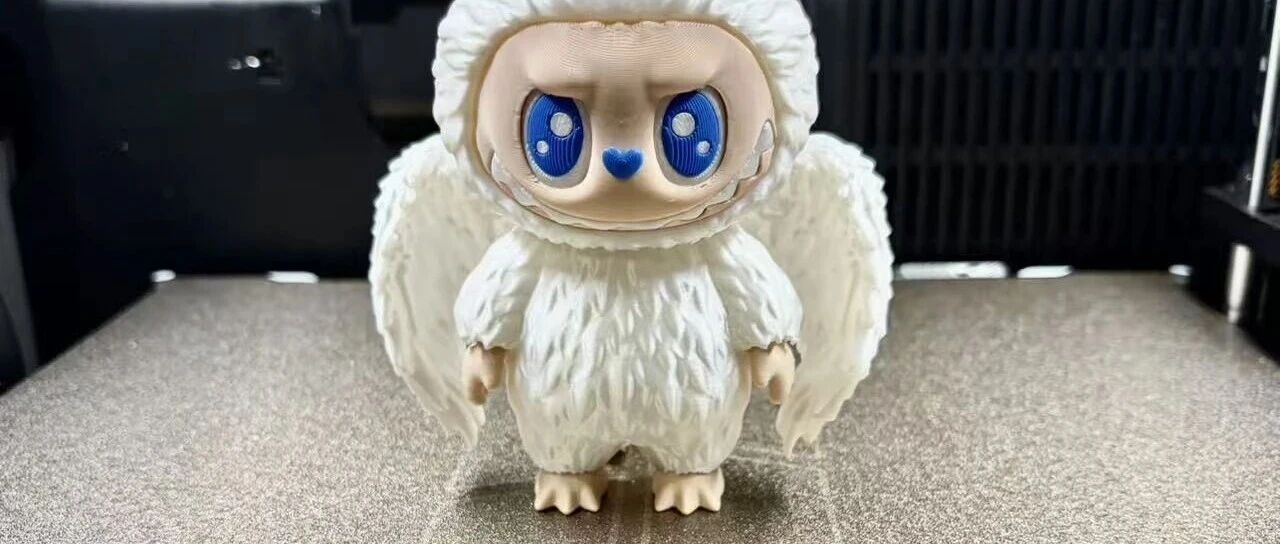
Core Viewpoint - The article discusses the emergence of a new AI 3D product, hyper3D's Rodin Gen-2, which allows users to edit 3D models using voice commands, marking a significant advancement in 3D modeling technology [7][8]. Group 1: Product Features - Hyper3D's Rodin Gen-2 is the first AI 3D product that enables voice-based editing of 3D models, allowing users to upload any third-party models for modification [8][9]. - The product offers a unique feature for local editing, enabling users to make incremental changes to existing models rather than generating new ones from scratch [42]. - Users can interact with the model through a visually engaging interface, selecting areas for modification and choosing from options like adding, removing, or altering parts of the model [29][31]. Group 2: Use Cases and Advantages - The ability to make precise, localized edits is crucial in professional settings such as gaming and film, where models undergo numerous iterations without altering the underlying structure [44]. - In e-commerce, the need for exact modifications, such as changing logos or colors, is emphasized, as any broad changes can disrupt the integrity of the 3D asset [45]. - The article highlights the importance of maintaining consistency in 3D assets, as any loss of information during model transformation can lead to significant production issues [41]. Group 3: Personal Experience and Applications - The author shares personal experiences with 3D printing and the creative possibilities enabled by AI-driven 3D modeling, showcasing a model created using the new technology [52]. - The integration of AI in 3D modeling and printing is seen as a fun and innovative development, with potential for various creative applications [54]. - The article concludes with a vision of a future where voice commands drive creative processes, emphasizing the growing power of language in technology [57].

腾讯投资拓竹,3D打印市场卷疯了:大疆才是幕后超级赢家?
3 6 Ke· 2025-11-26 03:45
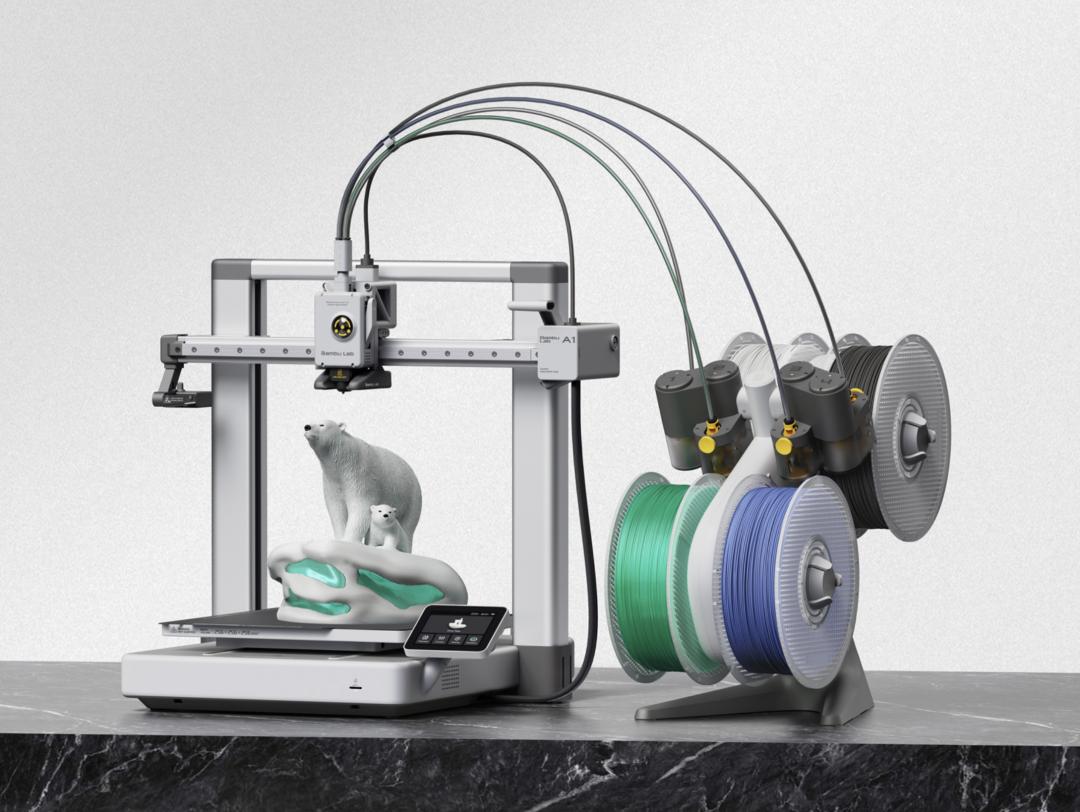
Core Insights - Bambu Lab, a rapidly growing company in the 3D printing sector, has achieved the highest sales in desktop 3D printers globally for three consecutive years and is valued at approximately $10 billion [1] - The global 3D printer market is projected to reach $24.61 billion in 2024, with a compound annual growth rate (CAGR) of 18.5% from 2024 to 2034 [3] - The consumer-grade 3D printer market is expected to see annual shipments grow from over 4 million units to 20 million units in the next five years, and then to 50 million units in the following five years [3] Company Overview - Bambu Lab's revenue is estimated to be around 6 billion RMB in 2024, with a shipment volume of approximately 1.2 million units, capturing about 29% of the global consumer-grade 3D printer market [1] - The company was founded by a team from DJI, which has contributed to its rapid growth and technological advancements in the 3D printing space [1][7] Market Dynamics - The competition in the consumer-grade 3D printer market is intensifying, with major players like Tencent and DJI investing in various companies, including Bambu Lab and Creality [5][12] - Bambu Lab has partnered with Tencent Cloud to integrate its 3D model platform MakerWorld with Tencent's 3D generation technology, which is seen as a key driver for market growth [3] Competitive Landscape - The "Shenzhen Four Kings" of consumer-grade 3D printers, which includes Bambu Lab, Creality, Zongwei Lifan, and Smart 3D, dominate approximately 95% of the entry-level 3D printer market [16][17] - Bambu Lab's current revenue significantly exceeds that of its competitors, with Smart 3D projected to reach 1.6 billion RMB in 2024 and 2.5 billion RMB in 2025 [13] Technological Advancements - Bambu Lab has leveraged technologies from its founders' experience at DJI, such as brushless motors and laser radar, to enhance the performance and capabilities of its 3D printers [7][9] - The integration of generative AI is lowering the barriers for users in 3D modeling, which is expected to further stimulate the growth of the 3D printing market [3] Future Outlook - The consumer-grade 3D printer market is still in its early development stages, with significant growth potential as major tech companies like Tencent and DJI continue to invest and innovate [22] - The market is being compared to the early days of the robotic vacuum cleaner industry, suggesting a potential for explosive growth in the coming years [22]

高瓴美团联手,疯抢3D打印
投中网· 2025-11-09 07:03
Core Viewpoint - The resurgence of consumer-grade 3D printing is attracting significant attention from mainstream capital, highlighted by recent investments in companies like Snapmaker and 创想三维 [3][4]. Group 1: Industry Trends - The 3D printing sector has seen a notable increase in investment activity, with nearly 40 financing events recorded this year, marking a five-year high [4][7]. - The consumer-grade 3D printing market is experiencing a compound annual growth rate (CAGR) exceeding 30% over the past three years, with major brands in Shenzhen achieving annual revenues around 1 billion yuan [7][8]. - The introduction of generative AI modeling tools has significantly lowered the barriers for ordinary users to create 3D models, enhancing user engagement and driving sales [11][12]. Group 2: Company Highlights - Snapmaker's product, Snapmaker U1, raised $22,020 in crowdfunding, setting a record on Kickstarter and attracting over 20,000 supporters [6]. - 创想三维, established in 2014, reported a revenue of 1 billion yuan in 2020 and projected total revenue of 2.288 billion yuan for 2024, with a CAGR of 30.4% [8]. - Snapmaker's innovative approach to multi-color printing has reduced printing time from 20-30 hours to just 5-6 hours, addressing significant industry pain points [7]. Group 3: Investment Landscape - The valuation of拓竹科技 has surpassed 30 billion yuan, reflecting strong market interest despite initial hesitance from investors [15]. - The competitive landscape is intensifying, with companies like拓竹科技 quickly responding to market demands by launching new products shortly after Snapmaker's success [8][15]. - The decline in consumer-grade 3D printer prices by 60% over the past three years is facilitating broader market adoption [13].